Hypoglycemia Symptoms: What to Watch For and How to Respond
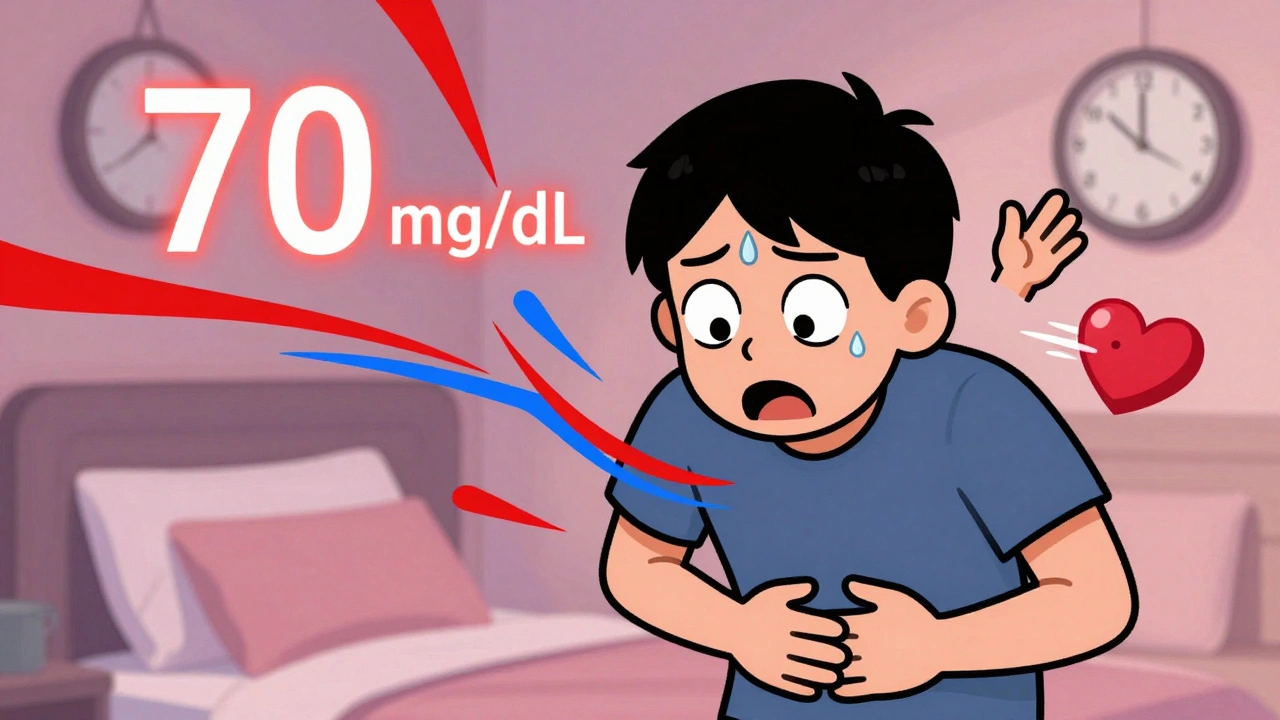
When your blood glucose, the amount of sugar in your bloodstream that fuels your cells drops too low, your body sends out warning signals—some subtle, some alarming. This condition, called hypoglycemia, a dangerously low level of glucose in the blood, often below 70 mg/dL, isn’t just for people with diabetes. It can happen to anyone, especially if you skip meals, take certain meds, or overdo exercise. The hypoglycemia symptoms you feel aren’t in your head—they’re your body’s emergency alarm system kicking in.
Early signs include shaking, sweating, a fast heartbeat, and feeling hungry or dizzy. These are your body’s way of saying, "I need sugar now." If you ignore them, things get worse: confusion, blurred vision, weakness, even seizures or loss of consciousness. For people on insulin or sulfonylureas, these episodes can happen suddenly, even at night. That’s why recognizing the pattern matters—whether you’ve had it once or ten times. insulin reaction, a sudden drop in blood sugar triggered by too much insulin or not enough food is one of the most common causes, but it’s not the only one. Skipping meals, drinking alcohol on an empty stomach, or over-exercising without adjusting your food intake can also trigger it. Even some non-diabetes medications or rare hormonal disorders can lead to low blood sugar.
What you do next can make all the difference. If you feel these symptoms, check your blood sugar if you can. If it’s below 70, treat it fast with 15 grams of fast-acting sugar—glucose tablets, juice, or even regular soda. Wait 15 minutes, check again. Repeat if needed. Then eat a snack with protein and carbs to keep it stable. If someone passes out or can’t swallow, they need emergency glucagon or a call to 911. No one should wait to see if it "gets better on its own." And if this happens often, talk to your doctor. You might need a medication tweak, a change in timing, or a better plan for meals and activity.
You’ll find real stories and practical advice in the posts below—from how to spot hidden hypoglycemia in older adults, to what to do when your glucose monitor doesn’t match how you feel, to why some medications make low blood sugar more likely. These aren’t just medical facts—they’re survival tips from people who’ve been there.
Learn how to recognize, treat, and prevent low blood sugar (hypoglycemia) if you have diabetes. Understand symptoms, emergency treatments like glucagon, and proven prevention strategies backed by 2025 guidelines.