
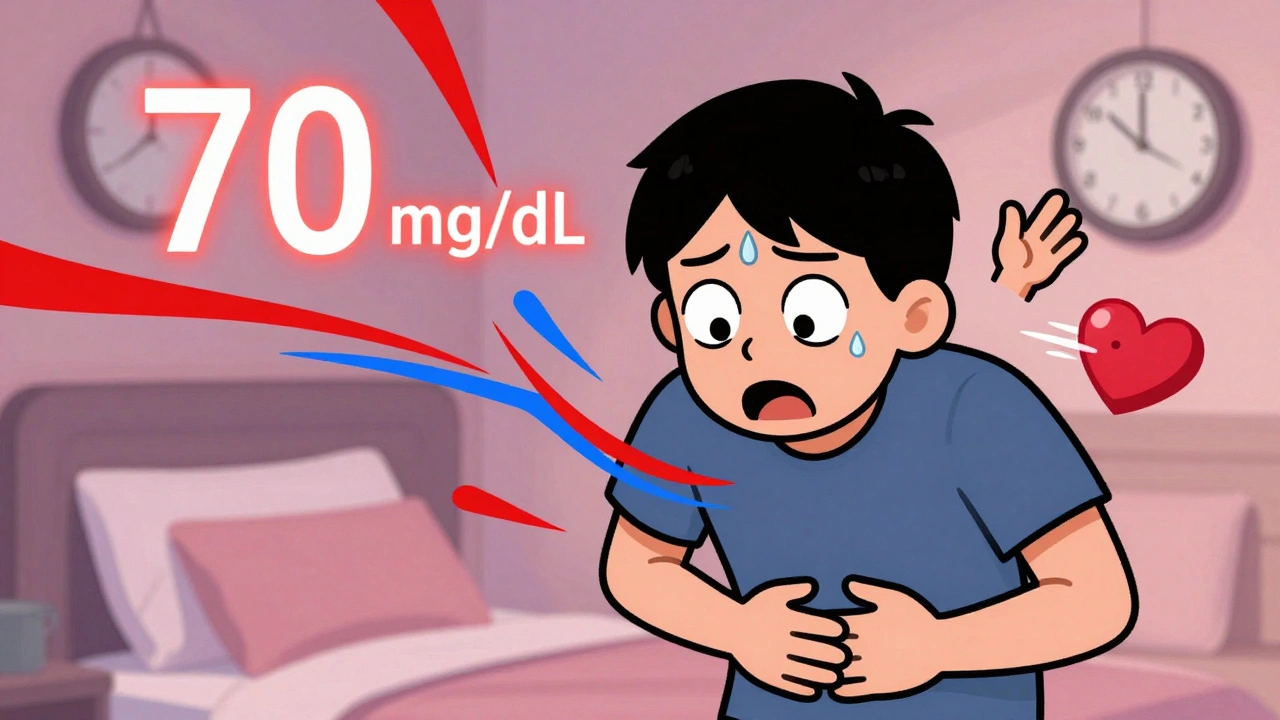
When your blood sugar drops too low, your body doesn’t just feel tired-it can start shaking, sweating, or even confuse you. For people with diabetes, this isn’t rare. It’s a daily risk. Hypoglycemia, or low blood sugar, happens when glucose falls below 70 mg/dL. That’s not a scare tactic-it’s a clinical threshold backed by the American Diabetes Association. And if you’re on insulin or certain diabetes pills, you’re at risk. About 47% of people with Type 1 diabetes and 33% of those with Type 2 on insulin experience it at least once a year. This isn’t just about feeling off. Left untreated, it can lead to seizures, unconsciousness, or worse.
What Hypoglycemia Feels Like (And Why It’s Not Always Obvious)
Your body has two warning systems for low blood sugar. One is physical-your adrenal glands pump out adrenaline. That’s what causes trembling hands, a racing heart, cold sweat, and sudden hunger. These are called adrenergic symptoms. They show up fast, often when glucose hits 70 mg/dL. But here’s the catch: if you’ve had diabetes for years, your body stops sending these signals. That’s called hypoglycemia unawareness. One in four long-term Type 1 patients lose this early warning. They don’t shake. They don’t sweat. They just get confused… then pass out.
The other system is neurological. Your brain runs on glucose. When levels drop below 65 mg/dL, thinking gets fuzzy. Below 55 mg/dL, vision blurs. At 50 mg/dL, you might slur your words or act drunk. Below 45 mg/dL, seizures or coma can happen. That’s why some people end up in the ER mistaken for being intoxicated. Emergency crews in England report over 30% of hypoglycemia calls are misdiagnosed as strokes or alcohol poisoning.
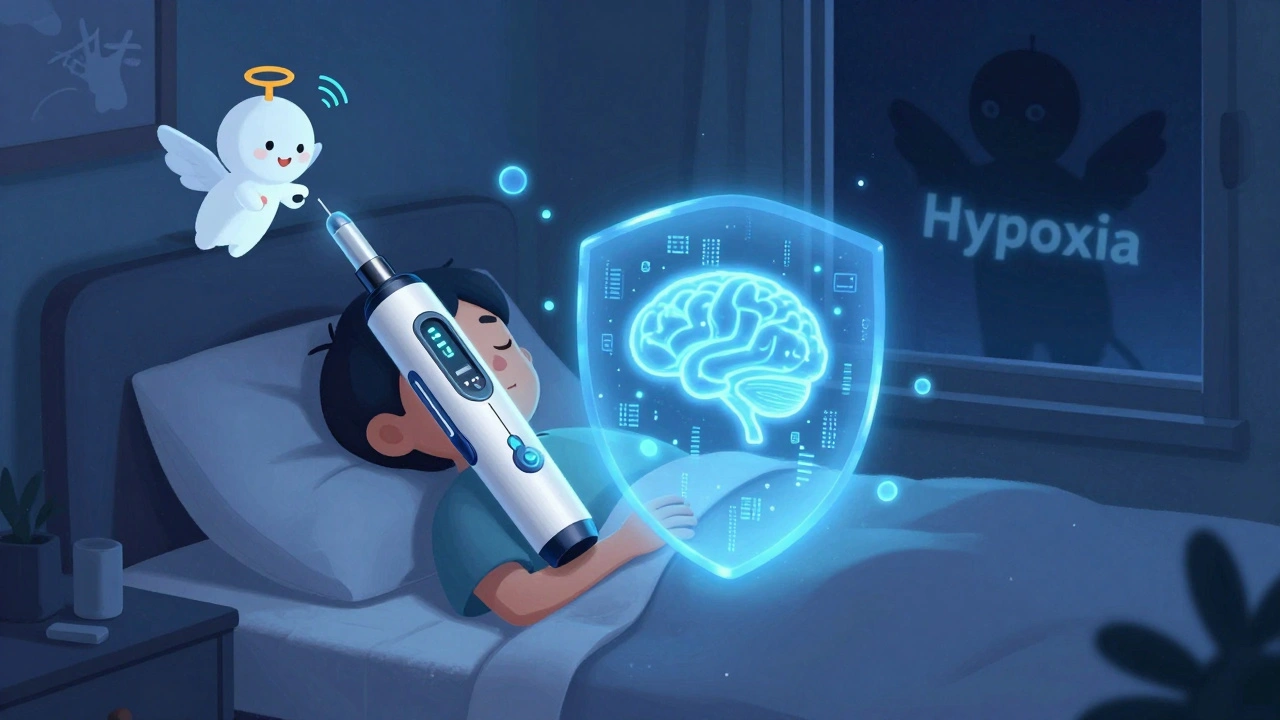
And it’s not always daytime. Nocturnal hypoglycemia hits while you sleep. You might wake up drenched in sweat, with a headache, or feel exhausted all day. Some report nightmares so vivid they feel real. The term "hypnoxia" describes this-hypoglycemia-induced nightmares. One in three Type 1 users on continuous glucose monitors (CGMs) say they have nighttime lows at least twice a week.
What Causes Low Blood Sugar (It’s Not Just Too Much Insulin)
Most people think hypoglycemia only happens when you take too much insulin. That’s true for about 73% of cases. But the other 27%? They’re sneaky.
- Not eating enough carbs after taking insulin? That’s the second biggest cause. Skipping a meal or eating a tiny snack after a dose can crash your glucose.
- Exercise without adjusting. A 45-minute walk, bike ride, or even heavy cleaning can drop your sugar. If you don’t eat extra carbs or reduce your insulin, your body burns through glucose faster than it can replace it.
- Alcohol. Even one drink can block your liver from releasing stored glucose. That’s why many people crash hours after drinking, especially overnight.
- Medication timing. Taking your insulin too early before a meal, or taking a long-acting insulin at the wrong time, throws off the balance.
- CGM lag. Sensors don’t update in real time. If your glucose is dropping fast-say, from 120 to 50 in 20 minutes-the meter might still show 98. That’s why you can’t rely on the number alone. You have to trust your symptoms too.
Non-diabetics can get hypoglycemia too, but it’s rare. Reactive hypoglycemia happens after meals-often after gastric bypass surgery. Fasting hypoglycemia might signal something serious, like a tumor on the pancreas (insulinoma) or liver failure. If you’re not diabetic and keep having low blood sugar, see a doctor.
How to Treat Low Blood Sugar-The 15-15 Rule (And When It Fails)
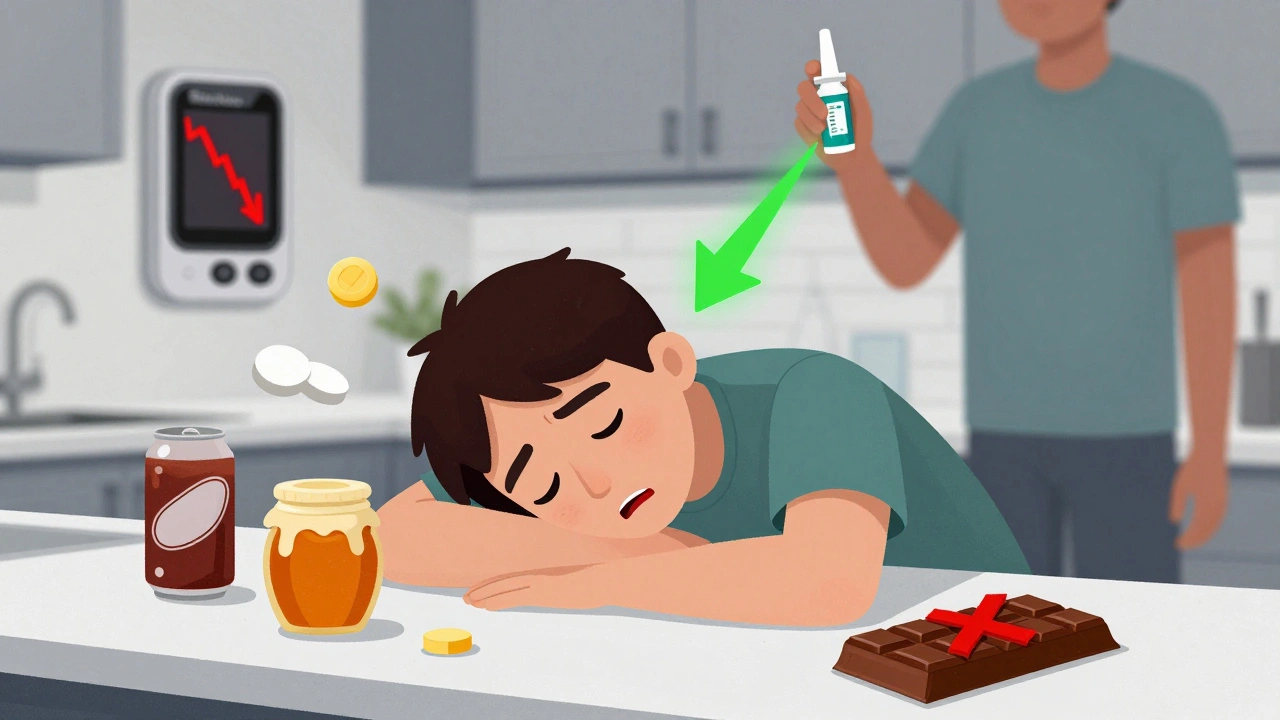
If your blood sugar is below 70 mg/dL and you’re conscious, use the 15-15 rule: take 15 grams of fast-acting carbs, wait 15 minutes, check again.
What counts as 15g? Exactly:
- 4 glucose tablets
- 1/2 cup (4 oz) of regular soda (not diet)
- 1 tablespoon of honey or sugar
- 1/2 cup of fruit juice
Don’t use chocolate or candy bars. The fat slows down absorption. You need sugar that hits fast.
Here’s the truth: the 15-15 rule works about 78% of the time for mild to moderate lows. But if you’re confused, slurring words, or unconscious? It won’t work. You need glucagon.
Glucagon is a hormone that tells your liver to dump stored glucose into your blood. It comes as an injection or nasal spray. The new nasal version (Dasiglucagon, brand Zegalogue) works in 10 minutes for 94% of people. Injectable glucagon takes 10-15 minutes and requires mixing powder with liquid-a nightmare if you’re panicking. That’s why many families keep pre-mixed pens on hand. If someone can’t swallow or is unconscious, give glucagon. Call 911 after.
After glucagon, even if they wake up, they still need carbs. Glucagon only gives a temporary boost. Without food, sugar will drop again.
Prevention: It’s Not Just About Food and Pills
Preventing hypoglycemia isn’t luck. It’s planning.
Carb counting matters. If you take 1 unit of insulin for every 10 grams of carbs, stick to it. Don’t guess. Use an app or journal. Even a 5-gram error can trigger a low.
Adjust for exercise. If you’re going to be active for more than 45 minutes, reduce your insulin by 20-50% or eat 15-30g of carbs before or during. For long hikes or bike rides, carry fast-acting carbs in your pocket. Don’t wait until you feel bad.
Check before bed. If your sugar is below 100 mg/dL before sleep, eat a small snack with protein and complex carbs-like peanut butter on whole wheat. Avoid skipping dinner.
Use technology. Continuous glucose monitors (CGMs) are game-changers. They show trends, not just numbers. If your glucose is dropping fast, you get an alarm. Newer models like the Guardian 4 can automatically pause insulin delivery when it predicts a low. Studies show this cuts nighttime lows by 44%.
Train your circle. Tell family, coworkers, friends what to do. Most people don’t know how to help. Show them where your glucagon is. Practice giving it. One study found that after two training sessions, caregivers had a 68% success rate using glucagon in emergencies.
Who’s at Highest Risk-and What’s Different for Them
Not everyone’s risk is the same.
People with Type 1 diabetes have the highest rate: nearly 19 episodes a month on average. Older adults (>65) often have atypical symptoms-falls, confusion, dizziness-mistaken for dementia. Each severe low increases dementia risk by 4.7% per episode.
People with kidney disease or long-standing diabetes are more prone because their bodies can’t release glucagon properly. Alcoholics and those with eating disorders also face higher risk.
And then there’s the "dead-in-bed" syndrome. It’s rare, but terrifying. Young people with Type 1 diabetes die in their sleep from undetected hypoglycemia. It accounts for 6% of unexpected deaths under age 40. That’s why CGMs with alarms and overnight monitoring are critical.
What’s New in 2025: AI, Artificial Pancreas, and Glucose-Responsive Insulin
The tools are getting smarter.
In 2023, the FDA approved the first closed-loop system, Tandem Control-IQ. It adjusts insulin automatically based on real-time glucose data. Users saw a reduction of 3.3 hours per week spent below 54 mg/dL. That’s over 17 hours a month of avoided lows.
AI is next. The NIH is funding a project called HypoPred to predict lows 45 minutes in advance using glucose trends, activity levels, and meal logs. Early versions are already 85% accurate.
The holy grail? Glucose-responsive insulin-insulin that turns itself off when blood sugar drops below 70 mg/dL. Phase 2 trials show it cuts hypoglycemia duration by 62% compared to standard insulin. It’s not on the market yet, but it’s coming.
Still, cost is a barrier. Nearly 3 in 10 people skip glucose strips or CGM sensors because they’re too expensive. Telehealth programs that provide education and support have cut severe lows by 41% in Medicaid populations. Knowledge saves lives as much as technology.
Can low blood sugar happen without diabetes?
Yes, but it’s uncommon. Reactive hypoglycemia can happen after meals, especially after weight-loss surgery. Fasting hypoglycemia may signal serious conditions like insulinoma (a pancreatic tumor) or liver or kidney failure. If you’re not diabetic and get frequent low blood sugar, see a doctor for testing.
Why do I get low blood sugar at night even with a CGM?
CGMs have a 5-15 minute lag. If your glucose drops rapidly during sleep, the sensor may not catch it fast enough. You might also be taking too much basal insulin, eating too little before bed, or drinking alcohol. Try a small bedtime snack with protein and complex carbs, and check your overnight insulin settings with your provider.
Is it safe to drive with low blood sugar?
No. At 50 mg/dL, your reaction time and judgment are as impaired as someone with a 0.08% blood alcohol level-the legal limit for driving. Always check your glucose before getting behind the wheel. If it’s below 70 mg/dL, treat it and wait until it’s above 80 before driving.
What’s the best snack to prevent low blood sugar during exercise?
For short workouts (under 60 minutes), 15g of fast-acting carbs like a banana or 4 oz of juice works. For longer activity, pair it with a slow-digesting carb and protein-like a slice of whole grain bread with peanut butter. This gives you quick energy plus lasting fuel.
Can I use candy or chocolate to treat low blood sugar?
Avoid chocolate and most candies. The fat content slows down sugar absorption, delaying recovery. Stick to glucose tablets, juice, soda, or honey. They work fast and predictably.
How often should I check my blood sugar if I’m at risk for hypoglycemia?
Check before meals, before bed, and if you feel any symptoms. If you’re on insulin, check before and after exercise. If you’ve had a recent low, check every 15 minutes until stable. People with hypoglycemia unawareness should check more often-up to 6-8 times daily.
What to Do Next
If you’ve had a low blood sugar episode, write it down: time, symptoms, what you ate, your insulin dose, and your glucose reading. Patterns will show up. Share this with your doctor or diabetes educator.
Make sure your glucagon is not expired. Keep it in your bag, car, and workplace. Teach someone how to use it. Practice with a trainer kit if available.
And if you’re not diabetic but keep having symptoms of low blood sugar-fatigue, dizziness, confusion after meals-get tested. It could be something simple, or something serious. Either way, you deserve an answer.



Joel Deang
bro i just ate a candy bar after my bg dropped and now i’m higher than my ex’s expectations 😅