
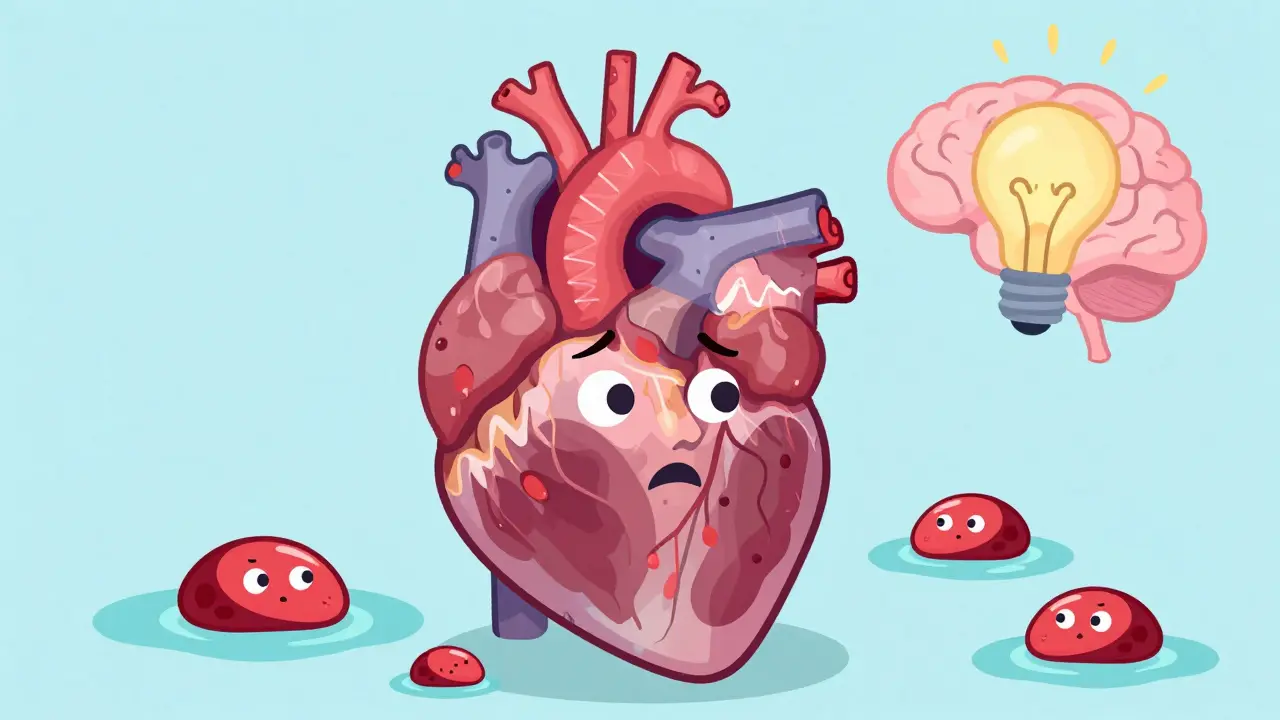
Every year, over 900,000 people in the U.S. have a stroke caused by a blood clot. For many, that clot forms because of an irregular heartbeat called atrial fibrillation - or Afib. It’s not the heartbeat itself that’s deadly, but the clots it can trigger. That’s where blood thinners come in. They don’t actually thin your blood. They stop clots from forming in the first place. And for people with Afib, they’re one of the most effective ways to avoid a stroke.
What Exactly Do Blood Thinners Do?
When your heart beats irregularly in Afib, blood can pool in the upper chambers and start to clot. If that clot breaks loose, it can travel to your brain and cause a stroke. Blood thinners - or anticoagulants - work by interfering with the clotting process. They don’t dissolve existing clots. They prevent new ones from forming. That’s why they’re so critical for stroke prevention.
There are two main types: warfarin and the newer DOACs (direct oral anticoagulants). Warfarin has been around since the 1950s. It works by blocking vitamin K, which your body needs to make clotting factors. DOACs, on the other hand, target specific proteins in the clotting chain - either thrombin or factor Xa. That’s why they’re more precise and predictable.
Warfarin: The Old Standard
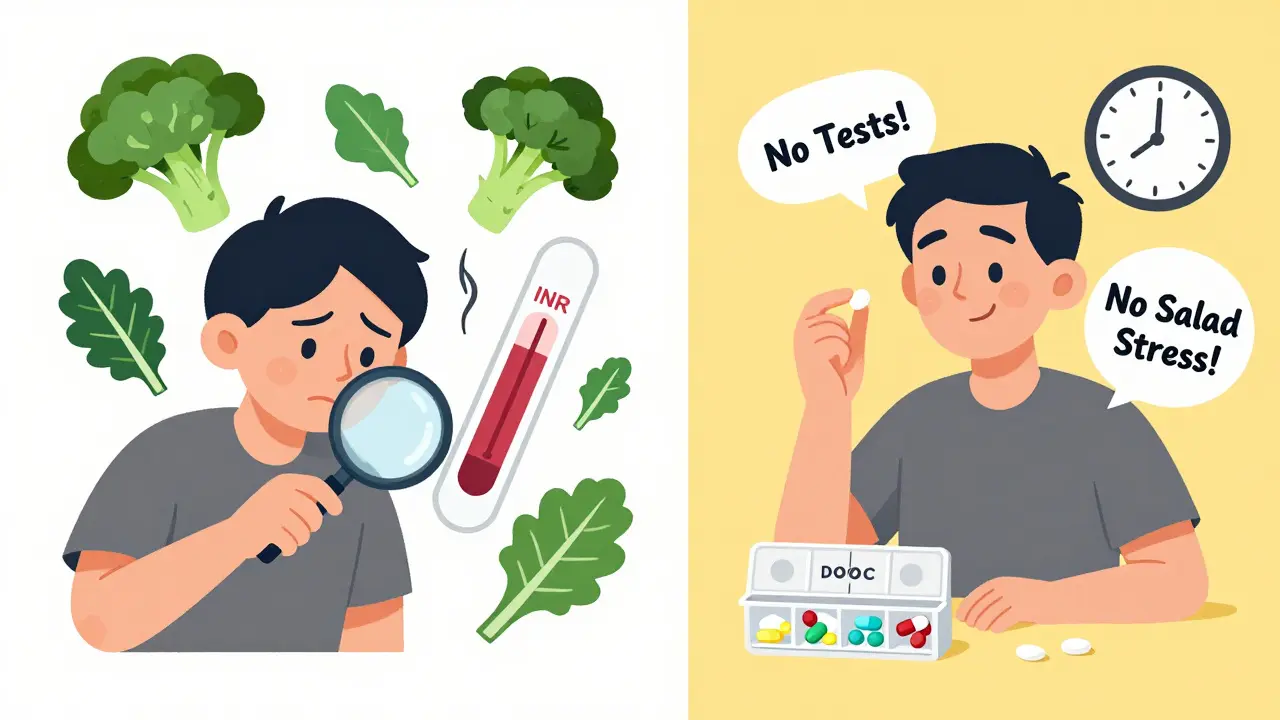
Warfarin was the only option for decades. It’s cheap - a 30-day supply costs about $15 with insurance. But it’s finicky. Your dose depends on how your body responds, which changes based on diet, other medications, even how much you’ve slept. That’s why you need regular blood tests - INR checks - to make sure your blood isn’t clotting too easily or bleeding too much.
The goal? Keep your INR between 2.0 and 3.0. But studies show nearly half of patients don’t stay in that range. One 2022 study found that only 60% of warfarin users spent enough time in the therapeutic zone to get full protection. Miss a test. Eat a big salad. Start a new antibiotic. Your INR can swing out of range fast. And if it does, your stroke risk goes up.
Plus, you have to watch your vitamin K intake. Leafy greens like spinach, kale, and broccoli can make warfarin less effective. One week you eat lots of greens, the next you don’t - your clotting time changes. It’s a constant balancing act. For many, it’s exhausting.
DOACs: The New Standard
Since 2010, four DOACs have hit the market: dabigatran, rivaroxaban, apixaban, and edoxaban. They don’t need INR checks. You take the same dose every day. No food restrictions. Fewer drug interactions. And they work faster - most reach full effect in hours, not days.
Here’s what the data says. A 2021 review of over 2 million patients found DOACs reduced stroke risk by 23% compared to warfarin. Major bleeding dropped by 32%. And the most dangerous kind - bleeding in the brain - was cut by more than half. Apixaban stood out even more: in trials, it lowered stroke and bleeding risk more than any other DOAC.
Real-world results match this. In 2023, 78% of new anticoagulant prescriptions in the U.S. were for DOACs. Apixaban alone made up 42% of those. Why? Because patients report feeling safer and more in control. No monthly blood draws. No worrying about broccoli. One patient on Reddit said, “Switched from warfarin to apixaban after 10 years - night and day difference.”
Which DOAC Is Best?
Not all DOACs are the same. Each has a different dosing schedule, side effect profile, and kidney clearance rate.
- Apixaban (Eliquis): Taken twice daily. Lowest bleeding risk among DOACs. Preferred for older adults and those with mild kidney issues. Dose reduced if you’re over 80, weigh under 60 kg, or have high creatinine.
- Rivaroxaban (Xarelto): Once daily. Higher risk of stomach bleeding than apixaban. Not recommended if you have severe kidney disease.
- Dabigatran (Pradaxa): Twice daily. Highest rate of gastrointestinal upset - about 1 in 3 users report nausea or stomach pain. But it has a specific antidote (idarucizumab) if you bleed.
- Edoxaban (Savaysa): Once daily. Lower dose needed for people with kidney problems. Least studied of the four.
For most people, apixaban is the top choice. It’s the safest, most effective, and now - since January 2024 - available as a generic. That brought the price down from $650 to around $450 a month. Rivaroxaban and dabigatran generics followed, dropping to $500-$550. Warfarin, even with monitoring, still costs less - about $650 total for the year, including tests. But the hidden costs of warfarin - missed work, ER visits, anxiety - are harder to count.
Who Shouldn’t Take DOACs?
DOACs are great - but not for everyone.
If you have a mechanical heart valve, DOACs are dangerous. The RE-ALIGN trial showed dabigatran doubled the risk of clots and strokes in these patients. Warfarin is still the only approved option here.
Severe kidney disease (CrCl under 15 mL/min) is another red flag. DOACs are cleared by the kidneys. If they’re not working well, the drug builds up and raises bleeding risk. Warfarin may be safer here, though it’s not perfect.
Extreme body weight - under 60 kg or over 120 kg - is tricky. Dosing isn’t well studied. Some doctors stick with warfarin because they can monitor INR. Others still choose DOACs but adjust dose based on weight and kidney function.
And if you’re on multiple medications that interact with DOACs - like strong antifungals or certain HIV drugs - warfarin might be easier to manage. But you’ll still need those INR checks.
How Do Doctors Decide?
It’s not just about the drug. It’s about the person.
Doctors use two scores to help decide:
- CHA₂DS₂-VASc: Estimates your stroke risk. Points for age, high blood pressure, diabetes, heart failure, prior stroke, and more. If your score is 2 or higher, anticoagulation is recommended.
- HAS-BLED: Estimates your bleeding risk. Points for high blood pressure, kidney/liver disease, stroke history, labile INR (if on warfarin), age over 65, drugs like aspirin, and alcohol use. A score of 3 or higher means you’re at higher risk - but not that you shouldn’t take anticoagulants. It just means you need closer monitoring.
Most patients with Afib and a CHA₂DS₂-VASc score of 2+ will be started on a DOAC. Apixaban is often first. If cost is a barrier, warfarin is still an option - especially if you can manage the monitoring.
What About the Future?
Research is moving fast. New drugs like milvexian and abelacimab are in late-stage trials. They target different parts of the clotting system - factor XI or XIa - and early results show they might prevent clots without increasing bleeding risk. One study showed 48% less major bleeding than apixaban.
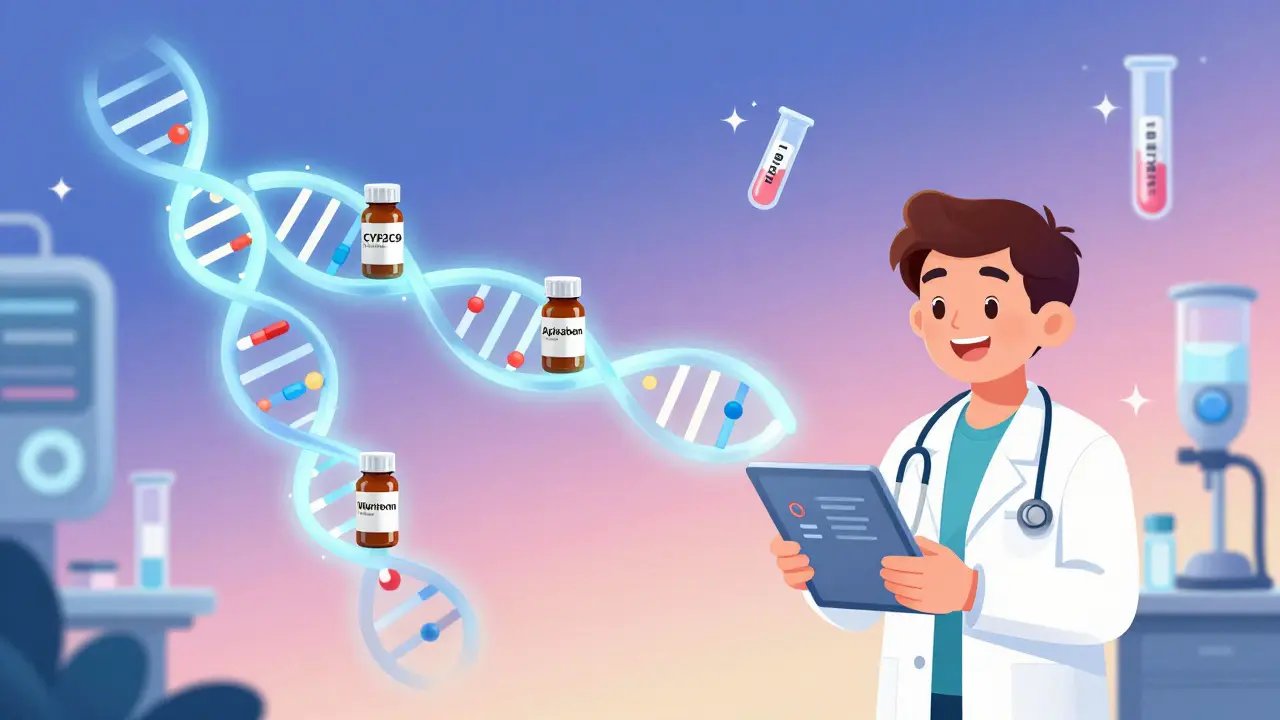
And soon, your genes might guide your choice. Scientists are learning how variations in CYP2C9 and VKORC1 genes affect warfarin dosing. Others are looking at ABCB1 gene patterns to predict how well you’ll respond to DOACs. Within five years, genetic testing could be routine before starting any anticoagulant.
For now, the message is clear: if you have Afib and are at risk for stroke, you need anticoagulation. DOACs are safer, simpler, and more effective than warfarin for most people. And with generics now widely available, cost is no longer the barrier it once was.
What If You Bleed?
Yes, bleeding is the main risk. But it’s rare - and manageable.
For DOACs, there are specific reversal agents. Idarucizumab reverses dabigatran. Andexanet alfa reverses apixaban and rivaroxaban. Hospitals keep them on hand. If you fall and hit your head, or start vomiting blood, go to the ER. Tell them what you’re taking. They’ll know what to do.
For warfarin, vitamin K and fresh frozen plasma can reverse it. But it takes hours. DOACs wear off faster - apixaban clears in 12-24 hours. So if you miss a dose or have a minor injury, your risk doesn’t stay elevated as long.
Staying on Track
Adherence is everything. Miss one dose of a DOAC? Your protection drops. Miss a week? Your stroke risk climbs back up.
Use a pill organizer. Set phone alarms. Link your dose to a daily habit - like brushing your teeth. Clinics that use structured education programs see 85% adherence. Those without? Only 67%.
And never stop on your own. Even if you feel fine. Afib often has no symptoms. But the clot risk doesn’t disappear.
Are blood thinners the same as aspirin?
No. Aspirin is an antiplatelet drug - it stops platelets from clumping. Blood thinners like warfarin and DOACs stop the clotting cascade itself. For stroke prevention in Afib, aspirin is not enough. Studies show warfarin reduces stroke risk by 1.7% more than aspirin - and DOACs do even better. Aspirin is not recommended for stroke prevention in Afib by current guidelines.
Can I drink alcohol while on blood thinners?
Moderation is key. Heavy drinking increases bleeding risk and can interfere with how your body processes warfarin. For DOACs, occasional light drinking (one drink a day) is usually fine. But binge drinking - even once - can raise your bleeding risk significantly. Talk to your doctor about your habits. They’ll give you a safe limit based on your health.
Do I need to stop blood thinners before surgery?
Sometimes, but not always. For minor procedures like dental work, you usually keep taking DOACs. For major surgery, your doctor will decide based on your stroke risk and bleeding risk. DOACs are stopped 24-48 hours before surgery because they leave your system quickly. Warfarin is stopped 5 days before. Never stop on your own - always follow your doctor’s plan.
What happens if I miss a dose?
If you miss a dose of a DOAC, take it as soon as you remember - but only if it’s within 6 hours of your usual time. If it’s been longer, skip the missed dose and take your next one at the regular time. Never double up. For warfarin, if you miss a dose, call your provider. They’ll tell you whether to take it later or skip it, depending on your INR.
Can I switch from warfarin to a DOAC?
Yes, and many people do. If you’re on warfarin and your INR is stable, your doctor can switch you to a DOAC. The transition is done carefully - you stop warfarin and start the DOAC when your INR drops below 2.0. Most patients report better quality of life after switching: no more blood tests, no more dietary worries. But it’s not automatic. Your doctor will check your kidney function, weight, and other meds first.
Final Thoughts
Stroke prevention isn’t about being perfect. It’s about being consistent. The right anticoagulant for you isn’t the one with the lowest price tag or the newest name. It’s the one you can take every day without fear, without hassle, and without constant worry. For most people with Afib, that’s a DOAC - especially apixaban. The data, the patient stories, the guidelines - they all point to the same conclusion: these drugs save lives. And now, with generics available, they’re more accessible than ever.



Lynsey Tyson
I switched to apixaban last year after 8 years on warfarin. No more weekly blood draws. No more stressing over spinach. I can finally eat salad without checking a chart. Life is just... quieter now.
Also, my dog started licking my arm one day and I panicked-turns out I wasn’t bleeding. I didn’t even know I was that anxious until it was gone.