
Bleeding Risk Assessment Tool
Assess Your Bleeding Risk
This tool calculates your HAS-BLED score based on key risk factors for bleeding when taking SSRIs with anticoagulants. Your score helps determine your risk level and appropriate monitoring.
Combining SSRIs with anticoagulants might seem like a routine clinical decision-treat depression, prevent stroke. But behind that simple combo is a real, measurable risk: bleeding. It’s not rare. It’s not theoretical. And it’s happening more often than many doctors realize.
In Australia, about 1 in 5 people on blood thinners also have depression. That’s a lot of people taking both. And while SSRIs help with mood, they quietly weaken your platelets-the tiny cells that stop bleeding. When you add that to a drug like warfarin or rivaroxaban, your body’s natural clotting system gets hit from two sides. The result? More bruises. More nosebleeds. More hospital visits.
How SSRIs Weaken Platelets
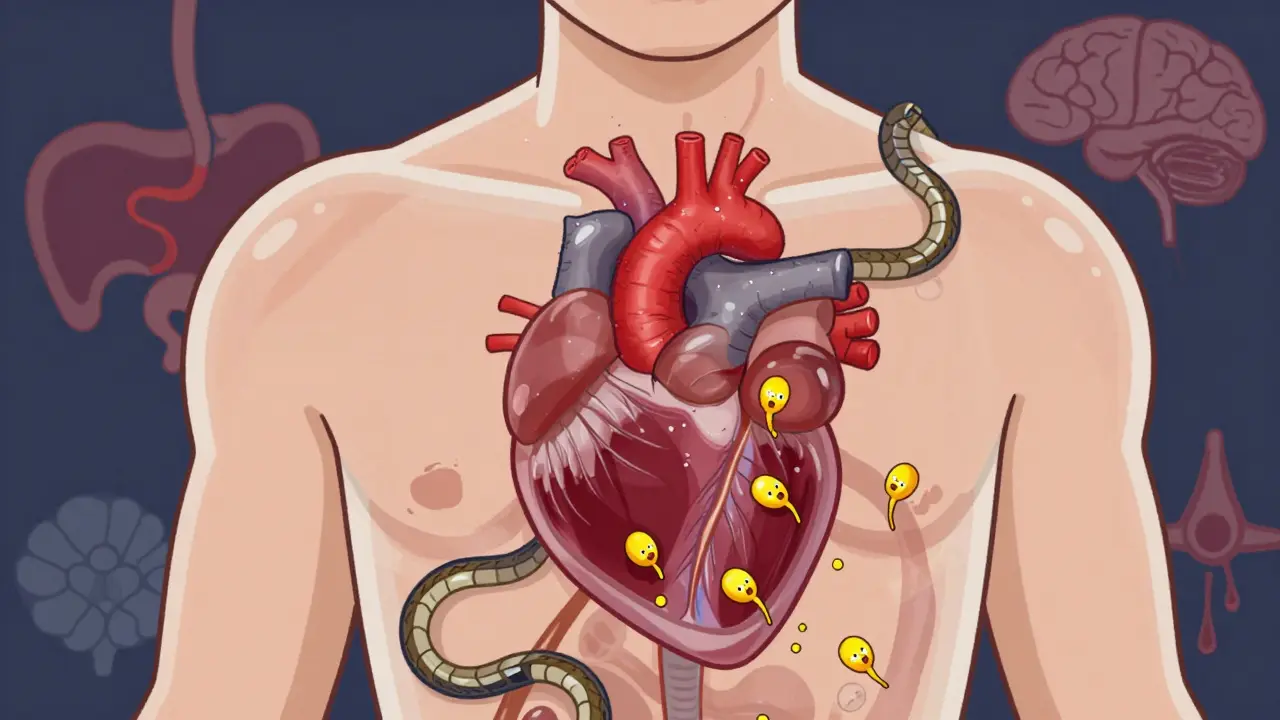
SSRIs-drugs like sertraline, escitalopram, and paroxetine-work by boosting serotonin in the brain. But serotonin isn’t just a mood chemical. It’s also stored inside platelets and released when they need to clump together to seal a cut. When SSRIs block serotonin reuptake, they drain platelets of this key signal. Studies show this reduces platelet aggregation by 30-40%. That’s not a minor tweak. It’s like taking the brakes off your car’s emergency stop.
Think of it this way: if you cut your finger while shaving, your platelets normally rush in, stick together, and form a plug. With an SSRI, that plug forms slower. With an anticoagulant? It barely forms at all. The combination doesn’t make you bleed faster-it makes it harder for your body to stop bleeding once it starts.
The Numbers Don’t Lie
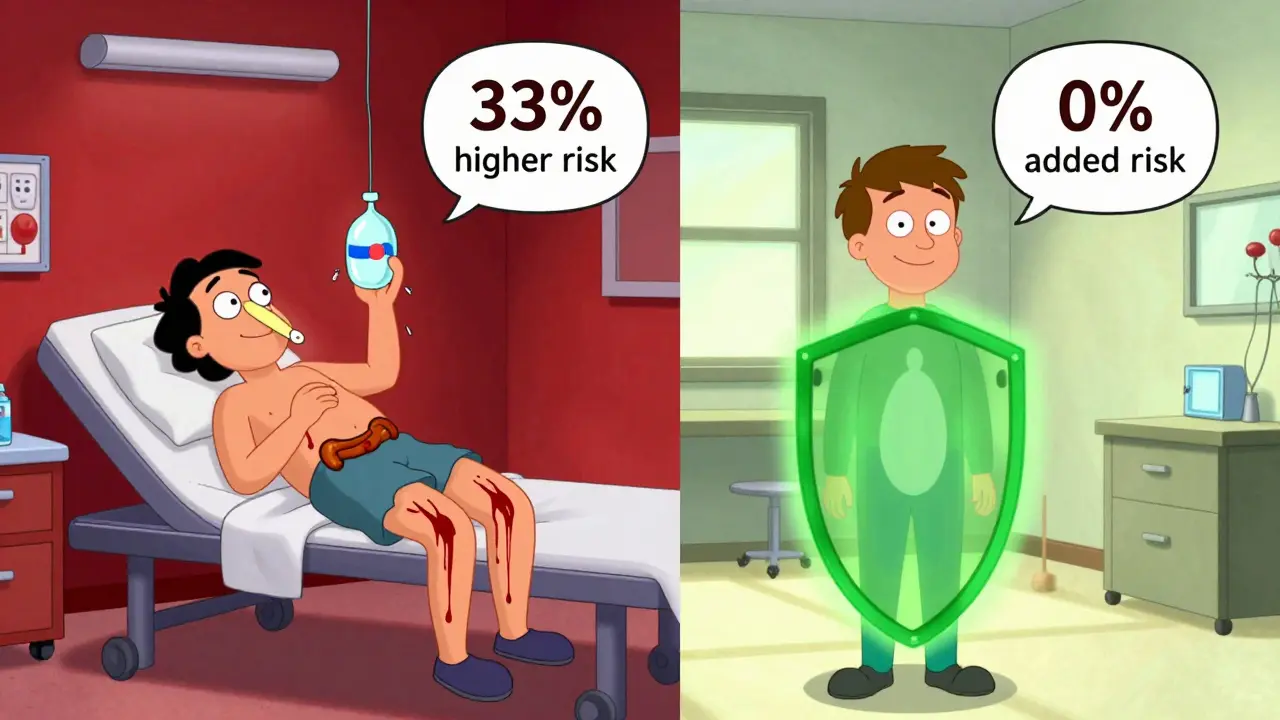
A massive 2024 study of over 42,000 people on anticoagulants found those also taking SSRIs had a 33% higher risk of major bleeding compared to those on anticoagulants alone. That might sound abstract, but here’s what it means in real terms: if 100 people on anticoagulants alone have 1.8 major bleeding events per year, adding an SSRI bumps that to 2.4. Multiply that across millions of patients, and you’re looking at thousands of preventable hospitalizations.
The biggest danger? The first 30 days. Risk spikes right after starting the SSRI. That’s when platelet serotonin levels drop fastest. After six months, the risk drops-some studies say by half. But that doesn’t mean it’s gone. It just means your body adapts, not that the danger disappears.
Where Does the Bleeding Happen?
It’s not random. The most common site? Your gut. About 58% of major bleeding events in this group are gastrointestinal. Think black, tarry stools, or vomiting blood. That’s not just uncomfortable-it’s life-threatening.
Then there’s brain bleeds. Intracranial hemorrhage makes up 17% of cases. That’s the scary one. A small bleed in the brain can lead to stroke, permanent disability, or death. Even if it’s rare, the consequences are severe.
The rest? Bleeding in joints, muscles, or other internal sites. These are harder to spot but just as dangerous. A slow bleed into the thigh can cause nerve damage. A bleed in the abdomen can mimic appendicitis. That’s why doctors need to ask: Have you noticed unusual bruising? Unexplained fatigue? Dark stools?
Not All Blood Thinners Are the Same
Warfarin has been around for decades. It’s cheap. But it’s finicky. It interacts with food, other drugs, and your liver enzymes. When you add an SSRI, the risk jumps. Studies show a 28% increase in bleeding with warfarin plus SSRI.
DOACs-like apixaban, rivaroxaban, dabigatran-are newer. They’re more predictable. And when paired with SSRIs, the risk is lower: about 22%. Not zero. Just lower. That’s why many cardiologists now prefer DOACs over warfarin for patients who also need antidepressants.
But here’s the twist: not all SSRIs are created equal when it comes to bleeding risk. You’d think paroxetine, the strongest serotonin blocker, would be riskiest. But the 2024 study found no difference between paroxetine, sertraline, or escitalopram. The risk was the same. That kills the old theory that “stronger SSRI = more bleeding.” The mechanism isn’t about potency-it’s about the fact that all SSRIs deplete platelet serotonin.
What About Other Antidepressants?
If SSRIs raise bleeding risk, what’s safer? Mirtazapine and bupropion are two options that don’t touch platelet serotonin. Mirtazapine helps with sleep and appetite too-useful for people with depression who’ve lost weight. Bupropion is energizing, no sexual side effects. Neither increases bleeding risk, according to multiple studies.
But here’s the catch: SSRIs are still the first choice for moderate-to-severe depression. Why? They work. They’re well-studied. And for many, alternatives don’t help as much. So the goal isn’t to avoid SSRIs entirely-it’s to know when to be careful.
Who’s at Highest Risk?
Not everyone. If you’re young, healthy, and take a low-dose SSRI with a DOAC? Your risk is low. But if you’re over 70, have a history of ulcers, take aspirin or NSAIDs, or have a HAS-BLED score of 3 or higher? You’re in the danger zone.
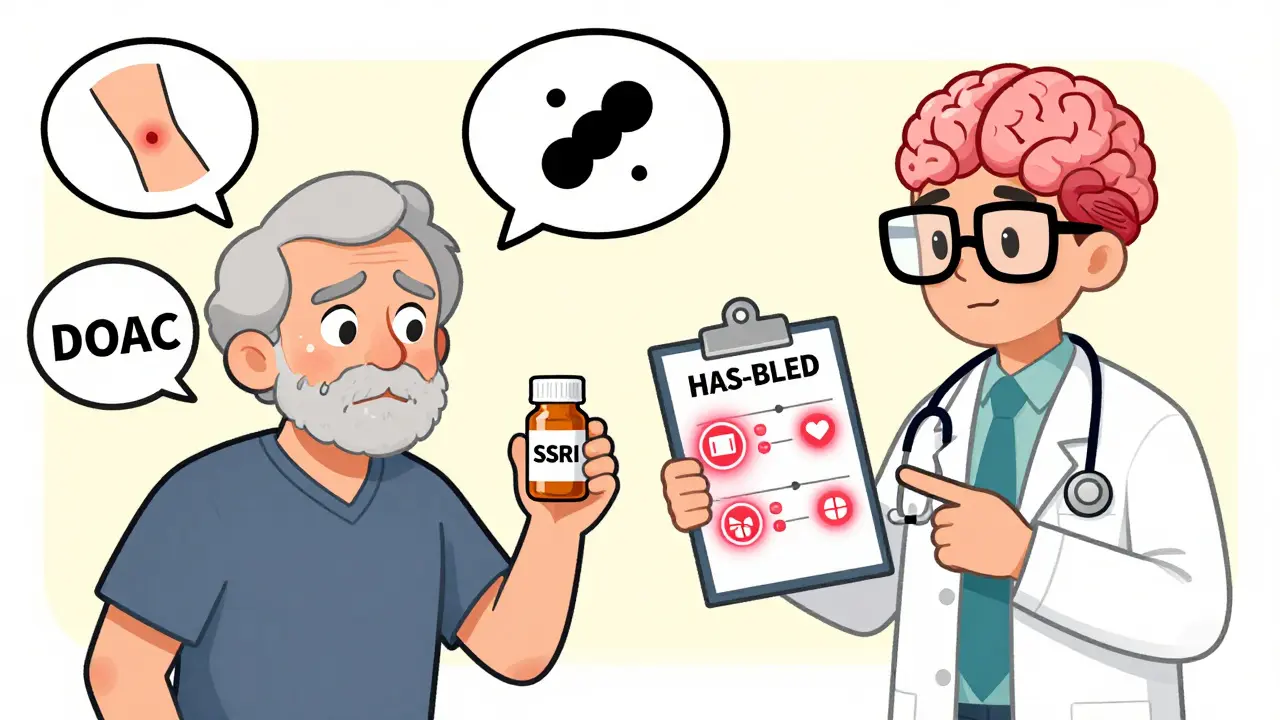
Has-BLED is a simple tool doctors use: points for high blood pressure, liver/kidney issues, stroke history, lab abnormalities, alcohol use, and older age. Score 3 or more? That’s a red flag. In those cases, switching to mirtazapine or bupropion isn’t just a backup-it’s a smarter move.
What Should You Do?
If you’re on an anticoagulant and your doctor suggests an SSRI:
- Ask: Is this the safest option for me?
- Ask: Could I try mirtazapine or bupropion instead?
- Ask: Should I get a baseline blood test before starting?
Monitor for signs of bleeding: unexplained bruising, dark stools, blood in urine, headaches, dizziness. If you notice any, call your doctor-don’t wait.
Also, tell every new doctor you see that you’re on both an anticoagulant and an antidepressant. Emergency rooms don’t always catch this combo. A 2022 audit found 68% of risky combinations happen because primary care doctors didn’t communicate with specialists.
What’s Next?
The FDA updated its anticoagulant guides in January 2025 to warn about this interaction. The National Institutes of Health is running a major trial called PRECISION-AF, tracking 5,000 patients on SSRIs vs. other antidepressants. Results come in late 2026.
Meanwhile, hospitals are starting to build clinical decision tools that check your HAS-BLED score and depression severity to recommend the safest antidepressant. It’s not perfect yet-but it’s coming.
For now, the message is clear: SSRIs and anticoagulants can be used together. But not without awareness. Not without monitoring. Not without asking the right questions.



Daniel Dover
This is spot on. I’ve seen this in practice-patients on rivaroxaban who start sertraline and then show up with melena. No drama, no fanfare. Just a quiet bleed that almost killed them. Doctors forget platelets aren’t just about clotting-they’re serotonin sponges. Simple mechanism, devastating outcome.