

Anticoagulant Sports Risk Calculator
Assess Your Sports Risk
Select your anticoagulant type and sport to determine your risk level and get personalized recommendations.
Playing sports while on blood thinners isn’t just risky-it’s a high-stakes balancing act. For athletes with conditions like atrial fibrillation or a history of blood clots, staying active isn’t optional. It’s part of their health. But every tackle, fall, or collision could mean life-threatening bleeding. The question isn’t whether you can play-it’s how you play safely.
Why Athletes on Blood Thinners Face Higher Risks
Most people think of blood thinners as just preventing strokes or clots. But for athletes, these drugs turn everyday sports into potential hazards. A minor bump that wouldn’t faze a non-athlete can turn into internal bleeding for someone on anticoagulants. Studies show athletes on these medications have a 3 to 5 times higher chance of major bleeding during physical activity than the average person. The problem isn’t just the drug-it’s the sport. High-impact activities like rugby, boxing, or ice hockey involve forces that can exceed 5G. That’s enough to rupture organs or cause skull fractures even in healthy people. Add anticoagulants into the mix, and the risk skyrockets. One study found that 22.7% of anticoagulated athletes in collision sports suffered major bleeding events. In low-risk sports like cycling or swimming, that number drops to just 1.3%.Types of Anticoagulants and How They Behave
Not all blood thinners are created equal. There are three main types used in athletes: warfarin, DOACs (direct oral anticoagulants), and occasionally heparin. Warfarin is the old-school option. It’s cheap, but it’s unpredictable. Your INR level-the measure of how thin your blood is-can swing based on what you eat, what other meds you take, or even a change in weather. It takes days to adjust, and you need weekly blood tests. For an athlete? That’s a nightmare. If your INR is too high during a game, you’re bleeding risk. Too low, and you’re at risk for a clot. DOACs like apixaban, rivaroxaban, and dabigatran are the new standard. They work faster, wear off faster, and don’t need constant monitoring. Apixaban, for example, has a half-life of 8 to 15 hours. That means you can time your dose so that during competition, the drug’s effect is at its lowest. A professional cyclist in a 2023 case study took apixaban at 8 a.m. and competed at 8 p.m.-just as the drug’s concentration dropped below therapeutic levels. He stayed protected from clots but minimized bleeding risk during the race. The JAMA Internal Medicine study of over 160,000 patients showed apixaban had the lowest bleeding risk among all anticoagulants-37% lower than warfarin. Rivaroxaban was better than warfarin for preventing clots, but no better for bleeding. So if you’re an athlete, apixaban is often the smartest pick.How Sports Are Classified by Risk
There’s no one-size-fits-all rule. But experts have grouped sports into three clear risk tiers:- High-risk (avoid completely): Football, rugby, hockey, boxing, wrestling, lacrosse. These involve direct, forceful contact. Even padded gear won’t stop internal bleeding if your blood can’t clot.
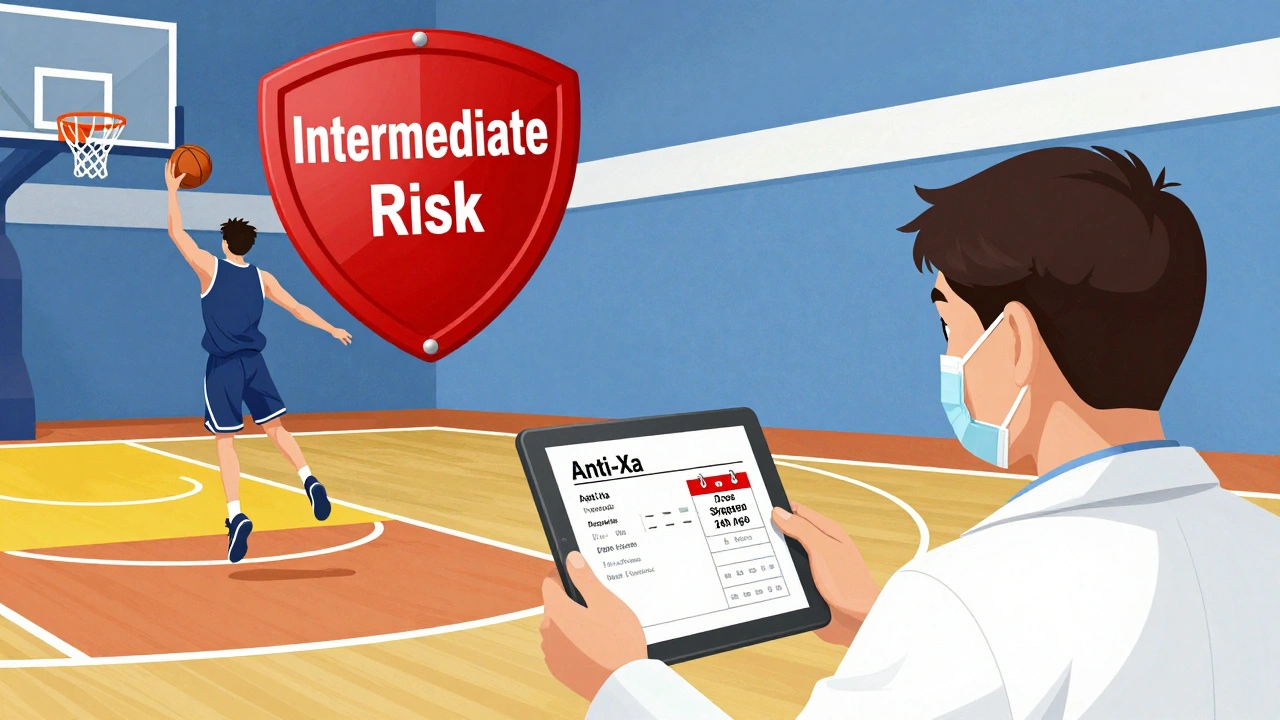
- Intermediate-risk (possible with caution): Basketball, soccer, skiing, mountain biking, gymnastics. These have frequent falls or collisions. You might be able to play, but only with a strict plan and protective gear.
- Low-risk (generally safe): Running, swimming, cycling, rowing, yoga, weightlifting (non-contact). These have minimal trauma risk. With proper management, most athletes here can continue without major changes.
Protective Strategies That Actually Work
So what can you do? Four proven strategies are used by sports cardiologists:- Switch to low-impact sports. If you’re on anticoagulants, your best bet is running, swimming, or cycling. Add a helmet, pads, or padded clothing where needed. One study showed that with simple protective measures, major bleeding rates dropped from 8.2% to 1.9% in athletes who switched to low-risk activities.
- Time your dose. This only works with DOACs. If your drug clears in 12-24 hours, take it 24 hours before competition. That way, your blood is still protected from clots, but the peak anticoagulant effect has passed. This isn’t guesswork-it’s based on pharmacokinetic studies and anti-Xa blood tests that measure drug levels.
- Use LMWH with interruption. For athletes who can’t switch to DOACs (like those with mechanical heart valves), enoxaparin (a shot) can be given daily and skipped 24 hours before an event. This reduces bleeding risk by 42% without increasing clot risk.
- Temporarily lower warfarin. Some doctors reduce warfarin 3-4 days before a competition to bring INR down to 1.5-1.8. But this isn’t ideal. Your clot risk jumps from 0.2% to 0.8% per event. Only consider this if the sport is essential and no other option exists.
What the Experts Say
Dr. Paul D. Thompson, who helped write the first major guidelines for athletes on blood thinners, puts it plainly: “The decision isn’t just medical. It’s personal. It’s about identity, passion, and quality of life.” But he adds: “You can’t ignore the numbers. A 22% chance of bleeding in a collision sport? That’s not worth it.” Dr. Matteo Palamà, who led a 2023 review in the European Heart Journal, says DOACs are game-changers. “They give athletes back control. You don’t have to quit. You just have to be smarter.” Still, there’s a gap. Only 0.3% of people in major anticoagulant trials were competitive athletes. So most guidelines are based on data from older, sedentary patients. That’s why personalized plans matter more than ever.
Real-World Rules in Pro Sports
Professional leagues aren’t ignoring this. The NBA requires players on warfarin to have an INR below 2.0 to play. The UCI (cycling’s governing body) allows DOACs but mandates a 24-hour pre-race dose pause. The NFL and NHL don’t have formal policies-but most teams now consult sports cardiologists before clearing an athlete. And yes, anticoagulants aren’t banned by WADA. As long as you declare them on your doping form, you’re fine. That’s important. This isn’t cheating. It’s medical necessity.What’s Coming Next
The future is precision. New tools are making it easier:- Home INR monitors like Roche’s CoaguChek INRange can now check your blood thinness with a finger prick and sync data to your phone-accuracy within 0.2 INR units.
- Wearable sensors are being tested to measure impact forces in real time during sports. Imagine a helmet that tells your doctor how hard you hit your head during a soccer header.
- AI-driven algorithms are being developed to predict your ideal dosing window based on your sport, body weight, and metabolism.
Final Takeaway: You Don’t Have to Quit
You can still run, swim, bike, lift, and compete. But you can’t do it the same way you did before. If you’re on anticoagulants:- Stop playing collision sports. No exceptions.
- Switch to apixaban if possible-it’s the safest option.
- Time your doses around training and competition.
- Use protective gear, even in low-risk sports.
- Work with a sports cardiologist, not just your regular doctor.
Can I still play basketball if I’m on blood thinners?
Basketball is classified as an intermediate-risk sport due to frequent contact and falls. While some athletes continue playing with strict precautions-like wearing padded shirts, avoiding high-risk positions, and timing DOAC doses-this is not recommended by most guidelines. The risk of major bleeding is 30-60% higher than in low-risk sports. If you choose to play, you must have a detailed plan with your cardiologist, including emergency protocols and regular coagulation monitoring.
Is warfarin safe for athletes?
Warfarin is the least ideal anticoagulant for athletes. It requires weekly blood tests, interacts with food and medications, and has a long half-life (36-72 hours), making it impossible to time around events. It’s only used in specific cases like mechanical heart valves, where DOACs are contraindicated. For most athletes, switching to apixaban or another DOAC is strongly advised.
Can I take a break from my blood thinner before a race?
Yes-but only with DOACs and under medical supervision. For apixaban or rivaroxaban, skipping the dose 24 hours before competition can reduce bleeding risk without losing clot protection. This is not safe with warfarin or heparin. You must confirm your drug levels with an anti-Xa test before and after the interruption. Never stop your medication without a doctor’s plan.
Do I need to tell my coach or team about my blood thinners?
Yes. At minimum, your coach, athletic trainer, and team medical staff should know. In case of injury, they need to know not to apply pressure for too long, avoid NSAIDs like ibuprofen, and recognize signs of internal bleeding (swelling, dizziness, extreme fatigue). Many teams now have emergency protocols for athletes on anticoagulants.
Are there any sports I can safely return to after starting anticoagulants?
Yes. Running, swimming, cycling, rowing, yoga, and non-contact strength training are generally safe with proper management. Many athletes return to these activities within weeks of starting anticoagulants. Always start slowly, wear protective gear, and avoid extreme conditions like icy roads or high heat, which can increase clot risk. Regular follow-ups with your doctor are essential.





Geraldine Trainer-Cooper
i just run now. no more basketball. no more fights. life’s too short to gamble with your insides. apixaban at 8am, race at 8pm. simple. smart. done.