
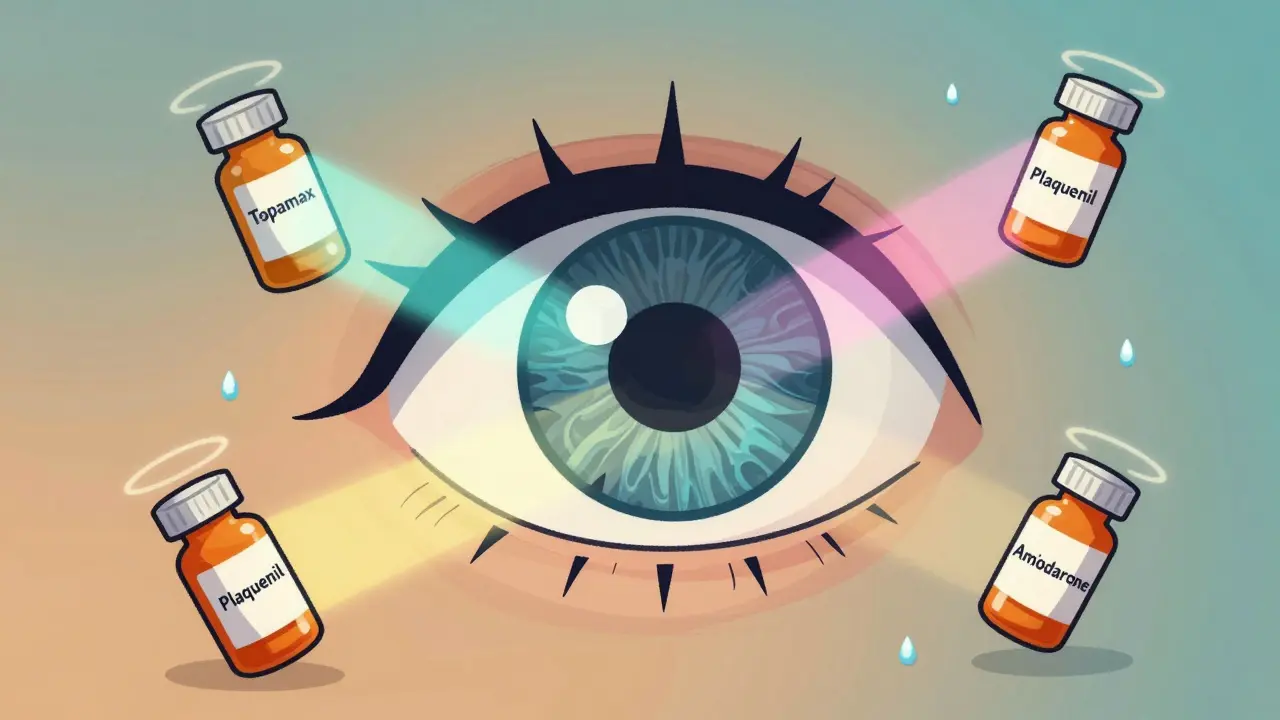
Blurred vision isn’t always just a sign you need new glasses. If you’ve started a new medication recently and your vision feels foggy, hazy, or out of focus, it could be the drug itself-not your eyes aging. Over 100 common prescriptions can cause blurry vision, and many people don’t realize it’s a side effect until the damage starts to stick around. The good news? Most of these changes are temporary. The bad news? Some can lead to permanent vision loss if ignored.
How Medications Blur Your Vision
Medications don’t just affect your body-they interact with your eyes in surprising ways. Your eyes are packed with tiny blood vessels, nerves, and muscles that are sensitive to chemicals. A drug meant to lower your blood pressure, treat acne, or control seizures can accidentally mess with those systems.
Some drugs dry out your eyes. Others change the shape of your lens or swell the cornea. A few even damage the retina or optic nerve over time. It’s not magic-it’s pharmacology. The mechanism depends on the drug:
- Anticholinergics (like some antidepressants or bladder meds) relax the muscle that focuses your lens, making near vision blurry for a few hours.
- Topiramate (Topamax) can suddenly block fluid drainage in your eye, causing pressure to spike and vision to cloud-sometimes within days.
- Amiodarone (for heart rhythm issues) builds up in your cornea like tiny swirls of glass, scattering light and causing halos and blur.
- Corticosteroids (steroids) can thicken your lens over months, leading to cataracts, or raise eye pressure, which damages the optic nerve.
- Plaquenil (hydroxychloroquine) slowly eats away at the macula, the part of your retina that gives you sharp central vision.
What’s scary is that some of these changes happen without pain. You might not notice anything until your vision is already damaged.
Medications Most Likely to Cause Blurry Vision
Not all drugs carry the same risk. Some are harmless for most people. Others are ticking time bombs if you’re not monitored. Here are the top offenders, backed by clinical data:
- Topiramate (Topamax): Used for migraines and seizures. Causes acute angle-closure glaucoma in 0.5-2% of users. Symptoms: sudden blurred vision, eye pain, headache, nausea. This is an emergency-untreated, it can blind you in under 48 hours.
- Isotretinoin (Accutane, Absorica): For severe acne. Dries out your tear film in 45-60% of users. Blurry vision, light sensitivity, and contact lens intolerance are common. Most improve after stopping, but some need prescription eye drops long-term.
- Amiodarone (Cordarone): For heart arrhythmias. Over 70% of long-term users develop corneal deposits. Vision changes are often permanent, even after stopping the drug. Optic nerve damage occurs in 1-2% of those on high doses.
- Hydroxychloroquine (Plaquenil): For lupus and rheumatoid arthritis. Retinal toxicity happens in about 1 in 5,000 users after five years. Once it starts, 95% of cases are irreversible. That’s why annual eye scans are mandatory.
- Corticosteroids (oral, injected, or inhaled): Cause cataracts in 5-7% of users after six months. Raise eye pressure in 30-40% of glaucoma patients within weeks. Diabetics are 3.2 times more likely to develop steroid-induced vision problems.
- Tamsulosin (Flomax): For prostate issues. Doesn’t cause blurry vision directly-but it makes cataract surgery risky. In 95% of users, the iris flops around during surgery, making it harder for the surgeon to see. This isn’t a side effect you can ignore if you’re planning surgery.
- NSAIDs (ibuprofen, naproxen): Daily use for over two years slightly increases risk of retinal bleeding. After five years, cataract risk goes up by 28%.
When Blurred Vision Is an Emergency
Not every case of blurry vision needs a trip to the ER. But some do. Here’s when to act fast:
- Sudden blur + eye pain: Especially if it’s one eye and comes with headache or nausea. This is classic acute angle-closure glaucoma from Topamax or other sulfa drugs. You have less than two days to save your vision.
- Blurry vision + flashing lights or floaters: Could mean retinal detachment or bleeding from NSAIDs or blood thinners. Don’t wait.
- Blurry vision + double vision or loss of peripheral vision: Could signal optic nerve damage from Plaquenil or amiodarone. These changes don’t reverse.
- Blurry vision after starting a new steroid: If you’re diabetic or already have glaucoma, this could be a sign of rapidly rising eye pressure. Get checked within a week.
People often delay because they think it’s just tired eyes. But if your vision changes suddenly, especially after starting a new pill, treat it like a warning sign-not a nuisance.
Who’s at Highest Risk?
Some people are more vulnerable than others. If you fit any of these profiles, you need to be extra careful:
- Diabetics: Your eyes are already under stress. Steroids and blood pressure meds hit harder. You’re 3.2 times more likely to get steroid-induced cataracts or pressure spikes.
- People with glaucoma: Even a small rise in eye pressure from steroids can cause rapid nerve damage. You’re already in the danger zone.
- Those on multiple medications: Drug interactions can amplify side effects. A blood pressure pill plus a diuretic plus a migraine med? Your eyes are getting hit from all sides.
- People taking drugs long-term: Plaquenil, amiodarone, and steroids cause damage over time. One year? Maybe fine. Five years? Time for serious screening.
- Older adults: Your eyes naturally dry out and lenses get cloudier. Medications make it worse.
If you’re on any of the high-risk drugs listed above and fall into one of these categories, you’re not just at risk-you’re in a high-alert zone.
What You Should Do Now
You don’t have to stop your meds. But you do need to protect your vision. Here’s what to do:
- Know your meds. Look up the side effects of every prescription you take. Don’t rely on memory. Use a free app like Medscape or GoodRx to check the official warnings.
- Ask your doctor. Say: “Is this drug known to affect vision? Do I need eye exams?” If they brush you off, get a second opinion.
- Get baseline eye exams. If you’re starting Plaquenil, amiodarone, or long-term steroids, get a full eye check before you begin. This gives your doctor a reference point.
- Follow the screening schedule. For Plaquenil: annual 10-2 visual field test and SD-OCT scan. For amiodarone: annual slit-lamp exam. For steroids: check eye pressure every 2-4 weeks if you’re on them longer than 2 weeks.
- Report changes immediately. Don’t wait for your next appointment. Call your eye doctor if you notice blur, halos, pain, or blind spots.
- Inform your surgeon. If you’re on Flomax and need cataract surgery, tell your surgeon at least 4 weeks ahead. They need to adjust their technique.
And if you’re on Accutane? Use preservative-free artificial tears 4-6 times a day. If dry eyes persist, ask about Restasis or punctal plugs. Many patients don’t know these options exist.
What’s Changing in 2026
Things are getting better-slowly. In 2023, the FDA approved an AI-powered tool called CenterVue’s Compass that detects Plaquenil damage 94.7% of the time, way better than old methods. In January 2024, the American Academy of Ophthalmology lowered the safe daily dose of Plaquenil from 5.0 mg/kg to 2.3 mg/kg based on new research. That’s a big deal-it means fewer people will get retinal damage.
Researchers are now working on genetic tests to find people who are at highest risk for drug-induced eye damage. Within five years, you might get a blood test before starting a drug like Plaquenil or amiodarone to see if your eyes are likely to react badly.
Hospitals are also catching on. 78% now require ophthalmology consultations before prescribing high-risk drugs. That wasn’t true five years ago.
Real Stories, Real Consequences
Reddit threads and patient forums are full of heartbreaking stories. One user on r/AskDocs said, “I took Topamax for a year. Stopped it. My vision never came back.” Another said, “I didn’t know Flomax would ruin my cataract surgery. The surgeon had to stop halfway because my iris wouldn’t stay still.”
On GoodRx, 32% of Accutane users report needing prescription eye drops. 18% say blurred vision made driving dangerous. And in a 2023 survey, 41% of migraine patients quit Topamax because of vision problems-67% said blurry vision was the main reason.
These aren’t rare. They’re predictable. And they’re preventable.
Final Thought: Your Eyes Are Not Disposable
Medications save lives. But they’re not harmless. Blurred vision from pills is one of the most underreported and overlooked side effects in medicine. Doctors focus on heart, liver, kidneys. Eyes? They’re an afterthought.
But your vision? That’s not something you can afford to lose. If you’re on any of these drugs, don’t wait for symptoms. Get checked. Ask questions. Advocate for yourself. A 10-minute eye exam today could save your sight for the next 50 years.
Can blurry vision from medication go away?
Yes, in many cases. Blurry vision caused by anticholinergics, dry eyes from Accutane, or temporary pressure changes often clears up after stopping the drug or adjusting the dose. But damage from Plaquenil, amiodarone, or long-term steroids can be permanent. That’s why early detection matters.
Which medications cause permanent blurred vision?
Plaquenil (hydroxychloroquine) can cause irreversible retinal damage called bull’s eye maculopathy. Amiodarone leads to permanent corneal deposits in 65% of long-term users. Steroids can cause permanent cataracts or optic nerve damage if eye pressure stays high too long. These aren’t side effects you can ignore.
How often should I get my eyes checked if I’m on a high-risk medication?
For Plaquenil: annual screening with visual field test and SD-OCT. For amiodarone: annual slit-lamp exam. For long-term steroids: check eye pressure every 2-4 weeks if you’ve been on them more than two weeks. If you have diabetes or glaucoma, your doctor may recommend even more frequent checks.
Can over-the-counter drugs cause blurred vision?
Yes. Daily use of NSAIDs like ibuprofen or naproxen for more than two years increases the risk of retinal bleeding. Antihistamines and decongestants can cause dry eyes and temporary blur. Even some herbal supplements like ginkgo biloba can affect blood flow to the retina.
What should I do if I notice blurred vision after starting a new drug?
Don’t panic, but don’t wait. Note when it started, how bad it is, and if it’s worse in bright light or at night. Call your prescribing doctor and your eye doctor. If you have eye pain, nausea, or sudden vision loss, go to the ER immediately. Early action can prevent permanent damage.



Wren Hamley
So let me get this straight-your eyes are basically a chemical lab where your meds throw wild parties and leave the lights on? I had no idea my migraine pills were turning my corneas into a disco ball. Amiodarone’s ‘swirls of glass’? That’s not a side effect, that’s a horror movie premise. And don’t even get me started on how Plaquenil’s just quietly eating your macula like it’s a snack. We’re out here popping pills like candy while our retinas throw silent screaming fits.