
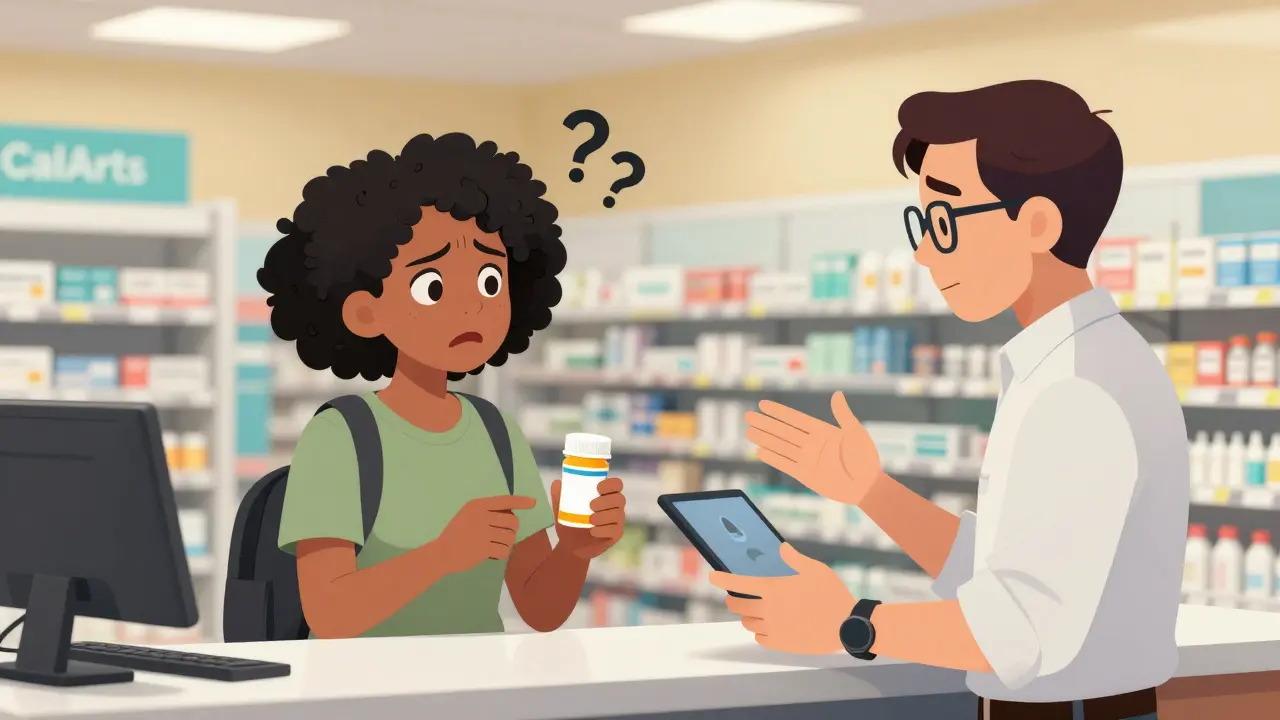
When you’re prescribed a new medication, understanding how to take it isn’t just helpful-it’s life-saving. But if English isn’t your first language, that understanding can vanish in a rush of confusing terms, fast-talking pharmacists, and poorly translated labels. You’re not alone. Over 11 million Medicaid enrollees in the U.S. have limited English proficiency, and many are being given prescriptions they don’t fully understand. The good news? Federal law says you have the right to a professional interpreter during medication counseling-and it’s free.
Why Language Services Matter in Pharmacy Counseling
A 2012 study from the University of California San Francisco found that patients who don’t speak English well are three times more likely to make dangerous medication errors when no interpreter is available. These aren’t minor mistakes. People miss doses, double up, or mix drugs because they misunderstood instructions like "take with food" or "avoid alcohol." One wrong pill can send someone to the ER-or worse. That’s why the Affordable Care Act’s Section 1557 requires any healthcare provider receiving federal funds-including pharmacies-to offer free language assistance. This isn’t optional. It’s the law. And it applies to every step of medication counseling: when the pharmacist explains dosage, warns about side effects, or answers your questions about interactions.What Counts as a Qualified Interpreter?
Not every bilingual person is qualified to interpret medical instructions. A person who speaks Spanish at home doesn’t automatically know the difference between "hypertension" and "hypotension," or what "PRN" means on a prescription label. Professional interpreters have completed at least 40 hours of medical terminology training, passed certification exams, and understand confidentiality rules under HIPAA and Section 1557. Using family members, friends, or untrained staff as interpreters is risky. A 2021 JAMA Pediatrics study showed that doing so increases the chance of serious medication errors by 49%. Even if someone seems fluent, they might translate "take once daily" as "take in the morning," missing critical timing details. Pharmacists are trained to spot these gaps-but patients need to know how to ask for the right help.How to Request a Professional Interpreter
You don’t have to wait for the pharmacist to offer. If you need help, say it clearly:- "I need a professional interpreter to understand my medication instructions."
- "Can you connect me with someone who can explain this in my language?"
- "I don’t want my child or neighbor to interpret this. I need a trained interpreter."
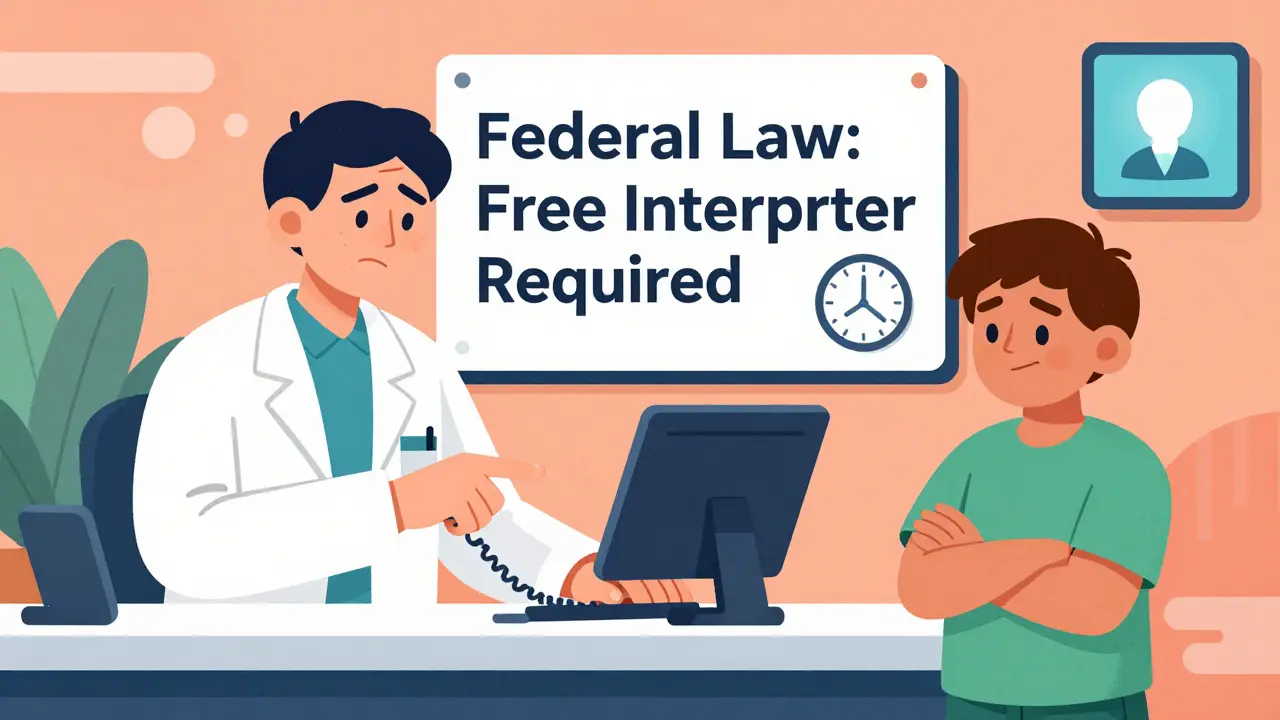
Types of Interpreter Services Available
There are three main ways pharmacies provide interpreters-and each has pros and cons:Phone Interpreting
This is the most common and cheapest option. Services like RxTran offer 24/7 phone access in over 200 languages. It costs pharmacies about $2.50 per minute. For you, it’s free. The downside? You can’t see facial expressions or gestures, which can make complex instructions harder to grasp. Elderly patients or those with hearing issues sometimes struggle with this method.Video Remote Interpreting (VRI)
VRI uses a tablet or screen to connect you with an interpreter via video. It’s become popular since 2023, with 65% of healthcare facilities using it. You can see the interpreter’s hand movements and expressions, which helps with understanding. It costs about $3-$5 per minute. It’s more reliable than phone for complex counseling but needs a stable internet connection. Some pharmacies in rural areas still lack the tech for this.On-Site Interpreters
This is the gold standard. A trained interpreter walks into the pharmacy and sits with you face-to-face. Pharmacists report better patient understanding and fewer follow-up calls when this happens. But it’s only practical in larger urban pharmacies where interpreters are regularly scheduled. Most small or rural pharmacies can’t afford to keep someone on-site full-time.What Languages Are Covered?
Federal law doesn’t list specific languages-it requires services based on the population served. But some states go further. California’s SafeRx program mandates that pharmacies provide translated medication instructions in five languages: Spanish, Chinese, Korean, Russian, and Vietnamese. These translations are standardized and posted on the state’s pharmacy board website. But even in California, problems remain. A 2022 survey found that 38% of Russian-speaking patients found dosage instructions confusing because the translations didn’t match how medical terms are structured in Russian. That’s why the state is now adding Tagalog and Arabic translations, with pilot programs starting in early 2024. Other states don’t have such clear rules. If your language isn’t listed, you still have the right to an interpreter. Just ask. Pharmacies must provide one, even if they have to call it in.What to Do If You’re Refused
Sometimes, pharmacies try to avoid the cost. They might say: "We don’t have one right now," or "Can your daughter help?" Don’t let them off the hook. If you’re denied:- Ask for the pharmacy’s language access policy. They’re required to have one.
- Request the name of the person you’re speaking to and the time.
- Call the pharmacy’s corporate office. Chain pharmacies like CVS, Walgreens, and Rite Aid have national language access teams.
- File a complaint with the U.S. Department of Health and Human Services (HHS) Office for Civil Rights. Since 2016, they’ve settled 47 cases involving language access violations-including a $1.2 million fine against a national pharmacy chain in 2022.
What Pharmacists Should Be Doing
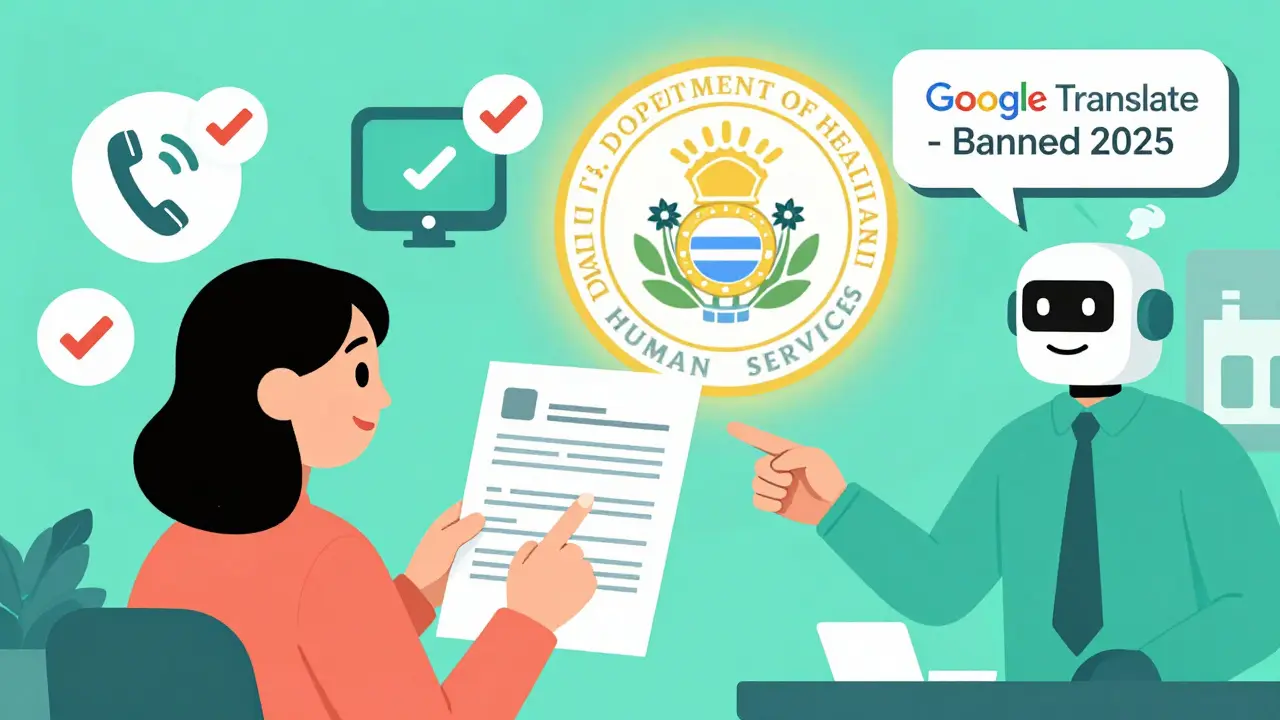
Good pharmacies follow a three-step process:- Identify the need-staff should ask every patient: "What language do you speak at home?"
- Access the interpreter-via phone, video, or in-person-before starting counseling.
- Document it-using billing code T-1013 and the CPT code for the visit. This isn’t just paperwork. It’s how pharmacies get reimbursed for the cost.



jay patel
man i wish this was around when my abba got his diabetes meds last year. he kept taking them at night cause the label said 'take once daily' and his cousin who spoke some english told him 'morning is fine'. he ended up in the hospital. i screamed at the pharmacist, they gave us a phone interpreter 20 mins later. i was so mad. but now i know: it's the law. no more 'my nephew can translate'. ever. if you're confused, ask. don't wait till you're dizzy from wrong pills. seriously. this post saved my family.
ps: i typed this on my phone. forgive the typos. my thumbs are still shaking from last year.