
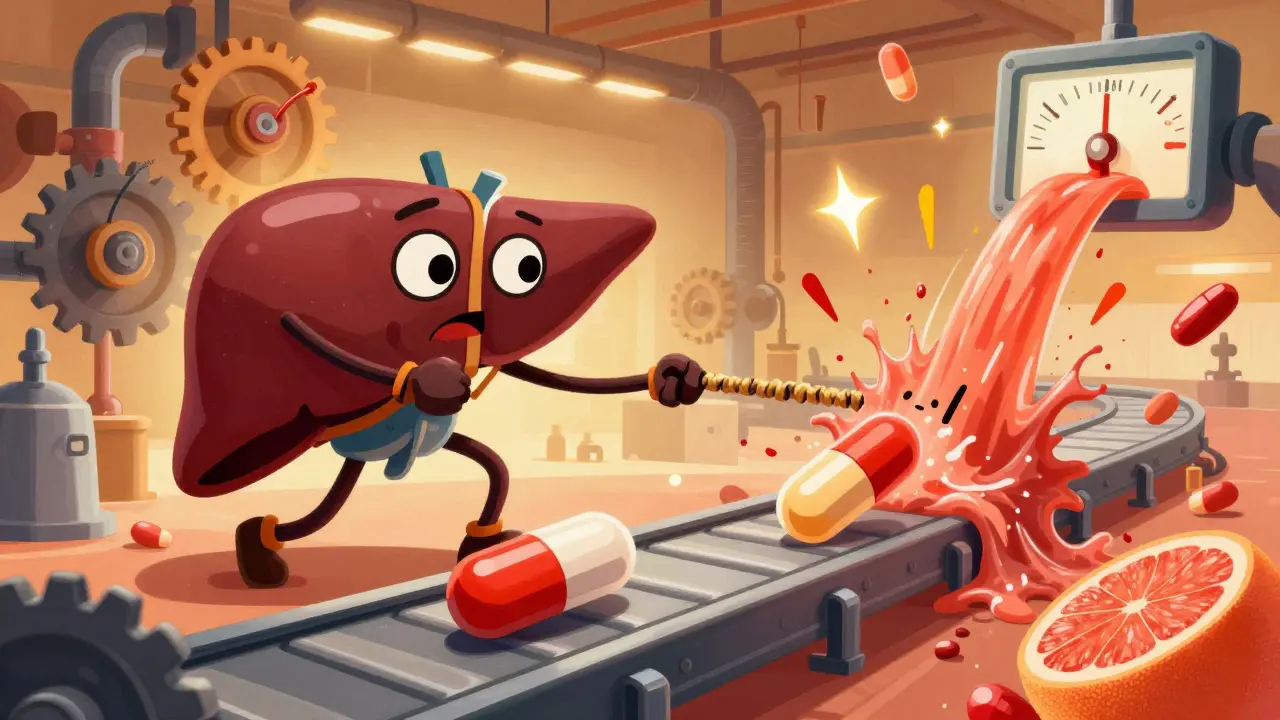
When you take more than one medication, your body doesn’t just handle them one at a time. It tries to process them all together-and sometimes, that’s where things go wrong. A drug interaction happens when one medicine changes how another works in your body. It’s not always obvious. You might not feel anything unusual until you suddenly feel worse than before. That’s because drug interactions don’t just cause new side effects-they intensify the ones you already know about.
Why Some Side Effects Get Worse
Think of your liver as a busy factory. It’s responsible for breaking down most of the drugs you take. One key part of that factory is a group of enzymes called cytochrome P450, especially CYP3A4. This enzyme handles about half of all prescription medications. When two drugs compete for the same enzyme, one can slow down the other’s breakdown. That means the second drug sticks around longer and builds up in your system. The result? Higher doses than intended, even if you’re taking the right amount. For example, if you’re on a statin like simvastatin to lower cholesterol and you also take clarithromycin (an antibiotic), the antibiotic blocks CYP3A4. That causes simvastatin levels to spike by up to 8.4 times. Suddenly, muscle pain turns into rhabdomyolysis-a dangerous condition where muscle tissue breaks down and can damage your kidneys. This isn’t rare. Studies show rhabdomyolysis rates jump from 0.3 per 10,000 patients to 2.7 per 10,000 with this combo. It’s not just antibiotics. Grapefruit juice is another sneaky culprit. It shuts down CYP3A4 in your gut, so drugs like felodipine (a blood pressure medicine) get absorbed much faster. One glass can triple the drug’s concentration in your blood. Amlodipine, another blood pressure drug, isn’t affected the same way-so the risk isn’t the same for all medications in the same class.When Drugs Team Up to Harm You
Sometimes, it’s not about how your body processes the drugs-it’s about what they do together. This is called a pharmacodynamic interaction. Two drugs can have the same effect on your body and multiply it. Take warfarin, a blood thinner. If you add aspirin or ibuprofen, you’re adding another drug that thins your blood. The combined effect doesn’t just add up-it multiplies. Studies show this combo increases bleeding risk by 70-100%. Even acetaminophen, often seen as safe, becomes risky at high doses (over 2 grams a day), increasing bleeding risk by 1.8 times. And if you’re eating more leafy greens or taking vitamin K supplements, you’re fighting warfarin’s effect, making your INR levels unstable. That’s why people on warfarin need regular blood tests-not just to check their levels, but to catch hidden interactions. Another dangerous combo: SSRIs (like sertraline) with tramadol. Both affect serotonin. Together, they can trigger serotonin syndrome-a rare but life-threatening reaction with symptoms like confusion, rapid heart rate, muscle stiffness, and high fever. Reddit users report this combo frequently. One patient wrote: “I took tramadol for back pain and didn’t realize my antidepressant was making it dangerous. I ended up in the ER.”Genes Play a Bigger Role Than You Think
Not everyone reacts the same way to drug interactions. Your genes decide how fast or slow your body breaks down certain drugs. About 3-10% of people of European descent have a genetic variant that makes them “poor metabolizers” of CYP2D6. That enzyme processes codeine, tramadol, and some antidepressants. If you’re a poor metabolizer, codeine won’t turn into its active form properly-so you get no pain relief. But if you’re an “ultra-rapid metabolizer,” you turn it into morphine too fast. That’s when you overdose on a normal dose. The FDA says 30% of commonly prescribed drugs now have pharmacogenetic warnings on their labels. That means your doctor should consider your genes before prescribing. But most don’t. Genetic testing isn’t routine yet, but it’s becoming more common in hospitals and specialty clinics. If you’ve had bad reactions to medications in the past, ask if pharmacogenetic testing could help.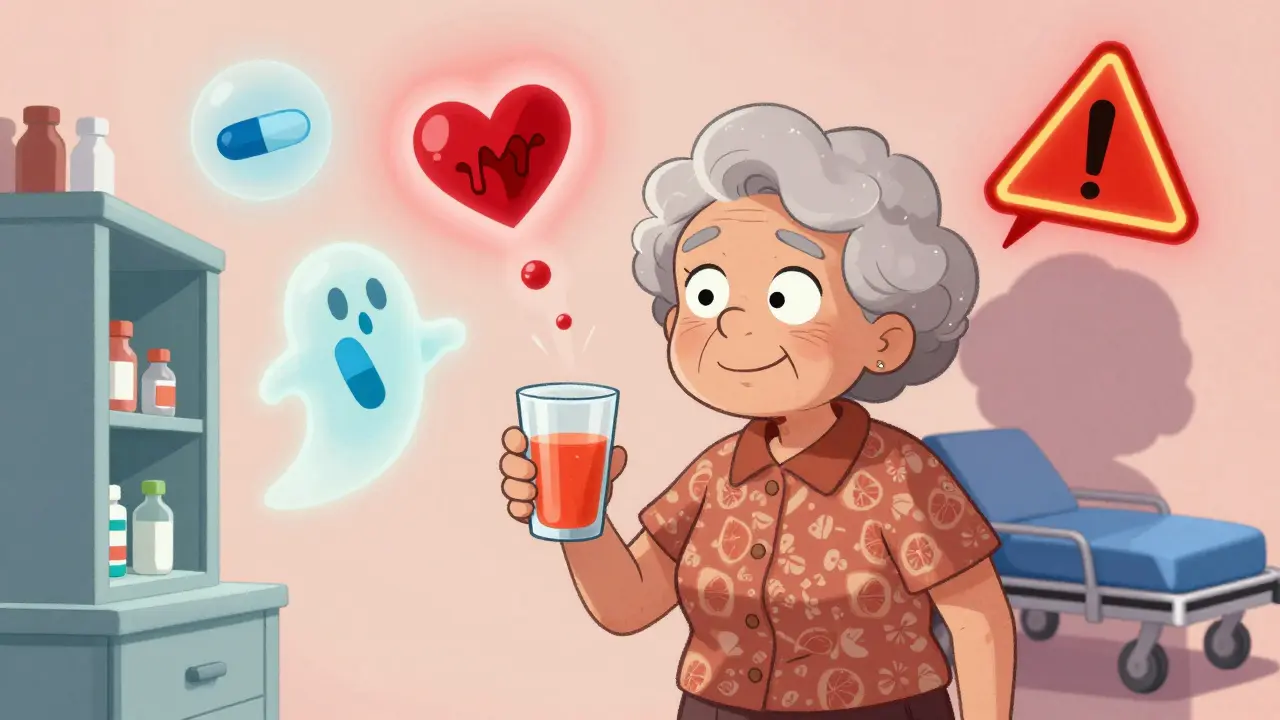
Polypharmacy Is the Hidden Danger
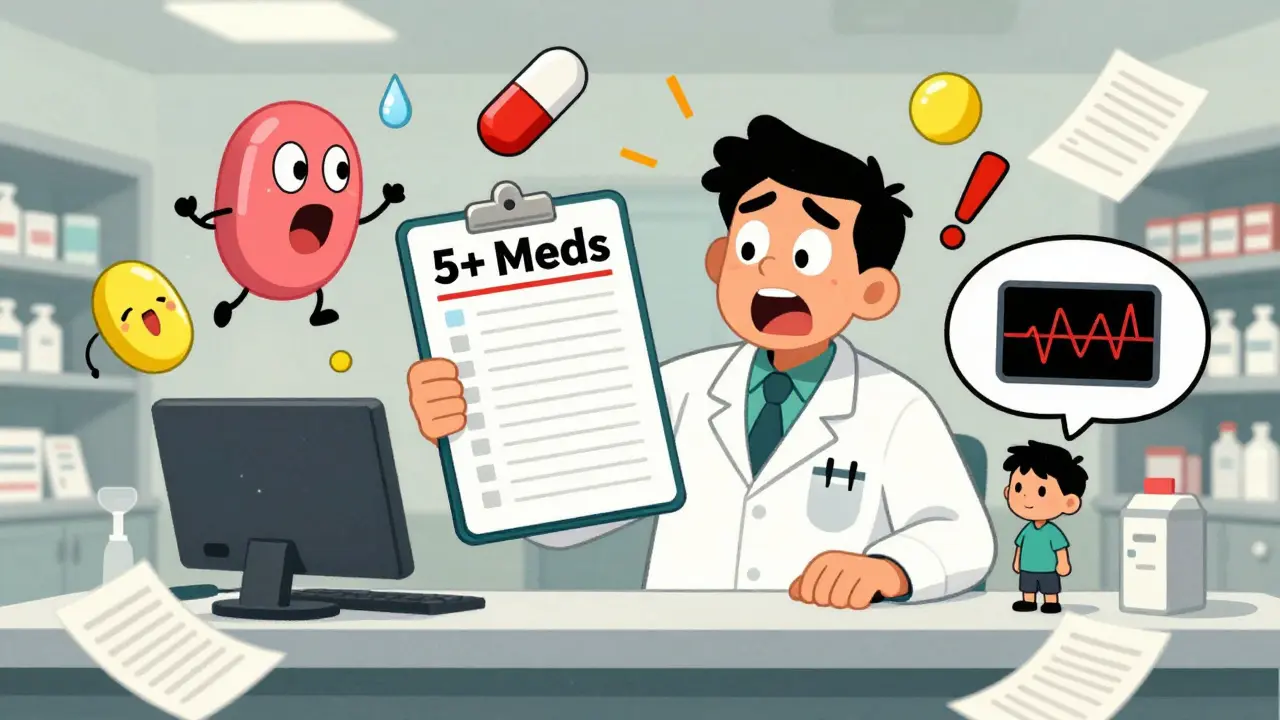
Taking five or more medications at once? You’re in a high-risk group. A 2024 study tracking 563 patients found that people on five or more drugs had a 78% higher chance of an adverse drug event. With ten or more, that risk jumps to 153%. It’s not just about the number-it’s about which ones you’re taking. High-risk drug classes include:- Antiarrhythmics (like amiodarone)-53 known interactions per drug
- Anticoagulants (like warfarin)-47 interactions
- Antipsychotics (like quetiapine)-42 interactions
- Antidepressants (like fluoxetine)-38 interactions
Why Doctors Miss These Interactions
You’d think electronic health records would catch all this. They don’t. In a 2023 survey of 3,500 doctors, 74% said they felt overwhelmed by drug interaction alerts. And here’s the kicker: 90-95% of those alerts are ignored. Why? Because most alerts are low-risk. They say “take with food” or “possible dizziness.” These aren’t emergencies. But when you get 20 of them every shift, you start clicking past them without reading. That’s called alert fatigue. Studies show only 7% of alerts are for high-risk interactions that actually need action. Nurses catch more of these errors than doctors. One study found nurses spotted 40% of adverse reactions that doctors missed. Why? They spend more time with patients. They ask, “Have you started anything new?” or “Are you taking anything you didn’t tell your doctor about?”What You Can Do to Stay Safe
You don’t need to be a pharmacist to protect yourself. Here’s what works:- Keep a full list of everything you take-prescriptions, supplements, vitamins, herbal teas, even over-the-counter painkillers. Write down the dose and why you take it.
- Bring that list to every appointment. Don’t assume your doctor knows what you’re taking. Many don’t check your full medication history.
- Ask about grapefruit juice. If you’re on any cholesterol, blood pressure, or psychiatric drug, ask if grapefruit is safe. It’s not just juice-it’s in some smoothies and marmalades.
- Use a reliable interaction checker. Apps like Medscape or Epocrates (free versions available) let you enter your meds and check for risks. Don’t rely on Google.
- Talk to your pharmacist. They’re trained to spot interactions. Most pharmacies offer free med reviews. Use them.
What’s Changing in 2026
The future of drug safety is getting smarter. AI models now predict dangerous drug combos with 89% accuracy-better than older systems. Some hospitals are testing wearable sensors that track how fast your body processes warfarin in real time. Others are using blockchain to share your full medication history between clinics so no one misses a drug you started elsewhere. Pharmacogenetic testing is slowly becoming standard. If you’re prescribed a new drug, you might soon be asked: “Have you had genetic testing for how you metabolize meds?” The goal? Prevent 150,000-200,000 serious side effects every year in the U.S. alone. That’s not science fiction. It’s the next step in safe medicine.Real Stories, Real Risks
One man in Melbourne took simvastatin and ate grapefruit every morning for years. He never felt anything unusual-until he woke up with severe leg pain and dark urine. His creatine kinase levels were off the charts. He had rhabdomyolysis. He didn’t know grapefruit was the problem. A woman in her 60s took sertraline for depression and started using St. John’s wort for “natural mood support.” Within weeks, she was agitated, sweating, and confused. She was diagnosed with serotonin syndrome. Her doctor didn’t ask about supplements. These aren’t outliers. They’re common. And they’re preventable.Can over-the-counter drugs cause dangerous interactions?
Yes. Common OTC drugs like ibuprofen, naproxen, and even antacids can interact with prescription meds. Ibuprofen increases bleeding risk with warfarin. Antacids with aluminum or magnesium can block absorption of antibiotics like tetracycline or thyroid meds. Even cough syrups with dextromethorphan can trigger serotonin syndrome if taken with SSRIs. Always check with a pharmacist before taking anything new.
Are herbal supplements safer than prescription drugs?
No. Many herbal products are just as potent-and less regulated. St. John’s wort can reduce the effectiveness of birth control, antidepressants, and even some cancer drugs. Garlic and ginkgo can thin your blood. Ginseng can interfere with blood pressure meds. Just because something is “natural” doesn’t mean it’s safe to mix with your prescriptions.
How do I know if I’m having a drug interaction?
Watch for new or worsening symptoms after starting a new medication or changing a dose. Common signs include unexplained fatigue, muscle pain, dizziness, confusion, rapid heartbeat, nausea, or unusual bruising/bleeding. If you notice anything new, don’t assume it’s just aging or stress. Check your meds and talk to your doctor or pharmacist.
Is it safe to take my meds with food?
It depends. Some meds need food to be absorbed properly (like certain antibiotics). Others should be taken on an empty stomach (like levothyroxine). Grapefruit juice is the big exception-it interacts with many drugs regardless of when you eat. Always follow the label instructions, and if you’re unsure, ask your pharmacist.
Can I just stop a medication if I think it’s causing side effects?
No. Stopping suddenly can be dangerous. Some meds, like beta-blockers or antidepressants, can cause rebound effects. Others, like blood thinners, need to be tapered. Always talk to your doctor before stopping or changing a dose-even if you think you know what’s going on.





Jerry Rodrigues
I never realized grapefruit juice could do that. My grandpa takes simvastatin and drinks it every morning. I'm gonna tell him ASAP.