
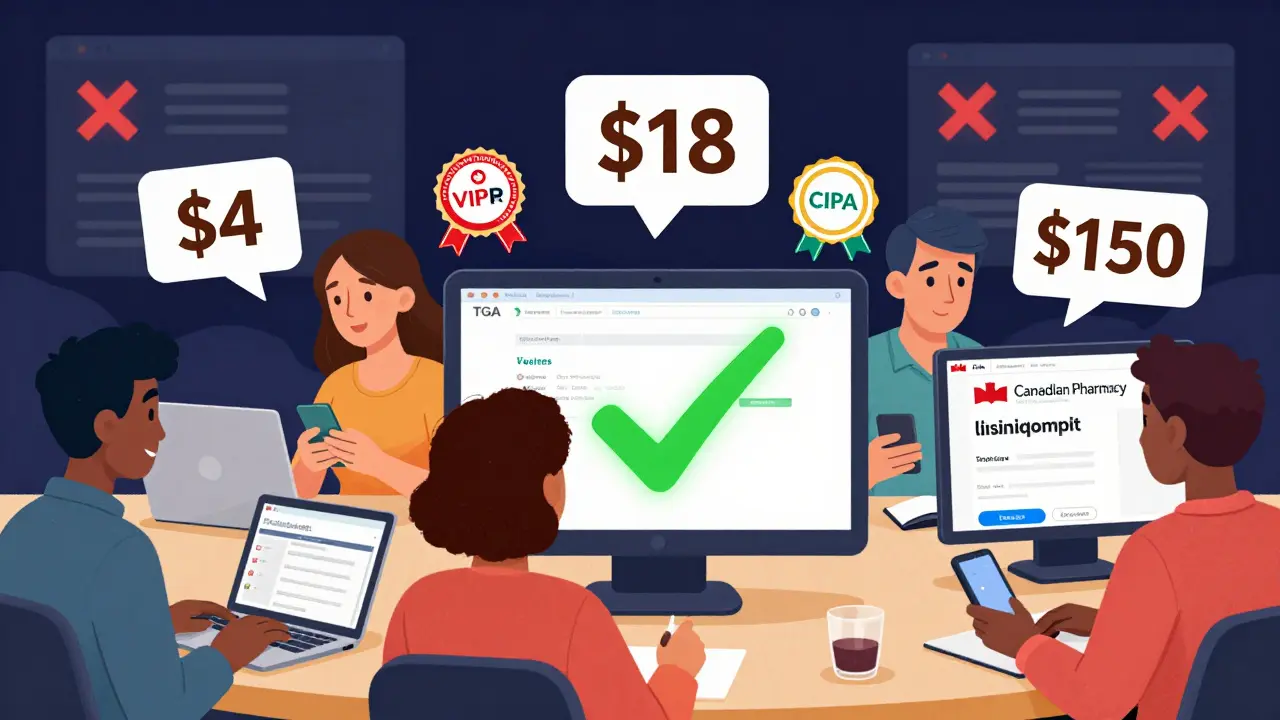
Buying generic medications online can save you hundreds of dollars a year-if you know where to look. Many people assume all online pharmacies charge the same for common drugs like metformin, lisinopril, or atorvastatin. That’s not true. Prices can vary by over 300% between legitimate retailers, even for the exact same pill, dosage, and quantity. The key isn’t just finding any online pharmacy. It’s using comparison shopping tools the right way to spot real deals without falling for scams.
Why generic drug prices differ so much online
Generic drugs are supposed to be identical to brand-name versions in active ingredients, safety, and effectiveness. But their prices? They’re anything but identical. One pharmacy might sell 30 tablets of 10mg lisinopril for $4. Another charges $18. What’s going on?It comes down to sourcing, overhead, and scale. Big online pharmacies buy in bulk directly from manufacturers, often overseas, and pass savings to customers. Smaller ones may buy through distributors, adding layers of cost. Some pharmacies operate as part of larger retail chains and use loss leaders-selling certain generics at near-cost to draw in customers who’ll then buy other products. Others charge more because they offer free shipping, 24/7 pharmacist support, or faster delivery.
Then there’s location. In Australia, the Pharmaceutical Benefits Scheme (PBS) caps what you pay for prescriptions. But if you’re buying outside PBS-say, from a U.S.-based pharmacy or a Canadian supplier-the rules change. Prices drop dramatically, but so does regulation. That’s why comparison tools matter: they help you find the sweet spot between low price and trustworthy seller.
How comparison shopping engines work for medications
Comparison shopping engines (CSEs) like Google Shopping, Shopzilla, and PriceRunner don’t sell drugs themselves. They scrape data from hundreds of online pharmacies and show you side-by-side prices, shipping times, and customer ratings. For medications, this is huge. You’re not just comparing $10 vs $15-you’re comparing whether the pharmacy is licensed, whether they require a prescription, and whether they’ve had complaints about counterfeit pills.Google Shopping dominates this space, with over 1.7 million monthly users searching for medication deals. But here’s the catch: Google prioritizes big retailers like CVS, Walgreens, and Amazon Pharmacy. Smaller, lower-priced pharmacies often don’t show up unless they pay for placement. That’s why you need to look beyond Google.
Shopzilla, though smaller, often surfaces independent Canadian and UK pharmacies that aren’t on Google’s radar. Their data refreshes every 2-4 hours, meaning prices are more likely to be current. Bizrate, which only allows reviews from verified buyers, is especially useful here. If you see a pharmacy with 4.5 stars and 500+ verified purchase reviews, you’re looking at real feedback-not bots.
What to look for beyond the price tag
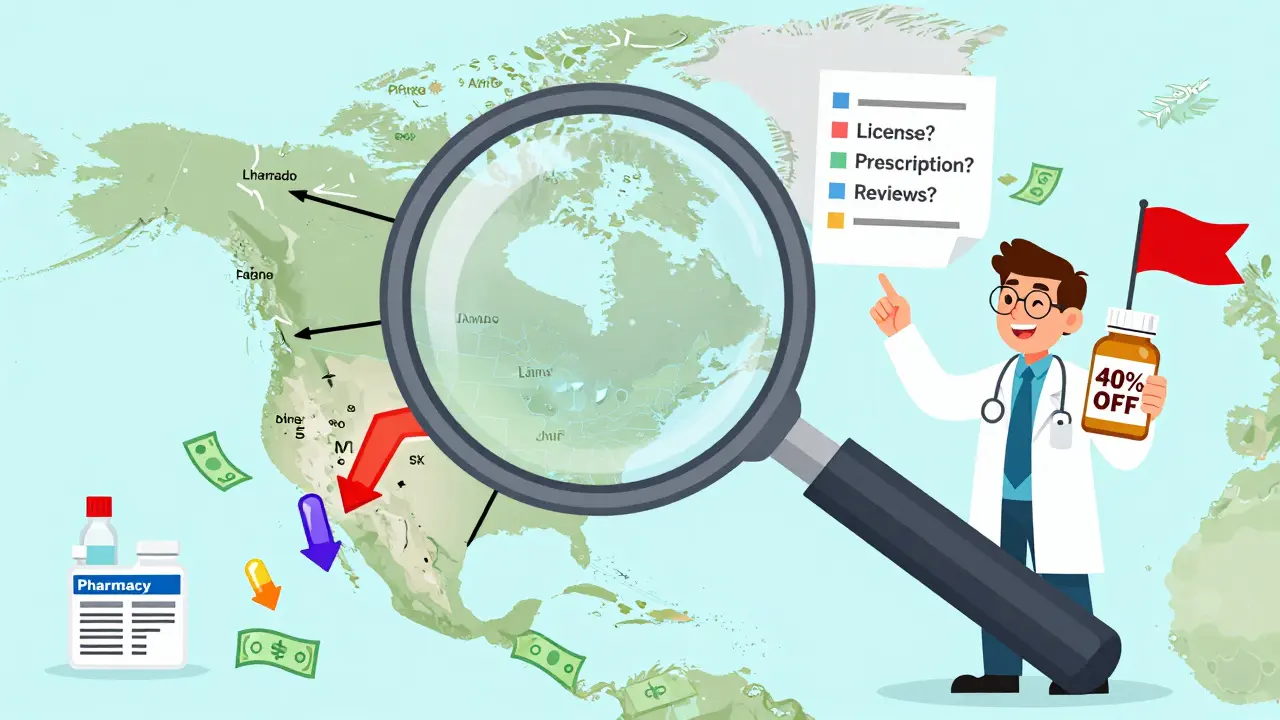
The lowest price isn’t always the best deal. A $3 bottle of generic metformin might sound great-until you realize the pharmacy doesn’t require a prescription, ships from a country with no drug safety laws, and has no physical address listed.Here’s what actually matters:
- License verification: Look for VIPPS (Verified Internet Pharmacy Practice Sites) seal in the U.S., or the logo of the Australian Therapeutic Goods Administration (TGA) for Australian sites. In Canada, check for the Canadian International Pharmacy Association (CIPA) certification.
- Prescription requirement: Legitimate pharmacies always ask for a valid prescription. If they don’t, walk away. It’s illegal and unsafe.
- Shipping origin: Drugs shipped from India or Pakistan may be cheaper, but quality control varies. Prefer pharmacies based in the U.S., Canada, UK, Australia, or New Zealand.
- Customer reviews: Don’t trust 5-star reviews with no detail. Look for reviews mentioning delivery time, pill appearance, or pharmacist responsiveness. Bizrate’s verified purchase system cuts fake reviews by 78%, according to Consumer Action.
- Return policy: If the pharmacy won’t let you return unopened medication, that’s a red flag.
One user on Reddit’s r/Frugal community shared that they saved $120/month switching from a local pharmacy to a verified Canadian site-but only after checking three comparison engines and confirming the pharmacy’s license number with Health Canada’s database.
Best tools for comparing generic drug prices in 2025
Not all comparison engines are built the same. Here’s what works best for medications right now:| Tool | Best For | Price Accuracy | Verified Reviews | International Coverage | Mobile App |
|---|---|---|---|---|---|
| Google Shopping | Big U.S. retailers (CVS, Walgreens, Amazon) | 64% | No | Limited | Yes |
| Shopzilla | Canadian, UK, and independent pharmacies | 78% | Partial | Yes | Yes |
| Bizrate | Trustworthy sellers with verified purchases | 72% | Yes (only verified buyers) | Minimal | Yes |
| PriceRunner | Australian and Northern European users | 81% | Yes | Yes (AU, CA, EU) | Yes |
| GoodRx | U.S. users with insurance or cash payments | 85% | No | U.S. only | Yes |
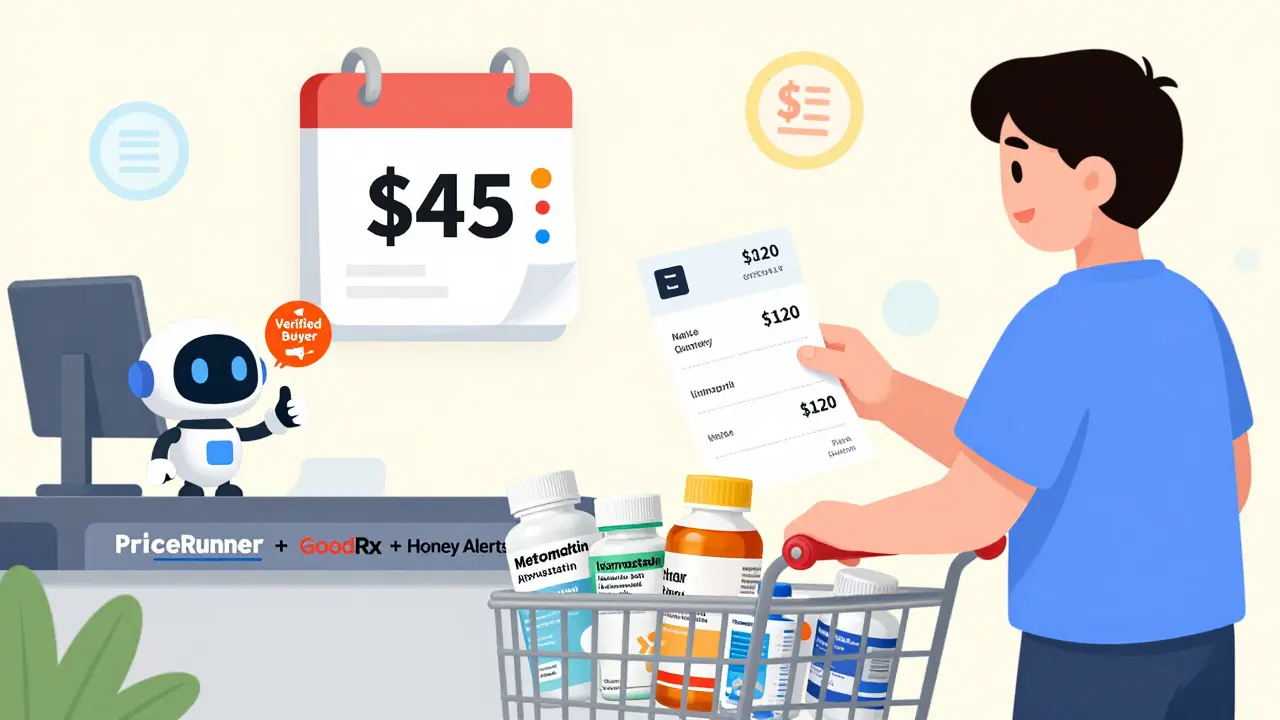
GoodRx isn’t a traditional CSE-it’s a coupon service-but it’s essential for U.S. users. It negotiates cash prices directly with pharmacies and often beats insurance copays. In Australia, PriceRunner is the top choice because it factors in GST and local shipping costs, which other engines ignore. If you’re in Melbourne and looking for a $200 monthly prescription, PriceRunner might show you a local pharmacy offering it for $45 after PBS subsidy, while Google Shopping only shows $80 from a U.S. site with $30 shipping.
Pro tips to save even more
Once you’ve found a few trustworthy options, here’s how to squeeze out extra savings:- Use price drop alerts: Tools like Honey and Keepa (for Amazon) can notify you when a medication’s price drops. Set alerts for your most-used prescriptions.
- Buy in bulk: Many pharmacies offer discounts for 90-day or 180-day supplies. A 90-day supply of generic metformin might cost $12 instead of $5 for 30 days-saving you 40% per pill.
- Check manufacturer coupons: Companies like Teva and Mylan often offer free coupons for their generics. Go directly to their websites and enter your drug name.
- Combine with mail-order: Some pharmacies offer free shipping over $50. Buy multiple generics together to hit the threshold.
- Use a Canadian pharmacy: Canadian pharmacies are legally required to sell at prices tied to government pricing formulas. A 30-day supply of generic Lipitor that costs $150 in the U.S. can be $22 in Canada-with the same pills, same manufacturer, same expiration date.
A 2025 Consumer Reports survey found that people who used these tactics saved an average of 22.3% on their monthly generic drug bills. That’s over $600 a year for someone on three prescriptions.
Red flags that mean walk away
Not every low price is a deal. Some are traps. Watch out for:- Prices that are 70%+ lower than the market average
- Pharmacies that don’t list a physical address or phone number
- Sites with poor grammar, broken links, or no SSL certificate (look for https://)
- Claims like “FDA-approved” when the pharmacy isn’t based in the U.S.
- No pharmacist available to answer questions
In 2025, the National Retail Federation reported a 22% increase in fake pharmacy scams targeting comparison shoppers. One user in Brisbane lost $400 to a site that looked just like a legitimate Canadian pharmacy-until their pills arrived as empty capsules. Always verify before you pay.
What to do if you can’t find your drug
Some generics-especially newer ones or those with complex formulations-aren’t listed on comparison engines. That’s normal. In those cases:- Ask your pharmacist if they can source it cheaper through a specialty distributor.
- Check patient assistance programs from drug manufacturers.
- Use GoodRx or RxSaver to compare cash prices at local pharmacies.
- Consider therapeutic alternatives-sometimes a different generic version of the same drug is available at a lower price.
Don’t give up. There’s almost always a cheaper option. You just need to look in the right places.
Are generic medications as effective as brand-name drugs?
Yes. By law, generic drugs must contain the same active ingredients, dosage, strength, and route of administration as the brand-name version. They’re tested for bioequivalence-meaning they work the same way in your body. The only differences are in inactive ingredients (like fillers or dyes) and packaging. Most people experience no difference in effectiveness or side effects.
Is it safe to buy generic drugs from online pharmacies outside Australia?
It can be, but only if the pharmacy is verified. Stick to pharmacies certified by CIPA (Canada), VIPPS (U.S.), or those registered with the TGA. Avoid sites that don’t require a prescription or ship from unknown countries. The Therapeutic Goods Administration warns that up to 1 in 10 counterfeit drugs come from unregulated online sources. Always check the pharmacy’s license number on official government databases.
Why do prices vary so much between pharmacies for the same drug?
It’s about sourcing and overhead. Big pharmacies buy in bulk and negotiate lower prices directly with manufacturers. Smaller ones pay more through distributors. Some offer free shipping or faster delivery, which adds cost. Others use loss leaders-selling one drug cheaply to attract customers who’ll buy other products. Price differences aren’t always about quality-they’re about business model.
Can I use my Medicare or PBS to pay for online pharmacy purchases?
No. Medicare and PBS only cover prescriptions filled at Australian-registered pharmacies. If you buy from an overseas pharmacy, you can’t use your PBS card or Medicare rebate. But you might still save money overall. For example, a $100 monthly prescription might cost $30 from a verified Canadian pharmacy. That’s still a $70 saving, even without PBS help.
How do I know if a comparison engine is showing me all available options?
You don’t-unless you check multiple engines. Google Shopping favors large retailers and paid advertisers. Shopzilla and PriceRunner often show smaller, independent pharmacies that aren’t on Google. For the most complete picture, use at least two engines: Google Shopping for U.S. retailers, and PriceRunner or Shopzilla for international options. Always cross-check with GoodRx or your local pharmacy’s cash price.



Sandeep Mishra
Wow, this is the kind of post that reminds me why the internet still has hope. 🌱 I used to pay $80 for my metformin until I found a CIPA-certified Canadian pharmacy through PriceRunner. Now I pay $12. Same pills, same manufacturer, same expiration. It’s not magic-it’s just knowing where to look. And yeah, I cried a little when I saw my first $68 savings. We’re not just saving money-we’re reclaiming dignity.