
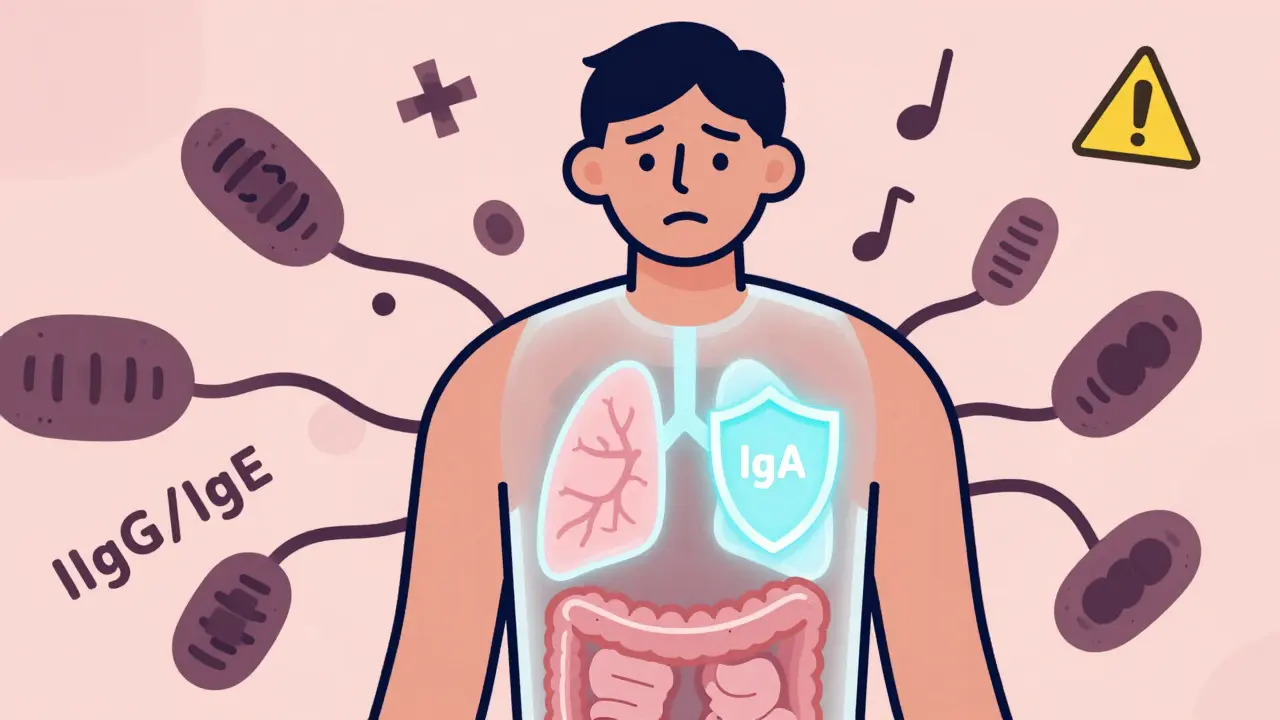
Imagine needing a blood transfusion - maybe after surgery, an accident, or serious anemia - and not knowing that the very thing meant to save your life could kill you. For people with IgA deficiency a primary immunodeficiency where the body produces little to no immunoglobulin A, the most common antibody in mucous membranes, this isn’t a hypothetical. It’s a real, life-threatening risk. IgA deficiency isn’t rare. In fact, it’s the most common primary immune disorder in the world. Studies show it affects between 1 in 300 and 1 in 700 people, especially in Caucasian populations. Most people - 90 to 95% - never even know they have it. They live normal lives, never sick enough to get tested. But for the 5 to 10% who do show symptoms, the stakes are high: recurrent infections, autoimmune diseases, and serious allergic reactions to blood products. The real danger comes when they need a transfusion. Why? Because their immune system, missing IgA, may have made antibodies against it. These antibodies - IgE or IgG - can trigger a violent reaction if they meet IgA again, even in tiny amounts. The reaction isn’t slow. It hits fast. Within minutes. Sometimes within seconds.
What Is IgA Deficiency, Really?
Immunoglobulin A (IgA) is the body’s first line of defense on surfaces exposed to the outside world - your lungs, gut, nose, throat, and urinary tract. It’s not in your bloodstream like IgG or IgM. It’s on the front lines. Think of it like a shield on your mucous membranes. When you breathe in a virus or swallow bacteria, IgA is there to trap and neutralize it before it can get deeper. In selective IgA deficiency, your body just doesn’t make enough. Serum levels drop below 7 mg/dL - nearly zero. But here’s the twist: your other antibodies (IgG and IgM) are normal. Your T-cells work fine. Your bone marrow isn’t broken. It’s just IgA that’s missing. And no one knows exactly why. It’s usually genetic. If a parent has it, your risk jumps by about 50 times. It’s not contagious. It’s not caused by drugs or infections. It’s a flaw in your immune system’s blueprint.
Who Gets Symptomatic? And What Happens?
Most people with IgA deficiency never have symptoms. But for those who do, it’s not a single problem - it’s a chain reaction. About half of symptomatic patients get frequent respiratory infections: ear infections (32%), sinus infections (28%), bronchitis (24%), pneumonia (18%). These aren’t occasional colds. They’re recurring, stubborn, and sometimes lead to permanent lung damage like bronchiectasis. Gut issues are common too. Around 15-20% have chronic diarrhea. Giardia infections? They keep coming back. And 7% develop celiac disease - an autoimmune reaction to gluten. That’s 10 times higher than in the general population. Inflammatory bowel disease and rheumatoid arthritis also show up more often. Allergies? Yes. About 25% of symptomatic patients have them: eczema, hay fever, asthma, allergic conjunctivitis. It’s not random. The immune system, missing its IgA shield, starts overreacting to harmless things.
The Transfusion Danger: Why Blood Can Kill
This is where it gets critical. About 20 to 40% of people with IgA deficiency develop anti-IgA antibodies. These antibodies don’t cause problems on their own. But if they meet IgA again - like in a blood transfusion - they trigger an immune storm. The reaction is fast. Severe. And often mistaken for something else. - 85% of reactions happen within the first 15 minutes of transfusion. - 15% of reactions are anaphylactic - life-threatening. - Symptoms include low blood pressure (systolic under 90 mmHg), wheezing, hives, swelling, and cardiac collapse. One study found that 1 in every 1,000 transfusions to an IgA-deficient person with antibodies leads to a severe reaction. And in up to 10% of those cases, it’s fatal. The scary part? Many patients don’t know they have antibodies until it’s too late. The first transfusion might be fine. The second? Catastrophic.
How Do You Prevent a Deadly Reaction?
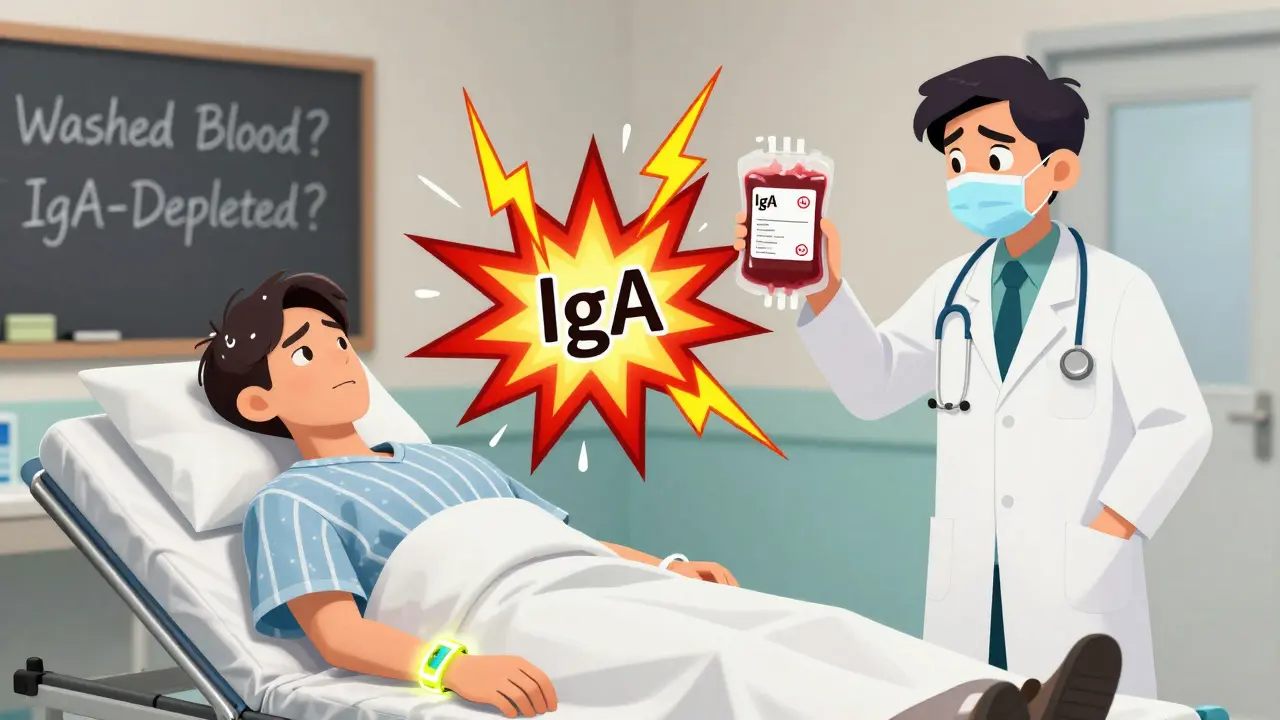
There are two safe options - and both require planning. Option 1: Washed red blood cells. This process removes over 98% of IgA from donated blood. But it’s not simple. It takes 30 to 45 minutes. Not every hospital can do it on demand. In emergencies, delays cost lives. Option 2: IgA-depleted blood products. These are specially processed to contain less than 0.02 mg/mL of IgA. They’re safer, but they’re rare. Ordering them takes 48 to 72 hours. You can’t just walk into an ER and ask for them. And here’s the catch: not every doctor knows this. A 2023 patient survey found that 42% of IgA-deficient people had been treated by a healthcare provider who didn’t know the transfusion risks. Seven out of ten severe reactions happened in emergency rooms where no one had access to their medical history. That’s why every patient with IgA deficiency should wear a medical alert bracelet or carry a card that says: “Selective IgA Deficiency - Requires IgA-Depleted or Washed Blood Products.”
Testing and Diagnosis: What Doctors Should Do
Diagnosis is straightforward: a blood test that measures IgA, IgG, and IgM levels. If IgA is below 7 mg/dL and the others are normal, it’s confirmed. The test is 98.5% accurate. But here’s the gap: most people aren’t tested unless they’re having symptoms. And even then, doctors often miss it. For patients who need transfusions, pre-testing for anti-IgA antibodies is recommended. The ELISA test is 95% sensitive - but it still misses 5 to 10% of cases. So, even if the test is negative, if the patient has IgA deficiency, assume they might have antibodies. The American Association of Blood Banks says: test everyone with IgA deficiency before transfusion. The European Society for Immunodeficiencies says: only test if they’ve had a prior reaction. That’s a 30% difference in practice across countries. And it’s not just a policy gap - it’s a safety gap.
What Patients Should Do Now
If you’ve been diagnosed with IgA deficiency, here’s what you need to do - today. 1. Get a medical alert card or bracelet. Include your diagnosis and the exact transfusion requirement: “Requires IgA-depleted or washed blood products.” 2. Carry it everywhere. Emergency responders don’t know your history. Your card might be the only thing that saves you. 3. Inform every doctor, dentist, and hospital. Even if you’re not getting blood, they need to know. Some IV fluids, immune globulins, and plasma products contain IgA. 4. Ask for pre-transfusion antibody testing. If you’re scheduled for surgery or a transfusion, demand the anti-IgA antibody test. Don’t assume it’s done. 5. Know your triggers. If you’ve had allergic reactions before, keep antihistamines on hand. But remember - no OTC medicine will stop anaphylaxis. 6. Get regular screenings. Annual celiac screening (tTG antibody test), biannual lung function tests, and quarterly check-ups for autoimmune signs can catch complications early.
The Future: What’s Next?
There’s no cure for IgA deficiency. But research is moving. A 2023 study in Blood Advances tested recombinant human IgA in 12 patients. It worked - no reactions, no side effects. But it’s still experimental. Not available outside trials. For now, prevention is everything. And awareness. The good news? Most people with IgA deficiency live full, normal lives. Their life expectancy is nearly the same as anyone else’s - as long as they avoid transfusion risks and manage infections and autoimmune conditions. The bad news? Without proper education and protocols, one transfusion can be fatal.
Can IgA deficiency be cured?
No, there is no cure for selective IgA deficiency. It’s a lifelong genetic condition. Most people don’t need treatment because they’re asymptomatic. For those who do have symptoms, management focuses on preventing infections, monitoring for autoimmune diseases, and avoiding transfusion risks. There is no medication that replaces IgA. Experimental therapies are being tested but are not yet available to the public.
Can I donate blood if I have IgA deficiency?
Yes, you can donate blood. People with IgA deficiency are not at risk from giving blood - only from receiving it. Your blood contains little to no IgA, so it’s safe for others to receive. In fact, your blood can be especially valuable for other IgA-deficient patients who need transfusions.
Do I need to avoid all vaccines?
No. Vaccines are safe and recommended. In fact, staying up to date on vaccines - especially flu, pneumonia, and meningococcal - is critical. Your immune system can still respond to vaccines normally. The key is ensuring you receive standard vaccines (not plasma-derived products) and that you’re not allergic to any vaccine ingredients.
Is IgA deficiency the same as celiac disease?
No. IgA deficiency is an immune system disorder where the body doesn’t make enough IgA. Celiac disease is an autoimmune disorder triggered by gluten. But the two are linked: people with IgA deficiency are 10 times more likely to develop celiac disease. That’s why doctors screen for celiac in all IgA-deficient patients - and why IgA-based celiac tests can give false negatives in these individuals (IgG-based tests are used instead).
What should I do if I’m in an emergency and need blood?
If you’re unconscious or unable to speak, your medical alert card or bracelet is your best protection. Emergency staff should check for it. If you’re conscious, clearly state: “I have IgA deficiency. I need washed or IgA-depleted blood.” If they’re unsure, ask for the blood bank. Most hospitals have protocols. If they refuse, ask to speak to a supervisor - this is a known, documented risk with clear guidelines from major medical societies.



Noluthando Devour Mamabolo
Okay but like… I just got diagnosed with IgA deficiency last year and I had NO idea transfusions could be lethal 😱
My ER doc literally said "it’s just low IgA, we’ll give you normal blood"
Thank you for this post. I’m getting my med alert bracelet TODAY. 💪🩸
Also… if anyone knows a blood bank that stocks washed RBCs in Cape Town, DM me. I’m desperate. 🙏