How to Treat Hypoglycemia: Quick Fixes, Long-Term Strategies, and What Doctors Recommend
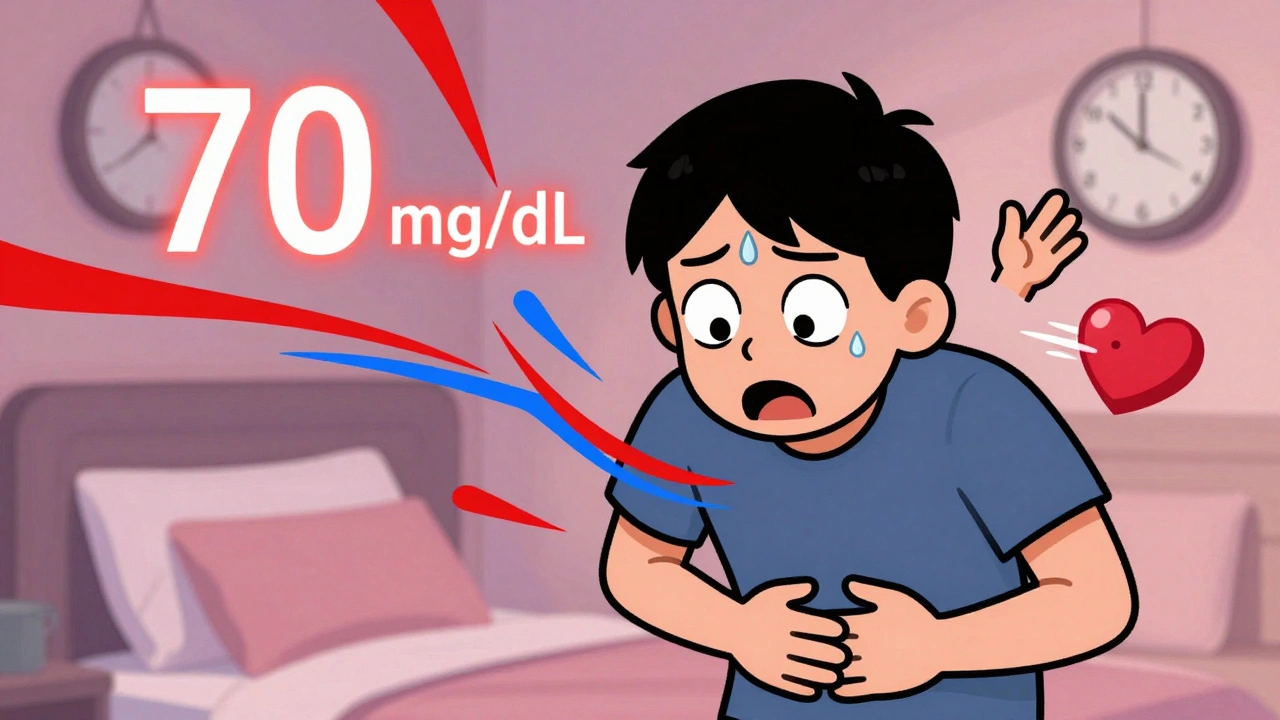
When your blood sugar, the amount of glucose in your bloodstream drops too low, you don’t just feel shaky—you might sweat, get confused, or even pass out. This is hypoglycemia, a condition where blood glucose falls below 70 mg/dL, and it’s not just a problem for people with diabetes. It can hit anyone, especially if you skip meals, take too much insulin, or drink alcohol on an empty stomach. The good news? It’s treatable—fast—if you know what to do.
When your blood sugar crashes, the goal is simple: raise it quickly. The 15-15 rule, a standard method for treating low blood sugar says: eat or drink 15 grams of fast-acting carbs, wait 15 minutes, then check your level again. That could mean 4 glucose tablets, half a cup of juice, or a tablespoon of honey. Don’t go for candy bars or chocolate—they have fat that slows sugar absorption. After your sugar climbs back up, eat a snack with protein and complex carbs, like peanut butter on whole grain, to keep it stable. If you’re helping someone who’s confused or unconscious, don’t give them anything by mouth. Call 911. A glucagon injection is the only safe option then, and it’s something every person with frequent hypoglycemia should have on hand.
But treating the symptom isn’t enough. If you’re having low blood sugar often, you need to find out why. Is it your insulin dose? Your meal timing? Maybe you’re taking a medication like sulfonylureas that pushes your pancreas to make more insulin than you need. Even some antibiotics and heart drugs can cause it. People without diabetes can get hypoglycemia too—from rare tumors, liver disease, or even after gastric bypass surgery. The key is tracking: write down when it happens, what you ate, what meds you took, and how you felt. That pattern tells your doctor what’s really going on.
Some people get what’s called hypoglycemia unawareness, a dangerous condition where you don’t feel the warning signs. That’s scary because your body stops sending signals—no shaking, no sweating, no warning. It often happens after years of frequent lows. The fix? Avoiding lows for a few weeks helps your body relearn how to react. That means checking your sugar more often, setting higher target ranges temporarily, and maybe adjusting your meds. It’s not easy, but it works.
And don’t forget your phone. Set reminders to eat. Keep glucose tabs in your car, your purse, your desk drawer. Tell your coworkers or family what to do if you collapse. Many people with hypoglycemia wear medical IDs—not just for emergencies, but to stop the guesswork. The best defense? Preparation. The best treatment? Knowing exactly what to do before it happens.
Below, you’ll find real, practical advice from posts that cover everything from emergency fixes to the hidden causes behind repeated low blood sugar episodes. No fluff. Just what works.
Learn how to recognize, treat, and prevent low blood sugar (hypoglycemia) if you have diabetes. Understand symptoms, emergency treatments like glucagon, and proven prevention strategies backed by 2025 guidelines.