
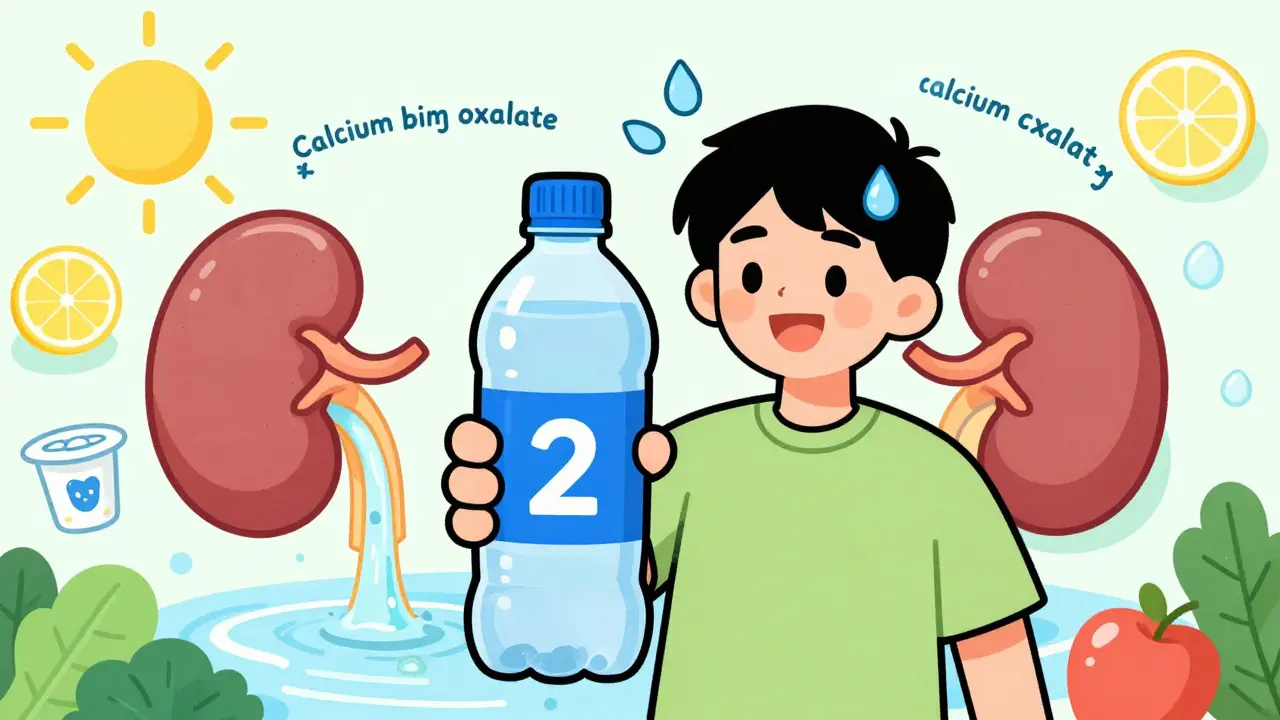
When you’ve had one kidney stone, you’re not done. In fact, you’re just getting started. About 30% to 50% of people who pass a kidney stone will have another within five years. And if you do nothing? That number jumps to 70%. This isn’t a one-time event. It’s a chronic condition - like high blood pressure or diabetes - and it needs daily management.
Why Kidney Stones Keep Coming Back
Kidney stones form when minerals in your urine clump together. Most are made of calcium and oxalate. But the problem isn’t just what’s in your urine - it’s how much water you have to dilute it. When your urine is too concentrated, those minerals stick together and harden. That’s why the single most important thing you can do is drink more fluids.Fluid Intake: Your First Line of Defense
You need to pee a lot. Not just a little. You need to produce at least 2.5 liters of urine per day. That means drinking 2.5 to 3 liters of fluid daily - even more if it’s hot, you’re exercising, or you’re sweating. Most people think thirst is a good guide. It’s not. By the time you feel thirsty, you’re already dehydrated. The NHS says it plainly: “Thirst is not a sufficient indicator of adequate hydration.” Drink water. Plain water. That’s your best bet. But tea and coffee count too. Yes, caffeine is a mild diuretic, but studies show it doesn’t hurt your overall hydration if you’re drinking enough. Avoid sugary sodas and energy drinks. They increase your risk. And skip fizzy drinks - the NHS specifically warns against them. A simple trick? Fill a 2-liter bottle in the morning. Drink it by dinner. Then drink another liter before bed. Use a marked container. Track it. Don’t guess.Don’t Cut Out Calcium - Do the Opposite
You’ve probably heard: “Avoid dairy to prevent stones.” That’s wrong. And dangerous. The European Association of Urology, the National Kidney Foundation, and the American Academy of Family Physicians all agree: do NOT restrict calcium. In fact, eating enough calcium lowers your risk. Here’s why: Calcium binds to oxalate in your gut. If you don’t eat enough calcium, oxalate gets absorbed into your bloodstream and ends up in your urine - where it forms stones. So eating calcium-rich foods like milk, yogurt, cheese, or fortified plant milks at meals helps trap oxalate before it reaches your kidneys. Aim for 1,000 to 1,200 mg of calcium daily from food - not supplements. Calcium pills taken alone (without food) can increase stone risk.Salt Is the Silent Culprit
Sodium is the hidden enemy. It makes your kidneys dump more calcium into your urine. That’s a recipe for stones. The guideline? Keep sodium under 2,000 mg per day - that’s about 5 grams of salt. Most people eat double that. Where’s the sodium hiding? Processed foods. Bread, canned soup, deli meats, frozen meals, soy sauce, even breakfast cereal. Read labels. Cook at home. Use herbs, lemon, or vinegar instead of salt. One study found that 75% of dietary sodium comes from packaged and restaurant foods. You can’t outdrink bad food.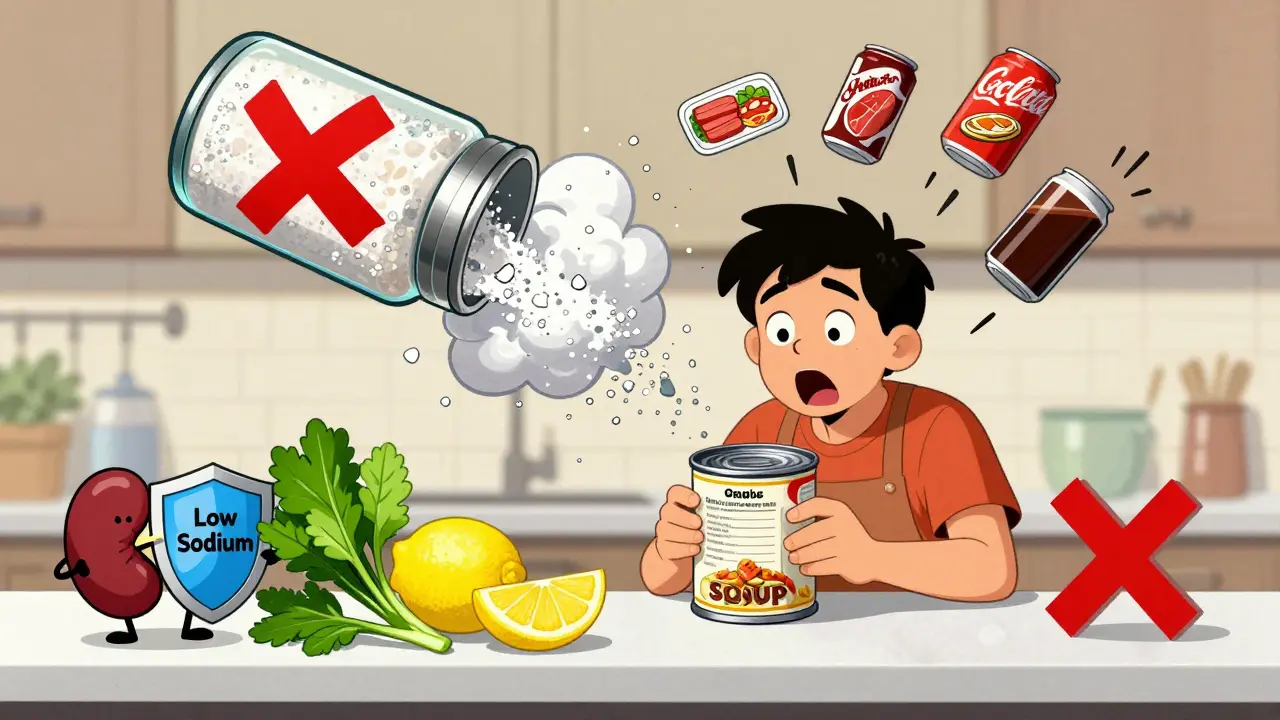
Protein: Less Is More
Animal protein - beef, chicken, pork, fish, eggs - increases uric acid and lowers citrate, both of which promote stones. Limit animal protein to 8 ounces (about 225 grams) per day. That’s roughly the size of a deck of cards. Spread it across meals. Swap out some meat for beans, lentils, tofu, or quinoa. Plant proteins don’t raise stone risk the same way.Oxalate: Don’t Fear It - Manage It
Spinach, nuts, beets, sweet potatoes, and chocolate are high in oxalate. But you don’t need to eliminate them. You need to pair them with calcium. Eat your spinach with yogurt. Have almonds with milk. Have a piece of cheese with your beet salad. That way, oxalate binds to calcium in your gut and doesn’t reach your kidneys. The National Kidney Foundation says people who eat more fruits, vegetables, whole grains, and plant proteins have fewer stones. It’s not about avoiding plants - it’s about balance.Citrate: The Natural Stone Blocker
Citrate is a substance in urine that stops crystals from forming. Low citrate = higher stone risk. The goal? At least 320 mg of citrate per day in your urine. How to boost it? Lemon juice. Fresh lemon juice. Squeeze half a lemon into a glass of water, twice a day. The NHS recommends this. So do many urologists. Orange juice works too - but it’s high in sugar, so stick to unsweetened versions. Citrate supplements (like potassium citrate) are available by prescription, but for most people, lemon water is enough - and free.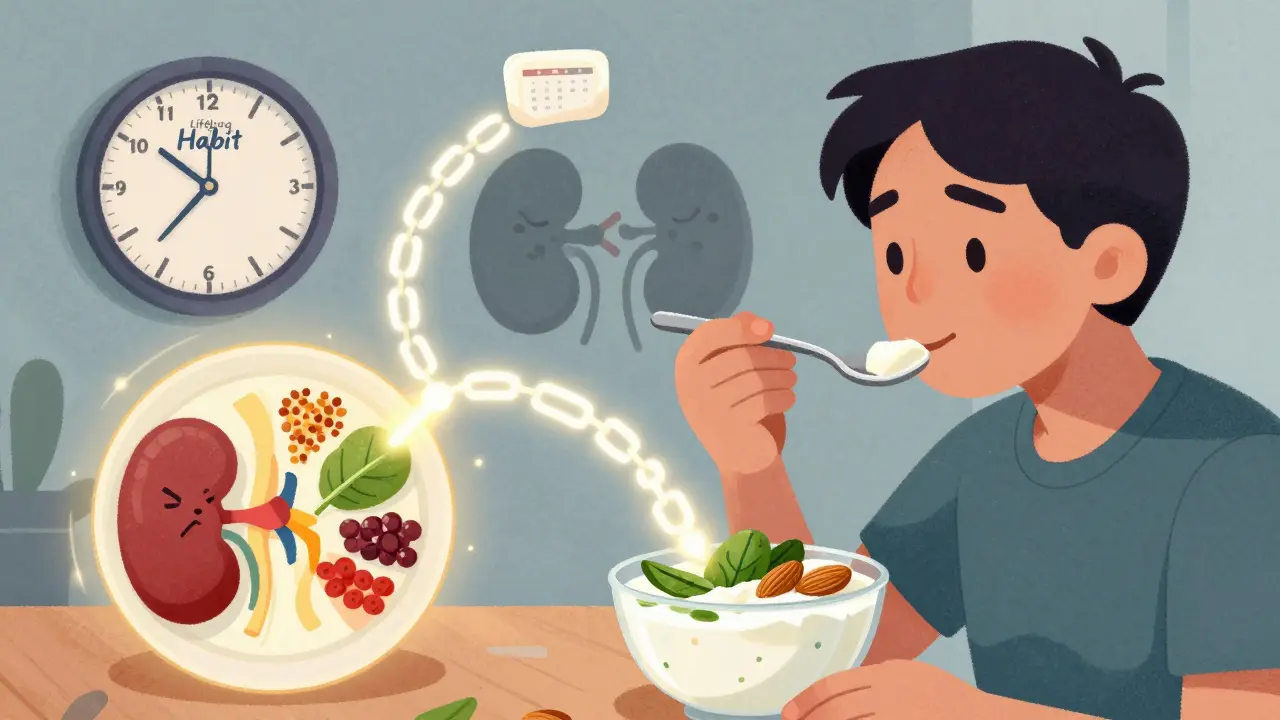
What to Avoid
- Fizzy drinks - especially colas with phosphoric acid
- Sugary drinks - soda, sweetened tea, energy drinks
- Excess vitamin C - over 1,000 mg/day can turn into oxalate
- High-dose calcium supplements - take them only with meals, if at all
- Low-carb, high-protein diets - they lower citrate and raise uric acid
It’s Not a Quick Fix - It’s a Lifelong Habit
Kidney stones don’t go away after one stone passes. They’re a chronic disease. The recurrence rate is 14% in one year, 35% in five years, and 52% in ten years if you don’t change your habits. There’s no “done.” No “I’ll just do this for six months.” You need to keep drinking, eating balanced meals, and watching your salt for the rest of your life. The good news? If you follow these steps, you can cut your risk by 40% to 50%. The DASH diet - designed for high blood pressure - has been shown to reduce kidney stones just as well. It’s rich in fruits, vegetables, whole grains, and low-fat dairy, and low in salt and red meat.When to See a Specialist
If you’ve had more than one stone, ask your doctor for a 24-hour urine test. It measures how much calcium, oxalate, citrate, and other minerals you’re excreting. That tells you exactly what’s going wrong in your body. The European Association of Urology recommends this test 8 to 12 weeks after starting treatment. It’s not optional. It’s how you know if your diet is working. Some people need medication - like thiazide diuretics or potassium citrate. But for most, food and fluids are enough. And they’re safer, cheaper, and more effective long-term.Final Thought: Think Like a Chronic Disease Patient
Dr. Juan Calle says it best: “I would tell them to think of it as more of a chronic disease than the way that we used to think about it.” You wouldn’t stop taking blood pressure meds after one normal reading. You wouldn’t quit insulin after one good A1C. Don’t treat kidney stones like a one-time problem. Treat them like you treat your heart, your kidneys, your life. Drink water. Eat real food. Watch the salt. Keep your calcium. And don’t wait until the next stone hits to act again.Can drinking lemon water really prevent kidney stones?
Yes. Lemon juice is rich in natural citrate, which binds to calcium in urine and stops crystals from forming. The NHS and several urology guidelines recommend adding fresh lemon juice to water - about half a lemon per glass, twice daily. It’s a simple, low-cost way to raise urinary citrate levels, which helps prevent calcium stones. While citrate supplements are stronger, lemon water works well for most people.
Should I avoid spinach and nuts if I get kidney stones?
No, you don’t need to avoid them completely. Spinach, almonds, and other high-oxalate foods are fine if you eat them with calcium-rich foods at the same meal. For example, have spinach with yogurt or almonds with milk. The calcium binds to oxalate in your gut, so it doesn’t reach your kidneys. Cutting out these healthy foods entirely can actually hurt your overall health and doesn’t reliably prevent stones.
Is it true that cutting out dairy helps prevent kidney stones?
No. Avoiding dairy increases your risk. When you don’t get enough calcium from food, your body absorbs more oxalate from plants, and that oxalate ends up in your urine - where it forms stones. The European Association of Urology, the National Kidney Foundation, and the American Academy of Family Physicians all say: eat calcium-rich foods at meals. Aim for 1,000-1,200 mg per day from food, not supplements.
How much water should I drink every day to prevent kidney stones?
You need to drink enough to produce at least 2.5 liters of urine per day. That usually means drinking 2.5 to 3 liters of fluid - including water, tea, and coffee. In hot weather or after exercise, drink even more. Don’t rely on thirst - it’s too late by then. Use a marked bottle to track your intake. Clear or light yellow urine is a good sign you’re drinking enough.
Can I still drink coffee and tea if I have kidney stones?
Yes. While caffeine is a mild diuretic, studies show that coffee and tea still contribute to your total fluid intake and do not increase stone risk when you’re drinking enough overall. In fact, some research suggests coffee may slightly lower risk. Just avoid sugary versions. Stick to black, unsweetened, or lightly sweetened.
Do I need to take supplements to prevent kidney stones?
Most people don’t. The best prevention comes from food and fluids. Calcium supplements can increase stone risk if taken without food. Vitamin C over 1,000 mg/day can turn into oxalate. Magnesium and potassium citrate may help, but only if your doctor recommends them based on a 24-hour urine test. Don’t self-prescribe - get tested first.
How long do I need to follow this diet?
For life. Kidney stone disease is chronic. Even if you haven’t had a stone in years, your body still has the same metabolic tendency. Stopping your fluid intake or going back to high-salt, low-calcium eating brings the risk right back. The National Kidney Foundation says prevention is “not one and done.” It’s daily, lifelong work - but it’s the only way to avoid repeat surgeries and long-term kidney damage.
Is there a specific diet proven to prevent kidney stones?
Yes. The DASH diet (Dietary Approaches to Stop Hypertension) was originally designed for high blood pressure, but studies show it reduces kidney stone risk by 40-50%. It’s high in fruits, vegetables, whole grains, and low-fat dairy, and low in salt, red meat, and sugar. It naturally supports the fluid, calcium, and citrate needs for stone prevention without requiring complicated restrictions.
If you’ve had more than one stone, your next step is simple: get a 24-hour urine test. It tells you exactly what’s in your urine - calcium, oxalate, citrate, pH - and lets you tailor your diet. Then, start drinking. Then, start eating. Then, keep going. Your kidneys will thank you.




CHETAN MANDLECHA
Been through this twice. Drinking 3L of water daily changed everything. No more stones in 3 years. Simple as that. Don't overcomplicate it.