

When a nurse hands a patient a vial of insulin or prepares an IV bag of heparin, they’re not just handing over medicine-they’re handling a potential life-or-death decision. A single wrong dose, a misread label, or a skipped step can lead to cardiac arrest, severe hypoglycemia, or uncontrolled bleeding. That’s why certain medications aren’t treated like ordinary prescriptions. They’re flagged as high-risk medications, and every step in their handling demands a second set of eyes, a second brain, and a second signature.
What Makes a Medication High-Risk?
Not all drugs carry the same level of danger. A common painkiller like acetaminophen? Mistakes happen, but they’re usually not fatal. Now consider intravenous insulin. Give too much, and the patient’s blood sugar crashes. Give too little, and diabetic ketoacidosis sets in. Both can kill within hours. That’s why the Institute for Safe Medication Practices (ISMP) calls these high-alert medications: drugs where errors are rare but have devastating consequences when they happen. The ISMP’s 2022 list includes five major categories that trigger mandatory extra verification:- Insulin (all forms: IV, subcutaneous, even oral in some cases)
- Opioids (especially IV, epidural, or intrathecal-these can stop breathing)
- Heparin (both IV and subcutaneous-too much causes bleeding, too little causes clots)
- Chemotherapy agents (cancer drugs with narrow therapeutic windows)
- Potassium chloride concentrate (a tiny overdose can stop the heart)
How Double Checks Actually Work
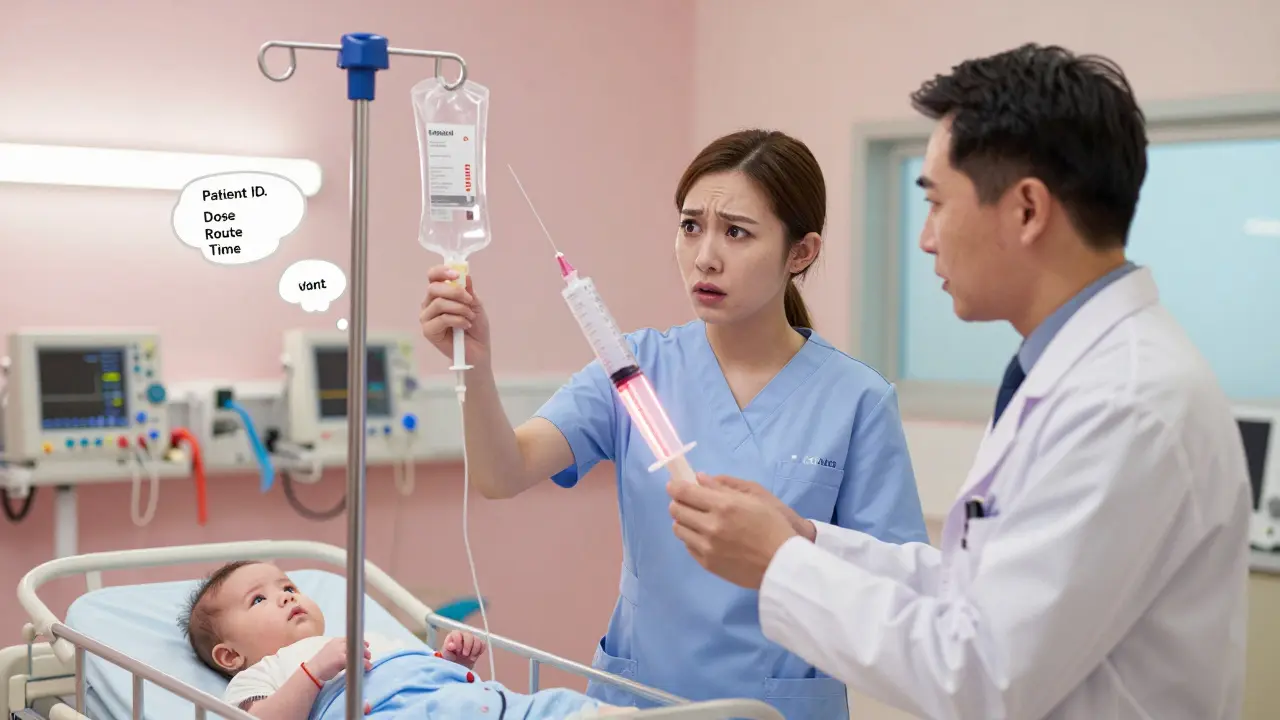
It’s not enough for one person to read the label and hand it off. The process, called an independent double check (IDC), has strict rules:- Two qualified individuals-usually a nurse and a pharmacist, or two nurses-must be present.
- No peeking. The second person must verify everything without seeing what the first person did. If they look at the first person’s work, it defeats the purpose. Confirmation bias kicks in, and errors get missed.
- Nine Rights must be confirmed: right patient, right drug, right dose, right route, right time, right documentation, right reason, right response, and right to refuse.
- Documentation happens immediately after. Both people sign off on the Medication Administration Record (MAR).
- Verify patient ID with two identifiers (name + date of birth)
- Confirm the drug name, dose, volume, and infusion rate
- Check the expiration date and physical condition of the bag or vial
- Explain the treatment to the patient and confirm they understand
- Sign the checklist before the infusion starts
Who Can Perform the Check?
Not just anyone can be the second checker. Regulations limit this to licensed professionals with direct training in medication safety:- Registered nurses
- Pharmacists
- Physicians (MD/DO)
- Advanced practice providers (ARNP, PA)
Why Double Checks Are Controversial
Here’s the uncomfortable truth: manual double checks aren’t foolproof. In fact, research shows they can sometimes create a false sense of security. A 2016 study in the Journal of Oncology Practice found that oncology nurses valued double checks-but many performed them as a checkbox task. They’d rush, talk over each other, or rely on memory instead of looking at the actual label. One nurse said, “I’ve done this 500 times. I know what it looks like.” That’s exactly the mindset that gets people hurt. The ISMP now warns against blanket double-checking. “Too many checks,” they say, “lead to fatigue, resistance, and missed errors.” Instead, they recommend focusing only on the highest-risk scenarios:- IV insulin
- IV opioids
- IV heparin
- IV chemotherapy
The Shift Toward Smart Systems
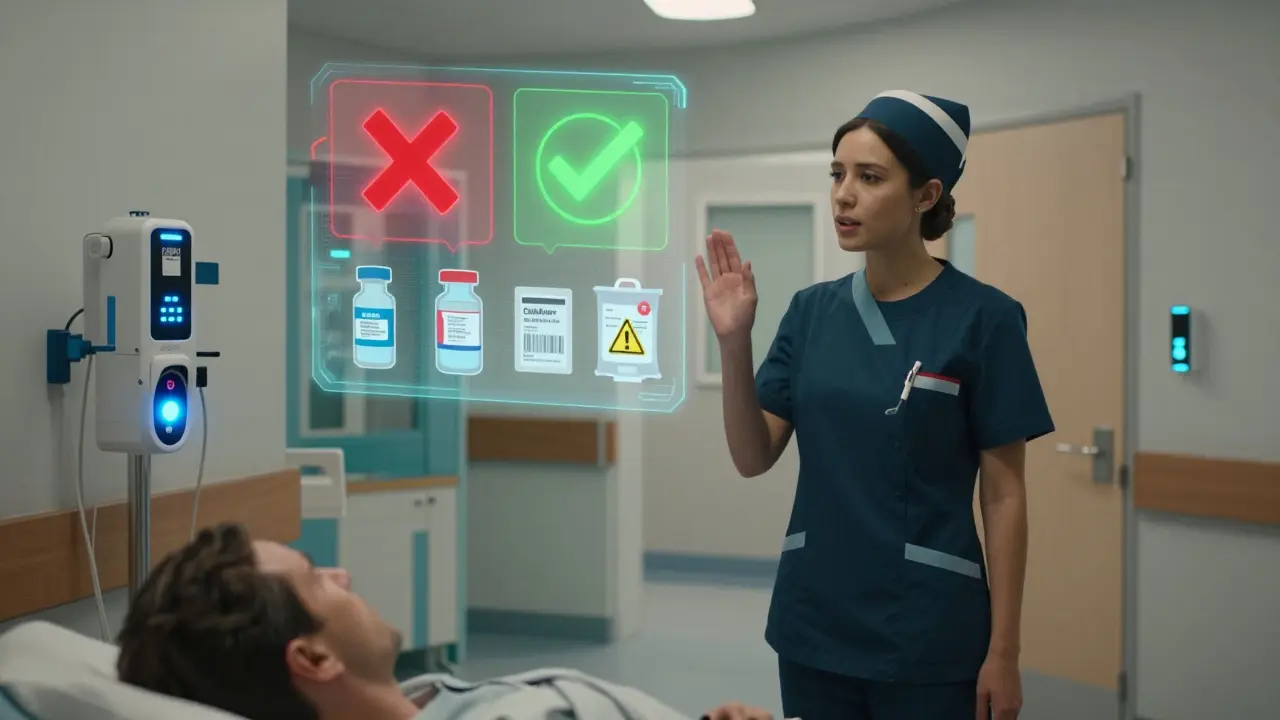
The future isn’t more paperwork. It’s smarter systems. The U.S. Department of Veterans Affairs (VHA) is phasing out manual double checks for most medications and replacing them with barcode scanning and automated alerts. By December 2024, every VA facility will use integrated systems that:- Match the patient’s wristband to the medication
- Alert if the dose exceeds safe limits
- Block administration if the drug conflicts with allergies or other meds
What You Should Know as a Patient or Family Member
You don’t need to be a nurse to protect yourself. If you’re receiving any of these high-risk medications:- Ask: “Is this being double-checked?”
- Confirm your name and date of birth are checked aloud before the med is given.
- Ask what the medication is for and why it’s being given.
- Don’t be shy about asking for a second nurse if you’re unsure.
What’s Changing in 2026?
By 2026, healthcare systems are moving toward a hybrid model:- Technology handles routine verification (barcodes, smart pumps, EHR alerts).
- Human double checks are reserved for the most dangerous moments: custom mixes, high-dose insulin, and complex infusions.
- Training is mandatory for all staff handling these drugs-not just once, but annually.
- Documentation is automated: signatures are digital, timestamps are locked, and errors trigger immediate reviews.
Which medications absolutely require a double check?
The most critical medications requiring independent double checks include IV insulin, IV opioids (like morphine or fentanyl), IV heparin, chemotherapy agents, and concentrated potassium chloride. These drugs have narrow safety margins-small errors can cause death. Facilities may also require double checks for TPN (total parenteral nutrition), antiarrhythmics, and other high-risk cardiovascular drugs based on their own error data.
Can a nurse double-check their own work?
No. A true independent double check requires two separate individuals who verify each other’s work without influence. If the second person sees what the first did, they may unconsciously assume it’s correct. This is called confirmation bias. The second checker must independently calculate doses, read labels, and confirm patient details without seeing the first person’s actions.
Are double checks always effective?
Not always. Studies show that when double checks are rushed, overused, or done in high-stress environments, they can fail. Nurses may skip them during busy shifts, or both people may rely on memory instead of checking the actual label. The ISMP now advises using double checks only for the highest-risk medications, not as a blanket policy. Technology like barcode scanning often catches more errors than manual checks.
Why do some hospitals require double checks for all controlled substances?
Controlled substances like opioids and sedatives carry high risks of misuse, overdose, and diversion. Even if the drug itself isn’t as dangerous as chemotherapy, the risk of giving the wrong dose or to the wrong patient is still high. Many hospitals extend double checks to all IV and oral controlled substances to reduce errors and prevent theft or accidental administration.
What’s replacing manual double checks in modern hospitals?
Barcode scanning at the bedside is now the gold standard. It links the patient’s wristband, the medication, and the electronic order to ensure all five rights are matched before administration. Smart infusion pumps also auto-calculate safe dosing limits and flag discrepancies. These systems catch more errors, faster, and without adding workload. Manual double checks are now reserved for situations where technology can’t verify complex preparations-like custom IV mixes or multi-drug infusions.



Patrick Jackson
I’ve seen nurses skip double checks during code blues. Not because they’re lazy - because they’re exhausted. We’re asking humans to be perfect machines in a system that’s falling apart. 😔