
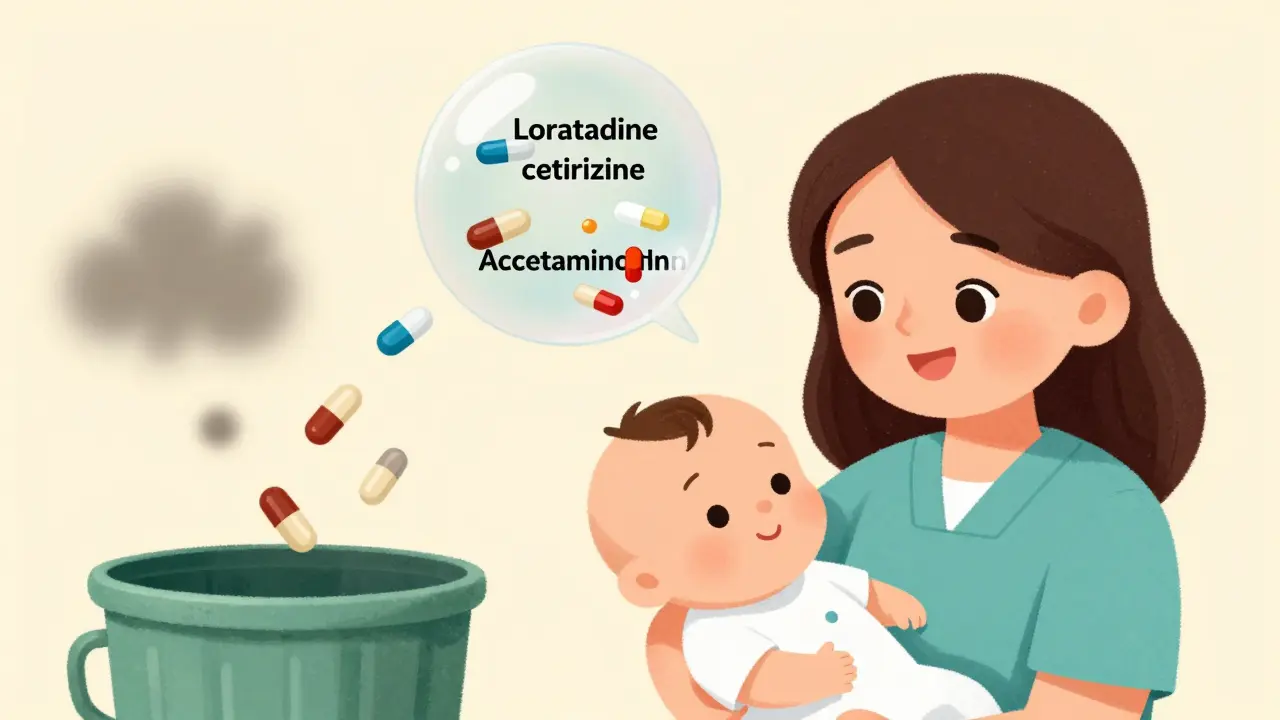
When you’re nursing, every pill you take feels like a risk. You want to feel better-whether it’s from a stuffy nose, itchy eyes, or a throbbing headache-but you also don’t want to hurt your baby. The good news? Many common antihistamines and pain relievers are perfectly safe while breastfeeding. The bad news? Not all of them are. And mixing up the wrong ones can lead to drowsy babies, poor feeding, or worse.
Why Some Medications Are Risky and Others Aren’t
Not all drugs behave the same way in your body-or in your breast milk. What matters most is how much of the drug actually gets into your milk, and whether your baby’s tiny system can handle it. Two big factors decide this: molecular size and protein binding. Larger molecules, like those in second-generation antihistamines (loratadine, cetirizine, fexofenadine), don’t easily slip into breast milk. They’re too big. Plus, if they stick tightly to proteins in your blood (over 90% binding), even less makes it through. That’s why loratadine transfers at just 0.04% of your dose, and fexofenadine at only 0.02%. That’s practically nothing. On the other hand, older antihistamines like diphenhydramine (Benadryl) and chlorpheniramine are smaller, more fat-soluble, and cross into milk easily. They also cross the blood-brain barrier-yours and your baby’s. That’s why some moms report their babies getting unusually sleepy, refusing feeds, or even losing weight after taking these meds. The same logic applies to pain relievers. Acetaminophen and ibuprofen are small but bind poorly to proteins and clear quickly. Acetaminophen shows up in milk at 1-2% of your dose. Ibuprofen? Even less-around 0.6%. Both have been studied in thousands of nursing mothers with zero reports of harm to infants.Safe Antihistamines for Breastfeeding Moms
If you’re dealing with seasonal allergies, hives, or a runny nose, here’s what you can take without worry:- Loratadine (Claritin) - One of the most studied. Minimal transfer, no sedation in babies, safe for daily use.
- Cetirizine (Zyrtec) - Slightly more likely to cause mild drowsiness in mom, but still safe for baby. Best taken at night if you notice tiredness.
- Fexofenadine (Allegra) - Lowest transfer rate of all. Ideal if you’ve had issues with other antihistamines.
Antihistamines to Avoid While Nursing
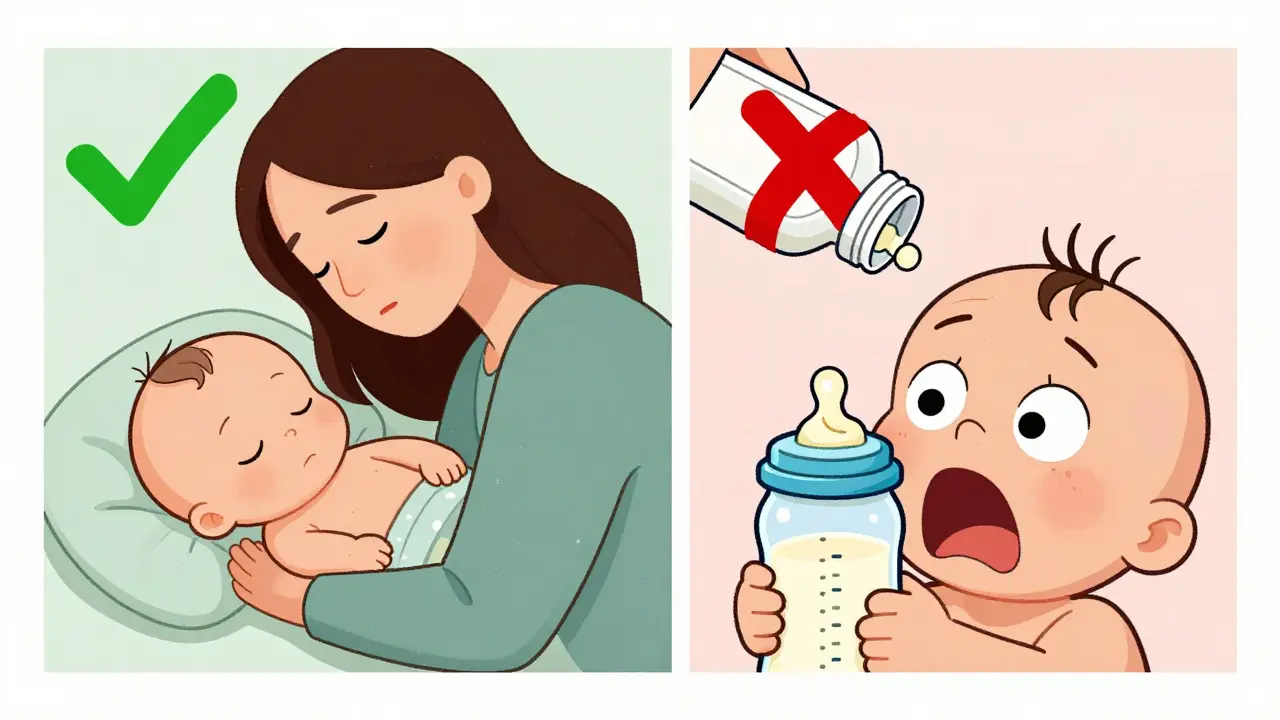
Steer clear of these, especially for regular use:- Diphenhydramine (Benadryl) - Even though it’s OTC, it’s the most common cause of infant drowsiness and feeding problems in nursing moms.
- Chlorpheniramine - Often found in cold and flu mixes. Can reduce milk supply and cause irritability or sleepiness in babies.
- Promethazine - Used for nausea and allergies. Strong sedative effects. Linked to breathing problems in newborns.
Safe Pain Relievers for Nursing Moms
Headache? Muscle ache? Period cramps? You’ve got options:- Acetaminophen (Tylenol) - The gold standard. Safe from day one. Even used in newborns. No known side effects in breastfed babies.
- Ibuprofen (Advil, Motrin) - Also very safe. Clears quickly from milk. Even better-it reduces inflammation, so it’s great for swelling or soreness.
Pain Relievers to Skip While Breastfeeding
Some pain meds look harmless-but aren’t:- Naproxen (Aleve) - Stays in your system for up to 17 hours. Higher transfer rate (7% of your dose). Linked to infant bleeding, anemia, and vomiting in rare cases.
- Codeine - Metabolized into morphine in your body. Some moms process it too quickly, flooding breast milk with dangerous levels. Can cause breathing problems or even death in infants.
- Tramadol, Oxycodone, Hydrocodone - These are opioids. Even small amounts can make babies too sleepy to feed. Avoid unless absolutely necessary and under strict medical supervision.
What About Cold and Allergy Mixes?
This is where most moms get caught. Many OTC cold, flu, and allergy medicines combine antihistamines with decongestants, cough suppressants, or pain relievers. And guess what? Most of them include diphenhydramine or chlorpheniramine. Check the label. Look for “antihistamine” or “for allergy relief.” If it says “PM” or “Nighttime,” it almost certainly has diphenhydramine. Even some “non-drowsy” formulas sneak in sedating antihistamines. Stick to single-ingredient products. Buy loratadine by itself. Buy acetaminophen by itself. That way, you know exactly what you’re taking-and what your baby is exposed to.Real-Life Scenarios: What Works and What Doesn’t
Sarah, 32, from Melbourne, had terrible hay fever last spring. She took Benadryl because it worked fast. Her 4-month-old started sleeping 10 hours straight and wouldn’t latch. She thought he was just growing out of night feeds-until she stopped the Benadryl. Within 48 hours, he was feeding normally again. Maria, 28, switched to cetirizine after her doctor recommended it. She took one pill a day. Her baby didn’t change a bit. Her allergies? Gone. James, 35, took naproxen for a back injury while nursing his 6-week-old. Two weeks later, his baby had dark stools and looked pale. A blood test showed mild anemia. His pediatrician traced it back to the naproxen. He switched to ibuprofen and his baby bounced back in days. These aren’t rare cases. They’re documented in LactMed and reported by breastfeeding support groups across Australia and the U.S.
How to Take Medications Safely While Nursing
Even safe meds need smart use:- Take the lowest effective dose.
- Time your doses right after a feeding, so levels are lowest when your baby nurses next.
- Don’t double up on OTC products. Check every label-cough syrup, sinus tablets, allergy pills-they all add up.
- Watch your baby for signs of drowsiness, poor feeding, irritability, or rash. If you see any, stop the med and call your doctor.
- Don’t use meds longer than needed. Allergies and headaches usually clear up in a few days.
What If I Need Something Stronger?
Sometimes, you need more than OTC meds. Maybe you’ve got a severe infection, a flare-up of migraines, or chronic pain. In those cases, your doctor can prescribe something safer than you think. For example:- Desloratadine (Clarinex) - A metabolite of loratadine. Even less transfer. Safe for long-term use.
- Topical NSAIDs (gels, creams) - For joint pain. Almost no absorption into milk.
- Low-dose, short-term opioids like morphine - Only if absolutely necessary and under supervision.
When to Call Your Doctor
You don’t need to panic over every pill-but do reach out if:- Your baby becomes unusually sleepy, limp, or hard to wake for feeds.
- Your baby isn’t gaining weight or seems to be feeding less.
- You notice a rash, vomiting, or unusual crying after you start a new med.
- You’ve been taking something for more than a week without checking with a professional.



Kathy Scaman
Just took cetirizine for the first time while nursing and my baby didn’t even notice. Honestly, I was scared to take anything but this was way easier than I thought.