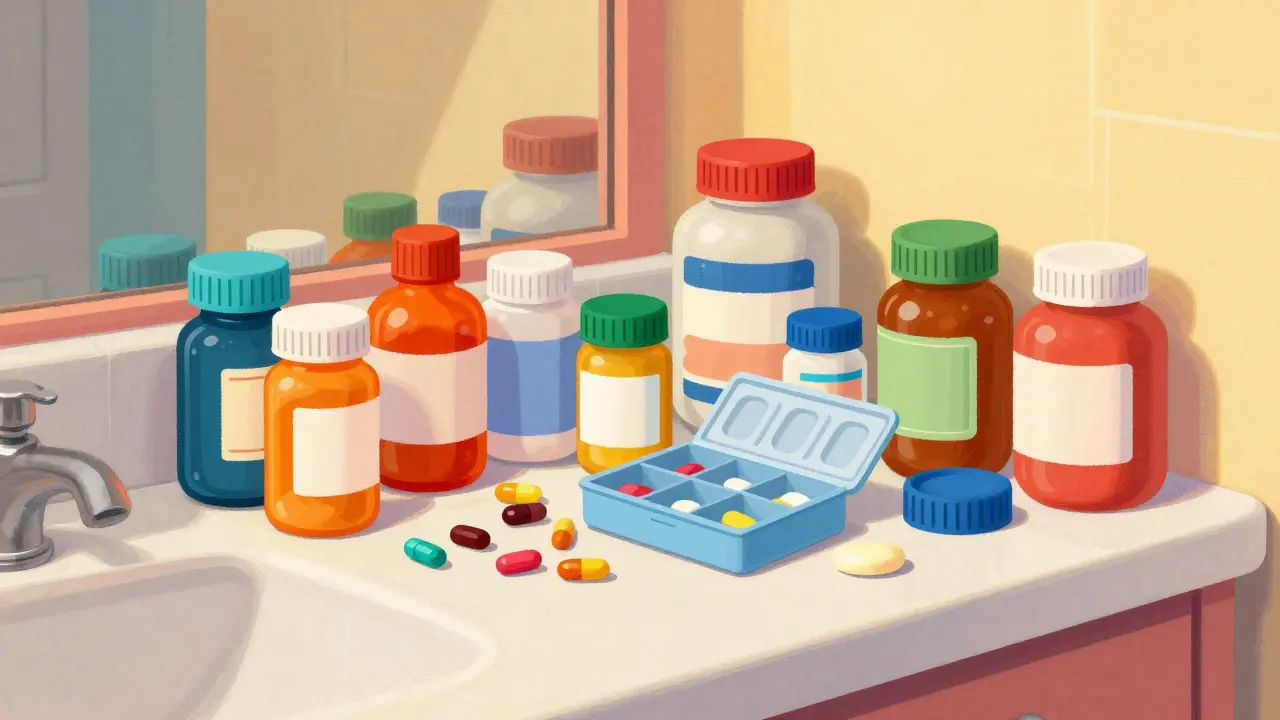
Imagine a medicine cabinet overflowing with bottles-some for blood pressure, others for cholesterol, a few for sleep, and a handful of supplements for joint pain. For many seniors, this isn't just a messy cupboard; it's their daily reality. When a person takes five or more medications regularly, doctors call it polypharmacy is the concurrent use of multiple medications by a single patient, which significantly increases the risk of adverse drug reactions in older adults. While these drugs are often prescribed to treat genuine conditions, the sheer volume of pills can create a dangerous ripple effect in the body.
The problem isn't just the number of pills. It's how they interact. As we age, our bodies change how they process medicine. Your liver doesn't clear toxins as quickly, and your kidneys slow down-dropping about 1% in clearance every year after age 40. This means a dose that worked perfectly at 50 might become toxic at 80. When medications pile up, the result isn't always better health; sometimes, it's a cycle of "prescribing cascades" where a new drug is given to treat a side effect caused by a previous drug, mistaken for a new medical condition.
| Medication Class | Primary Risk for Elderly | Potential Impact |
|---|---|---|
| Benzodiazepines | Sedation and imbalance | 50% increase in fall risk |
| NSAIDs (e.g., Ibuprofen) | Gastrointestinal irritation | 2.5x higher bleeding risk |
| Anticholinergics | Cognitive impairment | 1.5x higher dementia risk |
| Opioids | Severe sedation/confusion | 300% increase in fall risk |
Why the "Pill Burden" Happens
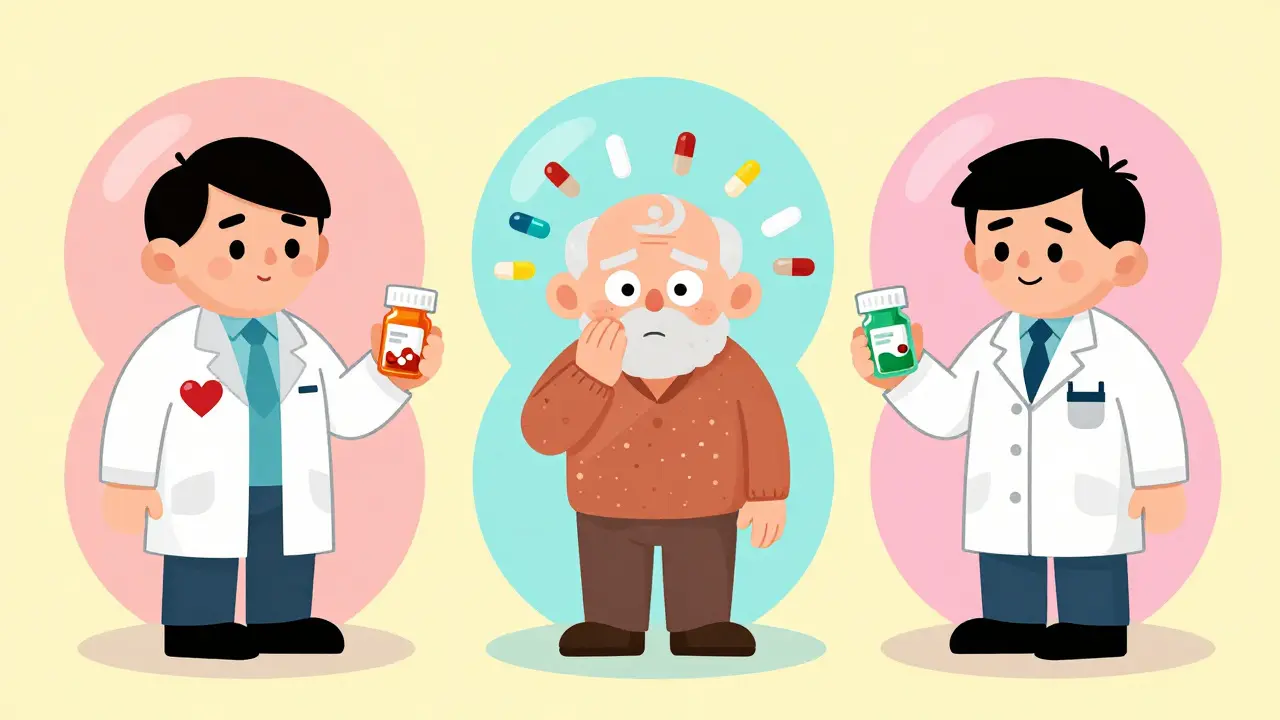
Polypharmacy usually doesn't happen because of one "bad" doctor. Instead, it's often a result of a fragmented healthcare system. A patient might see a cardiologist for their heart, a rheumatologist for arthritis, and a GP for diabetes. If these specialists don't talk to each other, they may prescribe drugs that clash or overlap. In fact, about 42% of seniors manage medications from three or more different specialists, which is a recipe for confusion.
Care transitions are another danger zone. Moving from a hospital to a nursing home or returning home after surgery often leads to errors. Medication reconciliation failures account for nearly 50% of post-discharge complications. It's common for patients to keep taking an old medication while starting a new, similar one because no one told them to toss the old bottle. This "accumulation" turns a manageable regimen into a risky one.
The Real-World Risks of Too Many Meds
When a senior is over-medicated, the symptoms often look like "just getting old," which makes the problem hard to spot. Confusion, dizziness, and fatigue are frequently dismissed as aging, but they are often signs of drug toxicity. One of the most concrete dangers is falls. Approximately 35% of emergency department visits among seniors are due to falls resulting in injury, many of which are linked to medications that affect balance or consciousness.
Beyond physical falls, there is the mental toll. The struggle to remember which pill to take at 8 AM, 12 PM, and 6 PM can be overwhelming. Research shows that 68% of people dealing with polypharmacy struggle with schedules requiring three or more different dosing times. When the regimen becomes too complex, patients start skipping doses or taking them incorrectly, which can lead to unstable blood pressure or dangerous sugar spikes in diabetics.
The Path to Safety: Deprescribing
The solution isn't just to stop taking pills randomly-that's dangerous. Instead, medical professionals use a process called deprescribing is the systematic, supervised process of reducing or stopping medications when the risks outweigh the benefits. The goal is to shift the focus from treating a specific disease to improving the patient's overall quality of life.
Doctors often use the Beers Criteria is a gold-standard list of medications that are potentially inappropriate for older adults based on clinical evidence to decide what should go. By identifying high-risk drugs and slowly tapering them off, clinicians have seen adverse drug events drop by 22% and hospital admissions decrease by 17%. It's a careful balancing act: is the benefit of this blood pressure pill worth the risk of the patient falling and breaking a hip?
Practical Steps for Families and Caregivers
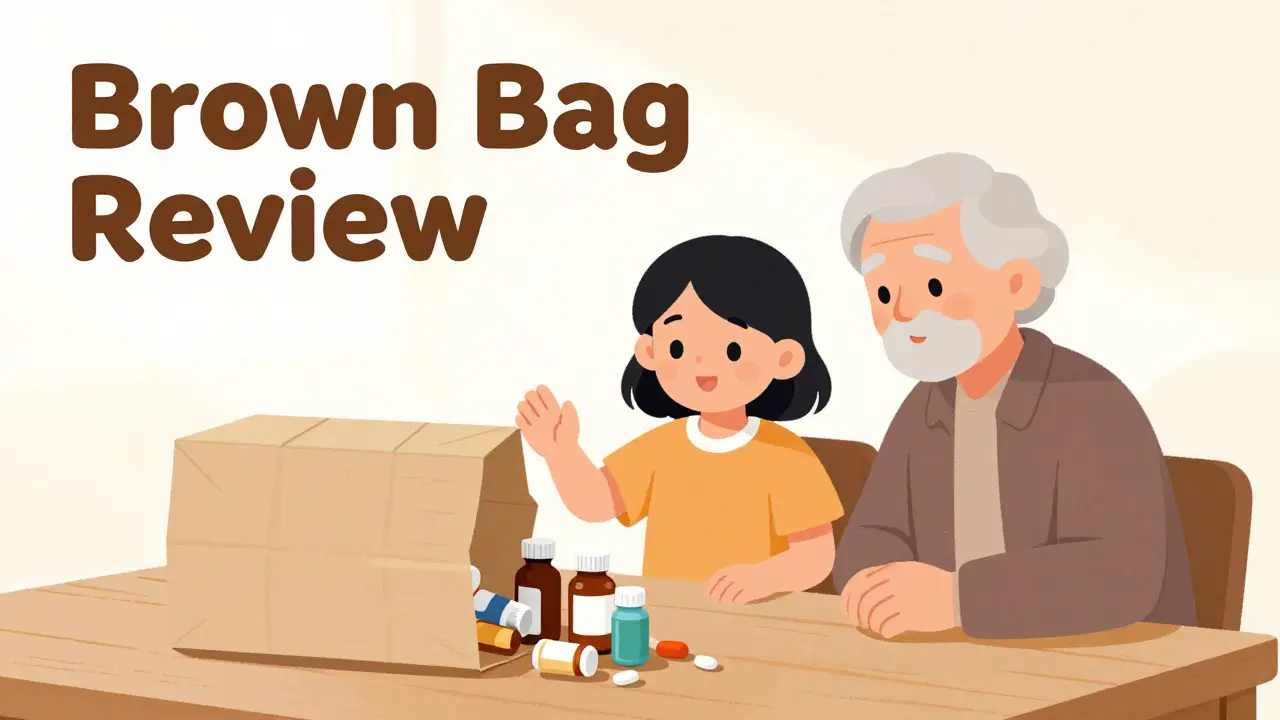
You don't have to be a doctor to help manage a loved one's medications. The most effective tool is the "Brown Bag Review." This is exactly what it sounds like: gather every single bottle-including prescriptions, over-the-counter creams, vitamins, and herbal supplements-and put them in a bag. Take that bag to the next doctor's appointment. This simple act often reveals duplicates or old prescriptions that are no longer needed.
Here are a few other ways to improve safety:
- Request a Comprehensive Medication Review: Ask the primary doctor for a full audit of all drugs. If you have Medicare Part D, there are specific requirements for these reviews that can save both money and health.
- Use One Pharmacy: Using a single pharmacy for all prescriptions allows the pharmacist's software to flag dangerous drug-drug interactions more effectively across different specialists.
- Simplify the Schedule: Ask the doctor if any medications can be switched to once-a-day dosing or if a pill organizer (blister pack) can be used to prevent double-dosing.
- Question New Prescriptions: When a new drug is suggested, ask: "What is the goal of this medication?" and "Can we review my current list to see if this replaces something else?"
Modern Tools in Geriatric Care
Medicine is moving toward a more personalized approach. We are seeing a shift from using chronological age (how many years you've lived) to biological aging (how your organs are actually functioning). New tools like the Medication Appropriateness Index help doctors quantify the risk of a regimen. Some advanced health systems are even using pharmacogenomics-testing a patient's DNA to see how they will react to specific drugs before the first pill is ever taken.
Pharmacist-led management is also proving to be a game-changer. When pharmacists take the lead in medication therapy management, hospital readmissions for Medicare patients have dropped by 24%. They have the specific expertise to spot the subtle interactions that a general practitioner might miss during a short 15-minute visit.
How many medications are considered "too many" for a senior?
Clinically, polypharmacy is defined as taking five or more medications daily. However, the "right" number depends on the person. Someone with five necessary, well-tolerated drugs may be safer than someone taking three drugs that cause severe side effects. The focus should be on whether the medications are appropriate, not just the total count.
Is it safe to stop a medication if I think I don't need it?
No. You should never stop or change the dose of a prescription medication without consulting a healthcare provider. Some drugs, especially blood pressure medications or antidepressants, can cause dangerous withdrawal symptoms or "rebound" effects if stopped abruptly. Always use a supervised deprescribing process.
Why do seniors react differently to medications than younger adults?
Aging changes your body's chemistry. The liver processes drugs more slowly, and the kidneys are less efficient at flushing them out. Additionally, seniors often have a higher percentage of body fat and lower water content, which changes how fat-soluble and water-soluble drugs are distributed in the body, often leading to higher concentrations of the drug in the bloodstream.
What is the "Prescribing Cascade"?
A prescribing cascade happens when a side effect of one drug is mistaken for a new medical condition, leading the doctor to prescribe a second drug to treat that side effect. For example, a drug for hypertension might cause a cough; the doctor then prescribes a cough suppressant, which might cause drowsiness, leading to a third drug to treat the fatigue. This cycle quickly leads to polypharmacy.
How can I tell if my loved one is suffering from medication side effects?
Look for sudden changes in behavior or physical ability. New onset of confusion, frequent dizziness, an increased number of falls, or a sudden loss of appetite can be signs of drug toxicity. If these symptoms appear shortly after a new medication is started or a dose is changed, it is a strong signal to contact their physician immediately.