
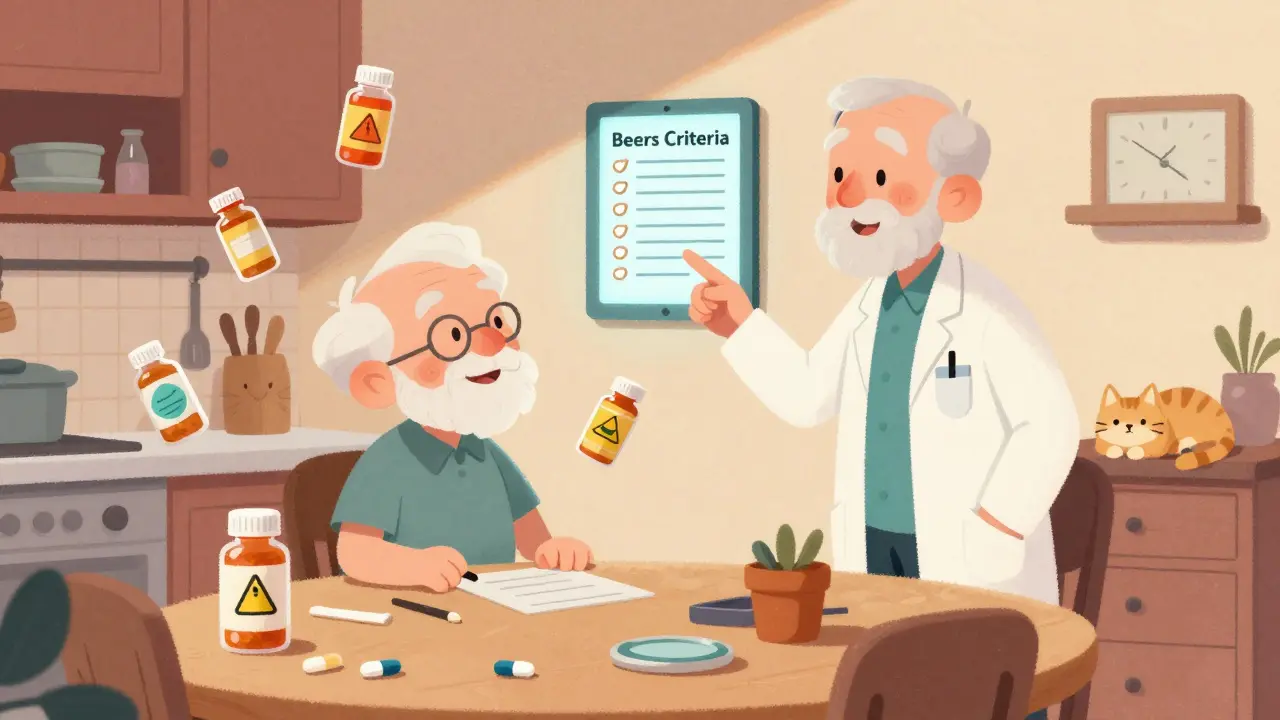
Every year, millions of older adults in the U.S. take medications that could do more harm than good. It’s not because their doctors are careless-it’s because many common drugs, safe for younger people, become risky for those over 65. That’s where the Beers Criteria comes in. Developed by the American Geriatrics Society (AGS), this living guideline identifies drugs that should be avoided or used with extreme caution in seniors. It’s not a blacklist. It’s a lifeline.
What Exactly Is the Beers Criteria?
The Beers Criteria is a science-backed list of medications that pose higher risks than benefits for adults 65 and older. First created in 1991 by Dr. Mark Beers, it’s been updated every three years since 2011. The latest version, released in May 2023, is based on a review of over 7,300 studies-22% more than the previous update. This isn’t theoretical. It’s practical. It’s used in hospitals, pharmacies, and doctor’s offices across the country.Why does it matter? Seniors make up just 13.5% of the U.S. population, but they take 34% of all prescription drugs. And about 23% of older adults living at home are on at least one medication flagged by the Beers Criteria. That’s nearly one in four. These drugs contribute to 15% of hospital admissions in this age group-many of which are preventable.
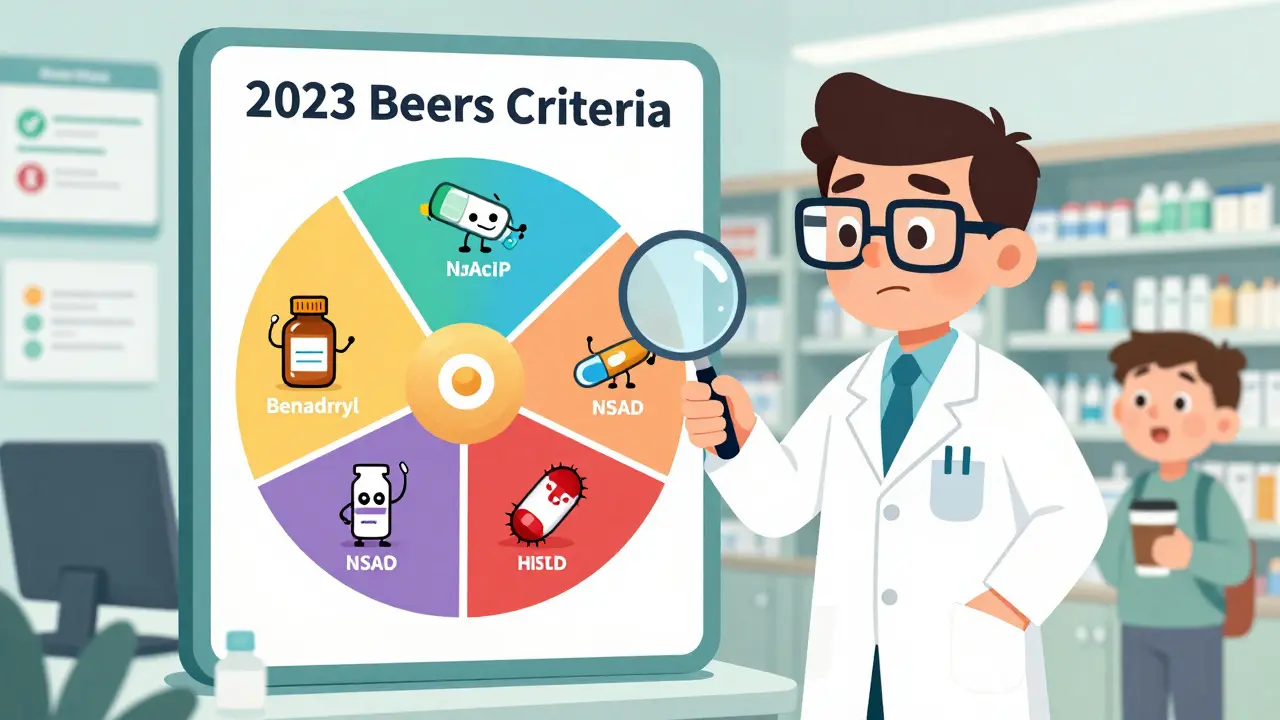
The Five Key Categories of the 2023 Beers Criteria
The 2023 update organizes risky medications into five clear groups. Knowing these helps you understand why a drug might be flagged-not just what it is.
- Medications to Avoid Altogether-These are drugs with no clear benefit and high risk. Examples include first-generation antihistamines like diphenhydramine (Benadryl) and hydroxyzine. They’re strong anticholinergics, meaning they block a brain chemical needed for memory and focus. In seniors, this can cause confusion, falls, and even long-term cognitive decline. Even short-term use can be dangerous.
- Drugs to Avoid With Certain Conditions-Some medications are fine for most people but dangerous if you have specific health issues. For instance, NSAIDs like ibuprofen or naproxen can worsen heart failure, cause kidney damage, or trigger bleeding in the stomach. If you have high blood pressure, heart disease, or a history of ulcers, these drugs should be off the table.
- Drugs to Use With Caution-These aren’t banned, but they need careful monitoring. Dabigatran (Pradaxa), an anticoagulant, increases bleeding risk in people over 75 or those with reduced kidney function. Gabapentin, often prescribed for nerve pain, can cause dizziness and falls if not dosed properly. The key? Dose adjustments based on kidney function, not age.
- Harmful Drug Interactions-Some drugs are safe alone but deadly together. Combining anticholinergics with opioids or sedatives can lead to severe constipation, urinary retention, or extreme drowsiness. These combos are especially risky for seniors with dementia or mobility issues.
- Medications Needing Renal Dose Adjustments-Kidneys slow down with age. Many drugs are cleared through the kidneys, so the same dose that’s safe for a 30-year-old can overdose an 80-year-old. Gabapentin, metformin, and many antibiotics require lower doses based on creatinine clearance. Without this adjustment, toxicity builds up silently.
The 2023 list includes 134 medications or classes. Thirty-two new ones were added-like certain antipsychotics for dementia-related agitation-and 18 were removed after new evidence showed they were safer than previously thought.
How It Compares to Other Tools
You might hear about STOPP/START, another guideline used mostly in Europe. The Beers Criteria is more common in the U.S.-used by 87% of healthcare systems compared to 42% for STOPP/START. Why? It’s built for American healthcare. Medicare Part D programs require Beers Criteria checks for seniors on eight or more medications. Most EHR systems, like Epic and Cerner, have Beers alerts built in.
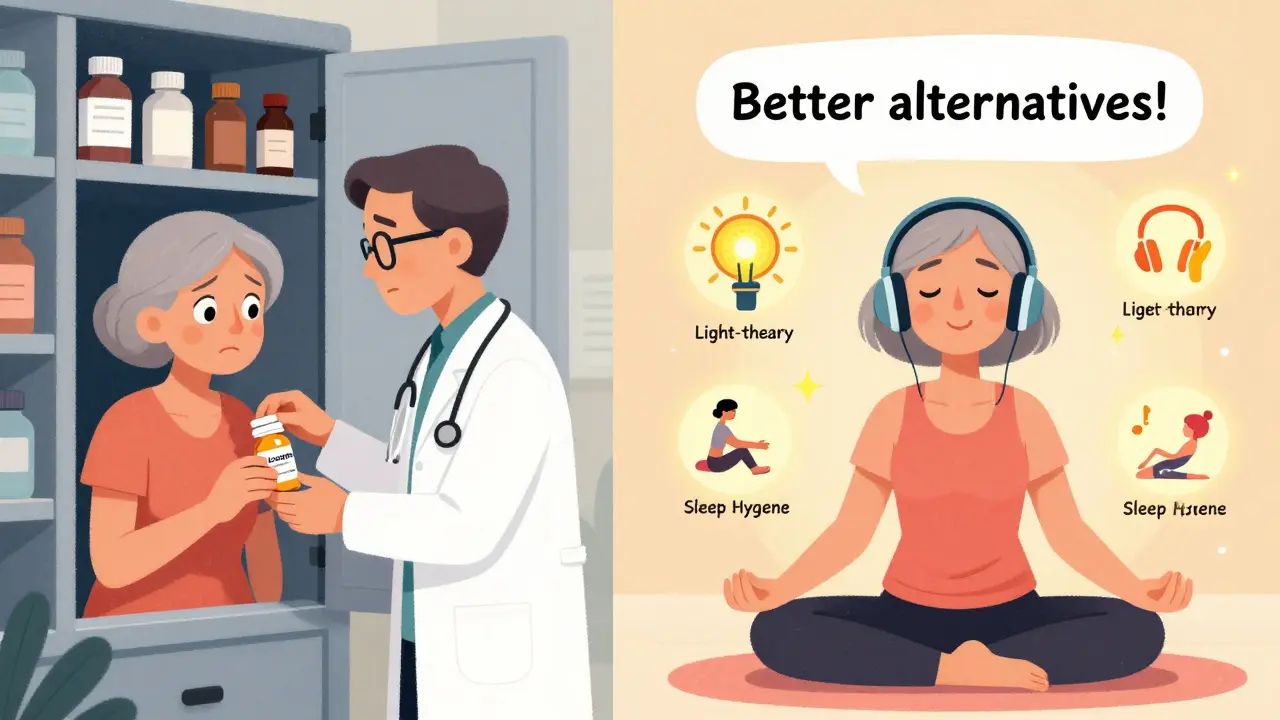
But it’s not perfect. STOPP/START looks at conditions first-like, “Is this drug right for heart failure?”-while Beers focuses on the drug itself. That means sometimes, a flagged drug is actually needed. For example, antipsychotics are listed as inappropriate for dementia-related psychosis. But in rare cases, when agitation leads to violence or self-harm, they may be necessary. That’s why the 2023 update added an Alternatives List-147 evidence-backed options, from cognitive behavioral therapy for insomnia to non-drug pain relief methods.
Real-World Impact: What Happens When It’s Used
When clinics use the Beers Criteria properly, results are clear. One study showed a 28% drop in adverse drug events. Another found that hospitals using EHR alerts reduced inappropriate prescribing by 37% in just six months.
Dr. Lisa Chen, a geriatrician, saw benzodiazepine prescriptions for insomnia drop by 43% in patients over 75 after her clinic added Beers alerts. That’s huge. Benzodiazepines like lorazepam and zolpidem increase fall risk by 50% in seniors. Cutting them saves lives.
But there’s a flip side. One in three primary care doctors say they’re overwhelmed by alerts. One system generates 12 Beers warnings per visit. That’s alert fatigue. When everything blinks red, doctors start ignoring them. The solution? Smart filtering. Prioritize high-risk flags-like anticholinergics in dementia patients-and mute low-risk ones.
Who Uses It-and Who’s Left Out
Pharmacists are the biggest fans. Eighty-nine percent say the Beers Criteria improved their ability to catch dangerous meds during medication reviews. Medicare mandates its use for dual-eligible patients. Pharmaceutical companies are responding: 23 new “senior-friendly” drugs have hit the market since 2023.
But here’s the gap: 61% of seniors don’t even know their meds are being checked against the Beers Criteria. Patients aren’t being told why a drug was changed or why a new one was refused. That erodes trust. And there’s another blind spot: cost. Dr. Jerry Avorn from Harvard points out that 25% of Medicare beneficiaries skip meds because they’re too expensive. The Beers Criteria doesn’t address that. A cheaper, risky drug might be the only option for someone choosing between food and medicine.
How to Use It Effectively
If you’re a clinician, start with your EHR. Most systems now auto-flag Beers-listed drugs. But don’t rely on alerts alone. Review meds at every visit. Ask: “Why is this still here?” Look for long-term use of anticholinergics, sedatives, or NSAIDs. Check kidney function. Use the free AGS pocket guide or mobile app-downloaded over 87,000 times.
If you’re a caregiver or senior, ask three questions:
- Is this drug on the Beers Criteria list?
- Is there a safer alternative-drug or non-drug?
- What happens if I stop this?
Don’t stop meds on your own. But do bring up the Beers Criteria. Say: “I read about this list. Is my medication on it?” Many doctors will appreciate the conversation.
The Future of Beers: What’s Next
The 2026 update will expand kidney dosing guidance to cover 100% of medications cleared by the kidneys. Right now, only 68% have clear rules. That’s a big step toward precision.
AI is coming. The AGS is working with Google Health to build predictive tools that flag patients at highest risk before they even get prescribed a risky drug. And the Alternatives List will keep growing-adding more non-drug options like exercise for chronic pain, light therapy for depression, and sleep hygiene for insomnia.
Still, challenges remain. In low-resource settings, 63% of Beers-listed drugs have no affordable substitute. That’s a global problem. But in the U.S., the framework is strong. It’s not perfect. But it’s the best tool we have to keep older adults safe, independent, and out of the hospital.
What medications are most commonly flagged by the Beers Criteria?
The top flagged drugs include first-generation antihistamines like diphenhydramine (Benadryl), benzodiazepines like lorazepam and alprazolam, nonsteroidal anti-inflammatory drugs (NSAIDs) like ibuprofen and naproxen, antipsychotics such as haloperidol, and certain muscle relaxants like cyclobenzaprine. These are commonly prescribed for insomnia, anxiety, pain, and agitation-but their risks in seniors often outweigh benefits.
Can a medication on the Beers Criteria ever be appropriate?
Yes. The Beers Criteria is a guide, not a rule. For example, antipsychotics are flagged for dementia-related agitation, but if a patient is at risk of harming themselves or others, they may still be necessary. The key is whether the benefit outweighs the risk-and whether alternatives have been tried. The 2023 update’s Alternatives List helps clinicians make those decisions.
How often is the Beers Criteria updated?
The American Geriatrics Society updates the Beers Criteria every three years. The most recent version was published in May 2023. Updates are based on new clinical studies, FDA warnings, and real-world outcomes data. A new update is expected in 2026.
Do Medicare plans require the use of the Beers Criteria?
Yes. Medicare Part D requires prescription drug plans to use the Beers Criteria in medication therapy management programs for dual-eligible beneficiaries-those on both Medicare and Medicaid. This affects over 12 million Americans and ensures that pharmacists review high-risk medications as part of routine care.
Are there free tools available to access the Beers Criteria?
Yes. The American Geriatrics Society offers a free pocket guide and a mobile app that updates quarterly. The app includes the full 2023 list, alternatives, and dosing tips for kidney impairment. It’s been downloaded over 87,000 times and saves clinicians an average of 8.2 minutes per patient encounter.



Martin Halpin
Look, I get that the Beers Criteria is supposed to be this holy grail for geriatric meds, but let’s be real - it’s just another bureaucratic checklist that turns doctors into compliance robots. I’ve seen a 79-year-old with chronic pain get yanked off naproxen because it’s on the list, then prescribed this $400/month ‘safer’ alternative that her Medicare won’t cover. So now she’s hobbling around in agony while the algorithm says ‘all good.’ The real issue isn’t the drugs - it’s that we’ve outsourced clinical judgment to a spreadsheet. And don’t even get me started on how these ‘alternatives’ are just ‘try yoga’ or ‘take a walk’ like we’re all living in a Whole Foods with a personal trainer.
It’s not about avoiding risk - it’s about managing it. And sometimes, that means letting a patient take a little risk so they can actually enjoy their last years without being drugged into a zombie state. The Beers list? It’s a safety net. But when it becomes a cage? That’s when the real harm happens.