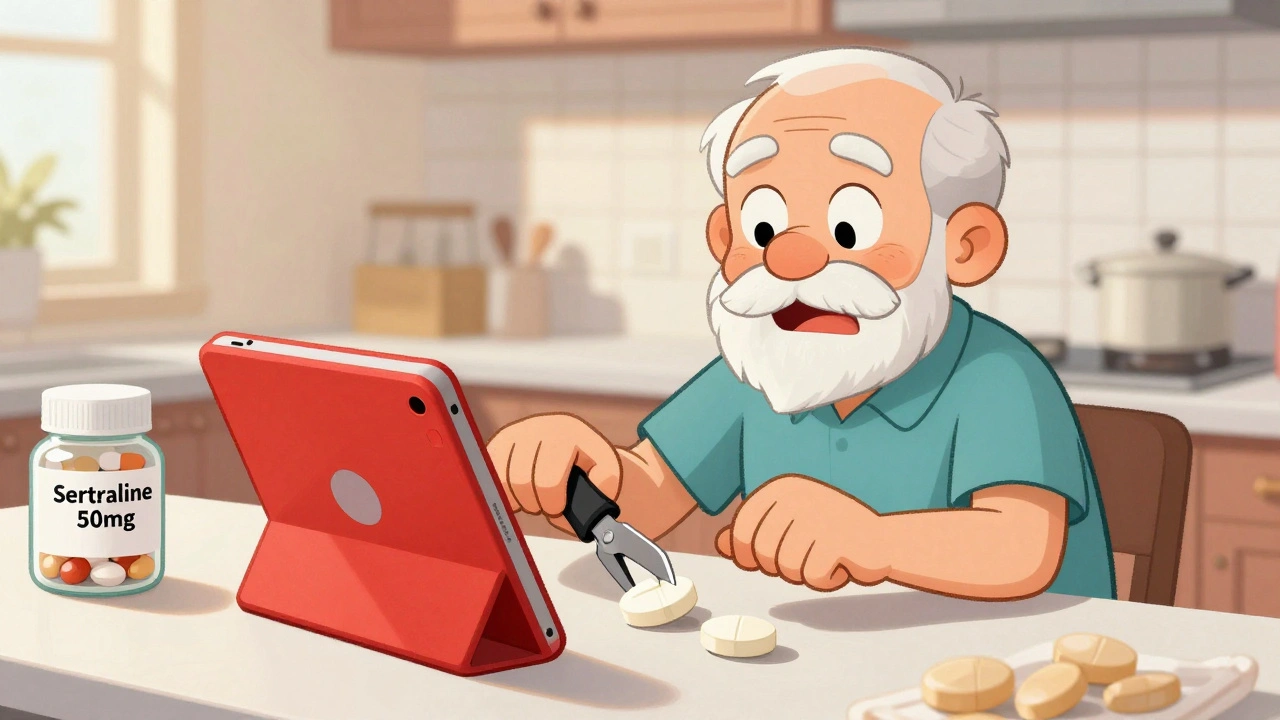
Pill Cutter: How to Safely Split Pills and Save Money on Medications
When you need to take half a pill, a pill cutter, a simple device designed to split tablets evenly for accurate dosing. Also known as a tablet splitter, it’s a low-cost tool that helps you stretch your prescription further—especially useful for expensive brand-name drugs or when your doctor prescribes a dose that doesn’t match the tablet strength. Many people use it to cut pills like lipitor, prozac, or atenolol, but not all pills are safe to split. Some have coatings, extended-release layers, or are too fragile, and splitting them can change how the drug works in your body.
Pill cutting ties directly into how generic drugs, lower-cost versions of brand-name medications that must meet FDA bioequivalence standards are used. Because generics often come in higher strengths than needed, splitting them lets you avoid buying two different pills. For example, if your doctor wants you on 25mg of a drug but it’s only sold as 50mg, a pill cutter lets you split it safely. But this only works if the pill is scored and designed for splitting—something pharmacists can confirm. It also connects to dosage adjustment, the process of modifying medication strength based on patient response, age, or side effects, which is common in older adults or those with kidney or liver issues. You might not realize it, but your doctor might suggest splitting a pill to fine-tune your treatment without switching medications.
But it’s not just about cost. Some people split pills to reduce side effects or ease swallowing. Others do it because insurance won’t cover the lower dose. Still, there are risks. Splitting a capsule or a time-release tablet can cause too much medicine to hit your system at once. That’s why it’s never a DIY decision—always check with your pharmacist or doctor first. The same goes for drugs like clozapine or digoxin, where tiny changes in blood levels can be dangerous. Even if a pill looks easy to split, if it’s on the list of drugs that shouldn’t be split, don’t risk it.
What you’ll find below are real-world guides on how to split pills safely, which medications are safe to cut, and how to avoid common mistakes that could hurt your health. You’ll also see how pill splitting fits into bigger topics like generic substitution, therapeutic equivalence, and patient perception—because sometimes, even if the pill is chemically identical, your body reacts differently if you think it’s not the same. These posts give you the facts you need to make smart, safe choices without overpaying or risking your treatment.
Learn which pills are safe to split and which ones can be dangerous. Save money on meds without risking your health by following expert guidelines on tablet splitting.