
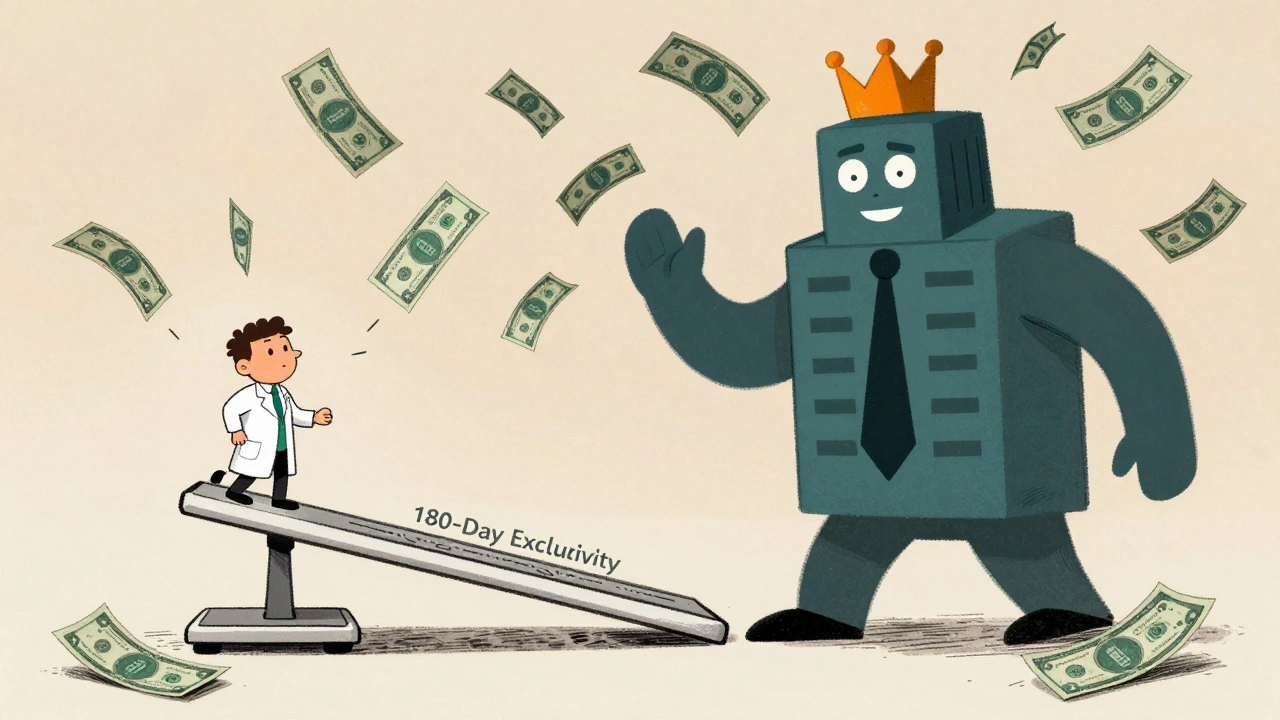
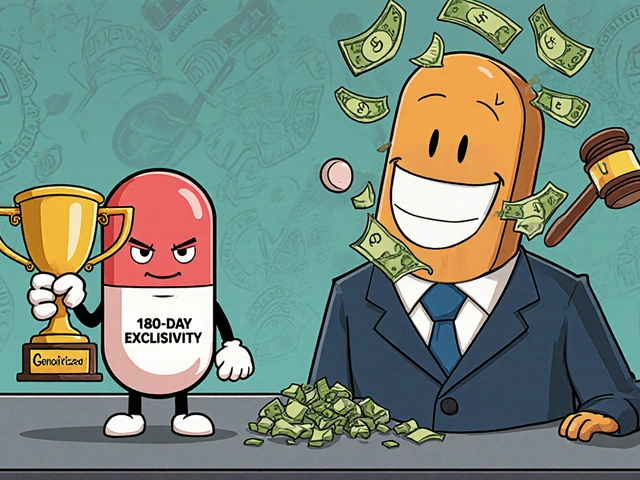
When a brand-name drug loses its patent, you’d think generic versions would flood the market right away. But that’s not how it works. In the U.S., the first company to challenge a brand-name drug’s patent and win approval gets something powerful: 180 days of exclusivity. That means no other generic can enter the market during that time. It’s not a reward for being first to file - it’s a reward for being first to take a legal risk. And it’s the main reason why generic drugs even exist in the first place.
Why the 180-Day Rule Exists
The 180-day exclusivity rule didn’t come out of nowhere. It was built into the Hatch-Waxman Act of 1984, a law meant to fix a broken system. Before that, brand-name companies could stretch their patents forever, keeping generics off the market even after the science was public. Generic manufacturers had no incentive to spend millions challenging patents - because if they lost, they lost everything. The law changed that. It gave them a shot at a financial lifeline: 180 days where they’re the only generic seller.This isn’t just about fairness. It’s about money. Generic drugs now make up 90% of all prescriptions filled in the U.S., but cost only 23% of what brand-name drugs do. That’s because the 180-day exclusivity pushes the first generic to launch fast and cheap. Once they’re in, prices drop hard. A study by the Rand Corporation found that during those first 180 days, generics sell at 15-20% of the brand’s price. After that, when more generics join, prices fall to 9-12%. That’s billions saved every year.
How It Actually Works
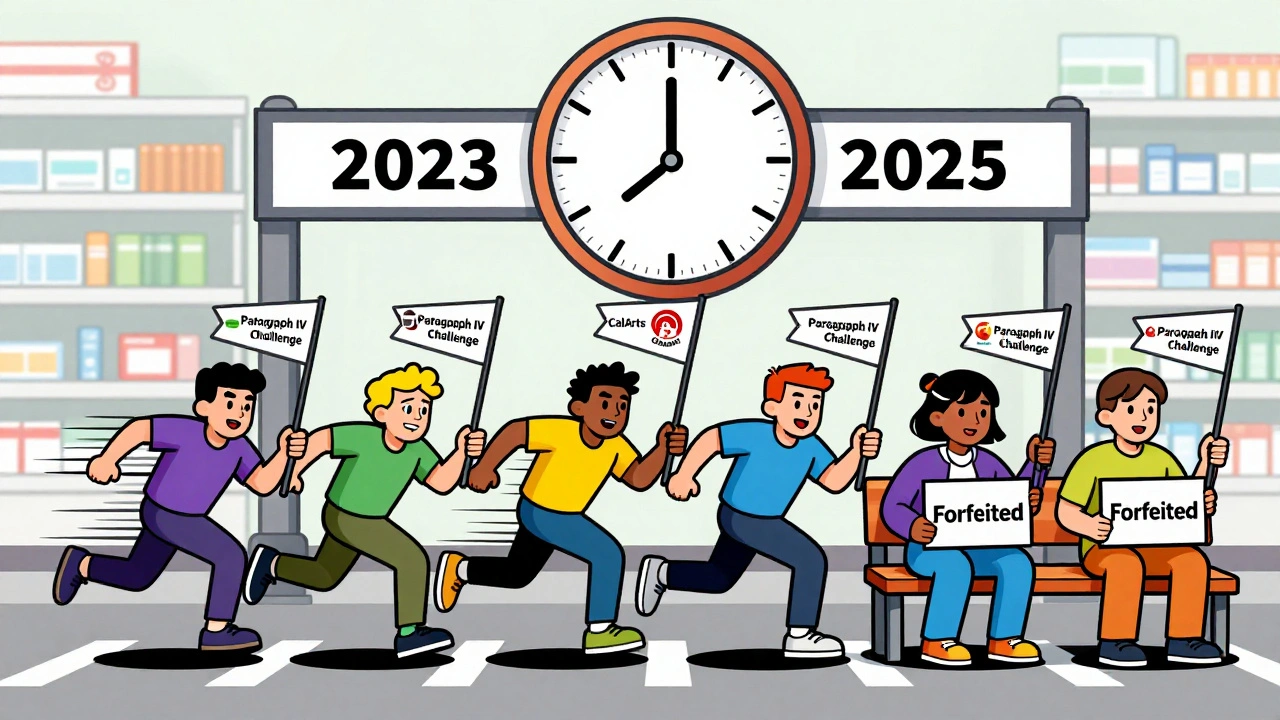
Here’s the technical side, simplified. A generic company files what’s called an ANDA - an Abbreviated New Drug Application. But to get the exclusivity, they must also file a Paragraph IV certification. That’s their legal notice saying: “Your patent is invalid, or we don’t infringe it.” That’s the gamble. If they’re wrong, they get sued. If they’re right, they win the 180-day clock.The clock doesn’t start when they get FDA approval. It starts when they start selling the drug - or when a court rules in their favor. That’s a big deal. It means a company can get approved in 2023, sit on it, and wait for a court decision in 2025. Only then does the 180-day clock begin. And during that waiting period, no other generic can enter. That’s how some companies stretch 180 days into years.
There’s another twist: if two or more companies file the same Paragraph IV challenge on the same day, they all share the 180 days. In 2020, six companies qualified for the exclusivity on apixaban, a blood thinner. Only three actually launched. The other three forfeited. The three who did launch split the 180 days evenly. That’s how messy this gets.
The Dark Side: When Exclusivity Becomes a Delay Tactic
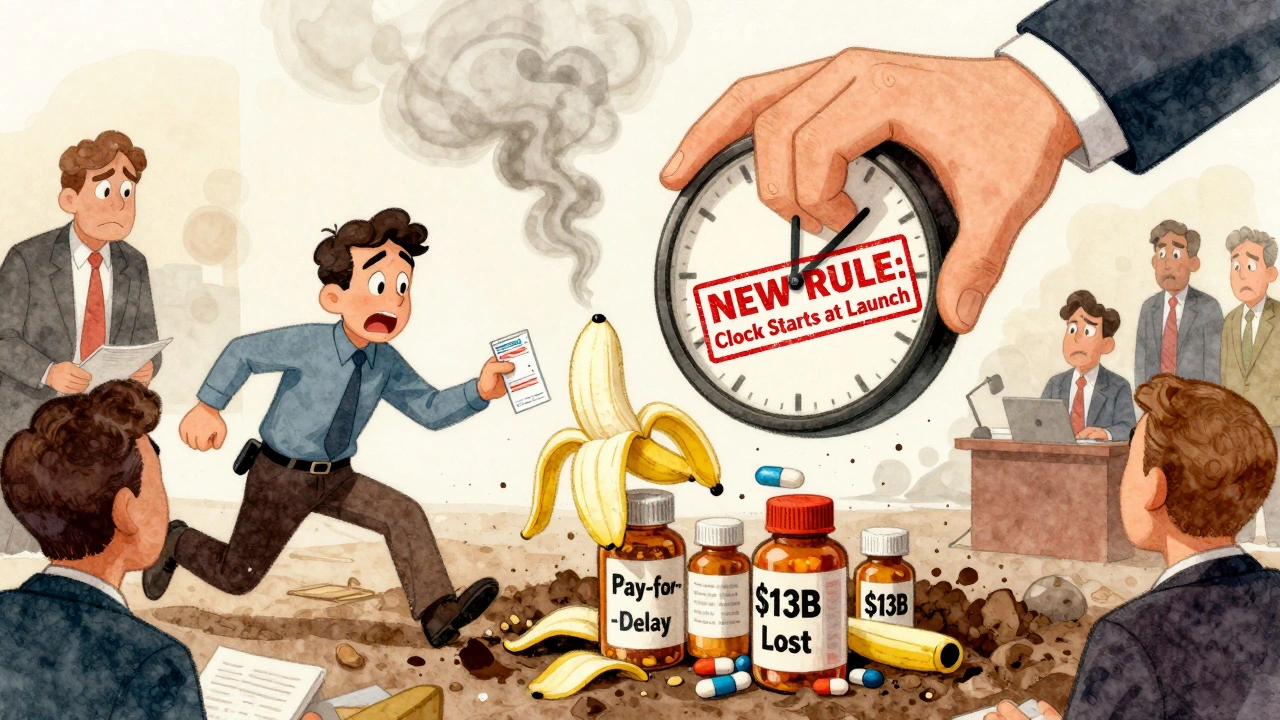
Here’s the ugly truth: the system was meant to speed up generics. But it’s often used to slow them down.Brand-name companies sometimes pay generic makers to delay their launch. That’s called a “pay-for-delay” deal. The FTC found 147 of these between 2015 and 2020. In one case, a brand-name drug stayed at full price for 18 months after the first generic got approval - because the generic just didn’t launch. They got the exclusivity, but they didn’t use it. They held it hostage.
Even without pay-for-delay, some generics sit on approval. Why? Because if they launch too soon, they risk getting sued again. Or they wait for the brand to lower prices first, so they can undercut them more. The average time from filing a patent challenge to actually selling the drug? 42 months. That’s over three and a half years. The 180-day exclusivity was meant to be a sprint. Too often, it’s a waiting game.
Who Benefits - and Who Doesn’t
The big winners? The top five generic manufacturers: Teva, Viatris, Sandoz, Amneal, and Hikma. Between 2018 and 2023, they grabbed 58% of all 180-day exclusivity periods. That’s not because they’re smarter. It’s because they have the lawyers, the money, and the risk tolerance to fight patent battles.Small generic companies? They’re the ones who need this rule the most. A 2024 FDA report said 63% of small manufacturers say the 180-day exclusivity is the only reason they bother with patent challenges. Without it, they can’t compete with big pharma’s legal teams. But they’re also the most likely to forfeit. About 35% of first applicants lose their exclusivity because they can’t launch within 75 days of getting a “Notice of Commercial Marketing.” They don’t have the supply chains. Or the cash to ramp up production fast.
Patients lose, too. A Harvard Medical School professor testified in 2022 that patients pay $13 billion extra every year because of these delays. The FTC says 37 cases in 2023 alone involved generics who got exclusivity but waited over 18 months to launch. That’s not competition. That’s collusion.
The Push for Change
The FDA knows the system is broken. In 2022, they proposed a fix: make the 180-day clock work like it’s supposed to. Under the new model - borrowed from the Competitive Generic Therapy (CGT) program - the clock starts only when the first generic actually hits the market. No more sitting on approval. No more stretching it to years. The exclusivity lasts 180 days, period.That change would cut average delays by 8.2 months per drug, according to the Congressional Budget Office. That’s billions in savings. It would also force generics to act fast. If you get approved, you launch - or you lose your shot.
But not everyone wants this change. Big generic companies argue it’ll scare off challengers. If the reward is smaller, why risk the lawsuit? That’s a real concern. But the current system is already failing. The FDA’s own data shows that over 10,000 generic drugs have entered the market since 1984 - but too many of them came late, too late, or not at all.
What’s Next?
Congress is listening. Senator Chuck Grassley introduced the Preserve Access to Affordable Generics Act in 2023. It would crack down on fake patent challenges - the kind filed just to block competition, not because the patent is actually weak. The FTC is also stepping up enforcement. They’re now tracking every single 180-day exclusivity case, watching for delays.The bottom line? The 180-day exclusivity rule was meant to be a bridge - connecting patent expiry to affordable medicine. But the bridge got clogged. Too many players are using it to block traffic, not let it flow. The fix isn’t to get rid of the rule. It’s to make it work the way it was designed: fast, fair, and for patients.
Right now, the system is a gamble. But it’s one that’s costing Americans billions. If the new rules pass, we could see 900-950 generic drugs hit the market each year by 2027 - up from 750-800 today. That’s not just a policy change. That’s better access. Lower prices. Real competition.



wendy b
so like… the 180 day thing is kinda wild right? like, its supposed to be a sprint but everyone’s just chilling with their approval like its a vacation? i mean, i get it-lawyers got bills too-but why does it take 42 months to launch? the FDA said fix it, but no one listens. again. because money.