ANDA Process: How Generic Drugs Get Approved in the U.S.
When you pick up a generic pill at the pharmacy, you’re holding a product cleared through the ANDA process, the legal pathway the U.S. Food and Drug Administration uses to approve generic versions of brand-name drugs. Also known as the Abbreviated New Drug Application, it’s the backbone of affordable medicine in America. Unlike brand-name drugs that need years of new clinical trials, generics skip most of that. Instead, they prove one thing: they work the same way in your body. That’s called bioequivalence, the scientific proof that a generic drug delivers the same amount of active ingredient at the same rate as the brand. No extra fluff. No marketing spin. Just science.
The whole system runs on the Hatch-Waxman Act, a 1984 law that balanced innovation and access by letting generic companies challenge patents and get a head start on market entry. It’s why you can buy generic versions of drugs like lisinopril or metformin for pennies. But it’s also why some companies play games—like launching authorized generics right when a patent challenger enters the market, crushing competition before it even starts. The FDA doesn’t approve drugs based on price, but the ANDA process was designed to make lower prices inevitable. It’s not perfect, but it works. You get the same medicine, just cheaper. And that’s the point.
What you’ll find in these posts is the real-world impact of this system. From how bioequivalence testing catches subtle differences in digoxin generics to why 180-day exclusivity, a reward meant to encourage generic challengers, often gets undermined by brand-name companies. You’ll see how patient perception tricks people into thinking generics don’t work as well, even when they’re chemically identical. And you’ll learn why some drugs—like those with a narrow therapeutic index—need extra monitoring, no matter how clean the ANDA looks on paper. This isn’t just bureaucracy. It’s your medicine. And understanding how it got here helps you use it better.
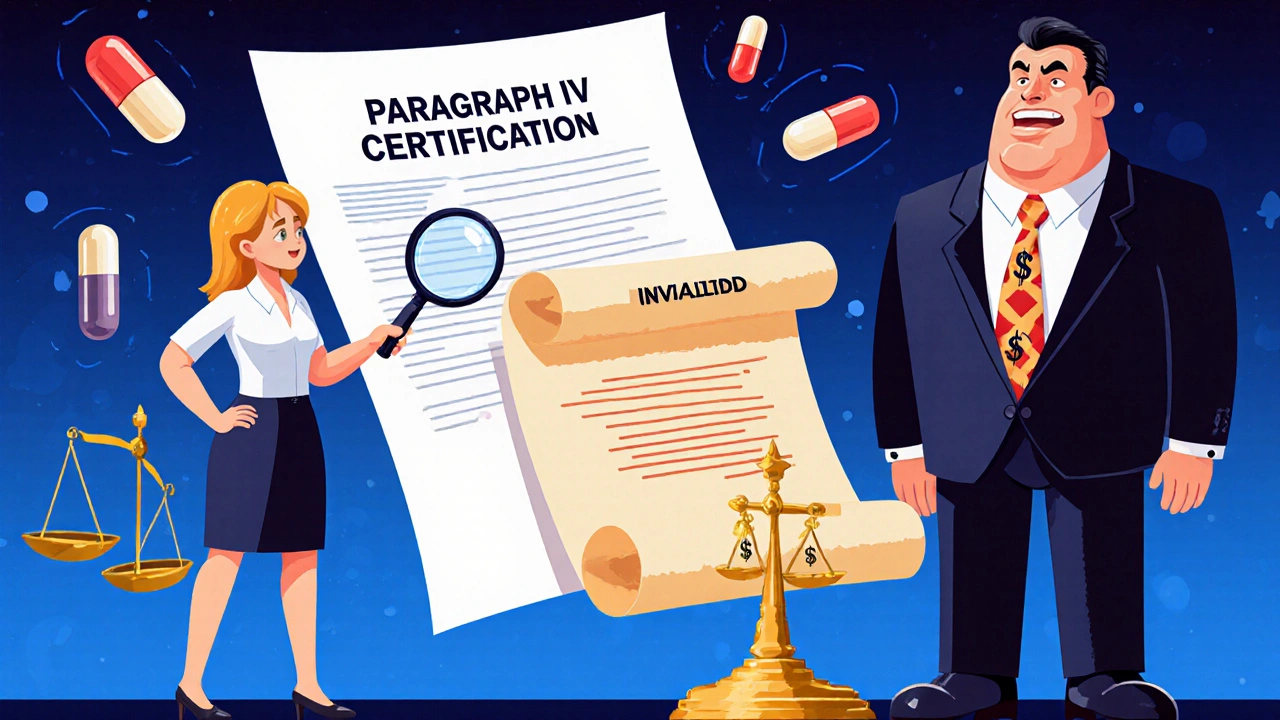
Paragraph IV certifications allow generic drug makers to legally challenge brand-name patents before launch. This Hatch-Waxman Act mechanism has saved over $1.7 trillion since 1984 by accelerating generic entry and rewarding the first challenger with 180 days of exclusivity.