
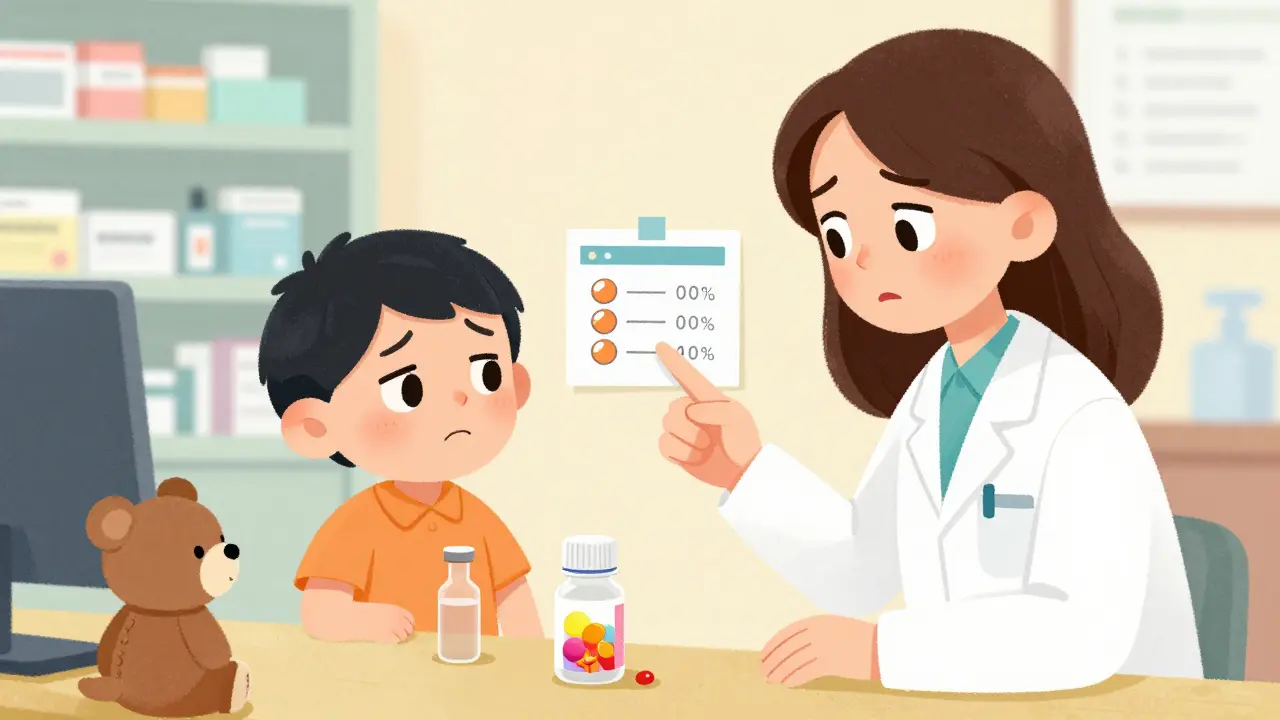
When a pharmacist hands you a new pill that looks different from what you’ve been taking for years, it’s natural to feel uneasy. For parents of young children or older adults managing multiple medications, this moment can spark real anxiety. The truth is, generic substitution isn’t just a cost-saving move-it’s a clinical decision that needs careful communication. And if you don’t explain it right, patients stop taking their meds, make mistakes, or lose trust in their care team.
Why Generic Substitution Feels Risky
Generic drugs aren’t knockoffs. They’re required by the FDA to have the same active ingredient, strength, and route of delivery as the brand-name version. They must also be bioequivalent-meaning they get absorbed into the body at a rate and extent within 80% to 125% of the brand drug. That sounds precise, but it’s not the whole story. For a 3-month-old with reflux taking lansoprazole, switching from Prevacid to a generic omeprazole suspension isn’t just a pill swap. The generic version might not even be approved for infants under one year. That’s not a loophole-it’s a gap in the system. The FDA found that only 38% of generic drugs have pediatric labeling. Many generics are made in adult-friendly forms: tablets, capsules, or bitter-tasting liquids that kids refuse. A 2022 Reddit thread with nearly 300 comments from parents showed that 64% reported their child refused the generic version of amoxicillin because of taste. Seniors face different but just as serious challenges. On average, older adults take 4.8 prescription drugs. When their blood pressure pill changes shape, color, and size three times in six months, they don’t see “bioequivalence”-they see confusion. One 78-year-old told a focus group: “I stopped taking it because I thought it was a different medication.” That’s not irrational. It’s human.What’s Really Different Between Brand and Generic
The active ingredient is the same. But everything else? Not always. - **Fillers and binders** can change how the drug dissolves. For someone with a sensitive stomach, that can mean nausea or bloating-even if the drug itself hasn’t changed. - **Formulation matters most for kids.** Brand-name pediatric drugs often come as sweet suspensions, chewables, or dissolvable tablets. Generics? Often just crushed pills in a bottle. A 2019 FDA analysis found only 32% of generics for children are available in child-friendly forms, compared to 68% of brand-name versions. - **For seniors**, especially those with memory issues or vision loss, pill appearance is a key identifier. If a pill that was always blue becomes white and oval, it’s easy to think it’s a new drug-or worse, a mistake. Even small differences in absorption can matter. For drugs with a narrow therapeutic index-like seizure meds, blood thinners, or thyroid hormones-a 20% variation in absorption can lead to serious consequences. A 2017 Danish study of nine epilepsy patients found that switching to a different generic caused seizure relapses in half of them.How to Talk to Parents About Generic Substitution
You can’t just say, “It’s the same thing.” That’s what most pharmacists and doctors do-and it’s why 37% of parents discontinue the medication after a switch, according to a 2018 U.S. Pharmacist study. Here’s what works:- Start with empathy: “I know you’ve been giving your child this medicine for months. It’s normal to worry when it looks different.”
- Explain why it changed: “The pharmacy switched to a generic version because it’s less expensive, but it has the same active ingredient and works the same way.”
- Be specific about form: “This version comes as a liquid, but it’s not as sweet as the brand. If your child refuses it, we can try a different generic or ask the doctor about a special order.”
- Use the teach-back method: Ask, “Can you tell me how you’ll give this to your child?” If they say, “I’ll mix it with juice,” and the instructions say “don’t mix with food,” you catch the error before it happens.
- Offer alternatives: Some pharmacies stock multiple generic brands. If one tastes awful, try another. Not all generics are made the same.
How to Talk to Seniors About Generic Substitution
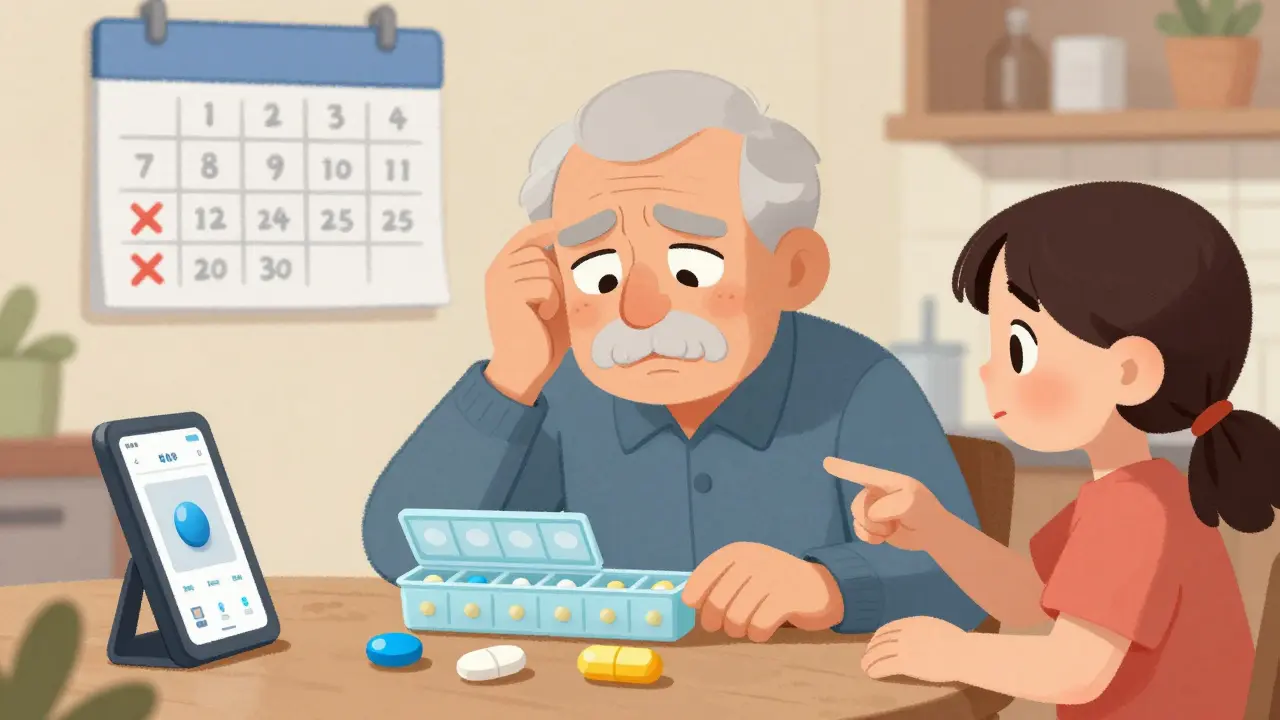
Seniors aren’t resistant because they’re stubborn. They’re resistant because they’re overwhelmed. The American Geriatrics Society recommends three key strategies:- Use large-print, simple handouts. Avoid medical jargon. Say “this pill lowers your blood pressure” instead of “this antihypertensive agent.”
- Include family members. If the patient lives with a spouse, child, or caregiver, involve them in the conversation. They’re often the ones managing pill boxes and refill schedules.
- Explain the nocebo effect. Many seniors report side effects after switching-headaches, dizziness, fatigue-but the generic has the same chemistry. The difference? Expectation. A 2021 study found 58% of seniors reported new side effects after a pill change, even when the drug was identical. Say: “Sometimes, when we change how a pill looks, our body notices the change and thinks something’s wrong. That doesn’t mean the medicine isn’t working.”
What Not to Say
Avoid these phrases-they’re common, but damaging:- “It’s just a generic.” (Implies inferiority.)
- “It’s cheaper, so it’s fine.” (Focuses on cost, not safety.)
- “The FDA says it’s the same.” (Too abstract. Patients don’t trust agencies-they trust people.)
- “Everyone takes generics.” (Invalidates their fear.)
- “This version has the same active ingredient and works the same way.”
- “We’re switching to save money, but your health comes first. If you feel off, we’ll switch back.”
- “Let’s write down what you’re feeling so we can track it together.”
When Not to Substitute
Not every drug should be swapped. Experts agree: avoid generic substitution for:- Narrow therapeutic index drugs: Warfarin, levothyroxine, phenytoin, lithium. Even small absorption changes can be dangerous.
- Pediatric formulations without pediatric labeling: If the generic isn’t approved for children under 12, don’t use it unless the doctor specifically approves it.
- Drugs with multiple substitutions in a short time: If a senior’s pill changes shape every few months, it’s not a substitution-it’s chaos.
What’s Changing in 2026
The FDA launched the Generic Drug Communications Initiative in 2023, requiring manufacturers to include clear notes about formulation differences in patient materials. New guidelines from the American Society of Health-System Pharmacists (January 2024) now require pharmacists to document patient understanding after every substitution. Digital tools are helping too. Apps that scan pill images and show the name, dosage, and manufacturer are now used by 67% of seniors who report feeling more confident about their meds. These tools aren’t perfect, but they reduce confusion. The biggest change? The shift from “substitution is automatic” to “substitution is a conversation.”What Patients Really Want
A 2023 study in Frontiers in Pharmacology found that 76% of patients believe they should have the right to choose between brand and generic-especially for long-term conditions. And 41% of parents and 33% of seniors said they’d pay more for the same formulation every time. That’s not about being difficult. It’s about control. When you’ve been on the same pill for 15 years, you don’t want your body to become a lab experiment. The goal isn’t to push generics. It’s to make sure when substitution happens, it’s done with care, clarity, and consent.Are generic drugs really the same as brand-name drugs?
Yes, in terms of active ingredient, strength, and how the body absorbs it. The FDA requires generics to be bioequivalent-meaning they work the same way in 80% to 125% of the time compared to the brand. But the inactive ingredients (fillers, dyes, flavors) can differ. That’s why some people notice taste changes or stomach upset. For most people, it doesn’t matter. For kids and seniors, those small differences can affect whether they take the medicine at all.
Why does my senior’s pill keep changing shape and color?
Pharmacies often switch between different generic manufacturers to get the best price. Each company makes the same drug with a different look-color, shape, size. It’s legal, but confusing. Seniors may think they’re getting a new medicine or that something’s wrong. To prevent this, ask your pharmacist to stick with one generic brand if possible. Or use a pill-identification app to help recognize each version.
Should I let my child take a generic version of their asthma or seizure medicine?
For most medications, yes. But for drugs with a narrow therapeutic index-like seizure meds (phenytoin, valproate) or asthma meds (theophylline)-even small changes in absorption can cause serious problems. Talk to your pediatrician first. If the brand version is working well and your child tolerates it, ask if staying on it is an option. Don’t assume the generic is automatically safe for kids just because it’s approved for adults.
What if my senior says the generic makes them feel worse?
Take it seriously-even if the drug is chemically identical. Many people experience the nocebo effect: they expect to feel worse, so they do. But that doesn’t mean it’s all in their head. Their body is reacting to change. Document the symptoms, and ask the pharmacist if a different generic brand is available. If symptoms persist, talk to the doctor. Sometimes, going back to the brand is the safest choice.
Can I ask for the brand-name drug instead of the generic?
Yes, you can. In most cases, your doctor can write “Dispense as Written” or “Do Not Substitute” on the prescription. Insurance may require you to pay more out of pocket, but if the brand version works better for your child or elderly relative, it’s worth it. Your health isn’t a cost-saving metric.
Next Steps for Families and Caregivers
- Keep a medication list: Write down every drug, dose, and pill appearance. Update it every time there’s a change.
- Ask before the switch: If a new prescription comes in, call the pharmacy and ask: “Is this a brand or generic? What does it look like?”
- Use a pill organizer with labels: Label each slot with the drug name and purpose, not just “morning pill.”
- Download a pill ID app: Apps like Drugs.com or MyTherapy let you scan pills and see what they are. Great for seniors.
- Speak up: If something feels off-taste, energy, sleep, mood-say something. Don’t assume it’s just aging.




Diana Stoyanova
Okay but like… have you ever tried giving a 2-year-old a generic amoxicillin that tastes like regret and old socks? 🤢 I swear my kid gagged so hard he launched a spitball across the room. Brand name was sweet, fruity, and didn’t make him cry. Generic? He now hides under the table every time he sees a bottle. It’s not just about chemistry-it’s about survival. Kids aren’t lab rats.