

Using a pill organizer can make managing multiple medications easier-until it doesn’t. For millions of people, especially older adults taking five or more pills a day, these little boxes are lifesavers. But they’re also a hidden risk if used the wrong way. The truth? A well-used pill organizer can boost medication adherence by over 26%. A poorly used one? It can land you in the emergency room.
Why Pill Organizers Work (and When They Don’t)
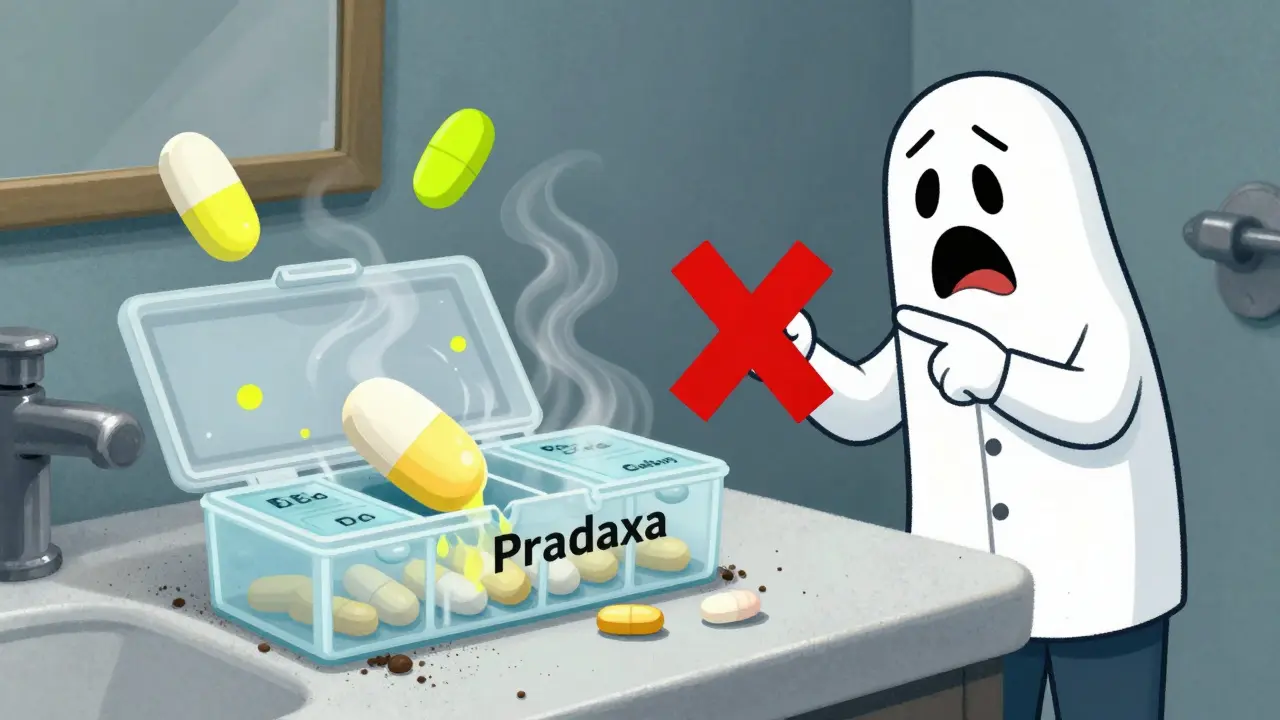
Pill organizers, also called weekly medication boxes, help you keep track of what to take and when. Most have compartments for each day of the week, and some even split each day into morning, noon, evening, and bedtime. They’re cheap, simple, and widely available-basic models cost under $3 at pharmacies like CVS or Walmart. For someone taking a steady dose of blood pressure pills or a daily vitamin, they’re perfect. But not all medications play nice with these containers. Some drugs break down fast when exposed to air, moisture, or light. Take Pradaxa (dabigatran), a blood thinner. The FDA warns: never transfer it from its original bottle. That bottle has a special desiccant cap that keeps moisture out. Put it in a plastic pill box, and within 30 days, up to 37% of the drug can lose its strength. One patient in New Zealand developed internal bleeding after repackaging Pradaxa into a weekly organizer-symptoms vanished only after going back to the original packaging. Other medications that shouldn’t go in pill organizers include:- Effervescent tablets (like Alka-Seltzer)-they dissolve if they touch even a little moisture.
- Nifedipine (a calcium channel blocker)-degrades in light.
- Cabergoline and sodium valproate-both absorb moisture like sponges, changing how your body absorbs them.
- Warfarin-a blood thinner where tiny changes in dosage can spike your INR levels dangerously high.
The Hidden Danger: Contamination and Cross-Contamination
A 2019 study found nearly 29% of pill organizers used in hospitals had visible bacterial growth. Staphylococcus aureus-common on skin-was found in over 12% of samples. That’s not just gross. It’s dangerous for people with weakened immune systems, like those on chemotherapy or with diabetes. Home users aren’t immune. Many people wash their organizer once a week, if at all. Some even share them with spouses or family members. That’s a big no. One Reddit user shared how their 72-year-old father mixed glipizide (a diabetes pill) and metformin in the same compartment. He took a double dose by accident and ended up in the hospital with low blood sugar. Clean your organizer properly:- Wash your hands with antimicrobial soap before handling pills.
- Wipe the organizer daily with 70% isopropyl alcohol.
- Once a week, wash it in the dishwasher on a sanitize cycle (if it’s labeled dishwasher-safe).
- Never mix medications from different people in the same box.
Smart vs. Simple: Which One Do You Need?
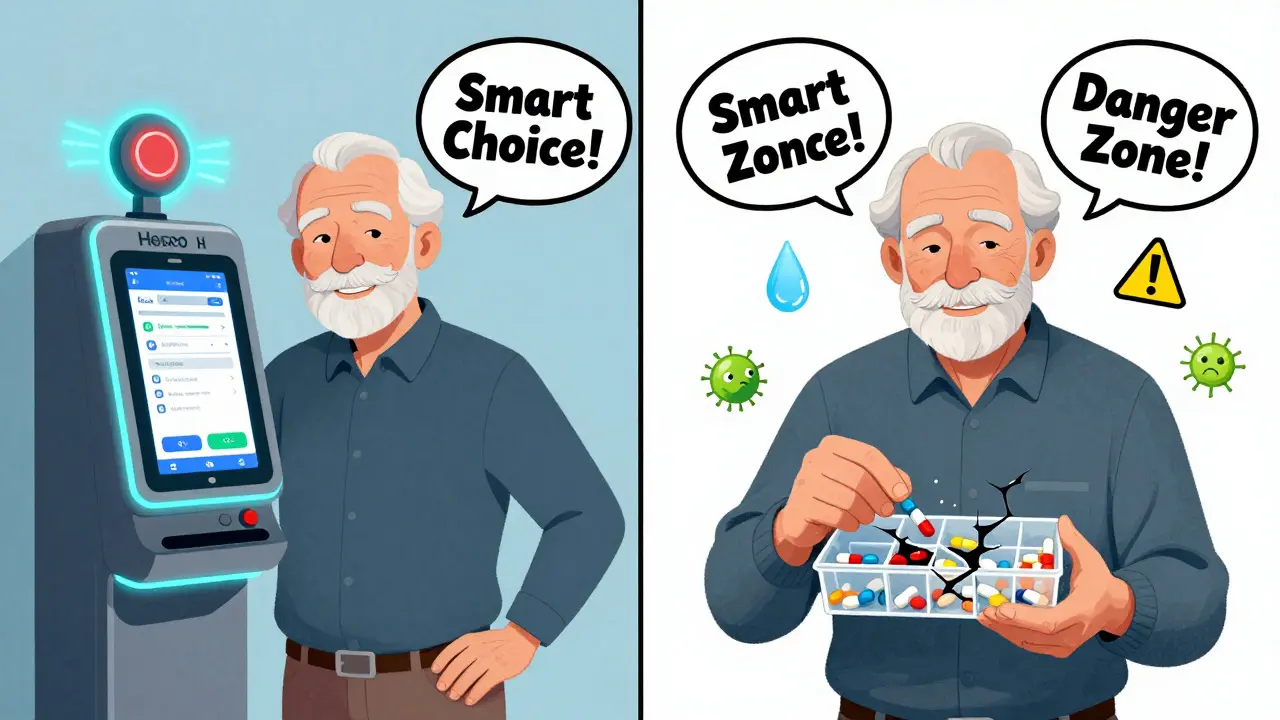
There’s a wide range of options-from $2 plastic boxes to $300 electronic dispensers like Hero Health. Here’s what works for whom:| Type | Best For | Pros | Cons |
|---|---|---|---|
| Basic Weekly (7-compartment) | People taking 1-3 meds daily, no complex timing | Under $5, lightweight, easy to carry | No alarms, lids pop open, no moisture control |
| Multi-Dose Daily (4x per day) | People taking meds at 4 different times | Clear time labels, good for complex regimens | Hard to fill, easy to mix up |
| Electronic Dispenser (e.g., Hero Health) | People with memory issues, caregivers, or on 5+ meds | Alarms, locked compartments, app alerts, humidity control | $200-$300, steep learning curve for seniors |
| Child-Resistant Lock Box | Households with young children | Prevents accidental ingestion | Harder for seniors to open, can delay emergency access |
When to Avoid Pill Organizers Altogether
If you’re taking any of these, skip the organizer unless your pharmacist says otherwise:- Medications with a "Do Not Repackage" label
- Drugs with narrow therapeutic windows (like warfarin or digoxin)-small changes in dose can be deadly
- Medications you take "as needed" (like painkillers or nitroglycerin)
- Any drug that’s sensitive to humidity, light, or temperature
How to Load Your Organizer Safely
Loading your box wrong is the #1 cause of errors. Follow these steps:- Do it on a clean, dry surface-wipe it with alcohol first.
- Wash your hands thoroughly.
- Check each pill against your prescription list. Don’t rely on memory.
- Use a magnifying organizer if you have trouble reading small print.
- Color-code compartments with sticky notes if needed (e.g., red for morning, blue for night).
- Fill only one week at a time. Don’t stockpile.
- Double-check with a family member or caregiver if you’re unsure.
What to Do If You Make a Mistake
Mistakes happen. You put two pills in one compartment. You missed a day. You’re not alone. Here’s what to do:- Don’t panic. Most errors don’t cause harm if caught early.
- Call your pharmacist. They can tell you if it’s safe to skip a dose or take a double one.
- Write it down. Note what happened, when, and what you did. This helps prevent repeats.
- Re-evaluate your system. Maybe you need a smart dispenser, or maybe you should go back to original packaging.



Cassandra Collins
ok but have yall seen the new pill boxes they put microchips in?? my cousin swears the gov is tracking meds through the plastic boxes now. she says if you take too much blood thinner, they send a drone to your house. i dont know if shes high or what but she wont touch any organizer since last year. also my aunt’s box had mold in it and she said the pharmacist laughed at her. 🤡