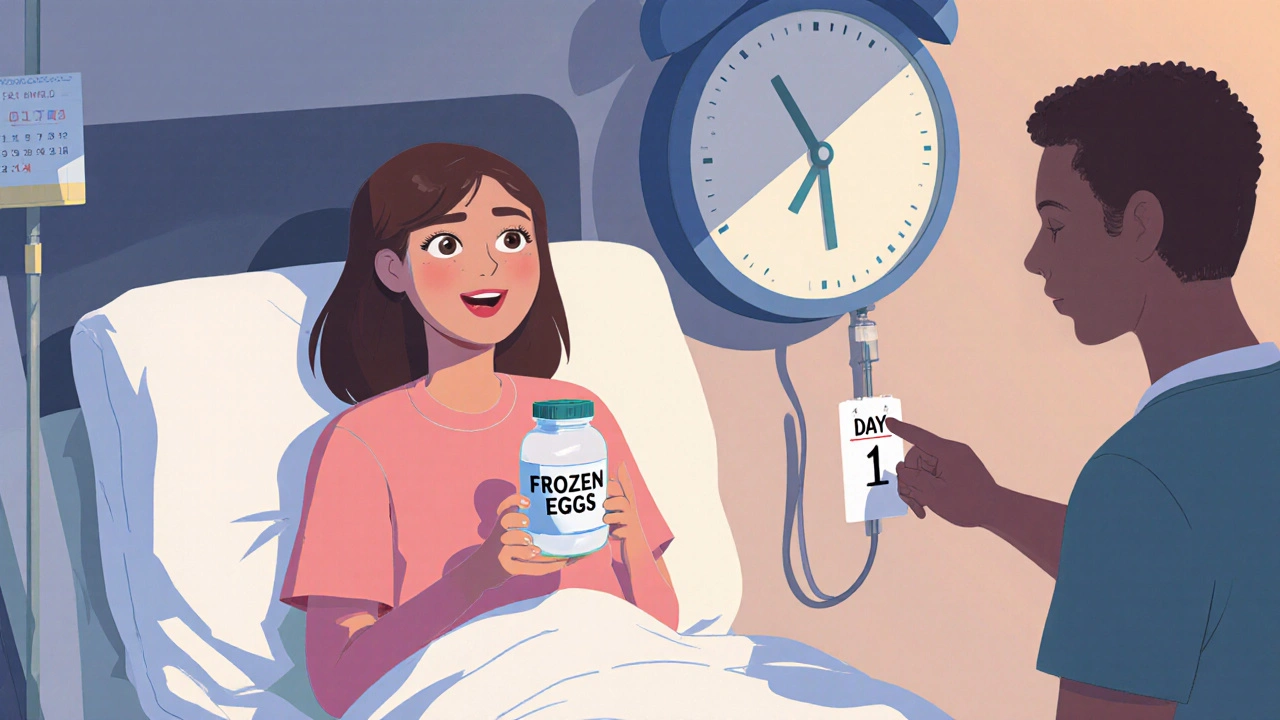
Ovarian Tissue Cryopreservation: Freezing Fertility for Future Use
When ovarian tissue cryopreservation, the process of removing, freezing, and storing ovarian tissue to preserve fertility. Also known as ovarian tissue freezing, it’s a powerful option for women who need to stop cancer treatments that could destroy their eggs. Unlike egg freezing, which requires hormone stimulation and timing around ovulation, this method doesn’t need those steps. That makes it the only viable choice for girls who haven’t hit puberty yet, or for women who can’t delay treatment to go through IVF.
This isn’t science fiction—it’s real, and it’s helping people have children after cancer. Doctors remove a piece of ovarian tissue through a small laparoscopic surgery, freeze it using special techniques, and store it in liquid nitrogen. Later, when the patient is ready to try for a baby, the tissue is thawed and re-implanted. Once it’s back in the body, it can start producing hormones and releasing eggs naturally. Over 200 live births have been reported worldwide from this method, and the success rate keeps climbing as techniques improve. It’s not perfect—there’s a small risk the tissue could bring back cancer cells if the original disease was blood-related—but for many, it’s the only shot at biological motherhood.
Related to this are fertility preservation, a broader set of medical strategies to protect reproductive potential before treatments that harm fertility, and ovarian tissue transplantation, the surgical process of putting frozen tissue back into the body. These are key parts of modern reproductive medicine, the field focused on helping people conceive when natural methods fail. While egg freezing gets more attention, ovarian tissue cryopreservation is often the only option for young patients or those with hormone-sensitive cancers like breast cancer, where stimulating ovaries isn’t safe.
What you’ll find below are real, detailed guides on how this procedure works, who qualifies, what the risks are, and how it compares to other ways of saving fertility. These aren’t theoretical articles—they’re based on clinical data, patient outcomes, and the latest medical guidelines. Whether you’re considering this for yourself, a loved one, or just trying to understand your options, the posts here cut through the noise and give you what matters: clear facts, honest risks, and real results.
Learn the proven options for preserving fertility before chemotherapy - from egg and sperm freezing to ovarian tissue banking. Understand what works, what doesn’t, and how to act fast before treatment begins.