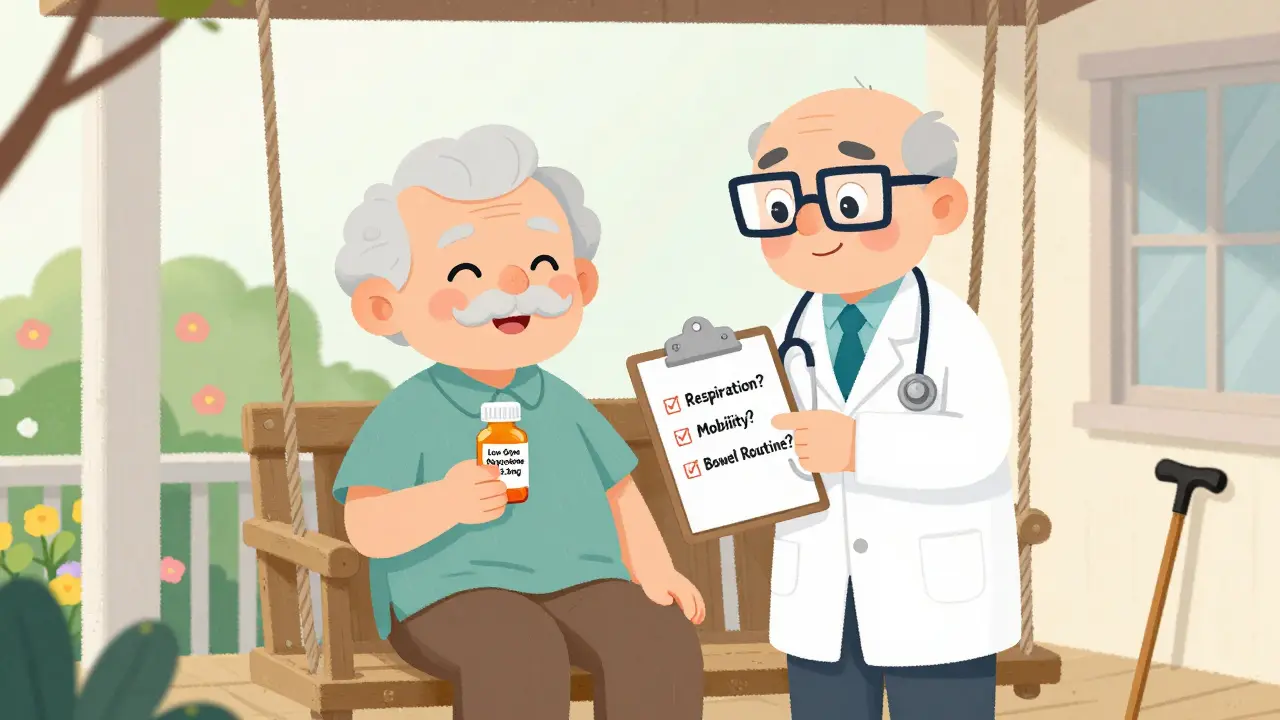
When seniors experience chronic pain, finding the right treatment isn't just about relieving discomfort-it's about staying safe. Opioids can help, but they come with real risks that grow stronger with age. What works for a 40-year-old might be dangerous for someone over 65. The key isn't avoiding opioids altogether, but using them the right way-with caution, monitoring, and personalization.
Why Seniors Are at Higher Risk
As we age, our bodies change in ways that affect how drugs work. The liver and kidneys don't clear medications as quickly. Body fat increases while muscle mass drops, which changes how opioids are absorbed and stored. This means a dose that's safe for a younger person can build up in an older adult’s system, leading to drowsiness, confusion, or even breathing problems. Many seniors also take multiple medications. A 72-year-old might be on blood pressure pills, diabetes meds, sleep aids, and arthritis drugs-all at once. When opioids mix with these, especially benzodiazepines or antidepressants, the risk of dangerous side effects like falls, delirium, or respiratory depression jumps sharply. A 2023 study in JAMA Network Open found that when rigid opioid limits were applied to older adults with cancer, many were switched to less effective drugs like gabapentin. But those drugs carry their own dangers: dizziness, confusion, and increased fall risk.What Opioids Are Safe? Not All Are Created Equal
Not every opioid is suitable for seniors. Some are outright risky.- Avoid meperidine (Demerol)-it breaks down into a toxic chemical that can cause seizures and delirium.
- Avoid codeine-it’s metabolized into morphine, but older adults often process it too slowly or too quickly, leading to unpredictable effects.
- Use tramadol and tapentadol with care-they can trigger serotonin syndrome when mixed with antidepressants or other CNS-affecting drugs.
- Hydrocodone, oxycodone, morphine, and hydromorphone are commonly used but must be started at very low doses.
- Buprenorphine (transdermal patch or buccal film) stands out as a safer option for many seniors. Studies show it causes less constipation and fewer CNS side effects-even when used with low-dose oxycodone for breakthrough pain.
Starting Doses: Less Is More
Never start a senior on a full adult dose. The rule of thumb? Begin at 30% to 50% of what you’d give a younger adult.- For oxycodone immediate release: start at 2.5 mg every 6 hours-not 5 mg.
- For morphine: start at 7.5 mg every 6 hours-not 15 mg.
- Use liquid formulations when possible. They allow even finer adjustments, like 1 mg or 2.5 mg doses.

Monitoring: What to Watch For
Starting an opioid isn’t the end of the story-it’s just the beginning. Regular check-ins are non-negotiable.- Respiratory function-especially if the patient has sleep apnea or COPD. Even slight breathing changes can be dangerous.
- Cognitive status-look for new confusion, memory lapses, or disorientation. These could be signs of opioid-induced delirium.
- Fall risk-opioids cause dizziness and slowed reflexes. A simple home safety check can prevent a broken hip.
- Constipation-this is almost universal. Start a bowel regimen (stool softeners, fiber, fluids) from day one. Don’t wait for it to become severe.
- Functional goals-ask: “Are you able to walk to the bathroom alone? Can you eat without help?” Pain relief means nothing if it doesn’t improve daily life.
What About Non-Opioid Options?
Opioids shouldn’t be the first choice. But alternatives have limits too.- NSAIDs (like ibuprofen or naproxen)-they’re fine for short flare-ups (1-2 weeks max), but long-term use raises the risk of stomach bleeding, kidney damage, and heart problems in seniors.
- Gabapentin and pregabalin-often prescribed as “alternatives,” but a 2023 study showed they reduce pain by less than 1 point on a 10-point scale. Worse, they cause dizziness and confusion in over 20% of older users.
- Acetaminophen-safer for the stomach and kidneys than NSAIDs, but cap it at 3 grams per day. For frail seniors over 80 or those who drink alcohol, keep it under 2 grams.
- Physical therapy, heat/cold therapy, TENS units, and cognitive behavioral therapy-these don’t carry drug risks and can be highly effective when combined with minimal medication.
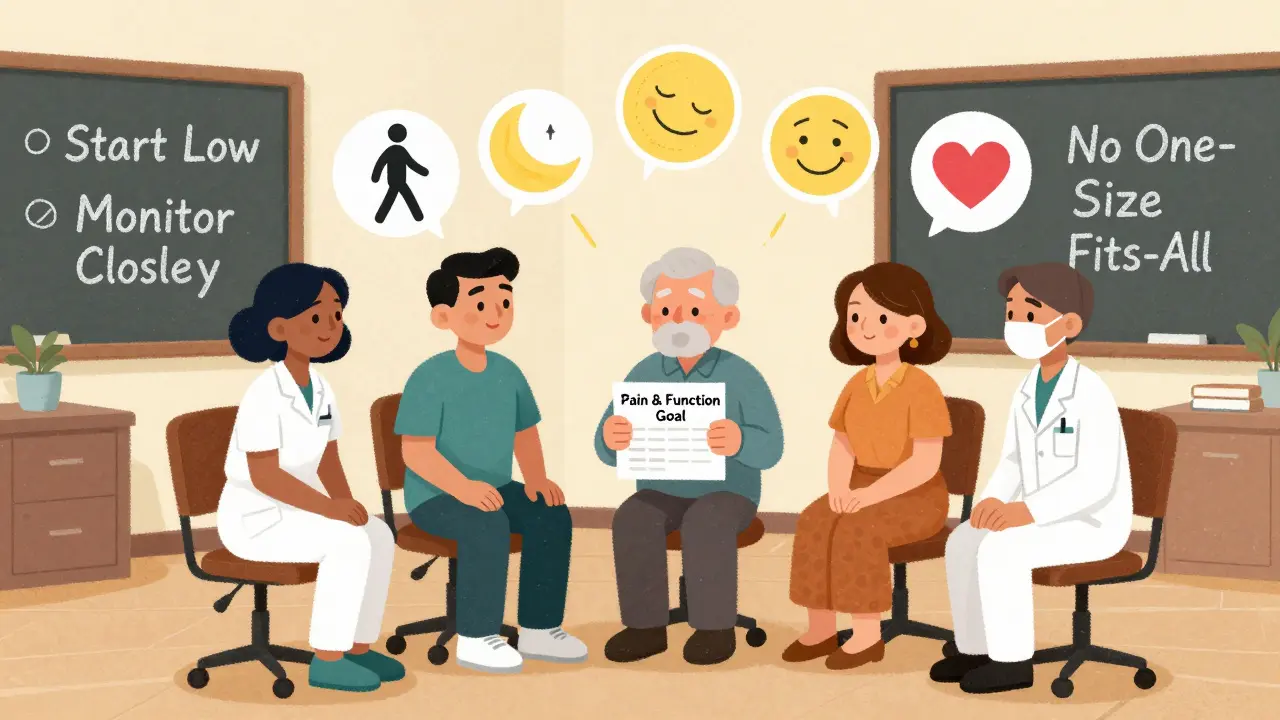
Dosage Limits: No One-Size-Fits-All
The old rule-“never exceed 90 morphine milligram equivalents (MME) per day”-was meant for younger adults. It doesn’t fit seniors.- Low dose: Up to 40 MME/day
- Medium dose: 41-90 MME/day
- High dose: Over 90 MME/day
What’s Changing in 2026?
The tide is turning. After years of over-restriction following the 2016 CDC guidelines, experts now agree: under-treating pain in seniors is just as harmful as over-treating it. Cancer patients, for example, often respond well to opioids-with a 75% success rate in reducing moderate-to-severe pain. The American Society of Clinical Oncology and National Comprehensive Cancer Network still recommend opioids as first-line for cancer pain. The 2022 CDC update explicitly corrected the earlier mistake of applying blanket limits to this group. New tools are emerging too:- Pharmacogenetic testing-blood tests that predict how someone will metabolize certain opioids-are becoming more accessible.
- Targeted nerve blocks and spinal cord stimulators are helping seniors avoid pills altogether.
- More clinics are integrating physical therapists and psychologists into pain teams, creating holistic plans.
Can seniors safely use opioids for long-term pain?
Yes, but only with careful planning. Seniors can use opioids long-term if they’re started at low doses, monitored regularly, and paired with non-drug therapies. The goal isn’t to eliminate pain completely-it’s to improve function and quality of life. Regular check-ups every 1-3 months, bowel management, and avoiding dangerous drug combinations are essential.
Why is buprenorphine considered safer for seniors?
Buprenorphine is a partial opioid agonist, meaning it has a built-in safety limit-it doesn’t fully activate the brain’s opioid receptors. This lowers the risk of overdose and respiratory depression. Studies show it causes less constipation and fewer drowsiness or confusion issues than full agonists like oxycodone or morphine. It can also be safely combined with low-dose short-acting opioids for breakthrough pain without triggering withdrawal.
What should I do if my elderly parent seems confused after starting an opioid?
Confusion is a red flag. Stop the opioid immediately and contact their doctor. Opioid-induced delirium is common in seniors and can be mistaken for dementia. The provider may reduce the dose, switch to a different opioid, or add a non-opioid treatment. Never adjust the dose on your own-always consult a clinician familiar with geriatric care.
Are there any opioids I should never give an older adult?
Yes. Meperidine (Demerol) is banned for seniors because its metabolite can cause seizures. Codeine is unsafe due to unpredictable metabolism. Methadone is risky because of long half-life and heart rhythm risks. Tramadol and tapentadol require extreme caution because of serotonin syndrome risk when mixed with antidepressants. Stick to oxycodone, morphine, hydromorphone, or buprenorphine unless advised otherwise.
How often should seniors on opioids have check-ups?
At minimum, every 1-3 months. The first check should be within 1-2 weeks of starting or changing the dose. Each visit should assess pain levels, side effects, function (like walking or sleeping), and signs of misuse. Urine drug screens and pill counts are recommended for long-term therapy. If the patient’s condition changes-like a new fall or hospitalization-re-evaluate immediately.