
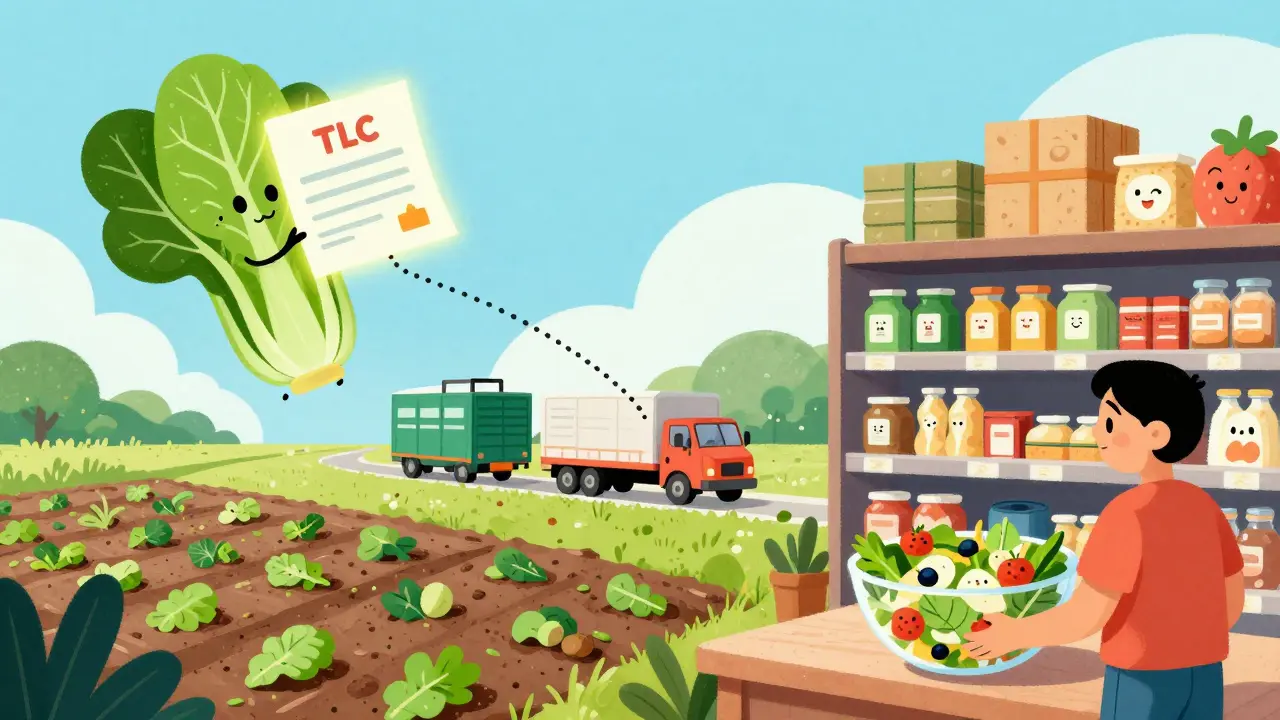
The FDA doesn’t guess where contaminated food came from. It follows a lot number-a simple string of letters and numbers-that ties every package back to its origin. This isn’t just paperwork. It’s the difference between a localized recall and a nationwide outbreak.
What Exactly Is a Traceability Lot Code?
The FDA calls it a Traceability Lot Code, or TLC. It’s not your typical batch number you might see on a yogurt cup. A TLC is a unique, mandatory identifier assigned at specific points in the supply chain for high-risk foods. Once assigned, it travels with the product through every handoff-packing, shipping, receiving-until it reaches the store shelf or restaurant kitchen.
Think of it like a birth certificate for a batch of spinach. If E. coli shows up in a salad, the FDA doesn’t have to call every farm, processor, and distributor asking, ‘Did you ship this?’ They pull up the TLC, and within minutes, they can trace it back to the exact field where those greens were harvested.
Why the FDA Needed a New System
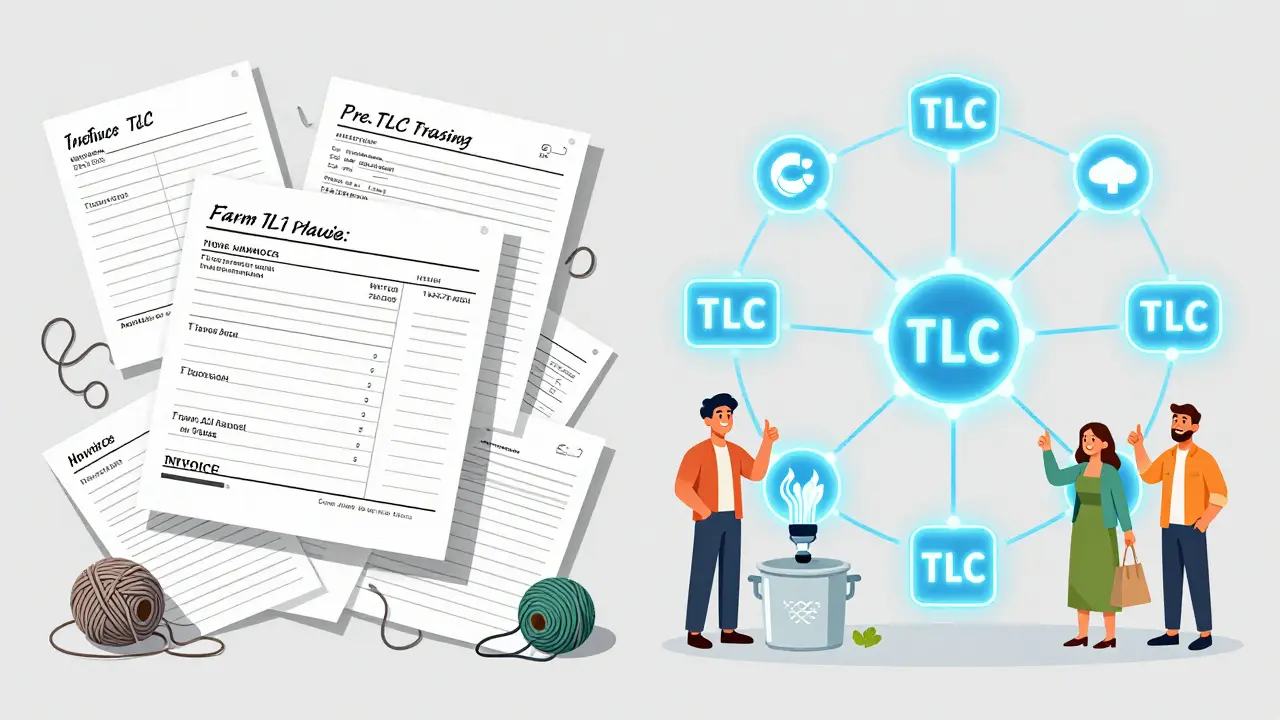
Before the Food Traceability Rule, tracing contaminated food could take weeks. Investigators had to dig through piles of paper invoices, spreadsheets, and handwritten logs. Sometimes, they followed the money trail instead of the food trail-tracking payments between companies rather than the actual product movement.
During the 2018 romaine lettuce outbreak, it took over two months to pinpoint the source. By then, over 200 people were sick, and five had died. The FDA realized: if they could cut that time down to days-or even hours-they could save lives.
The new system, finalized in November 2022 under Section 204 of the Food Safety Modernization Act (FSMA), was built to fix that. The goal? Reduce foodborne illness outbreaks by 20-30%. Pilot programs showed it was possible.
Which Foods Are Covered?
The FDA didn’t slap this rule on everything. They focused on the 15% of the food supply that causes the most outbreaks. This list, called the Food Traceability List (FTL), includes:
- Leafy greens (lettuce, kale, spinach)
- Tomatoes
- Onions
- Fresh-cut fruits and vegetables
- Soft cheeses like brie and feta
- Shell eggs
- Nut butters
- Specific seafoods like shrimp and crab
These aren’t random choices. These are the foods linked to the highest number of multi-state outbreaks over the past decade. Melons, for example, are still not on the list-despite being tied to multiple salmonella outbreaks-and critics say that’s a dangerous gap.
When and How Are Lot Codes Assigned?
You can’t just slap a TLC on a bag of lettuce at the grocery store. The FDA only allows assignment at three critical points:
- When raw agricultural commodities (like lettuce or tomatoes) are first packed at the farm or packinghouse
- When seafood is first received on land from fishing vessels
- When food is transformed-like when tomatoes are turned into salsa or spinach is washed and bagged
Once assigned, the TLC must stay the same through every transfer. If a processor turns raw onions into diced onions, they can’t reuse the old code. They must create a new TLC but keep a clear link to the original one.
Companies can choose their own format: Julian date + product code, random alphanumeric strings, even barcodes. But they must document it in their Traceability Plan and make sure it’s unique-not just within their own warehouse, but across the entire supply chain.
The Seven Key Data Elements
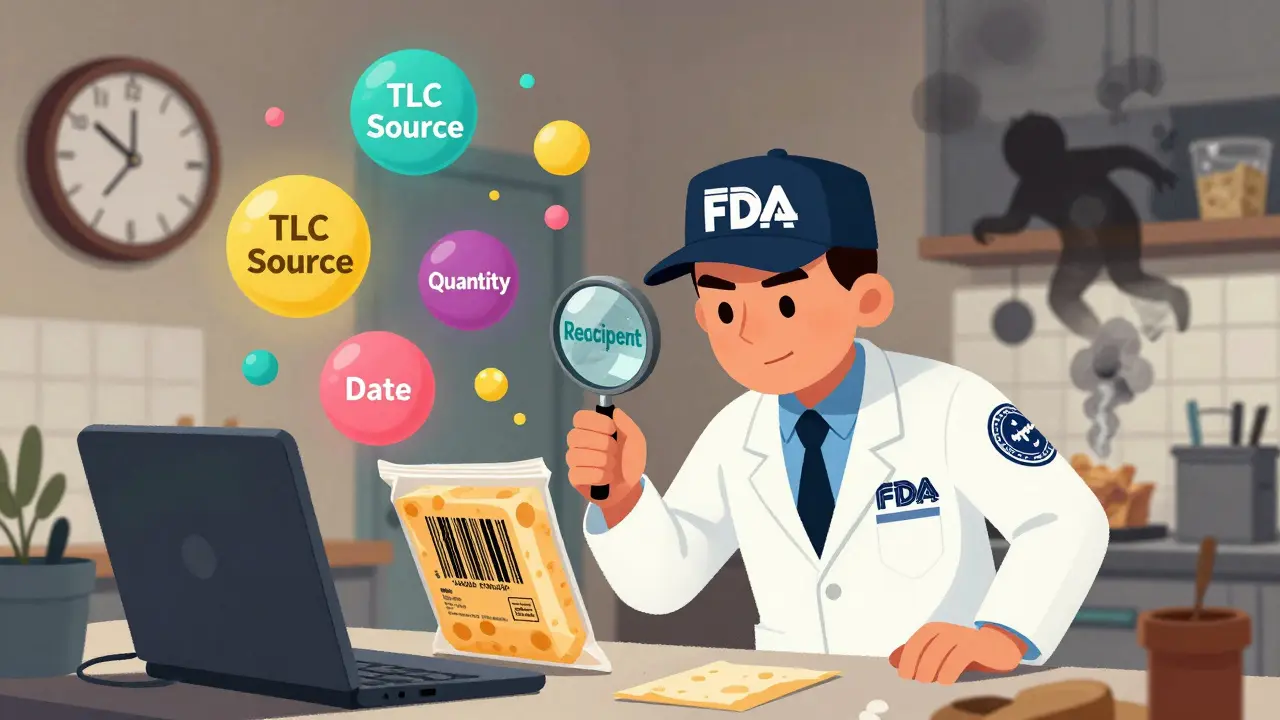
A TLC alone isn’t enough. It’s the anchor for seven other pieces of information called Key Data Elements (KDEs). These include:
- The TLC itself
- Where it was assigned (TLC Source)
- What the product is (description)
- How much of it there is (quantity)
- Unit of measure (pounds, cases, cartons)
- When the transfer happened
- Who received it
If the FDA asks for this data during an investigation, companies must provide it within 24 hours. That’s not a suggestion. It’s a legal requirement.
Records can be kept on paper, but they must be easy to find. Electronic records are strongly encouraged-and if you use them, they must be exportable in CSV or similar formats. No locked proprietary systems. No unsearchable PDFs.
How This Changes Everything for Food Companies
Before, lot codes were internal tools. A company might use one code for quality control, another for shipping, and a third for returns. Now, they need one code that works across the entire chain.
Many companies feared they’d have to run two systems-old internal codes plus the new TLC. The FDA addressed this head-on: if your current lot code meets the requirements, it can be your TLC. No extra work needed.
Still, implementation is messy. A 2023 survey found that 71% of companies struggle to get their suppliers to use TLCs consistently. Small farms and processors, especially, lack the software or staff to manage it. That’s why the FDA launched a Traceability Assistance Program in January 2023 to help them.
Technology and the Future
Some big players are already ahead of the curve. Walmart started requiring blockchain traceability for leafy greens back in 2019. Kroger and others use similar tech. These systems can track a single head of lettuce from farm to checkout in seconds.
The FDA isn’t mandating blockchain-but it’s funding pilot projects. Future versions of the rule may require standardized electronic formats for KDEs, making data sharing automatic instead of manual.
International systems are moving too. The EU’s Digital Product Passport, launched in January 2023, uses different standards. The FDA is now talking to global regulators to avoid a patchwork of incompatible systems.
Compliance Deadline: What You Need to Know
The rule became effective in December 2022, but companies had until January 20, 2026, to comply. In September 2023, the FDA proposed a 30-month extension-pushing the deadline to July 20, 2028. Why? Because most businesses, especially small ones, aren’t ready.
Only 42% of small and medium food businesses even knew about the rule, according to the Government Accountability Office. Implementation costs average $42,500 per company. For a small processor, that’s a huge burden.
But the payoff is real. The FDA estimates the system will save $60 million a year in outbreak response costs-far more than the $6.5 million companies will spend to comply.
What Happens When a Problem Is Found?
Imagine a hospital reports 12 cases of listeria linked to a specific brand of soft cheese. The FDA pulls the product’s TLC from the consumer’s receipt or packaging. They trace it to the distributor, then to the processor, then to the dairy farm that made the milk.
Within hours, they know which tanks, which pasteurization batches, which delivery trucks. They can pull the exact lot-maybe 500 pounds of cheese-instead of recalling 50,000 pounds.
That’s precision. That’s safety. That’s the point.
Is This Enough?
Experts agree: the TLC system is the biggest step forward in U.S. food safety since the Bioterrorism Act of 2002. But it’s not perfect.
Dr. David Acheson, a former FDA official, calls it the ‘linchpin’ of the system. But Mike Taylor, another former FDA deputy commissioner, says it’s ‘necessary but insufficient.’ Without standardized data formats, he warns, TLCs will just sit in silos.
And what about the foods left off the list? Melons, sprouts, and deli meats still don’t have mandatory tracking. Consumers Union argues that’s like putting a lock on your front door but leaving your back window open.
Still, the system works. In pilot tests, tracebacks went from 7-14 days down to under 24 hours. That’s the kind of speed that saves lives.
By 2028, when most companies are fully compliant, the FDA expects fewer outbreaks, fewer hospitalizations, and fewer deaths. It won’t stop every problem-but it will make sure when one happens, they find it fast.
What is a Traceability Lot Code (TLC)?
A Traceability Lot Code (TLC) is a unique alphanumeric identifier assigned to specific high-risk foods at key points in the supply chain. It allows the FDA to quickly trace contaminated products back to their source during foodborne illness investigations. Unlike internal batch codes, TLCs must be passed along unchanged through every transfer and linked to seven required data elements.
Which foods require a TLC under FDA rules?
The FDA’s Food Traceability List (FTL) includes leafy greens, tomatoes, onions, fresh-cut fruits and vegetables, soft cheeses, shell eggs, nut butters, and certain seafoods. These represent about 15% of the U.S. food supply by volume and are linked to the most frequent and severe outbreaks. Foods like melons and sprouts are not currently on the list but are under review.
When must a TLC be assigned?
A TLC must be assigned at one of three points: when raw agricultural commodities are first packed, when seafood is received on land from fishing vessels, or when food is transformed (e.g., washed, chopped, or packaged). Once assigned, the code stays the same unless the food is transformed again-then a new TLC must be created while linking back to the original.
Can I use my existing lot code as the TLC?
Yes. The FDA explicitly states that any existing lot code you use internally can serve as your TLC, as long as it meets the requirements: it must be unique across the supply chain, not just within your facility, and you must pass it along with the product. You don’t need to create a second code.
What happens if I don’t comply with the TLC rule?
Non-compliance can lead to enforcement actions, including product detention, refusal of entry into the U.S., or civil penalties. During an outbreak, failure to provide traceability data within 24 hours of FDA request is a violation of federal law. The FDA prioritizes education and assistance, especially for small businesses, but compliance is mandatory.
How long do I have to comply with the TLC rule?
The original compliance date was January 20, 2026. However, in September 2023, the FDA proposed a 30-month extension, pushing the deadline to July 20, 2028. This change was made to give businesses more time to implement systems, especially small farms and processors who face higher costs and fewer resources.
Does the FDA require blockchain or digital systems for TLC tracking?
No. The FDA does not require blockchain, RFID, or any specific technology. Records can be kept on paper, as long as they’re organized and can be provided within 24 hours. However, electronic records are strongly encouraged, and if used, they must be sortable and exportable in common formats like CSV. Many large retailers use blockchain voluntarily, but it’s not mandated.



Paul Barnes
This system is overengineered. Who even reads these lot codes? I’ve bought spinach three times this month and never once looked at the tiny print. If it’s contaminated, it’s contaminated-why do we need a birth certificate for lettuce?