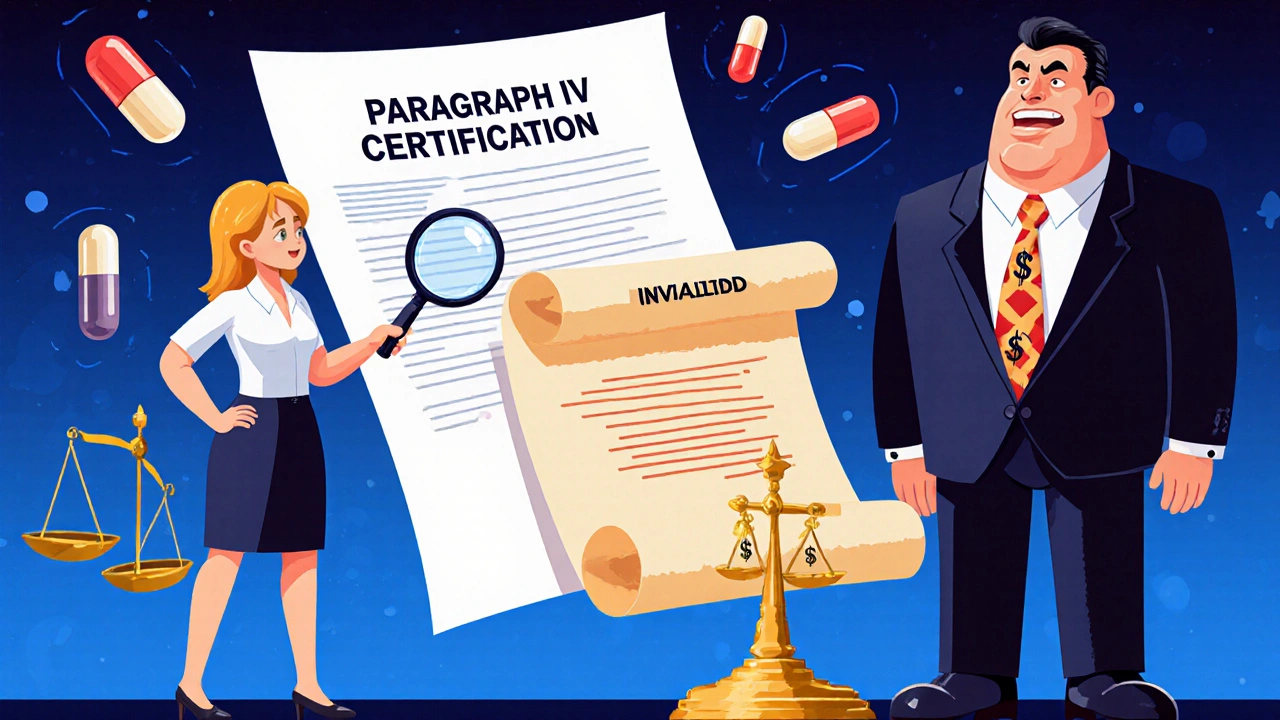
Generic Drug Patent Challenge: What It Is and How It Lowers Drug Costs
When a company files a generic drug patent challenge, a legal process where a generic manufacturer disputes the validity or applicability of a brand-name drug’s patent to gain market access. Also known as a Paragraph IV certification, it’s the main way generic drug makers break monopolies and slash prices. This isn’t just legal maneuvering—it’s how millions save hundreds or even thousands on prescriptions every year.
The system was built by the Hatch-Waxman Act, a 1984 U.S. law designed to balance innovation and access by letting generics enter the market faster without re-proving safety. Under this law, a generic company can file an ANDA (Abbreviated New Drug Application) and certify that the brand’s patent is either invalid or won’t be infringed. That’s the Paragraph IV certification, the formal notice a generic maker sends to the brand company, triggering a 45-day window for a lawsuit. If the brand sues, the FDA puts a 30-month pause on approving the generic. But if the generic wins—or the patent is thrown out—they get 180 days of exclusive rights to sell their version. That’s the 180-day exclusivity, a powerful incentive meant to reward the first challenger and drive down prices quickly.
Here’s where it gets messy. Sometimes, the brand company fights back by launching its own authorized generic, a version of the brand drug sold under a different label, often at the same price as the generic. This lets them undercut the challenger before the 180-day clock even starts. It’s legal, but it kills the reward system. That’s why some generic makers never get to enjoy their exclusivity—and why prices don’t always drop as much as they should.
These battles aren’t theoretical. Drugs like digoxin, which has a narrow therapeutic window, saw real patient risks when switches between generics weren’t tracked. And when a brand pulls a drug like ranitidine off the market, the patent challenge landscape shifts overnight. The same system that lets you buy cheaper antidepressants or blood pressure meds also shapes who gets access, how safe the switch is, and whether your pharmacy can even stock the generic version.
What you’ll find below are real stories and breakdowns of how patent challenges play out in practice: from the legal tricks used to delay generics, to why some drugs never get cheaper, to how patient perception can turn a chemically identical pill into something you’re afraid to take. These aren’t abstract policies—they’re the reason your prescription costs less today than it did five years ago.
Paragraph IV certifications allow generic drug makers to legally challenge brand-name patents before launch. This Hatch-Waxman Act mechanism has saved over $1.7 trillion since 1984 by accelerating generic entry and rewarding the first challenger with 180 days of exclusivity.