
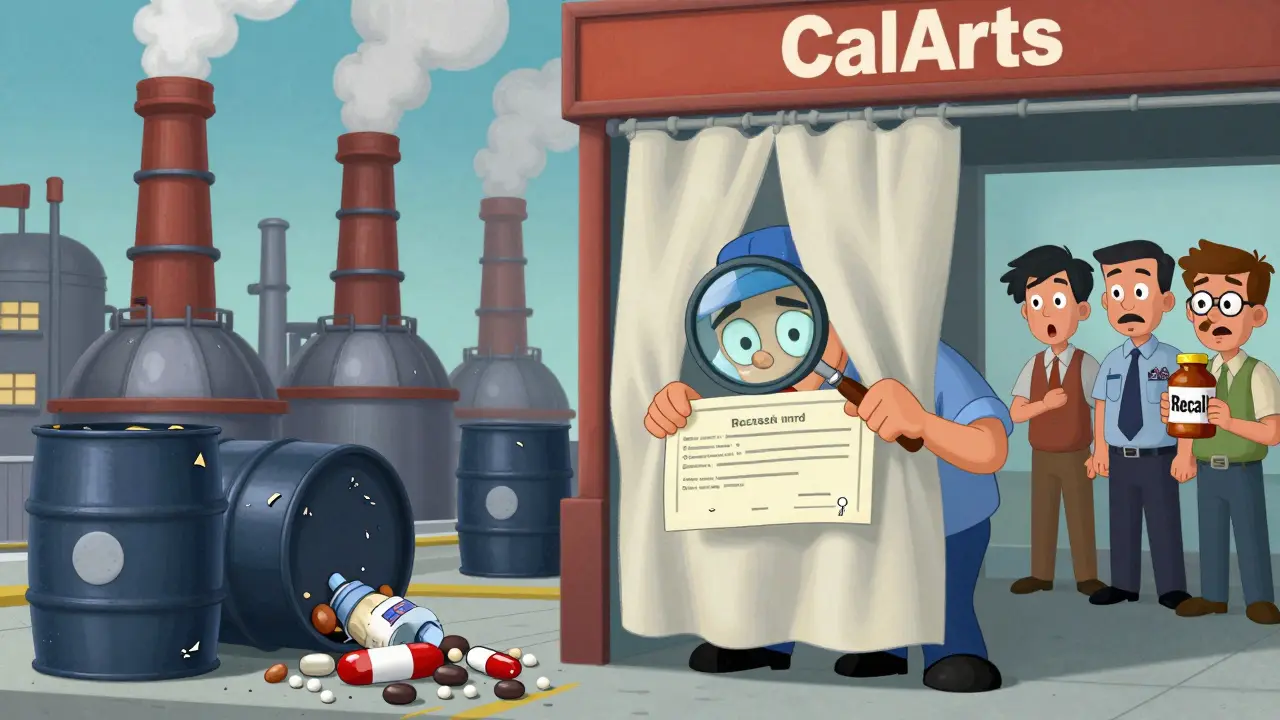
When you buy a pill, a medical device, or even a children’s toy made overseas, you’re trusting a system that’s more broken than most people realize. It’s not just about cheap labor anymore. Today, foreign manufacturing quality issues are turning into safety crises - especially in pharmaceuticals, medical devices, and consumer goods. The factories aren’t just cutting corners; they’re hiding failures, falsifying records, and substituting materials - all while regulators struggle to catch up.
Why Quality Crashes Happen Overseas
The problem isn’t one factory or one country. It’s systemic. In China, for example, over 47% of drug manufacturing sites received formal warnings from the FDA in 2024 - nearly double the rate of U.S. facilities. Why? Because inspections are often announced in advance. A factory has days to clean up, hide substandard equipment, and train workers to lie. Meanwhile, American plants get unannounced visits - no warning, no prep time. That’s not fairness. That’s a dangerous double standard.
Material substitution is the most common fraud. A 2025 Brookings analysis found that 68% of inspected Chinese facilities swapped out medical-grade silicone, polymers, or active pharmaceutical ingredients with cheaper, inferior versions. One case from Shenzhen involved a supplier replacing biocompatible silicone in a wound dressing with industrial-grade material. Twelve thousand units were shipped before testing caught it. Patients could’ve been exposed to toxins. No one noticed until it was too late.
Another big issue? Falsified documentation. Nearly 30% of non-compliant factories in China were caught lying about test results, batch records, or cleaning procedures. The FDA’s own data shows these aren’t isolated mistakes - they’re patterns. And when you’re making drugs, even small errors can be deadly.
The Hidden Cost of Cheap Production
Companies think they’re saving 30-45% on labor by moving production overseas. But that’s only the sticker price. The real cost comes later: recalls, lawsuits, lost brand trust, and FDA import alerts. Harris Sliwoski’s 2025 analysis found unaddressed quality failures add 15-25% to total manufacturing costs when you factor in rework, delays, and legal fees. One German company paid $1.2 million to China’s export credit agency, Sinosure, after receiving substandard goods - and still couldn’t get their money back.
And it’s not just money. The FDA reported that foreign manufacturing failures contributed to 37% of U.S. drug shortages in 2024. That’s not a statistic - that’s people unable to get their insulin, antibiotics, or heart medications. When a batch of generic metformin is contaminated with a carcinogen, it’s not a supply chain hiccup. It’s a public health emergency.
Where the Problems Are Worst
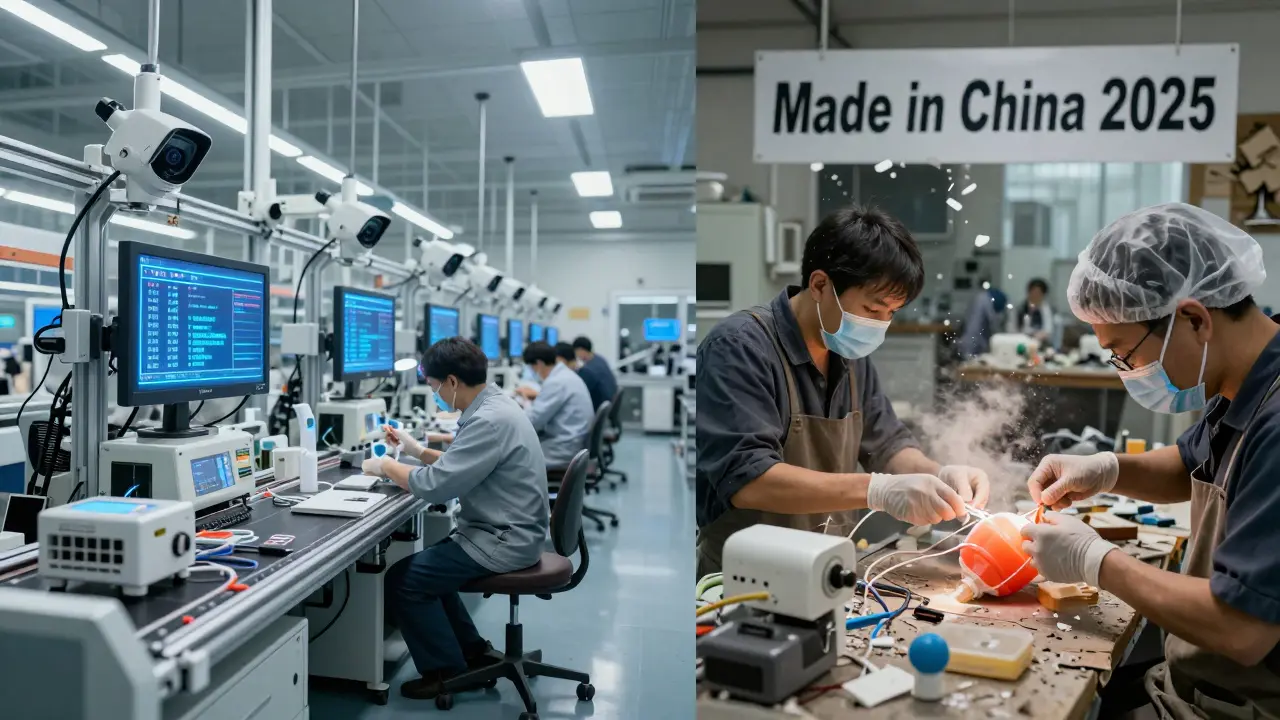
China still dominates global manufacturing, holding 31.6% of the market in 2025. But the quality gap is widening. On one side, you have high-end factories investing in AI inspection systems and blockchain traceability - part of the government’s ‘Made in China 2025’ push. These facilities are becoming world-class.
On the other side, thousands of smaller suppliers are drowning in debt. With shrinking margins and rising energy costs, they’re cutting quality to survive. Some are running what experts call ‘sophisticated bank-switch scams’ - taking payments for one order, then delivering a completely different, cheaper product. One Minnesota medical device company reduced defects from 12.7% to just 0.8% by implementing a ‘China-specific quality triad’: a local quality manager on-site, blockchain tracking of every batch, and third-party audits with no notice.
India is another red flag. Though it produces only 25% of foreign drug facilities, it accounted for 34% of FDA import alerts in 2024. Many Indian factories lack proper validation of their manufacturing processes - meaning they don’t even know if their own methods consistently produce safe products.
Vietnam, meanwhile, is improving. Since 2022, quality metrics there have risen 18%. But that’s still a long way from EU or U.S. standards. The EU’s Qualified Person (QP) system - where a certified professional must personally sign off on every drug batch - has cut quality failures by 22% compared to non-EU imports. The U.S. doesn’t have anything like that.
What’s Being Done - And What’s Not
The FDA is finally changing. In May 2025, Commissioner Marty Makary announced a major shift: by the end of 2025, 40% of foreign inspections will be unannounced. By 2027, that number will jump to 75%. That’s huge. For years, foreign factories had a built-in advantage. Now, they’ll face the same surprise inspections as American plants.
President Trump’s May 2025 executive order also raised user fees for foreign manufacturers - a move expected to increase compliance costs by 18-25%. That’s going to push out the weakest players. But it’s also going to hurt small businesses trying to import affordable generics.
Meanwhile, companies are starting to ‘friend-shore’ - moving production to allied countries like Mexico, India, or Poland. But that doesn’t solve the problem. It just moves it. Many of these new locations lack the regulatory infrastructure, trained inspectors, or quality control systems to handle complex manufacturing. The same mistakes will repeat.
How to Protect Yourself - If You’re Importing
If you’re a business bringing products from overseas, here’s what actually works - not theory, but proven tactics:
- Don’t trust the supplier’s word. Hire a third-party auditor who speaks the local language and has access to the factory floor - not just the office.
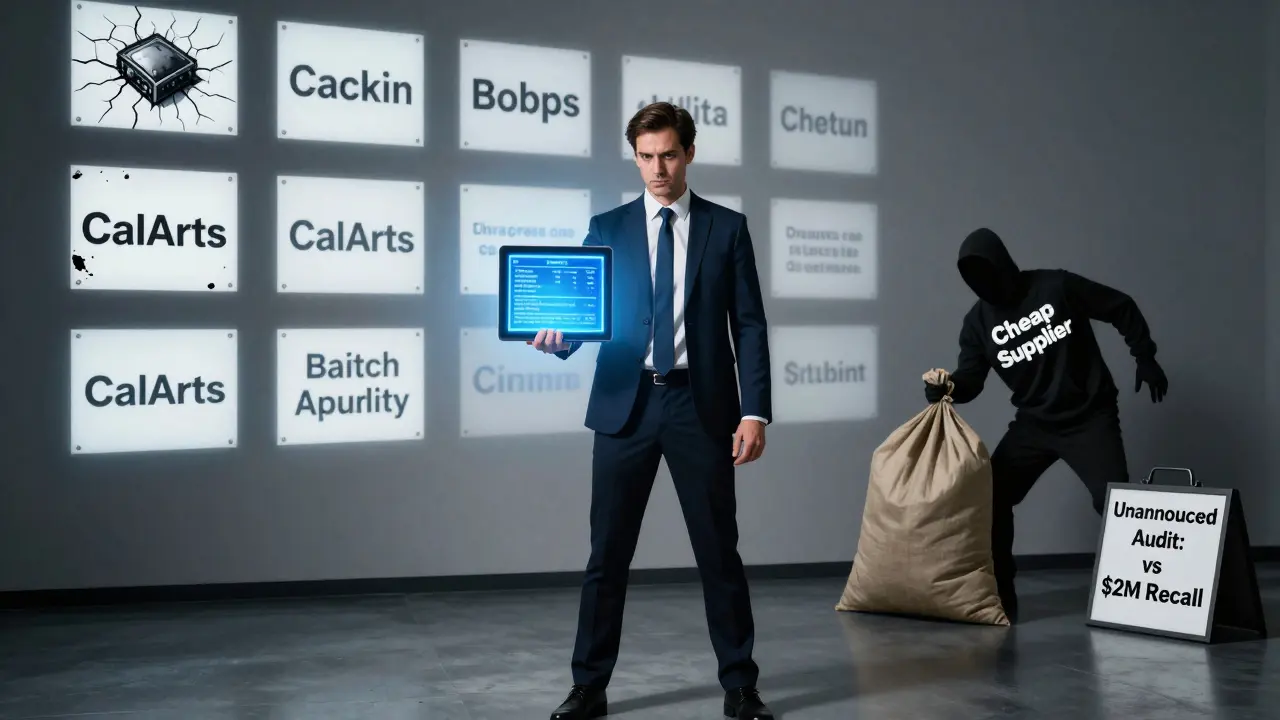
- Require unannounced audits. Include this in your contract. If they refuse, walk away.
- Use blockchain traceability. Every batch should have a digital record from raw material to final shipment. No paper trails. No edits.
- Test every shipment. Don’t rely on the supplier’s certificate of analysis. Send random samples to an independent lab. The cost? $500 per test. The cost of a recall? $2 million.
- Train your team. Successful companies spend $18,500 per year per overseas facility on quality training. That includes language, cultural norms, and how to spot fraud.
And never sign vague contracts. Harris Sliwoski found that 58% of recoverable losses came from contracts that said things like ‘products must meet industry standards.’ What does that even mean? Define exact tolerances, materials, testing methods, and penalties for failure.
The Future Is Digital - But Only for Some
AI-powered visual inspection systems now detect defects with 99.2% accuracy - far better than human eyes. But only 22% of Chinese manufacturers have adopted them. Why? Cost. Training. Resistance. The same companies cutting corners on materials won’t spend money on tech that catches them.
Deloitte predicts that by 2028, companies using full digital quality ecosystems - AI, IoT sensors, blockchain, real-time data - will hit 95%+ compliance. The rest? They’ll either adapt or disappear. The FDA’s new rules are forcing the hand of the industry. No more hiding. No more excuses.
But here’s the hard truth: if you’re buying a product made overseas, you’re still taking a risk. Unless you’re a company with the budget for real oversight, you’re relying on luck. And in manufacturing, luck isn’t a strategy. It’s a gamble with your health on the line.



Lexi Karuzis
I knew it. I KNEW IT. The FDA is in on it. Why do you think they only inspect 40% of foreign sites now? They’re being paid off by Big Pharma to keep the poison flowing. They’ve been hiding the truth since 2018-do you know how many babies died from tainted baby formula in Shenzhen that never made the news? The FDA’s ‘unannounced inspections’? Ha. They call the factory the night before. I have a cousin who works in logistics-he saw the emails. They’re all scripted. This isn’t negligence. It’s genocide by invoice.