
Every year, the FDA issues hundreds of drug safety alerts - some about dangerous side effects, others about contaminated batches or label errors. If you’re a patient, caregiver, or healthcare provider, missing one of these alerts could mean taking a medication that’s been recalled or prescribed a drug with a newly discovered risk. The good news? You can get these alerts delivered straight to your inbox, for free. The bad news? Most people don’t know how - or even that they exist.
Why FDA Drug Safety Alerts Matter
In 2018, a contamination in valsartan, a common blood pressure medication, led to recalls across multiple brands. Patients had no way of knowing if their pills were safe unless they checked the FDA website daily. That’s not practical. That’s why the FDA built its alert systems: to cut through the noise and deliver critical safety updates directly to those who need them. These aren’t just bureaucratic notices. They’re lifesavers. A hospital pharmacist in Ohio told the FDA in 2023 that a Drug Safety Communication about a recalled insulin batch prevented her facility from dispensing 400 vials of contaminated medication. A parent in Texas subscribed to keyword alerts for "peanut" after her child had a severe allergy reaction - and caught a contaminated over-the-counter cough syrup before giving it to her daughter. The FDA’s systems reached over 2.7 million subscribers by the end of 2023. That’s up nearly 50% from just a year before. But here’s the catch: only 38% of healthcare professionals even know all three alert systems exist. If you’re not signed up, you’re flying blind.The Three FDA Alert Systems - And What Each One Does
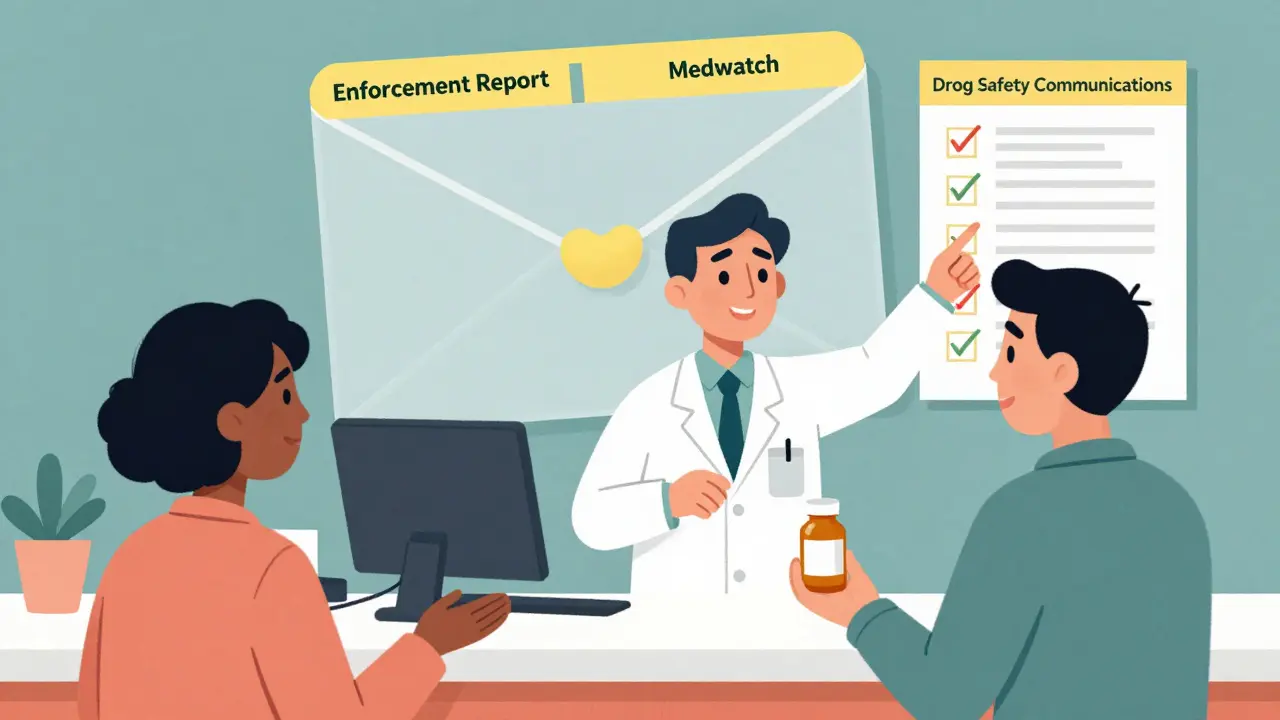
The FDA doesn’t have one alert system. It has three - and each serves a different purpose. Confusing them is common. Here’s how to tell them apart:- Enforcement Report Subscription Service: This one is for recalls. If a drug is pulled from shelves because of contamination, mislabeling, or manufacturing flaws, this system sends you an email. You can pick "Drugs" as your category and set custom keywords like "metformin" or "ibuprofen" to get only the alerts that matter to you. You can choose daily or weekly emails.
- MedWatch Safety Alerts: This is the FDA’s oldest system, dating back to 1993. It covers serious safety issues that might not rise to the level of a recall - like sudden heart risks, liver damage, or dangerous interactions. You can subscribe via email, Twitter (@FDAMedWatch), or RSS feed. It’s the go-to for new warnings that emerge after a drug is already on the market.
- Drug Safety Communications: This is the most targeted. It sends alerts about specific drug classes or medical conditions. For example, if you’re managing diabetes, you can sign up for alerts about GLP-1 agonists. If you’re a pharmacist who handles anticoagulants, you can get updates on warfarin or rivaroxaban safety changes. These are sent via email and often include detailed clinical guidance.
Here’s what each one covers:
| System | Covers | How to Subscribe | Custom Keywords | Delivery Frequency |
|---|---|---|---|---|
| Enforcement Report | Product recalls (drugs, devices, food) | fda.gov/enforcement-report-subscription | Yes (up to 5 keywords) | Daily or weekly |
| MedWatch Safety Alerts | Serious safety issues, adverse events, label changes | fda.gov/medwatch-email-list or @FDAMedWatch on Twitter | No | As needed (usually weekly) |
| Drug Safety Communications | Drug class or specialty-specific warnings | fda.gov/drug-safety-communications → "Sign up for email alerts" | Yes (by drug class or specialty) | As needed (typically monthly) |
Most people only need one or two. If you’re a patient taking multiple medications, start with Enforcement Report and Drug Safety Communications. If you’re a clinician, add MedWatch.
How to Subscribe - Step by Step
Signing up takes less than five minutes per system. Here’s how:Enforcement Report Subscription
- Go to fda.gov/enforcement-report-subscription
- Enter your email address
- Check "Drugs" under Product Categories - you can select more if you want (medical devices, cosmetics, etc.)
- In the "Keyword" field, type up to five terms like "lisinopril," "metformin," or "insulin" - these are case-insensitive and will trigger alerts containing those words
- Choose "Daily" if you’re a pharmacist or provider; "Weekly" is fine for most patients
- Click "Subscribe"
You’ll get a confirmation email within minutes. No password needed. No app. Just your inbox.
Drug Safety Communications
- Visit fda.gov/drugs/drug-safety-and-availability/drug-safety-communications
- Scroll down to the bottom of the page
- Click "Sign up for email alerts"
- Select the drug classes or medical specialties you want updates on - for example, "Antidepressants," "Diabetes Medications," or "Cardiovascular Drugs"
- Enter your email and click "Submit"
You’ll start receiving these within 24-48 hours. These alerts often include clinical recommendations - like "avoid co-administration with grapefruit juice" or "monitor liver enzymes monthly."
MedWatch E-List
- Go to fda.gov/medwatch-email-list
- Enter your email address
- Click "Subscribe"
That’s it. You’ll get a monthly summary of all serious safety alerts, plus urgent updates as they happen. You can also follow @FDAMedWatch on Twitter for real-time posts - it’s updated within minutes of an alert being issued.
What You Won’t Get - And What to Do About It
The FDA system is powerful, but it’s not perfect. Here’s what’s missing:- No mobile app: You can’t get push notifications. If you’re on the go, rely on email or Twitter.
- No risk scoring: The FDA doesn’t tell you if an alert is "high," "medium," or "low" risk. You have to read the full text. That’s why many clinicians use tools like First Databank or Epocrates to filter and prioritize.
- No Spanish alerts yet: As of early 2026, only 12% of alerts are available in Spanish - even though Spanish speakers make up 22% of the U.S. population. The FDA plans to fix this by Q3 2025.
- Alert fatigue: If you’re subscribed to all three systems, you might get 10-15 emails a month. That’s a lot. But you can reduce it by narrowing your keywords and only selecting the drug classes you actually use.
Pro tip: Create a folder in your email called "FDA Alerts" and set up a filter to auto-label them. That way, you won’t miss them - and you won’t let them clutter your inbox.
Why This Beats Commercial Services
There are paid services like MedWatcher or First Databank that promise better alerts. They offer mobile apps, risk ratings, and integration with EHRs. But here’s the truth: they only cover prescription drugs. The FDA covers everything - OTC meds, biologics, supplements, medical devices, even cosmetics. A 2023 study from the University of Michigan found FDA alerts came out 4.5 hours faster on average than commercial services. Why? Because the FDA gets the data directly from manufacturers and inspectors - not through third-party aggregators. And it’s free. No credit card. No trial period. No upsell.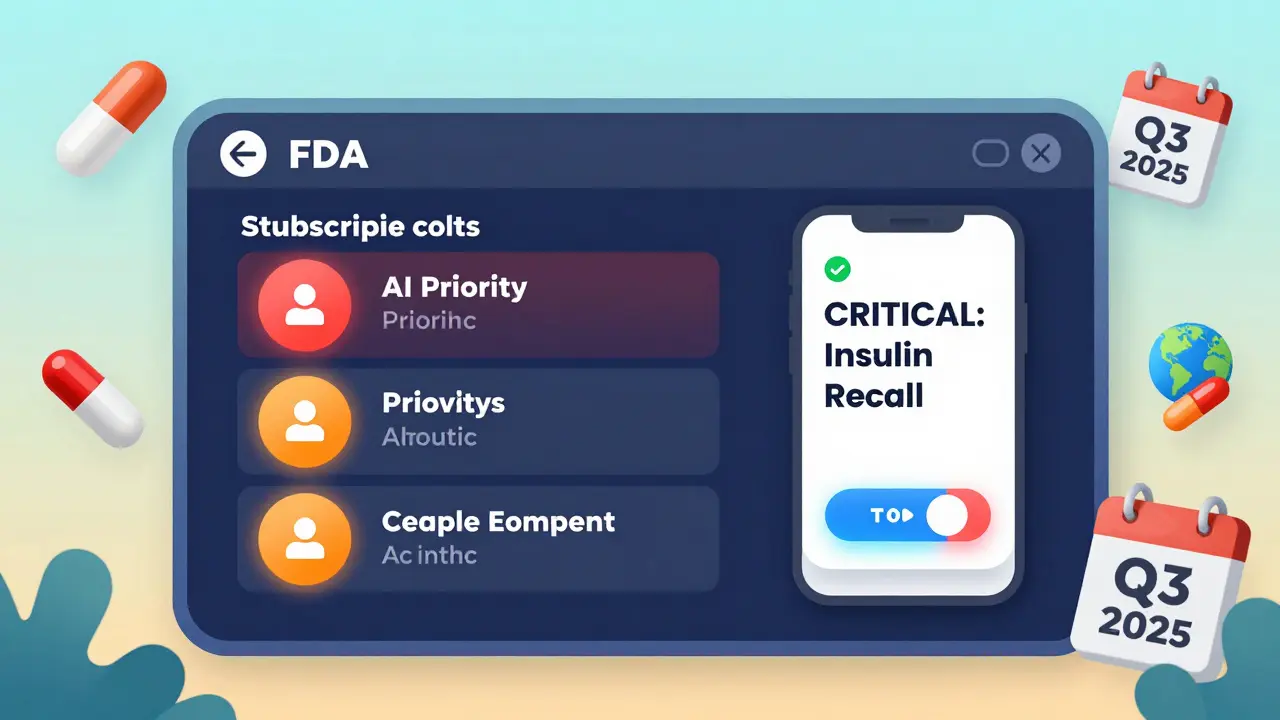
Who Should Subscribe - And Who Shouldn’t
Subscribe if you:- Take five or more medications
- Have a chronic condition like diabetes, heart disease, or epilepsy
- Work in pharmacy, nursing, or clinical care
- Are a caregiver for someone on high-risk meds
- Have allergies (use keyword alerts for "peanut," "sulfonamide," etc.)
- You only take one or two medications and rarely change them
- You don’t use the internet regularly
- You’re okay checking the FDA website once a month
But even if you think you’re fine - think again. A 2022 AMA survey found that 72% of physicians who subscribed to FDA alerts changed how they prescribed based on what they learned. That’s not just caution. That’s better care.
What’s Coming in 2025
The FDA is finally fixing the biggest complaints:- One unified platform: By Q3 2025, the three alert systems will merge into a single dashboard. You’ll pick your interests once and get everything in one place.
- 10 keywords instead of 5: You’ll be able to track more drugs, brands, and ingredients.
- Mobile app: Scheduled for Q2 2025. Push notifications for critical alerts.
- Spanish and other languages: Full translations rolling out by late 2025.
- AI-powered prioritization: Pilot programs have already cut alert fatigue by 32%. Soon, the most urgent alerts will rise to the top.
This isn’t just an upgrade. It’s a revolution in how safety information reaches patients and providers.
Final Thoughts
You wouldn’t ignore a recall notice on your car. Why ignore one on your medication? Subscribing to FDA drug safety alerts is one of the simplest, most effective things you can do to protect your health - or the health of someone you care for. It takes minutes. It costs nothing. And in a world where drug recalls and safety warnings are more common than ever, it’s not optional. It’s essential.Go to fda.gov/enforcement-report-subscription right now. Set up your email. Add one keyword - maybe your most-used medication. Do it before you finish reading this.
Do FDA drug safety alerts cost money?
No. All FDA drug safety alert subscriptions are completely free. You only need an email address. There are no hidden fees, no premium tiers, and no trials. The system is funded by taxpayer dollars and operates under federal law to ensure public access.
Can I get alerts in Spanish?
Not yet, but it’s coming. As of early 2026, only a small percentage of FDA alerts are available in Spanish. The agency has confirmed that full Spanish-language translations for all three alert systems will be rolled out by Q3 2025 as part of its Language Access Plan. Until then, you can use browser translation tools on the FDA website.
How often will I get emails?
It depends on the system. Enforcement Report lets you choose daily or weekly. MedWatch sends alerts as needed - usually 1-2 per week. Drug Safety Communications are sent only when there’s a new warning, which averages once a month. You won’t be flooded - but you will get timely updates when something matters.
What if I get an alert but don’t understand it?
Each alert includes a link to the full FDA page with detailed clinical information. You can also call the FDA’s Drug Information Line at 1-888-INFO-FDA (1-888-463-6332). They have pharmacists on staff who can explain what the alert means for your medication. Don’t guess - ask.
Do I need to subscribe to all three systems?
No. Most patients only need Enforcement Report and Drug Safety Communications. If you’re a healthcare provider, add MedWatch. You can always subscribe to more later. Start with one, see how it feels, then add others. Over-subscribing leads to alert fatigue - which is why the FDA is merging the systems in 2025.
Can I unsubscribe if I change my mind?
Yes. Every alert email has an "Unsubscribe" link at the bottom. Click it, and you’ll be removed immediately. There’s no waiting period, no confirmation required, and no tracking. Your data is deleted from the system as soon as you unsubscribe.
Are these alerts only for U.S. residents?
No. Anyone in the world can subscribe. The FDA’s alert systems are publicly accessible and designed for global use. Many international pharmacists, researchers, and patients outside the U.S. use them to track drug safety issues that affect global supply chains - especially for generic medications manufactured overseas.



Bob Cohen
Finally, someone laid this out without jargon. I’ve been telling my mom for years to sign up for these - she’s on six meds and still checks the FDA site once a month like it’s a library book return. Now I’m sending her this link. Thanks.
Also, ‘don’t guess - ask’? That’s the whole damn point. We’re not pharmacists. We need plain English.
Also also: the 2025 merge is long overdue. I’m already tired of bookmarking three different pages.