
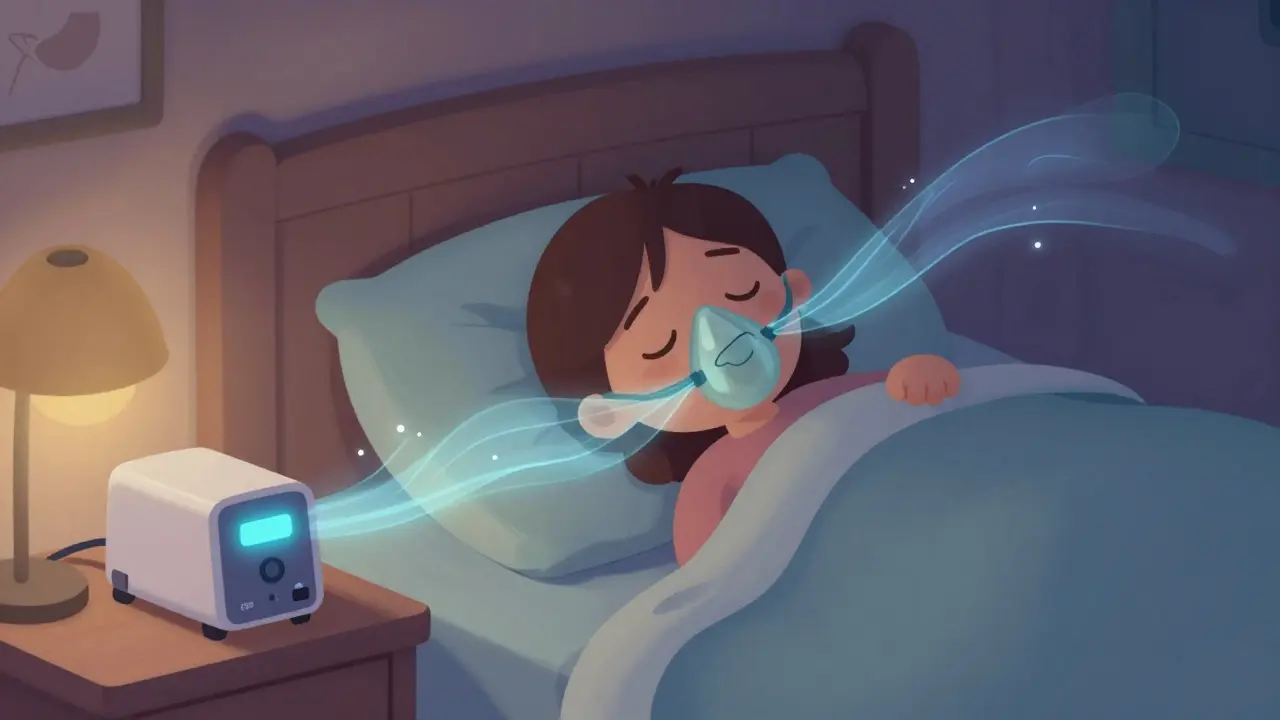
What CPAP Machines Do and Why They Matter
If you’ve been told you have sleep apnea, you’ve probably heard about CPAP machines. These devices aren’t optional extras-they’re the most effective non-surgical treatment for obstructive sleep apnea (OSA). Every night, when you sleep, your throat muscles relax and can block your airway. That’s when breathing stops, sometimes dozens of times an hour. Your brain jolts you awake just enough to restart breathing, but you never truly rest. Over time, this leads to daytime fatigue, high blood pressure, and even heart problems. CPAP machines fix this by pushing a steady stream of air through a mask, keeping your airway open so you breathe normally all night. Studies show that consistent use cuts cardiovascular events by 20-30%. The first working CPAP device was built in 1981, and today, it’s still the gold standard. But here’s the catch: it only works if you actually use it. About half of people prescribed CPAP stop using it within the first year. That’s not because the machine doesn’t work-it’s because the fit, the comfort, or the setup just isn’t right.
Four Types of CPAP Machines-Which One Is Right for You?
Not all CPAP machines are the same. There are four main types, each designed for different needs and breathing patterns.
- Traditional CPAP delivers one fixed pressure all night. It’s the simplest and cheapest option, usually costing $500-$1,000. Models like the ResMed AirSense 10 and Philips DreamStation are common. If your breathing pattern is stable and your doctor has already determined the exact pressure you need, this works fine.
- APAP (Auto-Adjusting CPAP) changes pressure automatically based on your breathing. If you snore more when on your back or wake up with a dry throat, APAP adapts. Prices range from $1,700 to $3,000. The ResMed AirSense 11 AutoSet is a top choice. A 2021 study found users stick with APAP 15% longer than traditional CPAP because it feels more natural.
- BiPAP gives two different pressures: higher when you inhale, lower when you exhale. This helps people who need high pressure (above 15 cm H2O) or have other lung conditions like COPD. It’s pricier-$600 to $1,600-but 25% more comfortable for those who struggle with standard CPAP. The Philips BiPAP Auto is a common model. You’ll need a separate titration study to set the right pressures, which adds cost.
- EPAP isn’t a machine at all. It’s a small, disposable nasal device that creates resistance when you breathe out. It costs $50-$150 a month. But it only works for mild sleep apnea (AHI under 15). For moderate or severe cases, it’s ineffective.
Travel CPAPs like the ResMed AirMini ($650) are tiny-smaller than a soda can-and useful for trips. But they lack built-in humidifiers, so you’ll need to buy one separately. Most insurance covers CPAP, APAP, and BiPAP after your deductible, but you’ll need a prescription and prior authorization.
Mask Fitting: The Most Overlooked Part of CPAP Therapy
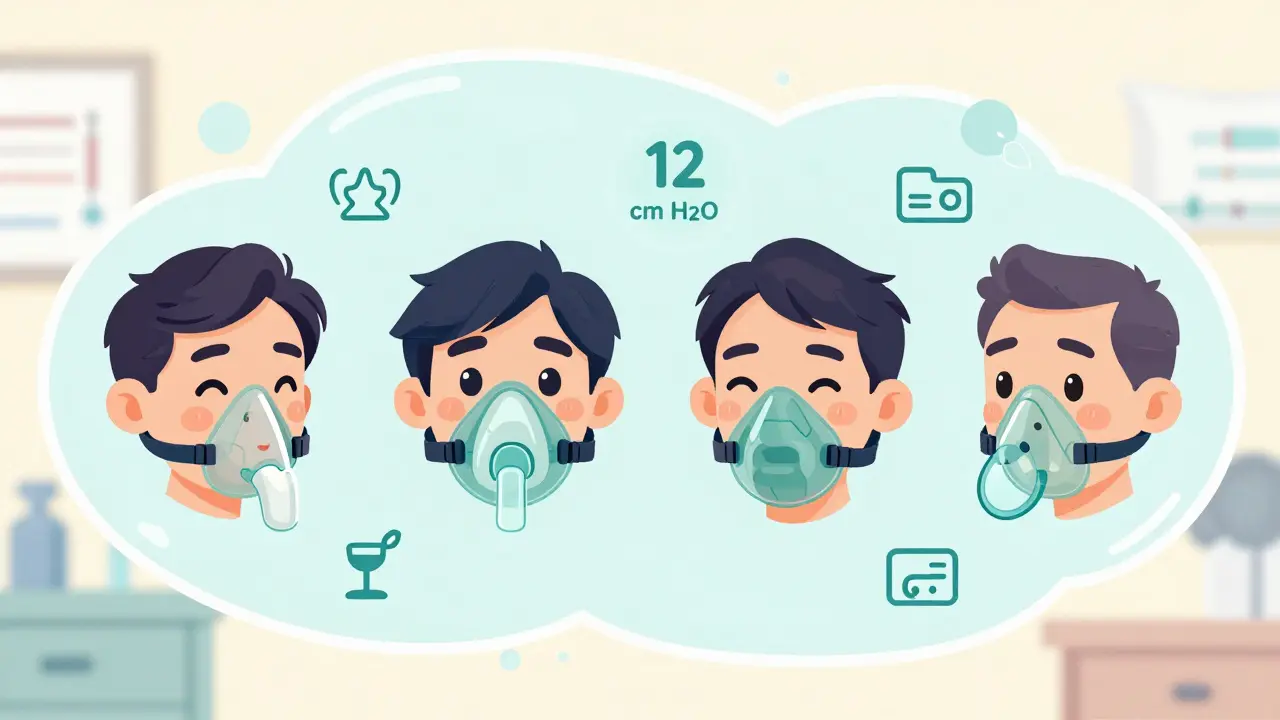
Most people quit CPAP because their mask hurts-not because the machine doesn’t work. A bad fit causes leaks, dry mouth, red marks, and nightmares of being trapped in plastic. There are four main mask types, and your face shape decides which one works.
- Nasal pillows sit at the edge of your nostrils. They’re the least intrusive. Ideal for side sleepers and people who feel claustrophobic. Users report 35% fewer skin irritations than with full-face masks. The AirFit P10 is the most popular.
- Nasal masks cover your nose. They’re the most common-used by 45% of patients. Good if you breathe through your nose and don’t mind a bit of bulk.
- Full-face masks cover your nose and mouth. Needed if you breathe through your mouth at night. But they’re bulkier, cause more leaks, and irritate skin more often.
- Hybrid masks are rare. Used only if you have severe nasal blockage and can’t use nasal pillows or masks.
Proper fitting isn’t just about size-it’s about structure. Your nasal bridge width, cheekbone shape, and jawline all matter. A leak rate above 24 L/min means your mask isn’t sealed right. Sleep specialists recommend trying at least three different masks before giving up. Many clinics offer a 30-60 day trial. Don’t settle for the first one your doctor hands you. If your mask leaks, you’re not getting therapy. You’re just paying for noise.
How to Actually Stick With CPAP-Real Strategies That Work
Adherence isn’t about willpower. It’s about design. You need to make using CPAP easy, comfortable, and rewarding.
Start slow. Don’t try to wear it all night on day one. Use it for 15-30 minutes while watching TV. Get used to the feel. Then add 10 minutes each night. This reduces panic and builds confidence. Many users who do this report 40% higher long-term use.
Use the ramp feature. It starts at low pressure and slowly increases over 5-45 minutes. About 75% of users rely on this. Combine it with heated humidification. Dry throat and nose? That’s the #1 complaint. Humidifiers reduce those complaints by 50%. Most modern machines include them. If yours doesn’t, ask for one.
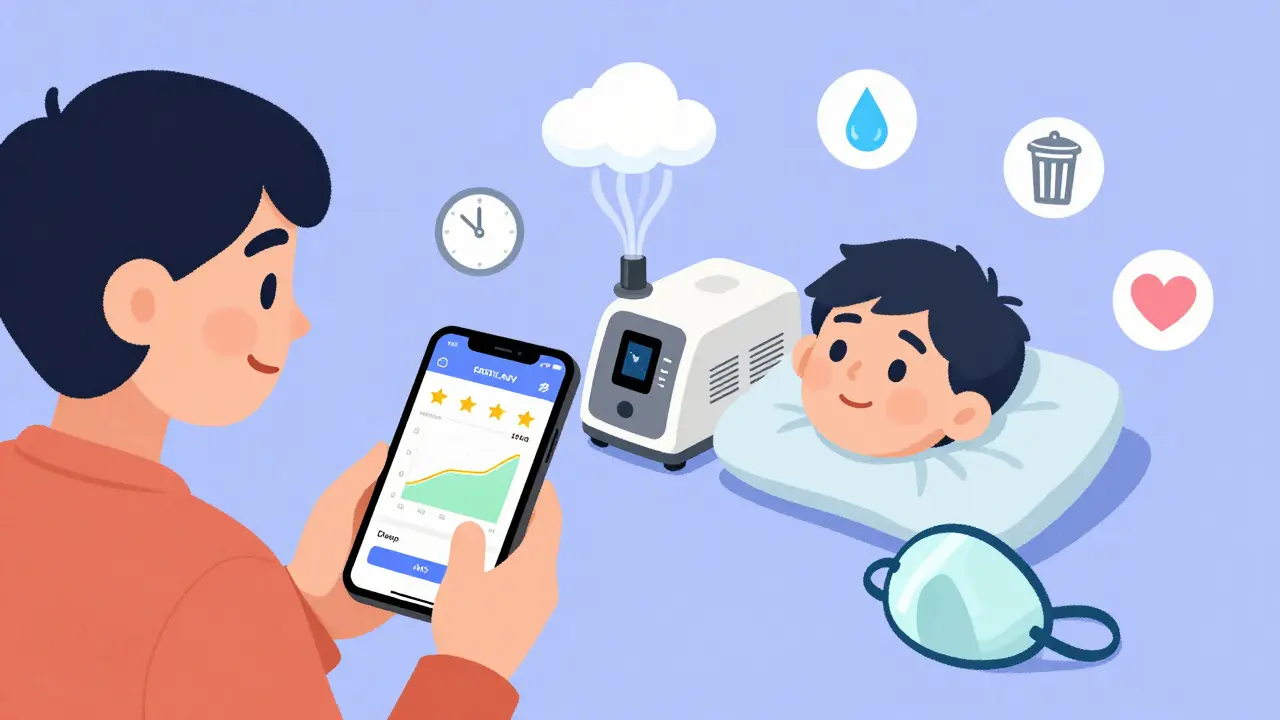
Track your data. Machines now log your usage, leak rates, and AHI. Use apps like ResMed’s myAir. It sends daily tips and rewards you for consistent use. Users who use the app see 27% higher adherence. If your AHI stays above 5, your pressure might be off. Don’t ignore the numbers-talk to your sleep doctor about them.
Use a CPAP pillow. These have cutouts so your mask doesn’t press into your face when you roll over. Users say leaks drop by 40%. Also, clean your mask daily. Oil and skin buildup break down the seal. Wash it with mild soap and water. Replace cushions every 1-3 months.
Why Some People Still Quit-And What to Do About It
Let’s be honest: CPAP isn’t perfect. Some people quit because of noise, claustrophobia, or skin sores. But the biggest reason? They didn’t get the right fit or support.
GoodRx’s 2023 survey found 42% of users stopped within three months because of facial pressure sores. Nasal pillow users had the least irritation. If your cheeks or bridge are red and sore, try a different mask type. Silicone cushions can be replaced. Foam ones can’t.
Noise is another issue. Newer machines like the Philips DreamStation 3 run at 25 dBA-quieter than a whisper. Older models can hit 52 dBA. If yours is loud, ask about upgrading. Most insurers will cover a new machine after two years.
And don’t forget: CPAP isn’t a one-size-fits-all fix. If you’ve tried everything and still can’t tolerate it, talk to your doctor about alternatives. Oral appliances, positional therapy, or even weight loss can help. But don’t give up on CPAP without trying all the options first.
What’s Next for CPAP Technology
CPAP tech is improving fast. ResMed’s AirSense 11 uses AI to predict breathing problems before they happen, cutting AHI by 22%. Fisher & Paykel’s SleepStyle reduces exhalation pressure by up to 50%, making breathing feel more natural. Transcend’s Micro 3 uses transnasal pressure-no mask at all. It’s still experimental, but promising.
Insurance rules are changing too. Starting in 2024, Medicare and other payers require proof you use your machine at least 4 hours a night, 70% of nights. If you don’t, coverage stops. That’s why tracking data matters more than ever.
More employers are stepping in. Trucking companies now require drivers with sleep apnea to use CPAP. Schneider Logistics saw a 32% drop in accidents after enforcing it. That’s not just health-it’s safety.
Final Thoughts: CPAP Works-if You Let It
CPAP machines aren’t glamorous. They don’t cure sleep apnea. But they do stop it, night after night. The difference between someone who uses it and someone who doesn’t? Energy. Focus. Blood pressure. Life expectancy.
Don’t let a bad mask or a noisy machine stop you. Try different types. Ask for help. Use the ramp. Clean it. Track it. Adjust it. You don’t have to love it. You just have to use it. And if you do, you’ll sleep better than you have in years.
Can I use a CPAP machine without a prescription?
No. In the U.S., all CPAP, APAP, and BiPAP machines require a prescription. This is because they’re classified as Class II medical devices by the FDA. Even if you buy one online without a prescription, insurance won’t cover it, and you won’t get the right pressure settings. Using the wrong pressure can worsen your sleep apnea or cause other health issues.
How do I know if my CPAP mask fits properly?
A properly fitted mask should seal without being overly tight. You shouldn’t feel pressure points or red marks after removing it. Check your machine’s leak rate-it should stay below 24 L/min. If it’s higher, try adjusting the headgear or switching mask types. Many clinics offer fitting sessions with a sleep tech. Don’t guess-get help.
Is APAP better than CPAP for beginners?
For many beginners, yes. APAP adjusts pressure automatically, which means you don’t need a separate titration study to find the right setting. It also feels more comfortable because it doesn’t blast you with high pressure all night. Studies show higher adherence with APAP, especially for people with variable breathing patterns. The cost is higher, but if you’re likely to quit CPAP due to discomfort, APAP might be worth the extra investment.
Why does my CPAP machine make me feel bloated?
Bloating happens when you swallow air during sleep, a condition called aerophagia. It’s common with high pressure settings or mouth breathing. Try switching to a nasal mask or nasal pillows if you’re using a full-face mask. Use the ramp feature to ease into pressure. If it continues, talk to your doctor about lowering your pressure or trying a BiPAP machine, which reduces exhalation pressure.
How long does it take to get used to CPAP?
Most people need 2-4 weeks to adjust. Some take longer, especially if they’re anxious or have trouble with mask fit. Start with short daytime sessions. Use the machine while reading or watching TV. Gradually increase time. Combine it with heated humidification and a comfortable pillow. Don’t rush. Consistency matters more than hours per night at first.
Does insurance cover CPAP machines and accessories?
Yes, most insurance plans cover 80% of the cost after your deductible, including the machine, mask, and humidifier. But you need a prescription and prior authorization. Some insurers require proof of usage (4+ hours/night, 70% of nights) to keep covering it. Replacement masks and tubing are usually covered every 3-6 months. Always check with your provider before buying.



calanha nevin
CPAP adherence isn't about willpower-it's about design. Start slow. Use the ramp. Clean the mask daily. Track your data. You don't need to love it. You just need to use it. That's the whole game.