Bioavailability: What It Means and Why It Matters for Your Medications
When you take a pill, not all of it makes it into your bloodstream—that’s where bioavailability, the portion of a drug that enters circulation and becomes available to have an active effect. It’s not just about how much you swallow, but how much your body actually uses. Two pills with the same dose can work completely differently if one has low bioavailability. That’s why it’s the silent gatekeeper behind every dose you take.
Pharmacokinetics, how your body moves a drug through absorption, distribution, metabolism, and elimination is the full picture, but bioavailability is the first and most critical step. If your body can’t absorb the drug properly, nothing else matters. That’s why the FDA requires bioequivalence, proof that a generic drug performs the same way as the brand-name version in the body before it can be sold. A generic might look identical, but if its bioavailability is off by even 10%, it could mean your blood pressure doesn’t drop, your seizures return, or your depression worsens. This isn’t theory—it’s why doctors hesitate to switch you on narrow therapeutic index drugs like warfarin or levothyroxine.
Bioavailability isn’t just about the drug itself—it’s shaped by what you eat, when you take it, and even your gut health. A pill that’s absorbed slowly because it’s coated? That’s intentional. A drug that breaks down too fast in your stomach? That’s a problem. That’s why some meds can’t be split, why some need to be taken on an empty stomach, and why certain generics trigger side effects even when they’re chemically identical. The nocebo effect plays a role too, but real differences in absorption? Those are measurable, and they matter.
Look at the posts below. You’ll see how bioavailability ties into everything from pill splitting and generic substitution to black box warnings and REMS programs. It’s why clozapine requires blood monitoring, why citalopram has strict dose limits, and why authorized generics cost less but still work the same. It’s the hidden thread connecting your prescription to your outcome. You don’t need to be a pharmacist to understand it—but knowing the basics can help you ask the right questions, spot red flags, and make smarter choices about your meds.
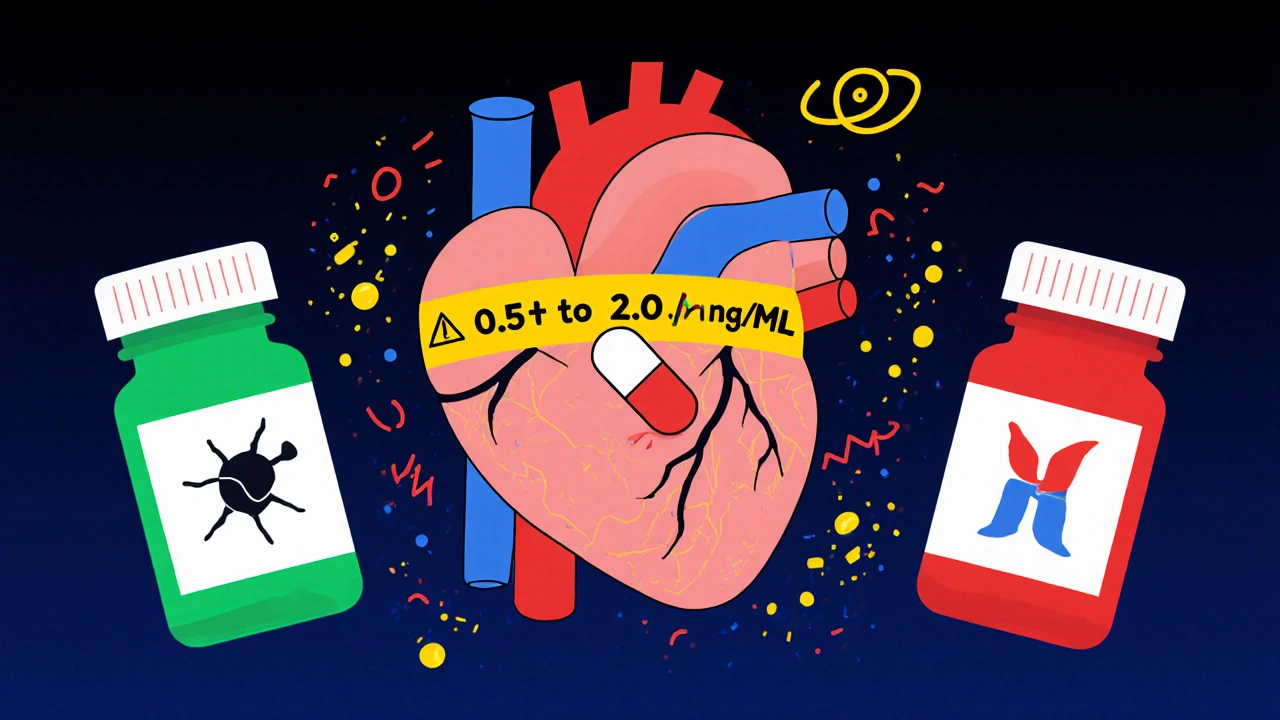
Digoxin generics can be dangerous if bioavailability varies between brands. Even FDA-approved switches may cause toxicity or treatment failure. Learn why consistent use and regular blood monitoring are critical for safety.