Benadryl for Sleep: Does It Really Work and Is It Safe?
When you can’t sleep, Benadryl, an over-the-counter antihistamine containing diphenhydramine. Also known as diphenhydramine, it’s one of the most common sleep aids people grab off the shelf. It works because it blocks histamine, a chemical in your brain that keeps you alert. That drowsiness? It’s not restful sleep—it’s sedation. And while it might help you fall asleep faster, it doesn’t improve sleep quality like your body needs.
People turn to Benadryl for sleep because it’s cheap, easy to find, and doesn’t require a prescription. But here’s the catch: your body gets used to it. After a few weeks, you need more to feel the same effect. Worse, it can leave you groggy the next day, mess with your memory, and even raise your risk of dementia with long-term use, especially over 40. Studies from the Journal of the American Geriatrics Society show older adults on regular antihistamines like Benadryl had higher rates of cognitive decline. It’s not just about feeling tired—it’s about your brain changing over time.
Benadryl doesn’t treat the cause of your insomnia. If you’re awake because of stress, pain, or sleep apnea, masking it with a sedative won’t fix anything. And mixing it with other meds—like painkillers, anxiety drugs, or even alcohol—can be dangerous. It’s not a solution. It’s a temporary bandage with hidden costs.
There are better ways. Melatonin helps reset your internal clock. Magnesium calms your nervous system. Cognitive behavioral therapy for insomnia (CBT-I) is proven to work better than pills over time. Even simple changes—like cutting screen time before bed or keeping your room cool—make a bigger difference than Benadryl ever will.
Below, you’ll find real-world insights on how diphenhydramine affects your body, what alternatives actually work, and why so many people regret relying on sleep aids that don’t address the root problem. You’ll see what doctors recommend instead, how to spot when OTC sleep aids are doing more harm than good, and what to do when your current routine isn’t cutting it anymore. This isn’t about quick fixes. It’s about finding sleep that lasts—and keeps you healthy.
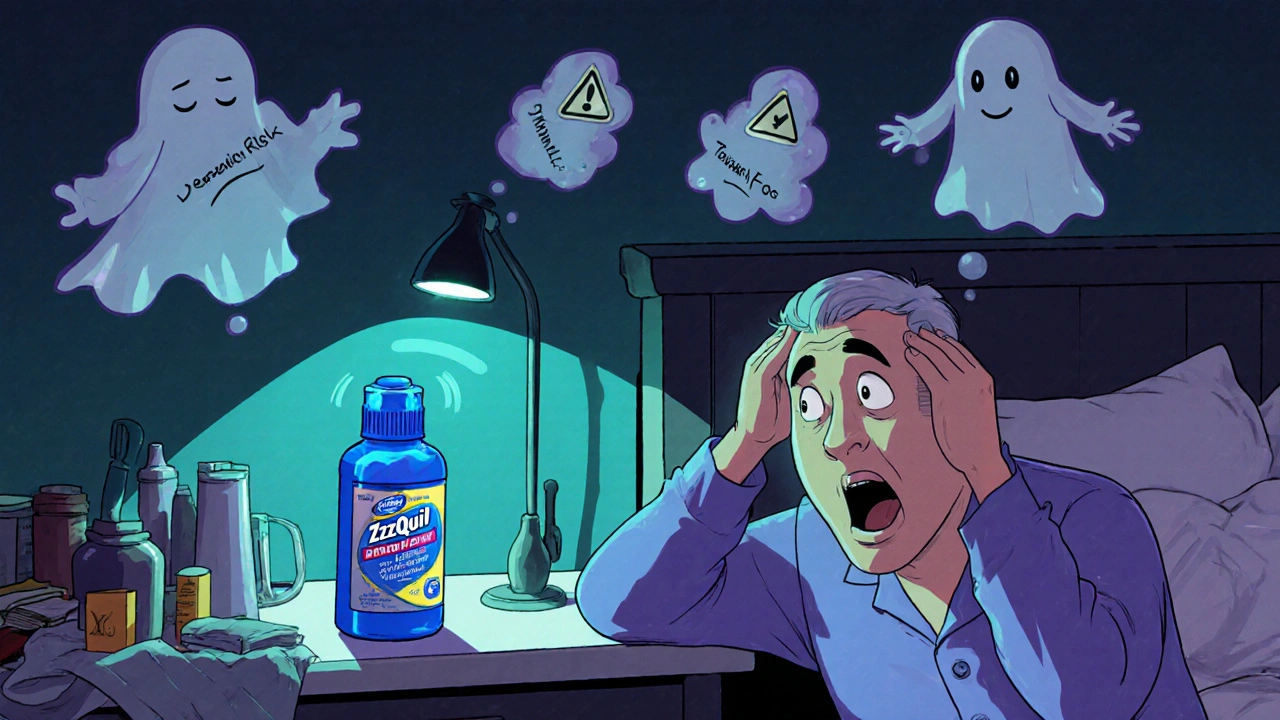
Diphenhydramine sleep aids like Benadryl and ZzzQuil may help you fall asleep fast, but they come with serious risks-especially for older adults. Learn why doctors advise against them and what safer, more effective alternatives actually work.