
Nocebo Effect Symptom Tracker
How Likely Are Your Symptoms Due to the Nocebo Effect?
Based on the landmark SAMSON trial showing 90% of reported statin side effects occurred during placebo periods.
Your Results
Based on SAMSON trial data, symptoms are 0% likely to be caused by statins if:
According to the SAMSON trial: 90% of reported statin side effects occurred during placebo periods. If your symptoms match the typical nocebo pattern, they're likely not caused by the statin.
Try the SAMSON method: Track symptoms for 7 days while taking a placebo. If symptoms persist, restart statins at lower doses.
Did you know? Statin-related muscle pain occurs in only 5% of people taking actual statins compared to placebo.
If you’ve been told to take a statin and then stopped because of muscle pain, you’re not alone. Millions of people have done the same. But what if the pain wasn’t really caused by the drug? What if it was your brain - not your muscles - that was to blame?
Statins Are Safer Than You Think
Statins are among the most prescribed drugs in the world. They lower LDL cholesterol, prevent heart attacks, and save lives. Yet, nearly half of people who start statins quit within a year. Why? Because they say they feel worse - muscle aches, fatigue, weakness. It sounds real. It feels real. But here’s the twist: in a landmark 2021 study called SAMSON, researchers found that 90% of these symptoms happened just as often when people took a sugar pill as when they took the actual statin. This isn’t magic. It’s the nocebo effect. The nocebo effect is the dark twin of the placebo effect. Instead of feeling better because you believe a treatment will help, you feel worse because you believe it will hurt. And statins? They’re ground zero for this phenomenon.The SAMSON Trial: How We Learned the Truth
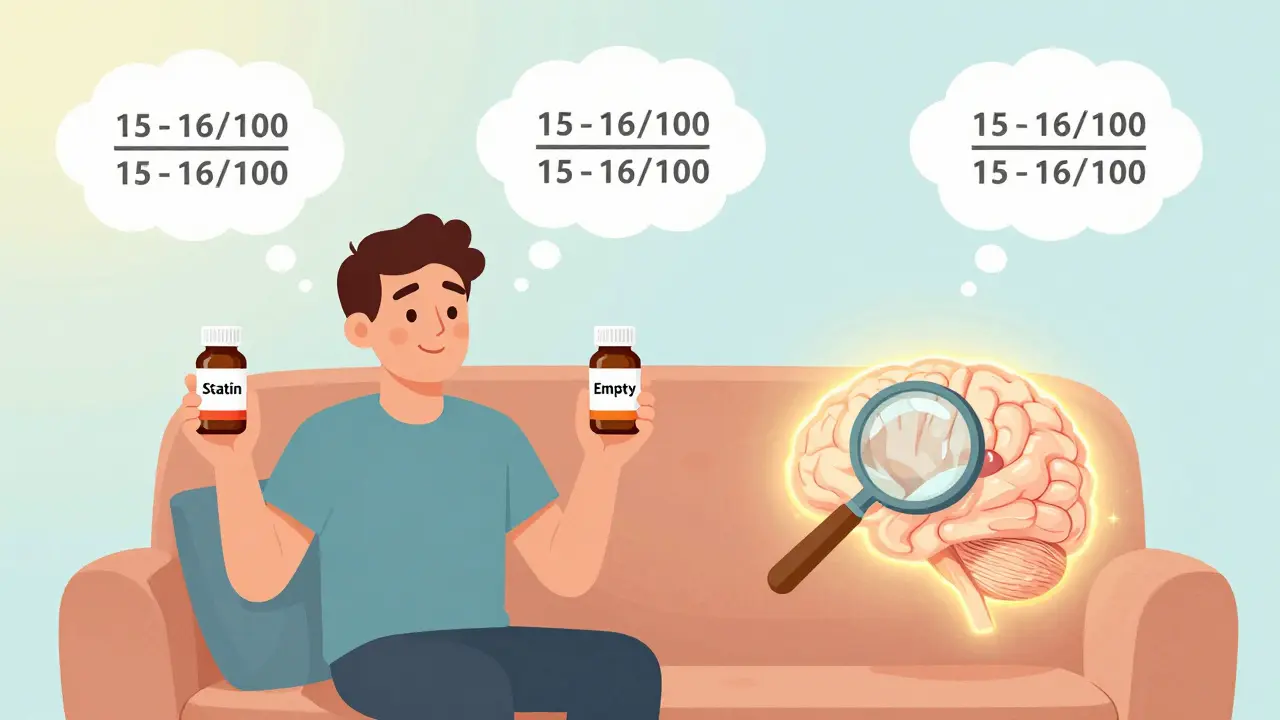
The SAMSON trial wasn’t just another study. It was designed to catch the nocebo effect in action. Researchers recruited 60 people who had quit statins because of side effects. Each person got 12 bottles over 12 months - four with atorvastatin (20 mg), four with placebo (sugar pills), and four empty (no pill). They didn’t know which was which. Every day, they rated their muscle pain on a smartphone app using a 0-100 scale. The results were shocking. On placebo days, symptoms averaged 15.4 out of 100. On statin days? 16.3. Almost identical. On days with no pill at all? Just 8.0. That means the symptoms people blamed on statins were just as bad when they took nothing but a sugar pill. And when they took nothing at all? Pain dropped sharply. The nocebo ratio? 0.90. Meaning 90% of the symptoms people thought were from statins were actually from the belief that statins cause harm. Not the drug. Not their muscles. Their minds.Why Statins? Why So Strong?
Why does this happen so strongly with statins and not other drugs? Part of it is the messaging. For years, statin labels and TV ads have hammered home the risk of muscle pain. One study found that simply reading about statin side effects made people more likely to report them - even if they weren’t taking the drug. The more you know, the more you notice. Compare that to other medications. Take blood pressure pills. People rarely blame them for fatigue. Why? Because the warnings aren’t as loud. Statins? They’re the only drug where doctors routinely say, “You might feel achy.” That sets the stage for the brain to look for, and find, pain. Even more telling: in blinded trials - where neither patient nor doctor knows who gets the real drug - statins show no more muscle pain than placebo. But in real-world clinics, where patients know they’re on statins, up to 20% report symptoms. That gap? That’s the nocebo effect in action.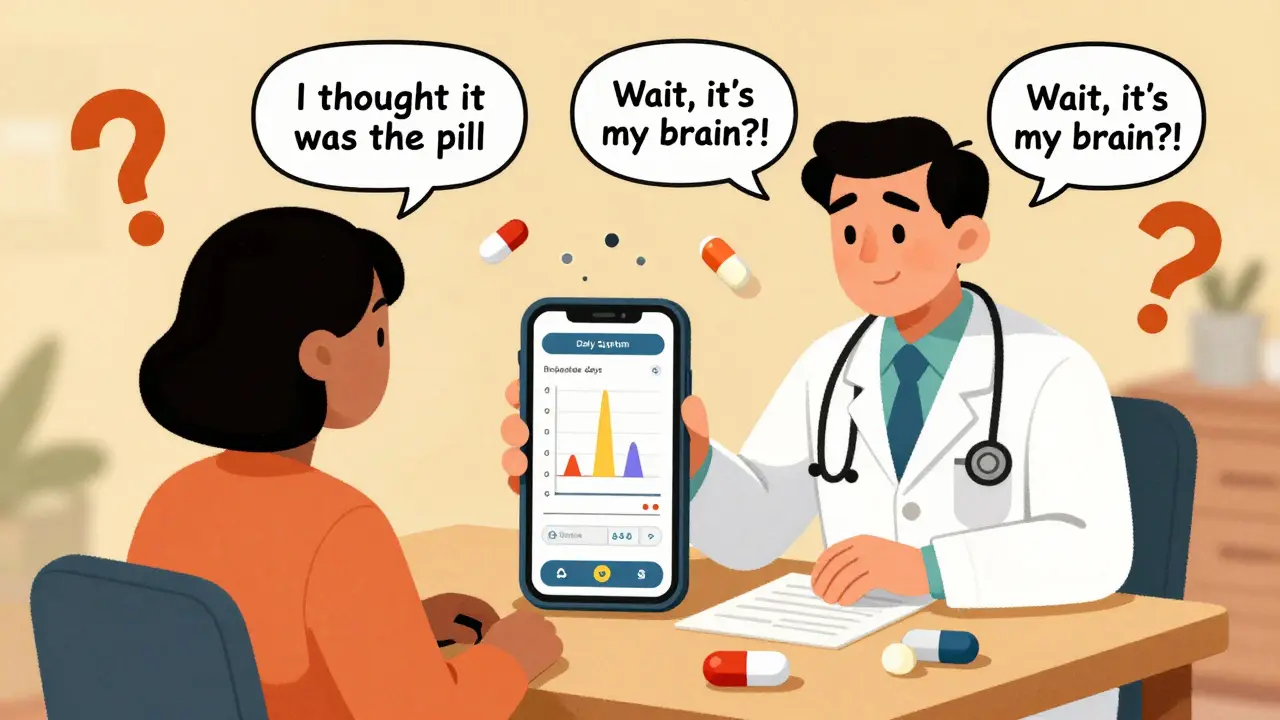
What About Real Muscle Damage?
You might be thinking: “But what if I really had damage? What if my CPK levels were high?” Valid point. There are rare cases where statins cause true muscle injury - rhabdomyolysis. But it’s extremely rare. About 1 in a million people. And even that number is mostly tied to very high doses, older age, or other medications like fibrates. The SAMSON trial specifically excluded people with confirmed muscle damage. They only studied those with subjective symptoms - the kind you feel, not the kind a blood test proves. That’s important. Because if your pain is real, but your blood work is normal? Odds are, it’s not the statin. The Mayo Clinic says it plainly: “The real risk of muscle pain from statins is about 5% or less compared to placebo.” That’s lower than the risk of muscle pain from walking too much after a vacation. But because we expect statins to hurt us, we blame them.How Patients Turned It Around
Here’s where it gets powerful. After seeing their own symptom data from SAMSON, half of the participants restarted statins. Not because they were convinced by science. But because they saw it themselves. One man in the study had quit statins after 10 years because of constant leg pain. He thought it was the drug. After the trial, he saw his pain was just as bad on placebo. He restarted. Six months later? No pain. LDL down 40%. He said, “I thought I was broken. Turns out, I was just scared.” Reddit threads are full of similar stories. “I was ready to quit forever. Then I saw my app data. Placebo days were worse than statin days. I restarted. Been fine for 8 months.” Clinicians who use this approach report statin restart rates of nearly 50%. Those who don’t? Only 22%. The difference isn’t in the medicine. It’s in the message.What Doctors Should Do
If you’re a doctor, don’t just say, “It’s probably nocebo.” That sounds dismissive. Instead, show the data. Use the SAMSON method: track symptoms daily. Offer a controlled reintroduction. Start low - 5 mg rosuvastatin or 10 mg atorvastatin. Give them a week. Then another. Track the numbers. Let them see the pattern. The American College of Cardiology now recommends this as a standard tool for statin-intolerant patients. It’s simple. No blood tests. No fancy machines. Just a phone app and a few bottles. And it works. A 2022 survey of 127 cardiologists found those who used this method saw 48.7% of patients restart statins. Those who didn’t? Only 22.1%.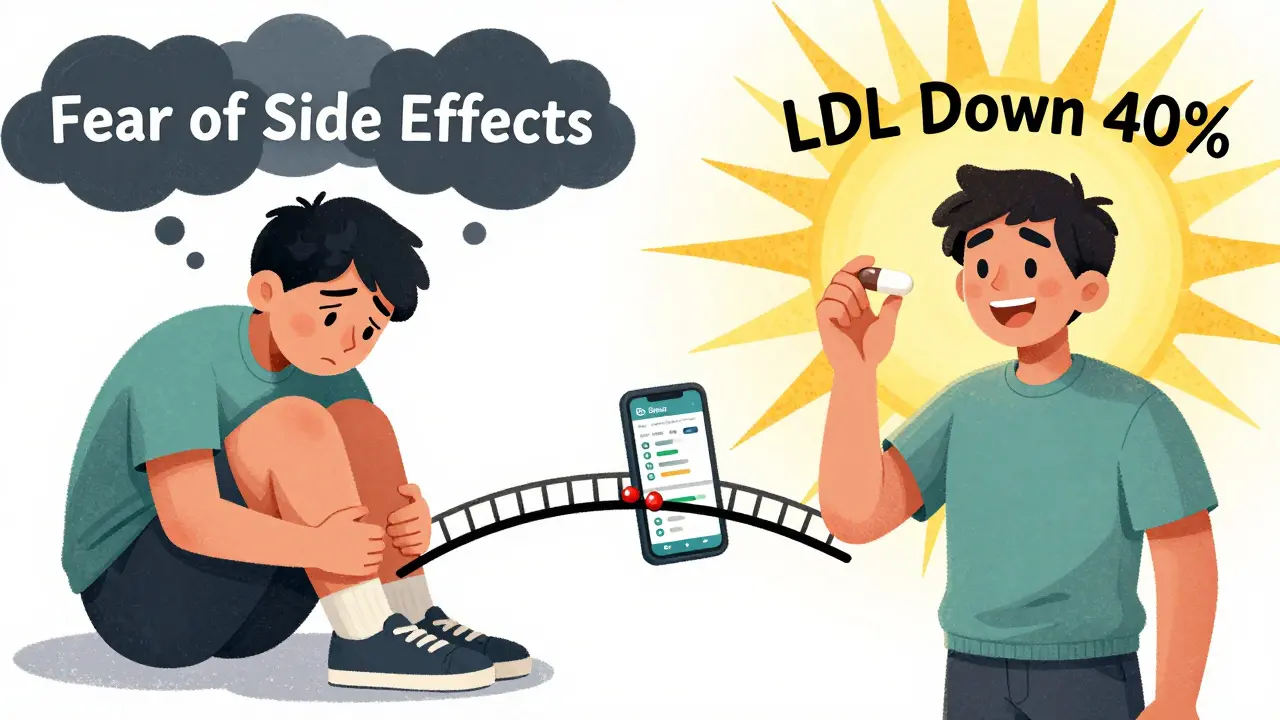
Why This Matters
This isn’t just about feeling better. It’s about staying alive. Statins prevent heart attacks and strokes. When people quit them, their risk goes up. In the U.S. alone, statin non-adherence due to perceived side effects costs the healthcare system $11.2 billion a year in preventable hospitalizations. The nocebo effect isn’t just a quirk. It’s a public health crisis. And it’s fixable.What You Can Do
If you’re on statins and feel off:- Don’t assume it’s the drug. Track your symptoms daily for a week - even if you’re not taking anything.
- Ask your doctor about a nocebo test. It’s not experimental. It’s evidence-based.
- Start with a lower dose. You might tolerate 5 mg better than 20 mg.
- Read less about side effects. The more you know, the more you feel.
- If pain persists after a clean trial? Then it’s worth investigating. But don’t quit before you’ve tried.
What’s Next
New studies are building on SAMSON. One trial, called SAMSON-2, is testing whether cognitive behavioral therapy can help people unlearn the fear of statins. Apple and Google are working with hospitals to build symptom trackers into Health and Fit apps. The European Medicines Agency now requires all future statin trials to measure nocebo effects. The message is clear: the problem isn’t the statin. It’s the story we’ve been told.Can the nocebo effect cause real muscle damage?
No. The nocebo effect causes perceived symptoms - like muscle aches, fatigue, or weakness - but it doesn’t cause biochemical damage like elevated CPK levels or rhabdomyolysis. True statin-induced muscle injury is extremely rare (fewer than 1 in a million) and is diagnosed through blood tests, not symptoms alone. If your CPK levels are normal and you have no other signs of muscle breakdown, your pain is likely from the nocebo effect, not the drug.
Why do I feel worse when I start a statin, even if I’ve taken it before?
Because your brain has learned to expect side effects. If you’ve read about statin pain, heard stories from others, or had a bad experience once, your brain starts scanning for discomfort. When you restart, even a normal muscle twinge gets labeled as “statin pain.” This is classic nocebo. The drug hasn’t changed. Your expectations have.
Is it safe to restart a statin after quitting?
Yes - and it’s often safer than continuing to avoid it. Statins reduce heart attack risk by up to 30% in high-risk patients. If you quit because of symptoms, restarting under a structured plan - like the SAMSON method - has a 50% success rate. Start low, track symptoms, and give it time. Most people find their symptoms disappear once they realize they’re not caused by the drug.
Do all statins cause the same nocebo effect?
Yes. The SAMSON trial used atorvastatin, but other statins show the same pattern. The nocebo effect isn’t tied to a specific drug - it’s tied to the belief that statins cause pain. Whether you take simvastatin, rosuvastatin, or pravastatin, your brain will react the same way if you expect side effects. That’s why switching statins rarely helps - unless you also change your expectations.
If the nocebo effect is real, does that mean my pain isn’t real?
Your pain is absolutely real - but its cause isn’t the statin. The nocebo effect doesn’t make pain fake. It makes the cause psychological, not pharmacological. Think of it like a phantom limb. The pain is real. The source isn’t the missing leg - it’s the brain. Similarly, your muscle ache is real. But it’s triggered by your expectation of harm, not the drug in your body.



Casey Tenney
This isn't science. It's wishful thinking from people who don't want to take responsibility for their own health. You think your brain is to blame? Maybe your body's just screaming at you to stop poisoning yourself.
Statins aren't harmless. They're chemical sledgehammers. And now we're told to ignore our instincts because some study says so? Nah.