
Medication Food Timing Checker
Check Your Medication
Enter your medication name to see if it should be taken with or without food according to FDA guidelines and clinical research.
Based on FDA guidelines and the New England Journal of Medicine study data, medications are categorized as:
Ever taken a pill with your morning coffee and wondered why it didn’t seem to work? Or maybe you felt sick after popping an ibuprofen on an empty stomach. You’re not alone. For millions of people, the simple act of taking medicine with or without food isn’t just a habit-it’s a matter of whether the drug works at all.
Food doesn’t just fill your belly; it changes how your body handles medicine. Some drugs need food to get absorbed properly. Others are ruined by it. Get it wrong, and you could be taking a pill that’s 50% less effective-or worse, risking serious side effects. This isn’t guesswork. It’s science. And it’s backed by decades of research, FDA guidelines, and real-world patient outcomes.
Why Food Changes How Your Medicine Works
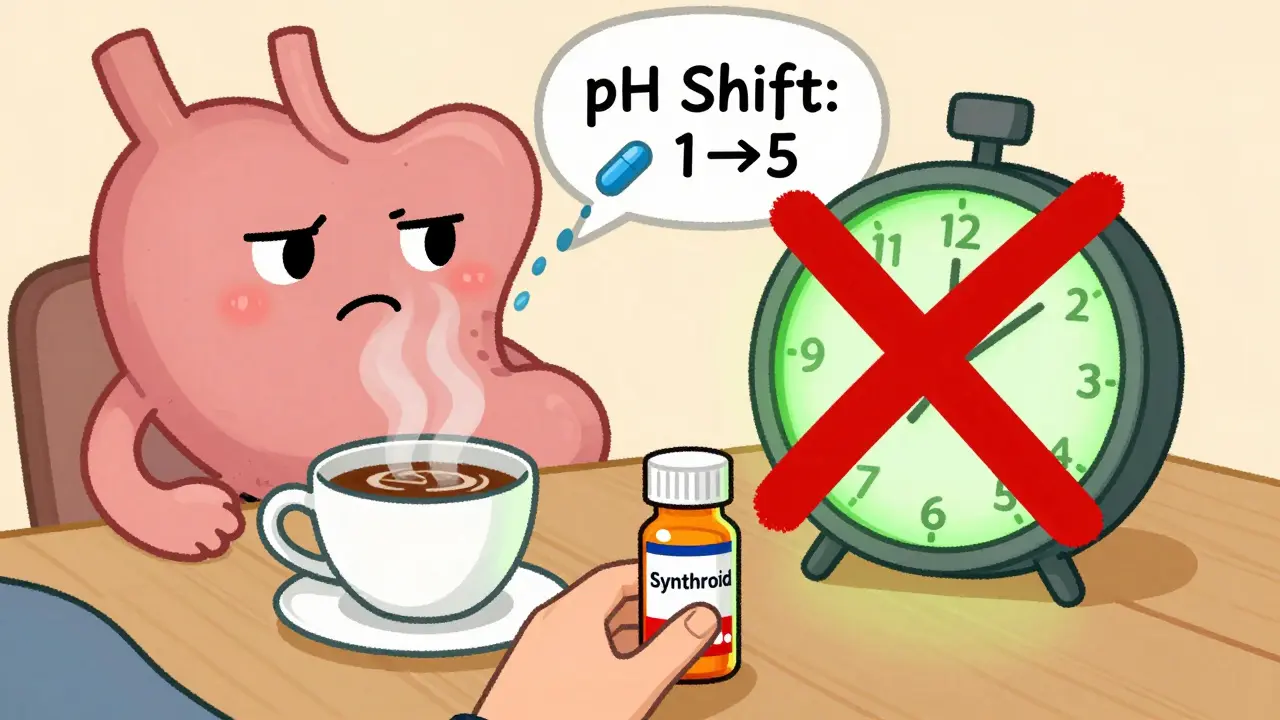
Your stomach isn’t just a passive container. It’s a chemical factory. When you eat, your stomach pH shifts from super acidic (around 1-2) to much milder (3-5). That sounds harmless, but for certain drugs, it’s a game-changer. Penicillin V, for example, breaks down 40% faster in a less acidic environment. If you take it with food, you might as well be throwing money away.
Food also slows down how fast your stomach empties. A high-fat meal can delay gastric emptying by 90 to 120 minutes. That’s long enough to mess up drugs like levothyroxine, which need to be absorbed quickly on an empty stomach. One 2021 study in the New England Journal of Medicine found that delayed absorption from food reduced its ability to suppress thyroid-stimulating hormone (TSH) by 22%. That’s the difference between feeling normal and still being exhausted, even on medication.
Then there’s bile. Food triggers bile release, which helps dissolve fat-soluble drugs. Griseofulvin, used for fungal infections, absorbs 50% better with food. Calcium and iron in meals can bind to antibiotics like tetracycline, cutting absorption by half. These aren’t edge cases. They’re standard pharmacology.
The FDA now requires drugmakers to test new medications with both high-fat (800-1,000 calorie) and low-fat (250-300 calorie) meals. Since 2020, 92% of new drug labels include specific food instructions-up from 65% in 2015. This isn’t random. It’s precision medicine.
Medications That MUST Be Taken on an Empty Stomach
Some drugs are so sensitive to food that even a snack can derail their effectiveness. Here are the big ones:
- Levothyroxine (Synthroid): Food can reduce absorption by 20-50%. A 2022 meta-analysis in the Journal of Clinical Endocrinology & Metabolism showed that taking it with breakfast led to TSH levels that were 30% higher than when taken correctly. Patients who switched to taking it 30-60 minutes before breakfast saw their levels stabilize within weeks.
- Alendronate (Fosamax): This osteoporosis drug needs an empty stomach to be absorbed. Food cuts absorption by 60%. Even water taken with food can interfere. You must wait at least 30 minutes after taking it before eating or drinking anything except plain water.
- Sucralfate (Carafate): This ulcer coating agent works by sticking to damaged tissue. Food prevents it from forming that protective layer. It should be taken 1 hour before meals and at bedtime.
- Ampicillin: A 2022 study showed a 35% drop in peak blood levels and 28% lower overall exposure when taken with food. The package insert clearly says: take 30 minutes before or 2 hours after meals.
- Zafirlukast (Accolate): Food reduces absorption by 40%. The FDA label requires it to be taken at least 1 hour before or 2 hours after meals.
- Proton pump inhibitors (PPIs) like omeprazole and esomeprazole: These drugs block acid production triggered by food. If you take them with or after a meal, they’re too late. They need to be taken 30-60 minutes before eating. Nexium specifically requires 1 hour before food.
Here’s the kicker: 22% of all medication errors related to food timing involve levothyroxine, according to the Institute for Safe Medication Practices. One Reddit user, u/ThyroidWarrior, shared how their TSH levels bounced for two years-until they realized their morning coffee with cream was the culprit. Now, they take Synthroid at 4 a.m. and wait 90 minutes before eating. Their levels are stable. No more fatigue. No more confusion.
Medications That NEED Food to Work Right
Not all drugs hate food. Some actually need it.
- NSAIDs like ibuprofen and naproxen: These can cause stomach ulcers, bleeding, and hospitalizations. A 2020 meta-analysis in Gastroenterology found taking them with food reduces ulcer risk by 50-70%. The American College of Gastroenterology estimates 10,000-20,000 annual hospitalizations from NSAID-related GI issues could be prevented just by eating first.
- Aspirin: High-dose aspirin for pain or inflammation increases stomach irritation from 25% to 8% when taken with food, per Bayer’s 2022 data.
- Duloxetine (Cymbalta): This antidepressant causes nausea in many people. Taking it with food cuts nausea by 30%, according to Eli Lilly’s post-marketing data. For patients with chronic pain or depression, that’s a huge quality-of-life win.
- Statins like atorvastatin and simvastatin: Food improves absorption. But here’s the catch: grapefruit juice. It can spike statin levels by 300-500%, raising the risk of rhabdomyolysis-a dangerous muscle breakdown. The Canadian Medical Association Journal documented a 15-fold increase in risk when statins are taken with grapefruit.
- Mesalamine: Used for ulcerative colitis, this drug often causes nausea. One patient on HealthUnlocked said taking it with food dropped their nausea from daily to once a month. "Game changer for my work life," they wrote.
These aren’t minor tweaks. They’re clinical necessities. Skipping food with these drugs doesn’t just reduce effectiveness-it increases harm.
The 2-1-2 Rule: A Simple Guide for Everyday Use
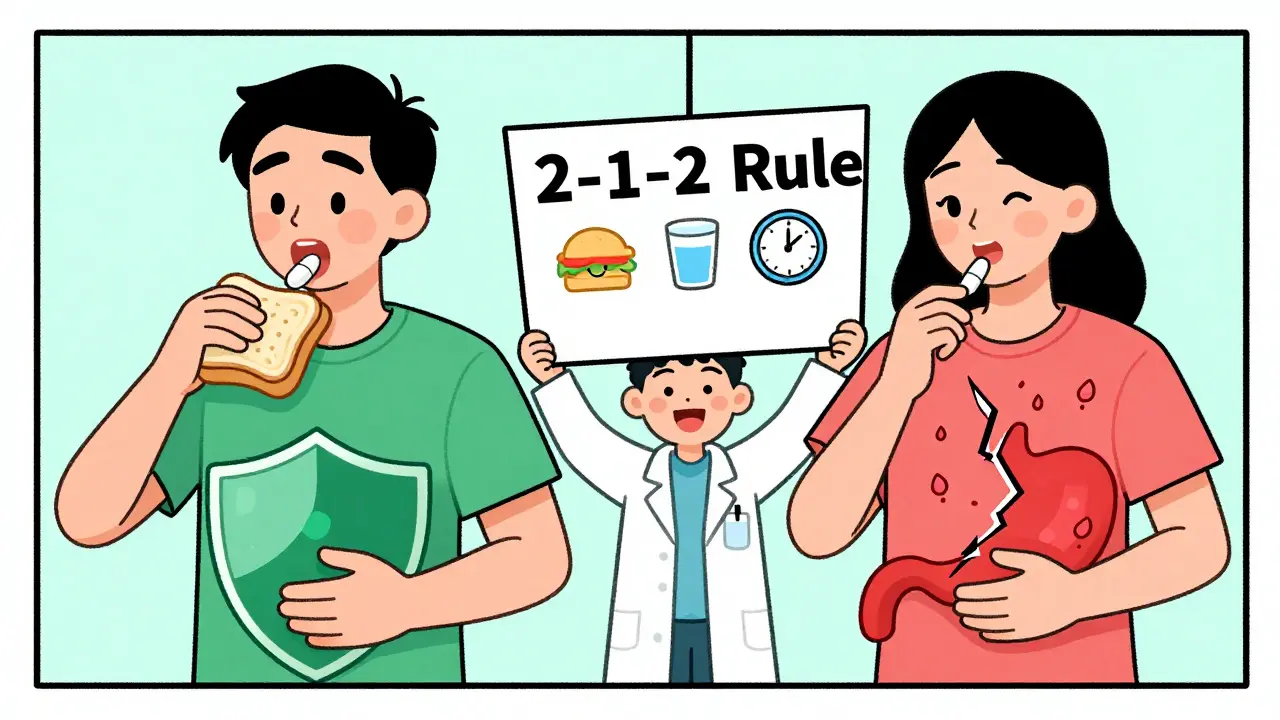
You don’t need a pharmacy degree to get this right. The CDC’s 2023 Medication Adherence Guidelines recommend the 2-1-2 Rule:
- 2 hours after eating: For meds that need a completely empty stomach.
- 1 hour before eating: For drugs that must be taken before food to work.
- 2 hours after eating: Also works as a safe window if you’re unsure.
For "with food" meds, take them during or within 30 minutes of a meal containing 500-800 calories. That’s roughly a sandwich, a bowl of cereal with milk, or a small plate of eggs and toast. A handful of crackers doesn’t count.
Many patients get confused because instructions say "take on an empty stomach" but don’t define it. That’s why pharmacists now use color-coded stickers: red for empty stomach, green for with food. A 2021 pilot study showed this simple trick boosted correct use from 52% to 89%.
Real Problems, Real Solutions
Here’s the truth: 65% of patients ignore food timing instructions. A 2022 Express Scripts survey of 10,000 people found 41% experienced reduced effectiveness, and 29% had more side effects because of it. The most common mistake? Taking NSAIDs without food. Over half of those patients ended up with stomach pain.
But solutions exist. Pill organizers labeled "before food" and "with food" improve adherence by 35%. Apps like Medisafe and GoodRx send alerts when it’s time to take a pill-and whether to eat first. One user told GoodRx, "I used to take all my pills with breakfast. Now I know Synthroid goes first, then coffee, then the rest. My doctor says I’m finally in range. I didn’t know it mattered this much."
Pharmacists are your best resource. A 2021 JAMA Internal Medicine study found 92% of pharmacists gave clear food-timing advice, compared to just 45% of physicians. If your doctor didn’t explain it, ask your pharmacist. They’re trained for this.
The Future: Fewer Rules, More Precision
It’s not all complicated. New drug formulations are changing the game. Johnson & Johnson’s Xarelto Advanced uses a pH-sensitive coating that keeps absorption steady whether you eat or not. Early trials showed only 8% variability-down from 35% in the original version.
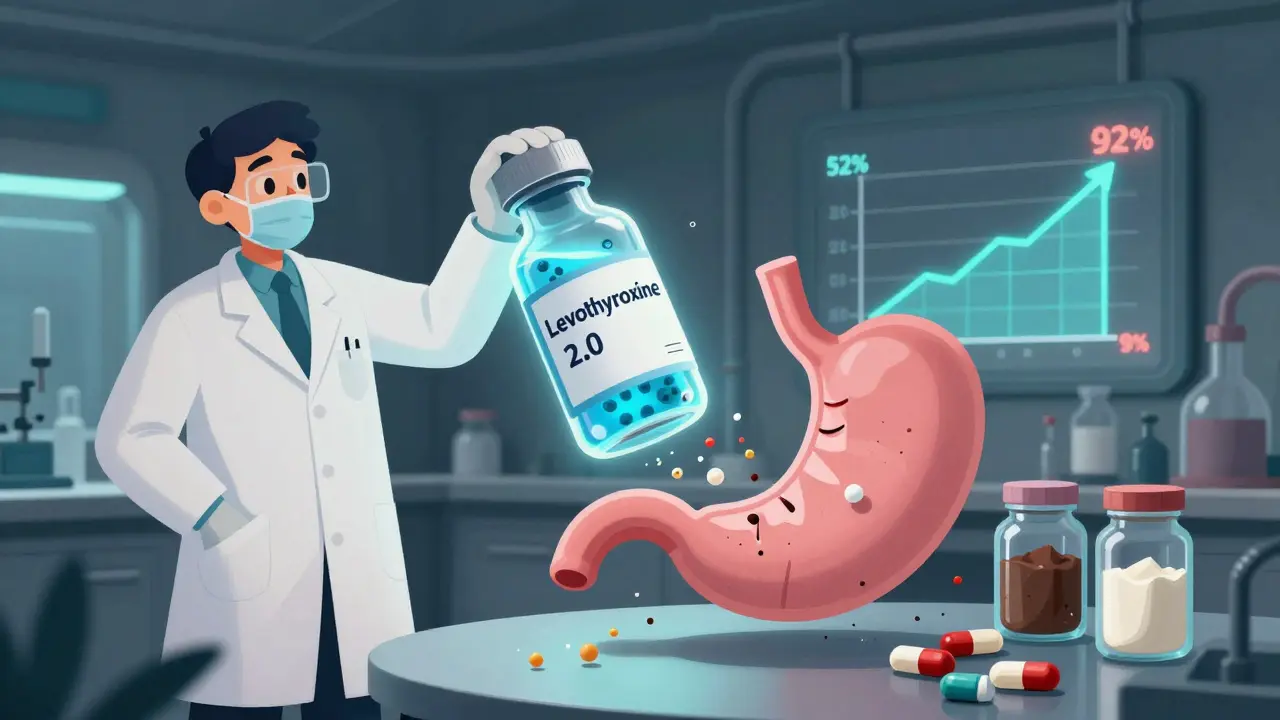
Researchers at the University of Michigan are testing mucoadhesive nanoparticles for levothyroxine that bypass stomach pH entirely. In Phase 2 trials, absorption stayed consistent 92% of the time, regardless of food. If approved, this could eliminate the "empty stomach" requirement for millions.
But here’s the catch: even with these advances, 75% of current medications still require careful timing. The American College of Clinical Pharmacy says we’re not done with food rules yet. In fact, personalized algorithms that adjust timing based on your individual digestion speed could become standard within five years.
Until then? Stick to the basics. Know your meds. Know your meals. And don’t assume it doesn’t matter-because for some drugs, it’s the difference between healing and harm.
Can I take my medication with water if it says "empty stomach"?
Yes, plain water is fine. The issue isn’t water-it’s food, milk, juice, coffee, or anything else that triggers stomach changes. For drugs like levothyroxine or alendronate, take them with a full glass of water, wait 30-60 minutes, then eat.
What if I forget and take my pill with food? Should I take another dose?
No, don’t double up. Taking extra can be dangerous. Instead, skip that dose and return to your regular schedule. If it’s a critical drug like levothyroxine or alendronate, call your pharmacist or doctor. They’ll tell you if you need to adjust your next dose or monitor for side effects.
Do all antibiotics need to be taken on an empty stomach?
No. Some, like ampicillin and tetracycline, do. Others, like azithromycin, are actually better with food to reduce nausea. Always check the label or ask your pharmacist. Never assume all antibiotics work the same way.
Is it okay to take statins with grapefruit juice if I only have a small amount?
No. Even a small amount of grapefruit juice can block the enzyme that breaks down statins, leading to dangerous buildup in your blood. One glass can affect your body for over 24 hours. Avoid grapefruit entirely if you’re on simvastatin, atorvastatin, or lovastatin. Other statins like pravastatin or rosuvastatin are safer.
Can I take all my meds at once with breakfast?
Only if every single one says "with food." Most don’t. Levothyroxine, alendronate, and some antibiotics must be taken alone. The safest approach is to stagger them: take empty-stomach meds first thing, wait an hour, then eat and take the rest. Use a pill organizer labeled with "before food" and "with food" to stay on track.
Medication timing isn’t about being perfect. It’s about being informed. A little attention to food and timing can make your meds work better, keep you safer, and save you from unnecessary side effects. Don’t guess. Ask. And don’t let a simple habit undo months of treatment.



THANGAVEL PARASAKTHI
Been taking my levothyroxine with coffee for years. Thought it was fine. Turns out the cream was wrecking my TSH. Switched to water only, 45 min before breakfast. My energy’s back. No more afternoon crashes. Simple fix, right? Why didn’t anyone tell me this sooner?