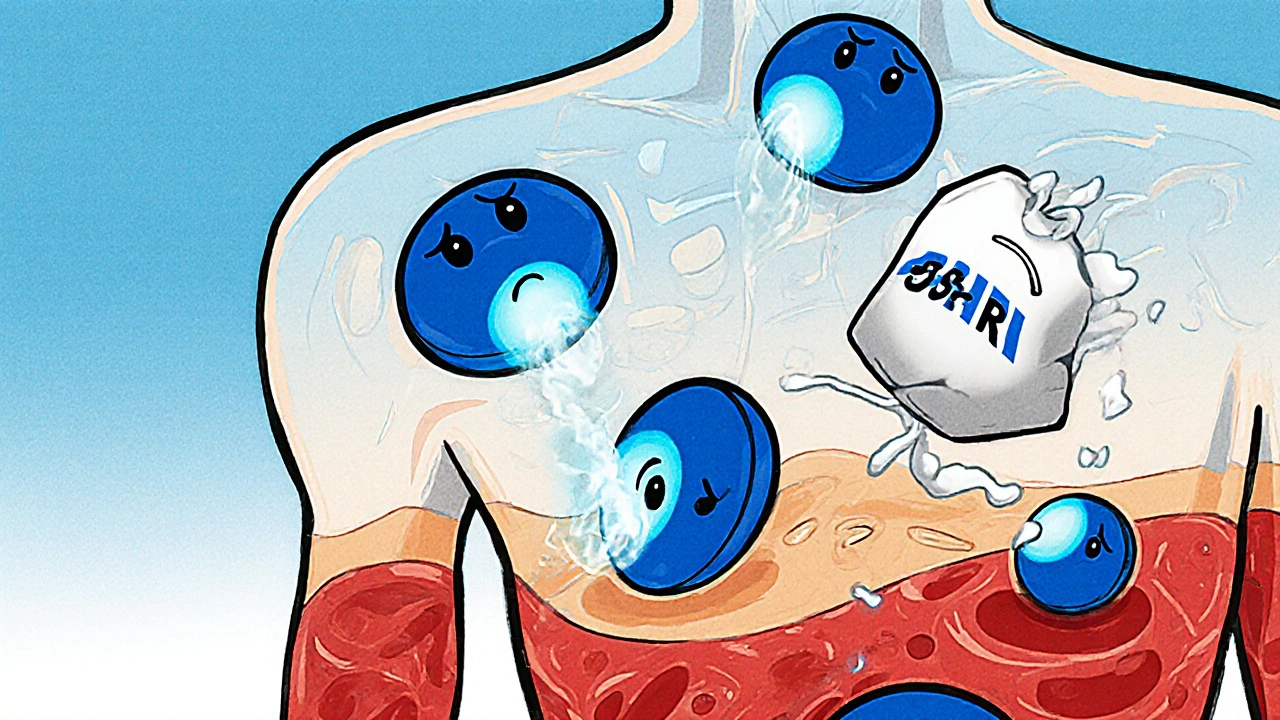
SSRIs and Bleeding: What You Need to Know About the Risk
When you take an SSRI, a class of antidepressants that increase serotonin in the brain to improve mood. Also known as selective serotonin reuptake inhibitors, these drugs are among the most prescribed for depression and anxiety. But here’s something many don’t talk about: SSRIs can raise your risk of bleeding—even if you’re otherwise healthy. It’s not a common side effect, but it’s real, and it’s worth understanding before you start or switch meds.
The link between SSRIs, medications like sertraline, escitalopram, and fluoxetine that block serotonin reabsorption and bleeding comes from how serotonin works outside the brain. Platelets, the cells that help your blood clot, rely on serotonin to stick together and seal cuts. When SSRIs lower serotonin levels in the blood, platelets don’t work as well. This effect gets worse when you combine SSRIs with blood thinners, drugs like warfarin, aspirin, or NSAIDs that prevent clots. A 2020 study in the BMJ found people on SSRIs plus aspirin had nearly double the risk of gastrointestinal bleeding compared to those on aspirin alone. Even over-the-counter painkillers like ibuprofen can be risky when paired with an SSRI.
It’s not just about pills. Dental work, surgery, or even minor cuts can become bigger problems if you’re on an SSRI and don’t know the risk. Older adults, people with liver problems, or those taking multiple medications are especially vulnerable. But the good news? For most people, the bleeding risk is small—especially if you’re not on other blood-thinning drugs. Still, if you notice unusual bruising, nosebleeds, or blood in your stool, talk to your doctor. Don’t stop your SSRI on your own—sudden withdrawal can cause serious side effects. Instead, ask about alternatives, dose adjustments, or whether you need to avoid certain meds.
What you’ll find below are real, practical articles that break down exactly how SSRIs interact with other drugs, what the science says about bleeding, and how to manage your treatment safely. From QT prolongation risks in citalopram to how blood thinners affect dental procedures, these posts give you the facts—not guesses. You’re not alone in this. Thousands of people take SSRIs without issue, but knowing the risks lets you take control—not just follow a prescription.
SSRIs can increase bleeding risk by reducing serotonin in platelets, leading to impaired clotting. Paroxetine carries the highest risk, while sertraline is safer. Learn how to assess your risk and make safer choices with your antidepressant.