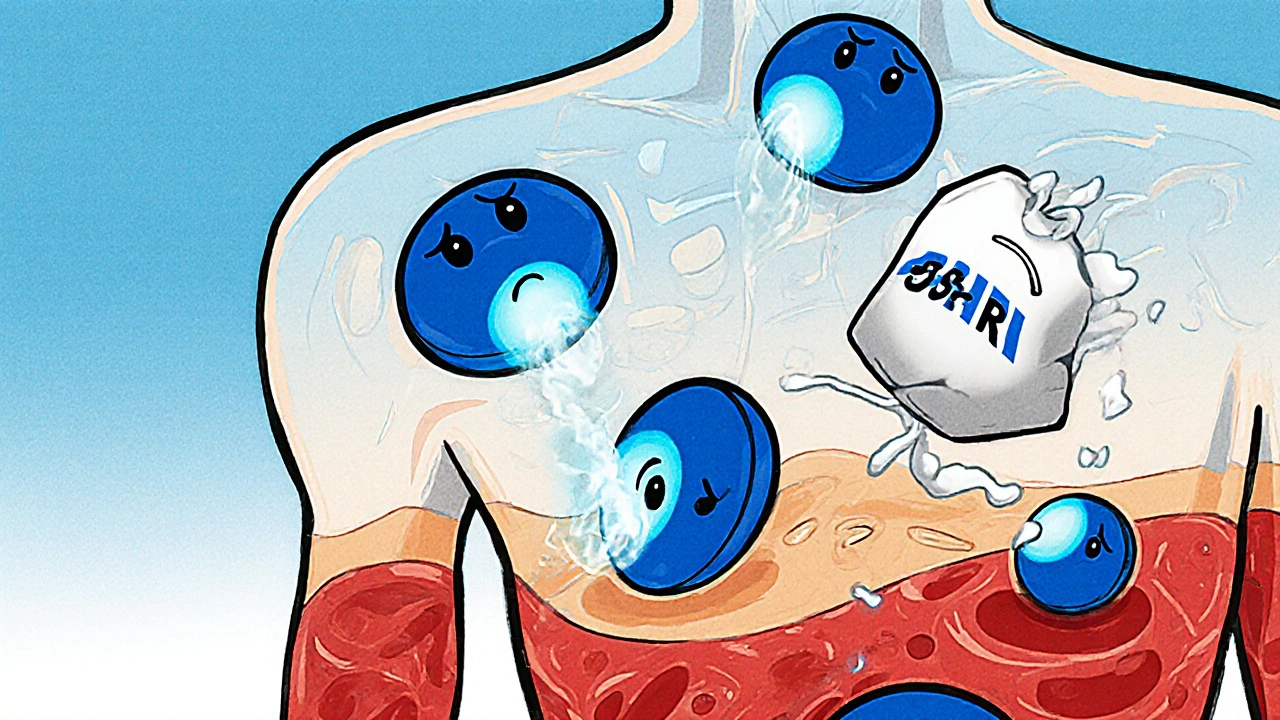
SSRI Bleeding Risk: What You Need to Know About Antidepressants and Bleeding
When you take an SSRI, a class of antidepressants that increase serotonin in the brain to improve mood. Also known as selective serotonin reuptake inhibitors, these drugs are among the most prescribed for depression and anxiety. But there’s a side effect many don’t talk about: SSRI bleeding risk. It’s not rare, and it’s not theoretical. Studies show people on SSRIs have a 30% to 60% higher chance of bleeding—especially in the stomach, brain, or after surgery. This isn’t about a minor nosebleed. This is about serious, sometimes life-threatening events.
Why does this happen? SSRIs lower platelet serotonin, which messes with blood clotting. Platelets need serotonin to stick together and seal cuts. Less serotonin = slower clotting. The risk goes up if you’re also taking blood thinners, medications like warfarin, apixaban, or aspirin that prevent clots, or NSAIDs, common painkillers like ibuprofen or naproxen that irritate the stomach lining. Even a simple dental procedure or minor injury can turn dangerous. Older adults, people with liver disease, or those on high-dose SSRIs are at the highest risk. And here’s the kicker: many patients don’t even know this risk exists. Doctors often focus on mood improvement and skip the bleeding warning.
It’s not about avoiding SSRIs—it’s about being smart. If you’re on one, tell every provider you see: your dentist, surgeon, even your chiropractor. Ask if your other meds could make bleeding worse. Don’t stop your SSRI cold turkey—sudden withdrawal can trigger worse problems. But do ask if a lower dose or a different antidepressant might be safer for you, especially if you’ve had unexplained bruising, nosebleeds, or dark stools. The posts below dig into real cases, drug interactions, and what to do if you’re already on multiple meds that raise bleeding risk. You’ll find clear advice on managing this risk without giving up your mental health treatment.
SSRIs can increase bleeding risk by reducing serotonin in platelets, leading to impaired clotting. Paroxetine carries the highest risk, while sertraline is safer. Learn how to assess your risk and make safer choices with your antidepressant.