Paroxetine Bleeding: Risks, Causes, and What You Need to Know
When you take paroxetine, a selective serotonin reuptake inhibitor (SSRI) used to treat depression, anxiety, and OCD. Also known as Paxil, it works by boosting serotonin in your brain—but that same effect can interfere with how your blood clots. This isn’t just a theoretical concern. Real patients have reported nosebleeds, bruising easily, and even serious bleeding during surgery or after minor injuries while on paroxetine. It’s not rare, and it’s not always talked about clearly.
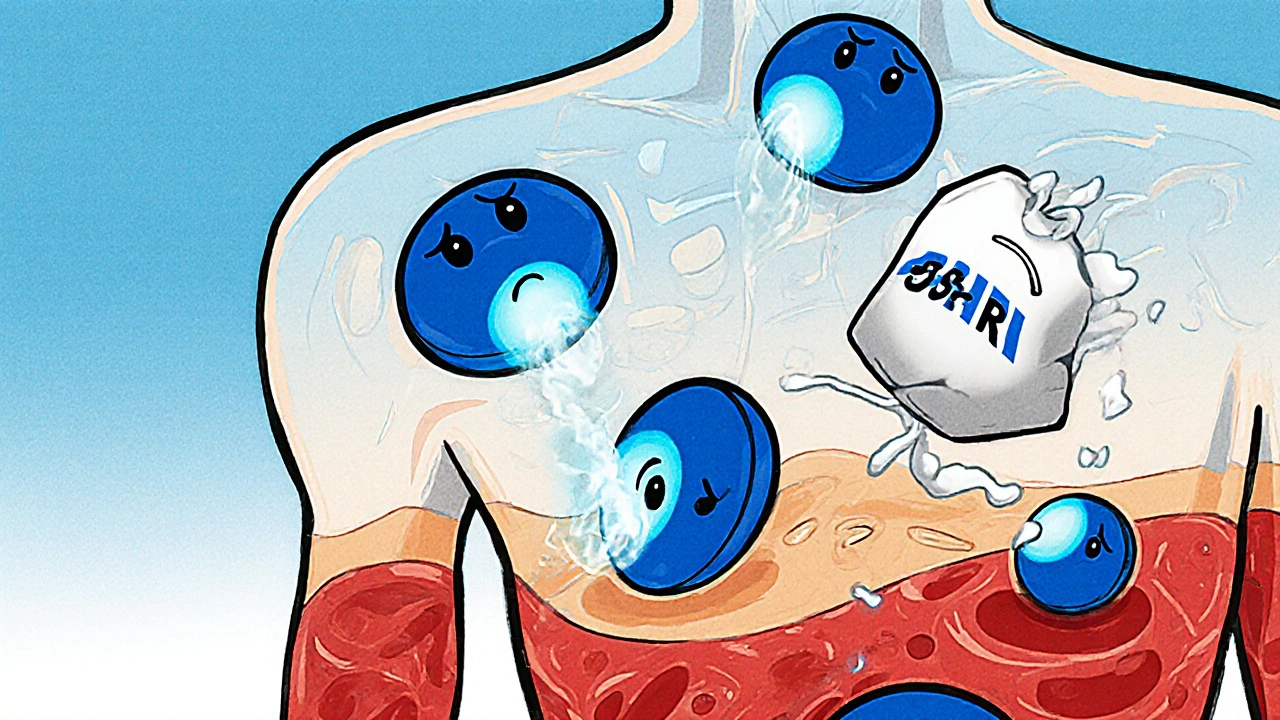
Here’s why it happens: serotonin isn’t just a mood chemical. It’s also stored in your blood platelets, which are the cells that help your blood clot. When paroxetine blocks serotonin reuptake in the brain, it does the same in platelets—depleting their serotonin stores. Without enough serotonin, platelets don’t stick together as well. That means even a small cut can bleed longer. The risk goes up if you’re also taking NSAIDs, like ibuprofen or naproxen, which also affect platelet function, or blood thinners, such as warfarin, aspirin, or DOACs. Even something as simple as fish oil or high-dose vitamin E can add to the risk. And if you’re older, have liver problems, or are on multiple meds, your chances of bleeding go up even more.
It’s not just about cuts and bruises. There are documented cases of gastrointestinal bleeding, brain bleeds after falls, and excessive bleeding during dental work or childbirth in people taking paroxetine. One study found people on SSRIs like paroxetine had nearly double the risk of upper GI bleeding compared to those not on antidepressants. That’s why doctors now check your full med list before prescribing paroxetine, especially if you’ve had bleeding issues before. The good news? The risk drops after you stop the drug, and it’s usually manageable if you’re aware. If you’re on paroxetine and notice unusual bruising, blood in your stool, or prolonged bleeding from minor injuries, don’t ignore it. Talk to your provider. You might need a different antidepressant, a dose change, or just closer monitoring. Below, you’ll find real posts from people who’ve dealt with this exact issue—what they learned, what worked, and what to watch out for.
SSRIs can increase bleeding risk by reducing serotonin in platelets, leading to impaired clotting. Paroxetine carries the highest risk, while sertraline is safer. Learn how to assess your risk and make safer choices with your antidepressant.