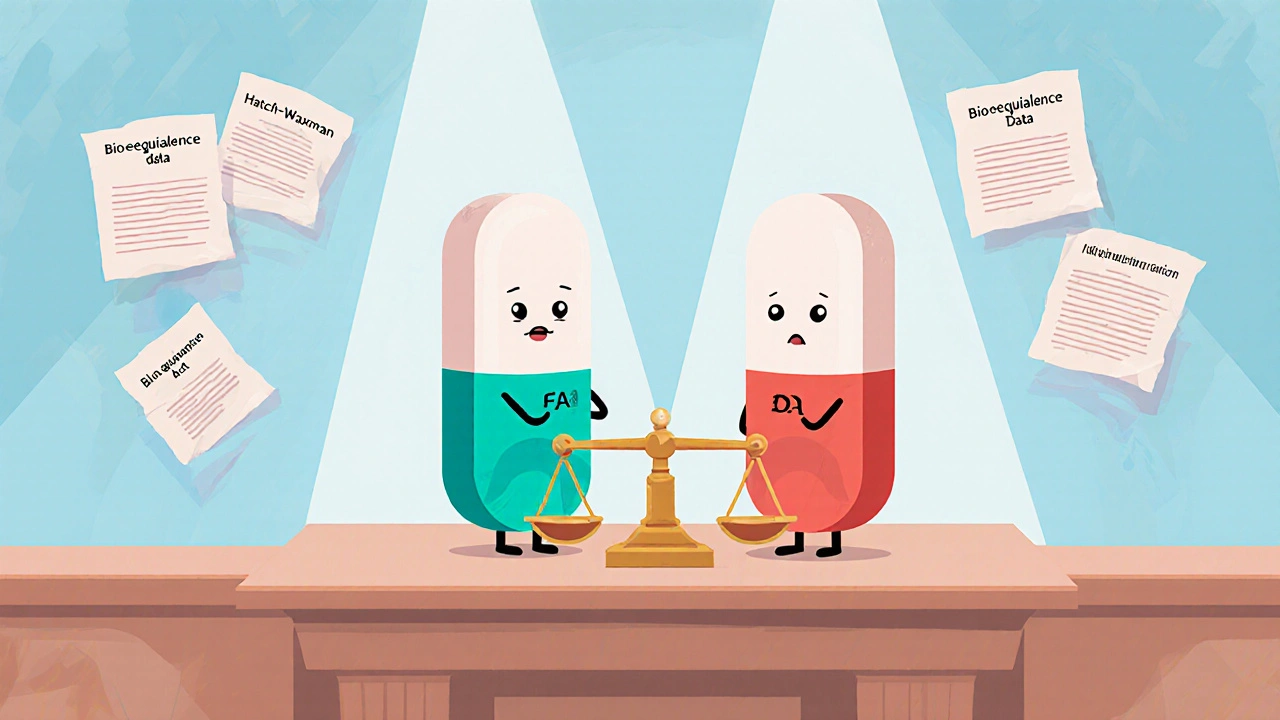
FDA ANDA Requirements: What You Need to Know About Generic Drug Approval
When you pick up a generic pill at the pharmacy, you’re holding a drug approved through the FDA ANDA requirements, a streamlined process the U.S. Food and Drug Administration uses to approve generic versions of brand-name drugs. Also known as Abbreviated New Drug Application, this system ensures generics are just as safe and effective as the original—without the high cost. The FDA doesn’t require new clinical trials for generics. Instead, they focus on proving the generic matches the brand in active ingredients, strength, dosage form, and how your body absorbs it.
That last part—how your body absorbs the drug—is called bioequivalence, the standard that proves a generic drug performs the same way in your system as the brand-name version. If a generic doesn’t meet bioequivalence thresholds, it won’t get approved. The FDA tests this using blood samples from healthy volunteers, measuring how fast and how much of the drug enters your bloodstream. It’s not about the pill looking the same—it’s about it working the same. This is why some people notice differences when switching brands, even though chemically, the drugs are identical. The issue isn’t the drug itself—it’s often the nocebo effect, where expectation changes perception, as seen in studies on generic medication use.
Manufacturers must also prove their generic drug is made under the same strict quality controls as the brand. That means clean facilities, consistent manufacturing, and accurate labeling. The FDA inspects these sites regularly. If a company cuts corners, the ANDA gets rejected—or worse, pulled after approval. You might see this happen when a generic version gets recalled due to impurities, like the recent cases with certain ARBs or ranitidine. That’s the FDA’s system working: catching problems before they reach too many people.
And it’s not just about pills. ANDA applies to injections, inhalers, patches, even eye drops. The rules adjust slightly depending on how the drug enters your body, but the core principle stays the same: prove it works like the original. That’s why you’ll find so many articles here about generic alternatives to drugs like Synthroid, Micardis, or Anafranil—they all went through this process. The FDA doesn’t approve generics because they’re cheaper. They approve them because they’re proven to be the same.
What you’ll find in the posts below are real-world examples of how these rules play out. From how clomipramine generics compare to Anafranil, to why some people question generic thyroid meds, to how the FDA’s stance on ranitidine changed overnight—each article shows the human side of the ANDA system. You’ll see how approval standards affect what’s on your shelf, how perception shapes experience, and why some drugs get replaced faster than others. This isn’t just bureaucracy. It’s your health, regulated.
The ANDA process is the legal pathway for generic drug approval in the U.S., requiring strict proof of bioequivalence, manufacturing quality, and patent compliance under the Hatch-Waxman Act. Learn the key requirements, fees, and challenges.