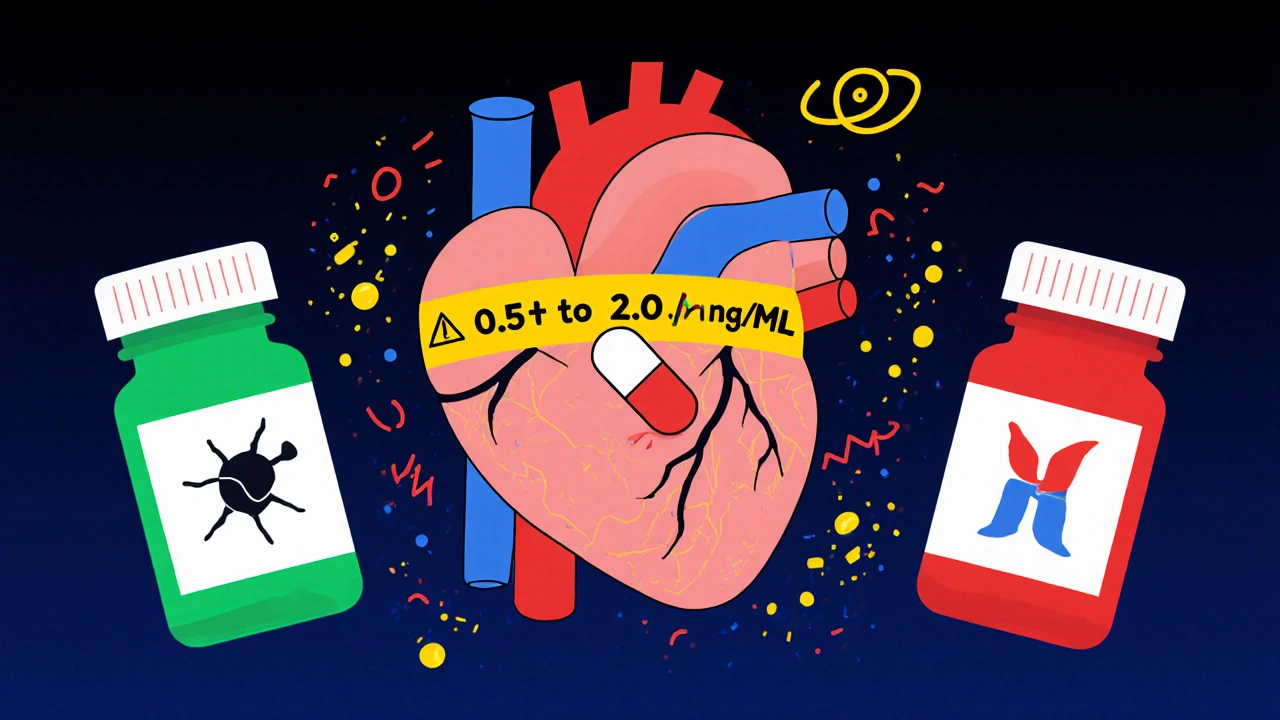
Digoxin Generics: What You Need to Know About Cost, Safety, and Alternatives
When you hear digoxin generics, lower-cost versions of the heart medication digoxin, used to treat heart failure and irregular heart rhythms. Also known as digitalis generics, they work the same way as the brand-name version but often cost a fraction of the price. Digoxin has been around for over 200 years, originally made from foxglove plants, and it’s still one of the few drugs that can help control heart rate in atrial fibrillation and improve symptoms in heart failure. But here’s the catch: even though generics are chemically identical, some patients report feeling worse after switching. Why? It’s not always the drug—it’s often how your body reacts to tiny differences in fillers, how fast it’s absorbed, or even your expectations.
That’s where bioequivalence, the legal standard that says a generic must perform the same way in the body as the brand comes in. The FDA requires generics to match the brand in how much of the drug enters your bloodstream and how quickly. But for digoxin, that window is narrow. Too little, and it doesn’t work. Too much, and you risk toxicity—nausea, blurry vision, or even dangerous heart rhythms. That’s why some pharmacies stick to one generic maker, and why doctors sometimes prefer to keep you on the same version you started with.
And then there’s the digitalis alternatives, other heart rhythm and failure drugs like beta-blockers, ACE inhibitors, or newer agents like sacubitril/valsartan. Many patients now get these instead of digoxin because they’ve been shown to improve survival. But digoxin still has a place—especially for older adults with atrial fibrillation who don’t tolerate other drugs well. The key is knowing when it’s the right choice, and whether your generic version is doing its job.
Below, you’ll find real posts from doctors and pharmacists who’ve seen the effects of switching generics, the hidden risks of low-dose digoxin, and how to spot signs your body isn’t tolerating the version you’re on. You’ll also learn how Paragraph IV certifications and ANDA approvals shape which generics reach your pharmacy, and why authorized generics sometimes cost less than the so-called "cheaper" versions. This isn’t just about saving money—it’s about making sure the drug you’re taking actually works for you.
Digoxin generics can be dangerous if bioavailability varies between brands. Even FDA-approved switches may cause toxicity or treatment failure. Learn why consistent use and regular blood monitoring are critical for safety.