
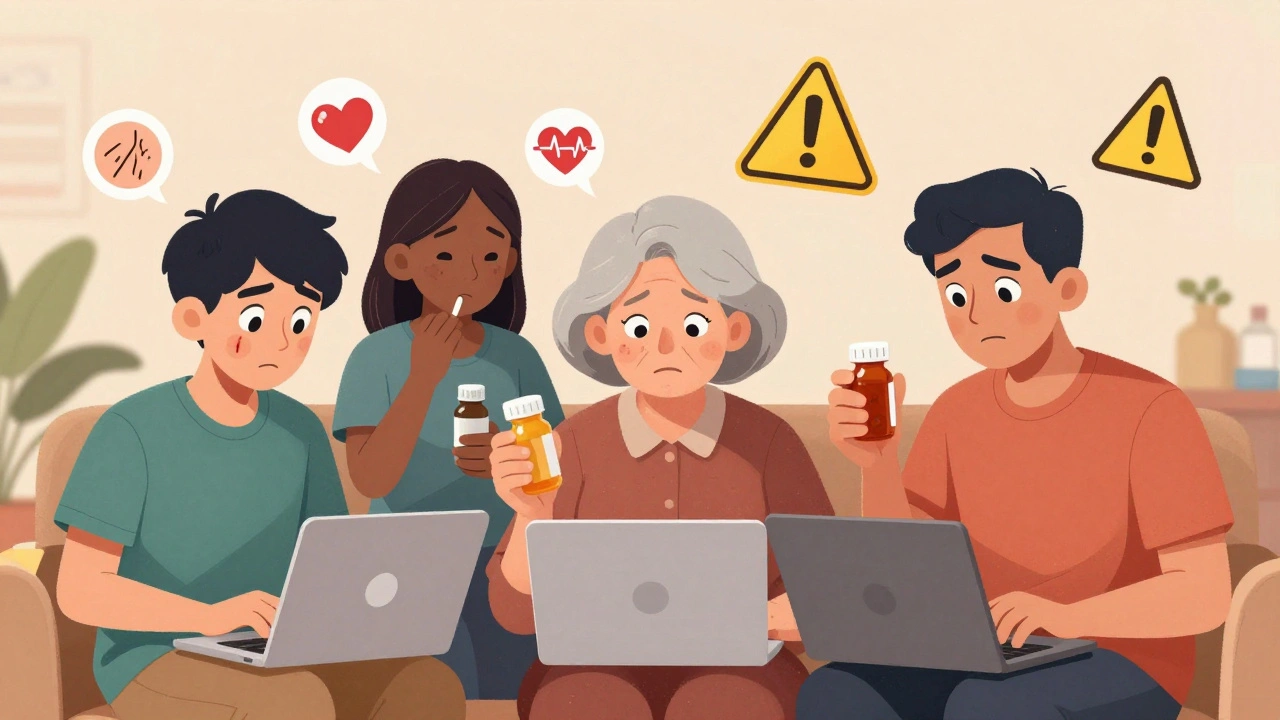
Every year, millions of people take prescription drugs, over-the-counter medicines, and even supplements. Most of them work fine. But for some, things go wrong - unexpected rashes, heart palpitations, liver damage, or worse. When that happens, reporting it to the FDA isn’t just a good idea. It’s how we find out if a drug is safer than we thought - or more dangerous.
What Counts as an Adverse Event?
An adverse event is any harmful or unwanted reaction that happens after taking a medication. It doesn’t have to be proven to be caused by the drug. If you took a pill and then got sick, and you’re not sure why, it still counts. The FDA defines it broadly: side effects, overdoses, withdrawal symptoms, or even when a drug just doesn’t work when it should. This includes everything from a mild headache to death.Some events are already listed in the drug’s label - those are expected. But if something new pops up - like sudden hearing loss after taking a common antibiotic - that’s what the FDA is looking for. That’s how they catch hidden dangers. The FAERS (FDA Adverse Event Reporting System) is the database that collects all these reports. It’s got over 30 million entries going back to 1968. Every report adds to the puzzle.
Who Can Report?
Anyone can report. Patients, family members, doctors, pharmacists, nurses, and drug companies. But the rules are different depending on who you are.Drug manufacturers? They’re required by law to report serious and unexpected adverse events within 15 days. Miss the deadline? They could face fines up to $2.3 million per violation. That’s why big pharma has teams dedicated to this.
Healthcare providers? They’re not legally required to report every side effect - except for certain vaccines under the National Childhood Vaccine Injury Act. But they’re strongly encouraged to. A study from the FDA found that reports from doctors with full medical records are 73% more useful than those without.
Patients and caregivers? You’re not obligated. But your report matters. The FDA gets about 400,000 reports from consumers every year. And guess what? That’s just a fraction of what’s happening. Experts estimate only 1% to 10% of all adverse events are reported. That means most problems go unnoticed.
How to Report as a Patient or Caregiver
You don’t need to be a doctor. You don’t need to understand medical jargon. You just need to know what happened.Start by talking to your doctor or pharmacist. They can help you fill out the report - and often will submit it for you. But if you prefer to do it yourself, here’s how:
- Go to the FDA MedWatch website (you don’t need to log in).
- Click on “Report a Problem” and choose “Consumer or Patient.”
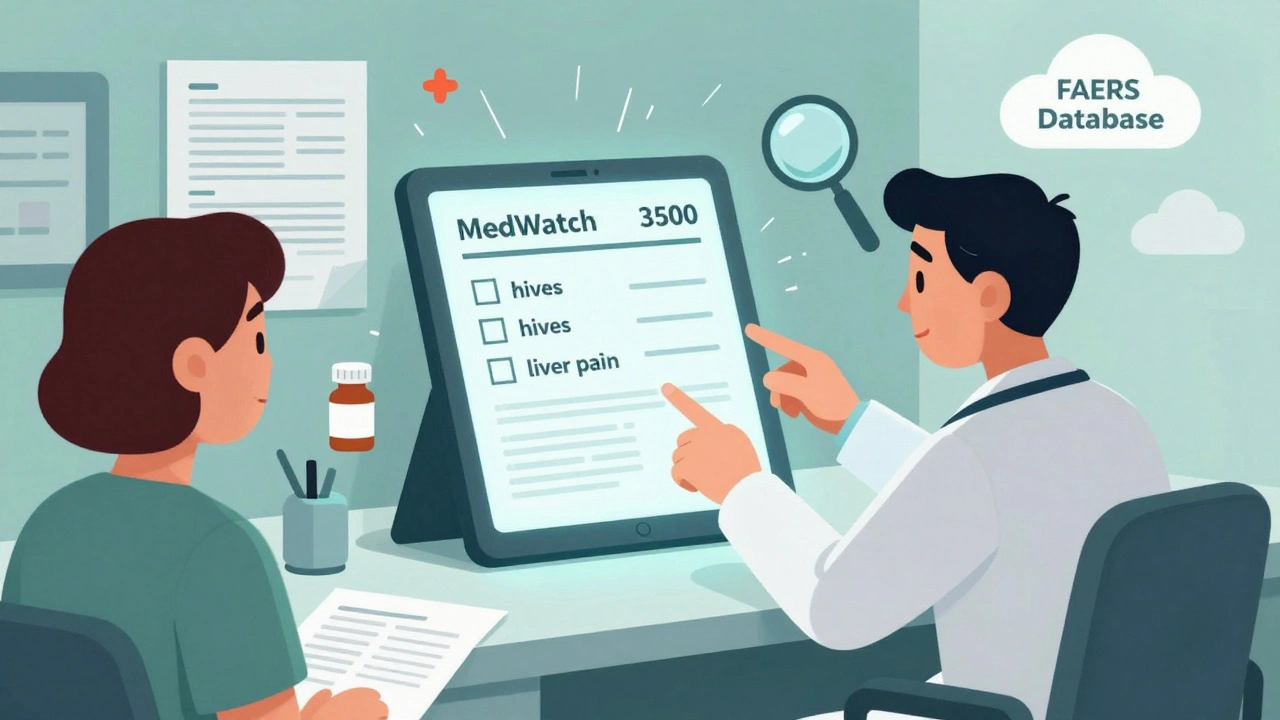
- Fill out Form 3500. You’ll need:
- Your name and contact info (optional - you can report anonymously)
- The patient’s age, gender, and relevant medical history (like diabetes or kidney disease)
- The name of the drug - brand and generic, if you know it
- How much you took and how often
- When you started the drug
- When the problem started - be as specific as possible
- A clear description of what happened - symptoms, hospital visits, lab results
- What happened after - did you stop the drug? Did you get better?
Don’t worry if you don’t know all the details. Just give what you have. The FDA says reports with specific timelines - like “I took the pill on Monday, and on Wednesday I broke out in hives” - are 82% more likely to trigger a safety review.
You can upload photos of the prescription bottle, packaging, or even the pills themselves. That helps them verify what you took. And if you’re not sure if it’s serious? Report it anyway. The FDA doesn’t want you to second-guess yourself.
How Healthcare Professionals Report
Doctors, nurses, and pharmacists report the same way - through MedWatch Form 3500. But you have advantages.You have access to lab results, imaging reports, and medical history. Include those. If the patient had elevated liver enzymes, say so. If an EKG showed a new arrhythmia, note it. The more clinical detail you add, the more valuable the report becomes.
Some hospitals and clinics have internal systems that auto-submit reports to the FDA. Check with your institution. If not, use the online form. It’s free, secure, and takes about 15-20 minutes.
Pro tip: Save a copy of your report. Use the unique Report ID the system gives you. You can return to it within three days to edit or finish if you get interrupted.
What Happens After You Submit?
You won’t get a thank-you note. You won’t get a call. But your report goes into a massive database that’s analyzed every day.Specialists use statistical tools to spot patterns. If 50 people report the same rare reaction to the same drug, that’s a red flag. The FDA then investigates further - maybe by reviewing medical records, running new studies, or comparing data from other countries.
Some reports lead to changes: new warning labels, restrictions on who can take the drug, or even a recall. In 2018, consumer reports helped link fluoroquinolone antibiotics to aortic aneurysms. That led to a “Black Box” warning - the strongest warning the FDA can give.
But here’s the hard truth: Most reports don’t lead to immediate action. It takes time. The FDA has only one safety reviewer for every 18,000 reports. The average time from submission to initial review? Over 217 days.
Don’t let that discourage you. Your report is part of a system that’s saved lives. One report might not change anything. But 10,000? That’s how discoveries happen.

Common Problems and How to Avoid Them
People run into the same issues over and over:- The form times out. Some users report losing work after 45 minutes. Save your progress often. Use a word processor to draft your description first, then copy-paste.
- 3,000-character limit. That’s not enough for complex cases. Focus on clarity over detail. Use bullet points in your description. Highlight the most important facts.
- “Is this expected?” If you’re unsure if the side effect is listed in the drug’s label, report it anyway. The FDA assumes spontaneous reports are potentially related - you don’t have to prove it.
- No confirmation email. The system doesn’t send receipts. That’s frustrating. But your Report ID is your proof. Write it down.
And don’t wait. If you or someone you know had a serious reaction, report it within days. The sooner it’s in the system, the faster the FDA can act.
What’s Changing in 2025?
The FDA is working to make reporting easier and smarter.In 2023, they launched the FAERS Public Dashboard 2.0. Now, anyone can search the database for trends - no special access needed. You can see how many reports came in for a drug, what symptoms were most common, and even how they changed over time.
By 2025, the FDA plans to use AI to scan reports automatically. Instead of humans reading every single one, algorithms will flag unusual patterns. That could cut review times in half.
They’re also working with electronic health record systems. Imagine if your doctor’s software could auto-generate a report when a patient has a known reaction. That could increase reporting rates by 300%.
But the biggest change? More people are reporting. Since the FDA made the forms mobile-friendly, consumer submissions have gone up 22% in a year. That’s progress.
Why Your Report Matters
You might think, “One report won’t make a difference.” But here’s what happened in 2022: A mother reported her daughter’s severe anaphylaxis to penicillin. She included lab results and the exact timing. The FDA contacted her within 10 days asking for more info. That report was part of a cluster that led to updated guidelines on penicillin use in children with certain immune conditions.Every report is a piece of evidence. You’re not just sharing a personal story. You’re helping scientists see the bigger picture. You’re protecting the next person who takes that same pill.
Medications save lives. But they can also hurt. The only way we know which is which is because people like you took the time to report.
Don’t wait. If something went wrong - report it today.
Do I need to prove the drug caused the side effect to report it?
No. The FDA doesn’t require proof of causation. If you took a medication and experienced a new or unexpected reaction, you can and should report it. The system is designed to catch potential signals - not confirm them. Experts analyze patterns across thousands of reports to determine if there’s a real link.
Can I report an adverse event for an over-the-counter drug or supplement?
Yes. The FDA’s MedWatch system accepts reports for prescription drugs, over-the-counter medicines, vaccines, dietary supplements, and even medical devices. Many people don’t realize supplements are included. If you had a reaction to a herbal product, protein powder, or vitamin, report it. These products aren’t tested as rigorously as prescription drugs, so your report is especially valuable.
What if I don’t know the exact name of the drug?
Try to find the name on the pill bottle, prescription label, or packaging. If you can’t, describe it: color, shape, markings (like “L484”), or the condition it was for. The FDA can often match it to the correct product using that info. Photos of the actual pill or bottle are very helpful - upload them if you can.
Will my report be kept private?
Yes. The FDA protects your personal information. Reports are anonymized before being made public. Your name, address, and contact details are removed from the public FAERS database. Only authorized FDA staff can access identifying information, and only for safety investigations. You can report anonymously if you prefer.
How long does it take to see results from a report?
There’s no set timeline. Most reports don’t lead to immediate changes. It can take months or even years for enough similar reports to emerge and trigger a safety review. The FDA doesn’t notify reporters when action is taken. But your report contributes to long-term drug safety - even if you never hear back. That’s how the system works.
Can I report a side effect that happened years ago?
Yes. The FDA accepts reports for events that happened months or even years ago. While recent reports are more useful for detecting new trends, historical data helps track long-term effects. If you’re remembering a reaction now, it’s still worth reporting - especially if it was serious or unusual.
What if I reported it and nothing happened?
That’s normal. Most reports don’t lead to public action. But that doesn’t mean they didn’t matter. The FDA needs large numbers of similar reports to detect a pattern. One report might be ignored. Ten thousand? That’s a signal. Your report adds to the collective knowledge. You’re helping protect future patients, even if you never see the outcome.



Brian Perry
i just reported my aunt's weird reaction to that new blood pressure med... she got this crazy rash and started hallucinating? like, talking to her dead cat. idk if it's related but i'm not taking chances. FDA, please don't ignore this. 🙏