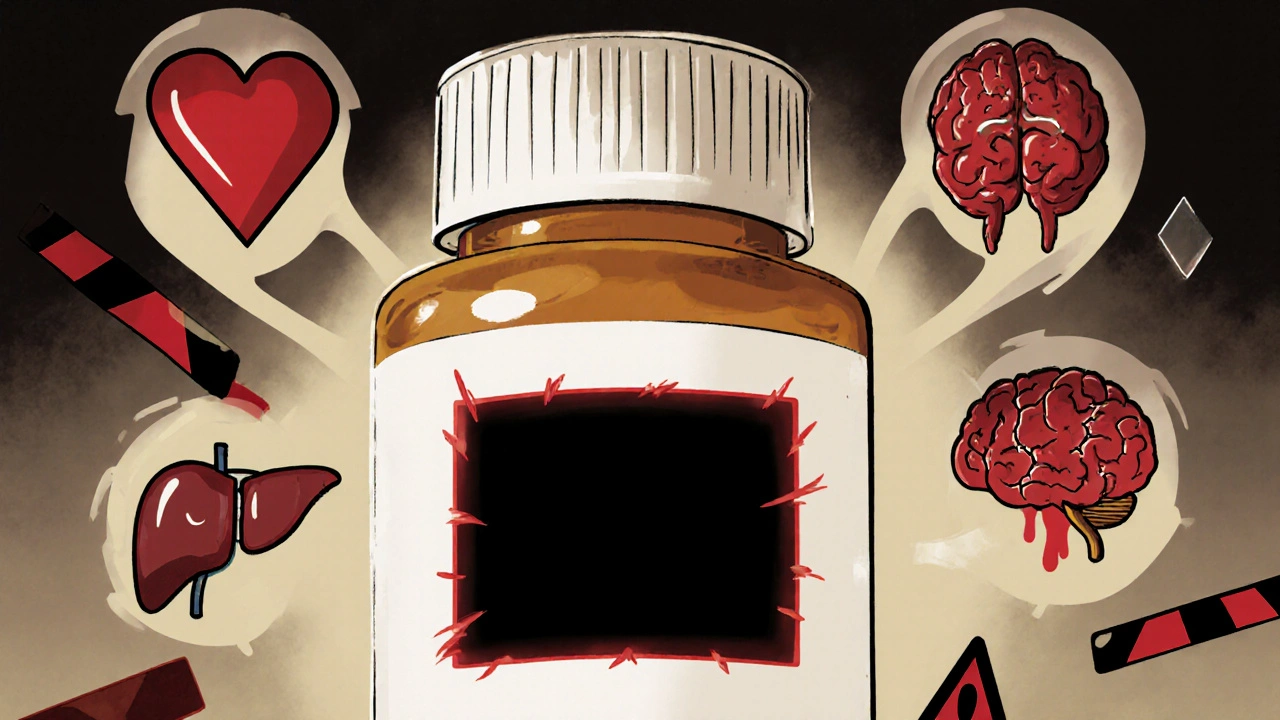
Boxed Warning: What It Means and Why It Matters for Your Medications
When you see a boxed warning, the most serious safety alert the U.S. Food and Drug Administration (FDA) can require for a prescription drug. Also known as a black box warning, it’s printed in a bold, bordered box on the drug’s label to grab your attention—because something in this medication could kill you. This isn’t a gentle reminder. It’s a red flag that says: "This drug has caused death, serious injury, or life-threatening side effects in real patients—and you need to know exactly how and why."
These warnings don’t appear randomly. They’re added after the FDA reviews reports of serious harm—like liver failure from certain antibiotics, suicidal thoughts with antidepressants, or fatal heart rhythms from QT-prolonging drugs. For example, digoxin, a heart medication with a narrow therapeutic index, carries a boxed warning because tiny changes in blood levels can turn a life-saving dose into a deadly one. Similarly, SSRIs, common antidepressants like paroxetine and citalopram, have boxed warnings for increased suicide risk in young people and bleeding risks due to platelet dysfunction. These aren’t hypothetical concerns. They’re backed by hospital records, autopsy data, and real-world outcomes tracked over years.
What does this mean for you? A boxed warning doesn’t mean you should avoid the drug. It means you need to be smarter about using it. That’s why doctors order therapeutic drug monitoring, regular blood tests to check medication levels for drugs like digoxin. It’s why you’re told not to mix certain antidepressants with blood thinners or NSAIDs. And it’s why switching to a generic version isn’t always safe—bioavailability differences, even within FDA-approved generics, can push you into danger zones. The warning exists because people have died from assumptions: "It’s just another pill," "My doctor said it’s fine," or "I’ve taken it before without issues."
The posts below dive into exactly these real-world cases—how a generic switch led to toxicity, why certain antidepressants raise bleeding risk, and how legal loopholes in drug approval can leave patients vulnerable. You’ll find practical advice on recognizing red flags, asking the right questions, and working with your provider to stay safe. This isn’t about fear. It’s about power. Knowing what a boxed warning really means puts you in control of your own health.
Black box warnings are the FDA's strongest safety alerts for prescription drugs, signaling serious risks like death or severe injury. Learn what they mean, how they're decided, and what to do if your medication has one.