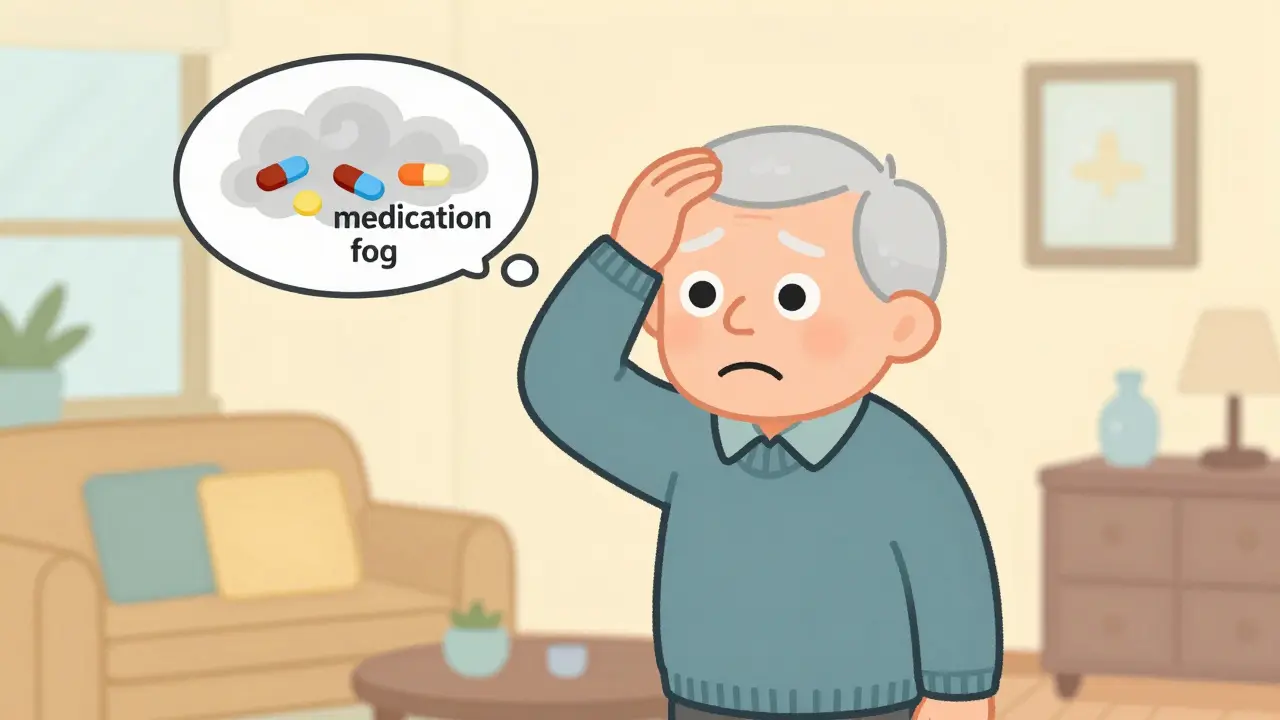
Imagine a person in their late 60s who suddenly starts forgetting where they are, struggling to hold a conversation, and acting confused. Most people-and even some doctors-would immediately assume it's the start of dementia. But what if the cause wasn't a brain disease, but a few common pills in their medicine cabinet? This is a hidden epidemic in senior care: medication side effects that look exactly like aging.
The problem is that as we get older, our bodies handle drugs differently. Our livers process chemicals slower and our kidneys don't clear them out as fast. Because of this, medications can build up in the system, crossing the blood-brain barrier more easily. When this happens, a senior might experience a "medication fog" that mimics cognitive decline so closely that it leads to a wrong diagnosis. The good news? Unlike dementia, these symptoms are often reversible if you catch them early.
| Feature | Medication-Induced Side Effects | Typical Neurodegenerative Aging |
|---|---|---|
| Onset Speed | Often sudden or rapid (days to weeks) | Gradual, progressive decline over years |
| Pattern | Fluctuates based on dose timing | Steady, relentless progression |
| Reversibility | Can resolve after "deprescribing" | Generally permanent and progressive |
| Physical Signs | Often paired with dry mouth or constipation | Usually cognitive/motor focus first |
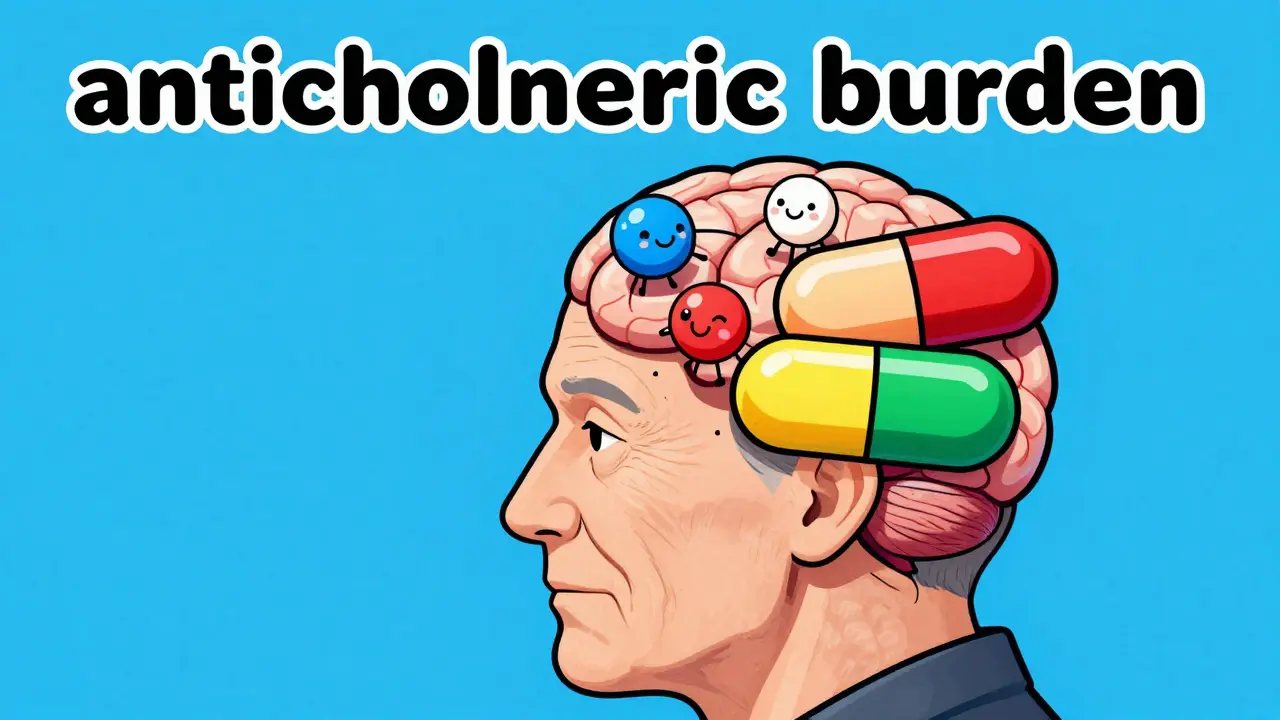
The Danger of the "Anticholinergic Burden"
One of the biggest culprits in this kind of confusion is a group of drugs known as Anticholinergics. These are medications that block acetylcholine, a neurotransmitter essential for learning and memory. You'll find them in everything from old-school allergy meds like Benadryl to certain bladder control and sleep aids.
When a senior takes these, they aren't just treating a runny nose or an overactive bladder; they are inadvertently blocking the brain's ability to communicate. Research shows that about 50-70% of older adults are taking at least one drug with these properties. If they are taking several, they develop what experts call an "anticholinergic burden." This can lead to a terrifying cocktail of symptoms: confusion, dizziness, blurred vision, and even delirium. In some cases, the cognitive impairment is so severe that patients are misdiagnosed with dementia, only to recover completely once the medication is stopped.
Common Drug Culprits to Watch For
It isn't just allergy meds. Several different classes of Senior Medications can trick you into thinking someone is "just getting old." Keep an eye out for these specific groups:
- Benzodiazepines: Drugs like Xanax or Ativan are often used for anxiety or sleep. However, they can cause significant short-term memory gaps in over 60% of elderly users, making them seem more forgetful than they actually are.
- Opioids: Used for pain management, these can cause a mental haze and memory loss in more than half of older adults.
- Corticosteroids: These can trigger sudden mood swings or, in more severe cases, psychotic episodes that look like sudden psychiatric decline.
- Antipsychotics: Some of these can cause tremors or stiffness that look exactly like Parkinson's disease, leading to a dangerous cycle of adding more meds to treat a side effect of the first med.
How to Spot "Medication Fog" in Real Time
If you're a caregiver or a family member, you're the first line of defense. You know the person's "baseline" better than any doctor does. To figure out if the symptoms are drug-related, look for these specific red flags:
First, check the timeline. Did the confusion start within 14 days of a new prescription or a dose change? If the mental decline happened quickly, it's much more likely to be a side effect than a slow-growing disease like Alzheimer's. Second, notice the timing. Does the person seem more confused an hour after taking their pills, or do they clear up as the dose wears off?
Also, look for the "physical package." If the mental confusion comes along with a very dry mouth, constipation, or sudden dizziness, you're likely looking at an anticholinergic reaction. Dizziness is particularly dangerous, as it can increase the risk of falls by 200%, turning a medication issue into a physical crisis.
The Path to Recovery: Deprescribing
Once you suspect a medication is the cause, the goal isn't to just stop the pills-that can be dangerous. Instead, the process is called "deprescribing." This is a systematic way of reducing or stopping medications that are no longer helpful or are causing more harm than good.
Doctors often use the Beers Criteria, a gold-standard list updated by the American Geriatrics Society that flags medications generally inappropriate for people over 65. By reviewing a patient's list against these criteria, a doctor can identify high-risk drugs and taper them off slowly over 4 to 12 weeks.
This process is incredibly powerful. Clinical observations suggest that 30-40% of apparent dementia cases actually improve significantly after a proper medication review and adjustment. It's the difference between accepting a decline in quality of life and reclaiming mental clarity.

Navigating the Healthcare System for Better Results
Getting a doctor to acknowledge that a drug is causing the problem can be tough because many physicians are trained to attribute these symptoms to aging. To get the best results, you need a team approach. A geriatrician-a doctor specializing in the elderly-is often better equipped for this than a general practitioner.
Don't be afraid to bring a complete, written list of every single supplement, over-the-counter drug, and prescription to every appointment. Mention specific changes in behavior, such as "Mom became confused two weeks after starting the new bladder medication," rather than saying "Mom seems more forgetful lately." Concrete timelines force a medical review rather than a vague diagnosis.
Can medication actually cause permanent dementia?
While many side effects are reversible, some long-term use of high-risk drugs can increase the risk of permanent decline. For example, research shows that taking strong anticholinergics daily for three years can increase the risk of developing dementia by nearly 50%. This is why regular medication reviews are so critical.
How do I know if a medication is an "anticholinergic"?
Many common drugs fall into this category, including diphenhydramine (Benadryl), certain tricyclic antidepressants, and oxybutynin for bladder control. The best way to be sure is to ask your pharmacist for the "anticholinergic burden" of your medications or check them against the Beers Criteria.
Is it safe to just stop the medication if I suspect it's causing confusion?
No, never stop a prescription medication abruptly. Some drugs can cause severe withdrawal symptoms or a "rebound effect" that makes the original problem worse. Always work with a healthcare provider to taper the dose safely over several weeks.
What is the difference between delirium and dementia?
Dementia is a slow, progressive decline in memory and function. Delirium is a sudden state of confusion and disorientation, often triggered by a medication reaction, infection (like a UTI), or illness. Delirium is usually temporary and treatable, whereas dementia is not.
Does the "medication fog" go away immediately after stopping the drug?
It varies. Some people see an improvement within days, while others may take several weeks for the drug to fully clear their system and for the brain's chemistry to rebalance. Monitoring for 4 to 12 weeks is the typical clinical recommendation.
Next Steps for Caregivers
If you're worried about a loved one, start with a "Brown Bag Review." Put every single pill bottle they take into a bag and take it to their pharmacist. Pharmacists are often the most accessible experts on drug interactions and can quickly flag medications that are known to cause cognitive side effects.
From there, schedule an annual wellness visit. Under current Medicare and global health standards, medication reviews are now a required part of senior care. If the doctor dismisses the symptoms as "just old age," ask them specifically to review the patient's Anticholinergic Cognitive Burden (ACB) score. This shifts the conversation from a subjective opinion to a clinical metric.