
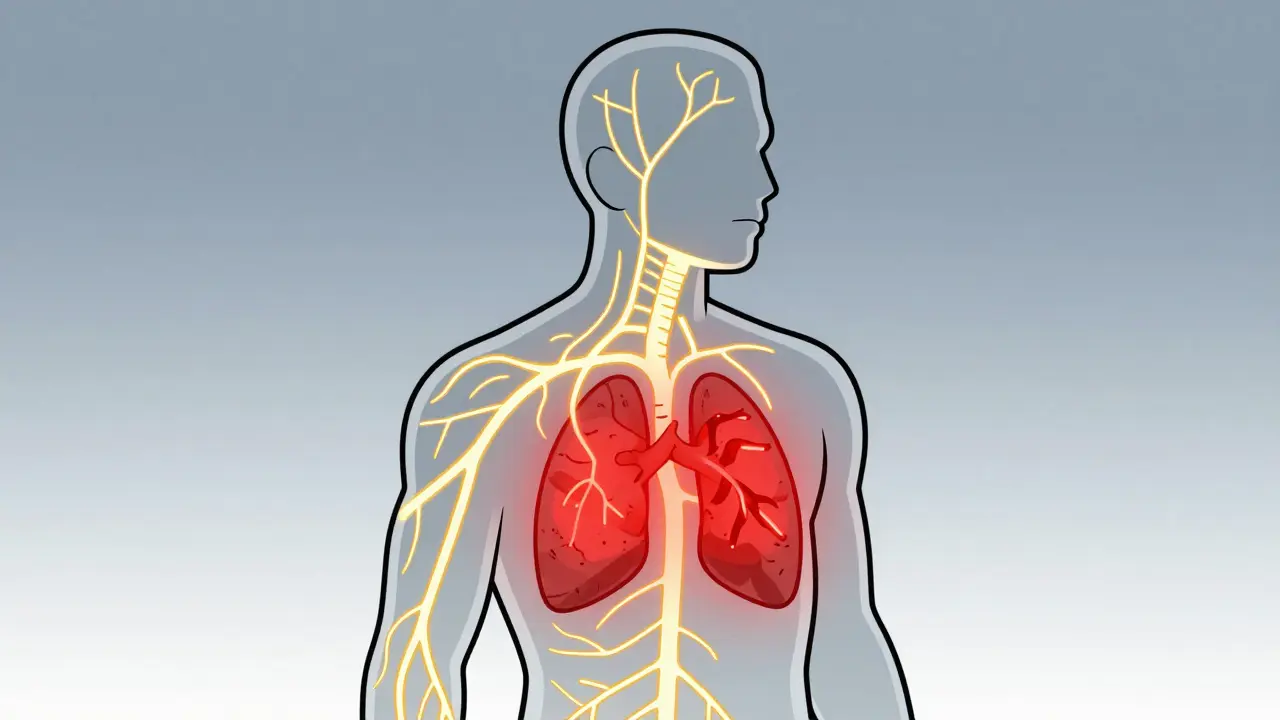
It starts with pain relief. A doctor prescribes a strong medication to help you recover from surgery or manage chronic injury. But there is a shadow that follows these powerful drugs: the very mechanism that makes them work also creates a path toward danger. You might feel safe taking the medication exactly as written, yet the body adapts in ways that aren't always visible until the damage is done. By late 2023 and into 2026, the numbers are stark. In the United States alone, over 80,000 people died from opioid-involved overdoses during just one year. While those statistics come from America, the science behind the risk applies globally, affecting anyone using these substances.
This isn't just about misuse; it's about biology. Even when used correctly under medical supervision, Opioids create physical changes in your brain. They bind to mu-opioid receptors, triggering dopamine release. That feeling of relief comes at a cost. Your nerves learn to expect the chemical signal, and eventually, they stop responding the same way. This leads to a cycle where you need more of the drug to achieve the same result, a process known as tolerance. When combined with other factors, like stopping and starting use, the risk of a fatal respiratory event increases dramatically.
The Chemistry Behind the Crisis
To understand why getting off these drugs is so hard, we have to look at how they function. Unlike standard painkillers that target inflammation, opioids interact directly with your nervous system's control center. Since morphine was isolated in 1804, doctors have utilized compounds like Morphine, Oxycodone, and Fentanyl. These are chemically distinct but share the same binding goal: the mu-receptor.
When you take an opioid, it blocks calcium channels and activates potassium channels in nerve cells. This hyperpolarizes the membrane, effectively telling your brain "there is no pain here." However, this mechanism does not distinguish between blocking pain signals and slowing your breathing reflex. That is the critical safety margin. If your breathing slows too much, oxygen levels drop. This is respiratory depression, and it is the direct cause of death in overdose scenarios.
| Opioid Type | Potency Relative to Morphine | Risk Profile |
|---|---|---|
| Morphine | 1x (Baseline) | High dependency potential |
| Fentanyl | 50-100x stronger | Extremely high overdose risk |
| Buprenorphine | Variable (Partial Agonist) | Lower overdose risk, ceiling effect |
| Methadone | Varies widely | Long half-life, accumulation risk |
Why Tolerance Develops Faster Than Safety
Here is the most misunderstood part of long-term use. Patients often think they are building immunity to the side effects as they build immunity to the pain relief. It is not true. The brain develops tolerance to the euphoric feeling and the pain relief relatively quickly. It becomes much harder to build tolerance to the dangerous respiratory suppression.
Scientists describe this through receptor downregulation. After repeated exposure, your mu-opioid receptors literally retreat from the cell surface or change their shape (desensitization). To get the same pain relief, you need a higher dose to saturate the remaining active receptors. But the receptors controlling your breathing rhythm do not adapt fast enough to handle that higher dose. Studies show that even chronic users who tolerate 100 times the normal dose for pain remain dangerously sensitive to the sedative effects.
This imbalance explains why a seasoned user can survive days on heavy doses, only to die from a single dose months later after taking a break. The tolerance to breathing slows vanishes faster than the addiction behaviours. This phenomenon puts recovered individuals at extreme risk if they attempt to return to their pre-detox dosage levels.

Distinguishing Dependence from Addiction
Medical professionals often use these terms interchangeably in casual conversation, but biologically, they are different states. Physical dependence is a normal physiological state caused by regular dosing. If you take benzodiazepines or opioids for weeks, your body adjusts its own chemistry to match that external input.
If you stop abruptly, you enter withdrawal. You experience flu-like symptoms, anxiety, and pain returning worse than before. This proves dependence, but it doesn't necessarily prove addiction. Addiction involves the compulsive pursuit of the drug despite negative consequences. However, the line blurs when tolerance sets in. As Lake County health reports suggest, 10 million Americans misused prescription opioids in recent years simply because the therapeutic dose shifted below the level needed to treat their pain, leading them to seek higher quantities.
While the term Addiction carries heavy social stigma, the biological reality is a neurological adaptation requiring specific treatment pathways. Recognizing the difference helps patients understand that seeking help for dependence isn't an admission of failure-it is a management of chronic physiology.
The Relapse Paradox and Lost Tolerance
The period after someone stops using opioids is deceptive. On day six months of abstinence, a person feels strong. They have overcome the acute withdrawal sickness. But their body has completely lost the tolerance built up during the active addiction phase. Their respiratory threshold returns to baseline sensitivity.
Tragically, community data indicates that nearly two-thirds of overdose deaths occur in people with prior treatment history. In forums like Reddit's r/stopopiates, users recount stories of returning to a previous high dose and finding themselves clinically dead within minutes. Paramedics report being called to revive people who were flatlining from a dose that wouldn't kill them a year prior. This "lost tolerance" is the number one killer in the recovery population.
Safety Net Strategies
We cannot eliminate the risk entirely, but we can manage it. The most effective intervention remains Naloxone. Often called Narcan, it acts as an antagonist. It kicks the opioid off the receptors instantly. It reverses the respiratory depression. In 2021, access to naloxone reduced fatal outcomes significantly in communities where distribution was prioritized.
For those managing chronic pain or recovering from disorder, Medication-Assisted Treatment (MAT) offers a safer pharmacological path. Drugs like Methadone and Buprenorphine fill the receptor sites in a controlled manner. Buprenorphine, specifically, has a "ceiling effect." Once you reach a certain dose, it does not depress breathing further regardless of how much more you take. This makes it impossible to overdose on Buprenorphine alone in the same way you can with Heroin or Fentanyl.
The shift in regulatory policy supports this. By early 2026, the removal of the X-waiver requirement in the U.S. means any licensed physician can prescribe Buprenorphine. This expansion aims to treat the 1.1 million eligible patients currently blocked from care. For patients in Melbourne or Sydney, while laws differ slightly regarding Methadone clinics, the principle of specialist-supervised maintenance therapy remains the gold standard for keeping people alive and functional.
Questions About Risk and Recovery
Can you build a tolerance to opioids?
Yes. With regular use, the body adapts, requiring higher doses for the same pain relief. However, tolerance builds unevenly; you lose the ability to breathe safely slower than you lose pain relief, creating a safety gap.
Is it safe to combine opioids with alcohol?
No. Both substances suppress the central nervous system. Combining them causes synergistic respiratory depression, meaning the risk of overdose skyrockets even at low doses of each substance.
What is the safest way to stop using opioids?
Never stop cold turkey after prolonged use. Seek a tapering plan or switch to a long-acting agonist like Methadone or Buprenorphine under medical supervision to manage withdrawal safely.
How long does tolerance last?
Tolerance declines rapidly after cessation. Within a few weeks to months of abstinence, your respiratory tolerance can return to near-zero, making a relapse dose extremely dangerous.
What are the signs of a dangerous overdose?
Look for slow or shallow breathing, pinpoint pupils, unresponsiveness, and skin turning blue or pale around the lips and fingertips. Call emergency services immediately if you see these signs.



Philip Wynkoop
Good info on the tolerance loss danger :P