
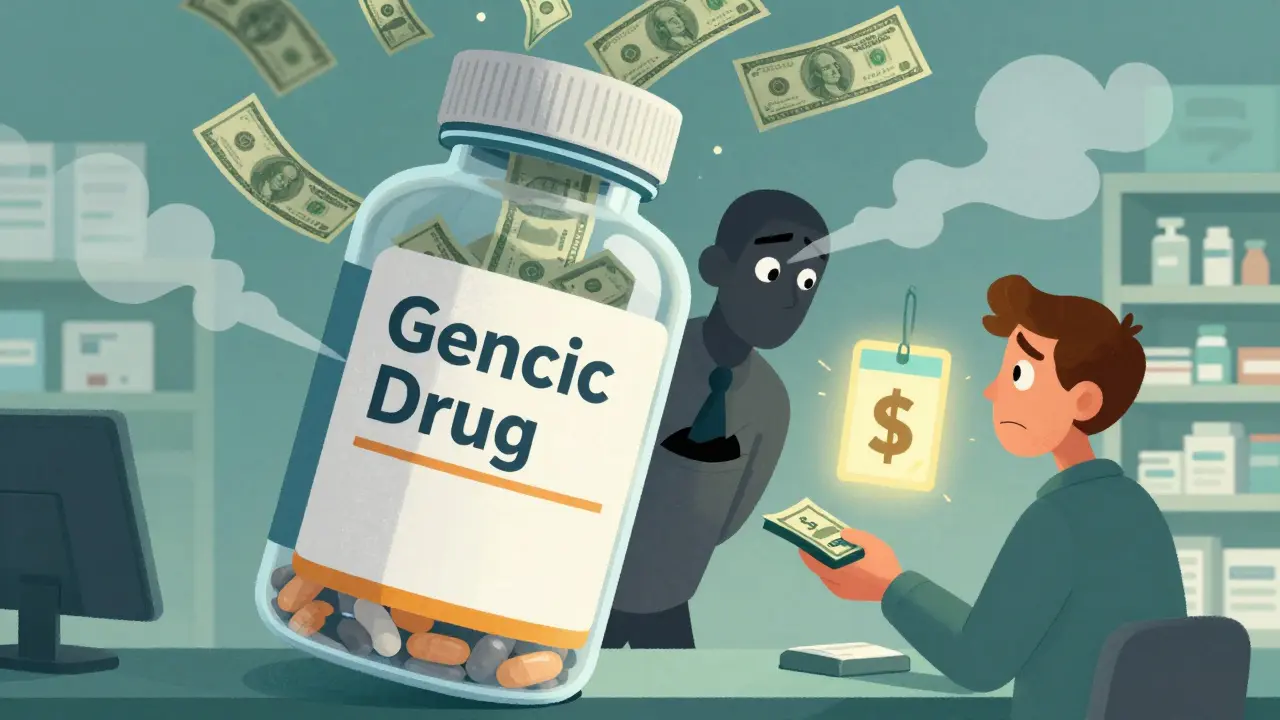
When you fill a prescription for a generic drug, you might assume the insurance company pays a low, straightforward price - maybe a few dollars. But here’s the truth: what insurance actually pays for generics isn’t what it looks like on your receipt. Behind the scenes, a complex web of hidden fees, opaque contracts, and financial incentives is shaping your out-of-pocket cost - and often, it’s not saving you as much as you think.
Generics Don’t Get Rebates Like Brand Drugs Do
Most people think rebates are how drug prices get lowered. That’s true for brand-name drugs. Manufacturers pay big rebates - sometimes 30% to 70% of the list price - to pharmacy benefit managers (PBMs) in exchange for being placed on a plan’s preferred list. But generics? They don’t work that way. Why? Because generics are cheap by design. Dozens of companies make the same pill. Competition drives the price down before the rebate system even comes into play. There’s no need for a manufacturer to offer a rebate when they’re already selling a 100-pill bottle of lisinopril for $4. Instead of rebates, PBMs make money through something called spread pricing.Spread Pricing: The Hidden Cost in Your Prescription
Here’s how spread pricing works: Your insurance plan agrees to pay the PBM, say, $8.50 for a generic blood pressure pill. The PBM then pays the pharmacy only $4.25. The $4.25 difference? The PBM keeps it. No rebate. No transparency. Just a profit taken from the middle. This isn’t theoretical. A 2024 case study from a Fortune 500 company found their PBM was charging $8.50 per generic prescription while paying pharmacies just $4.25 - and they didn’t know until they audited their contract. That’s $4.25 per pill, multiplied by thousands of prescriptions a month. That’s tens of thousands of dollars lost - money that should’ve gone to lowering premiums or copays. The U.S. Department of Health and Human Services reported in 2022 that the average spread on generic drugs was $4.73 per prescription. Multiply that by the 4 billion generic prescriptions filled annually in the U.S., and you’re looking at over $18 billion in hidden fees every year.Why Your Insurance Might Not Cover the Cheapest Option
Here’s the kicker: sometimes, the cheapest drug isn’t covered at all. PBMs have an incentive to favor brand-name drugs over generics - not because they’re better, but because they pay bigger rebates. A 2023 report from Rightway Healthcare found that PBMs sometimes exclude low-cost generics from formularies to keep brand-name drugs with 60% rebates on the list. One employer found their PBM blocked a $0.15-per-dose generic in favor of a $5-per-dose brand drug with a 60% rebate. Net result? The insurer paid more, even though the generic was 97% cheaper. This isn’t rare. The Commonwealth Fund’s 2025 analysis showed that rebate-driven formularies systematically disadvantage generics. Patients end up paying more out-of-pocket, or they have to fight through appeals just to get the drug their doctor prescribed.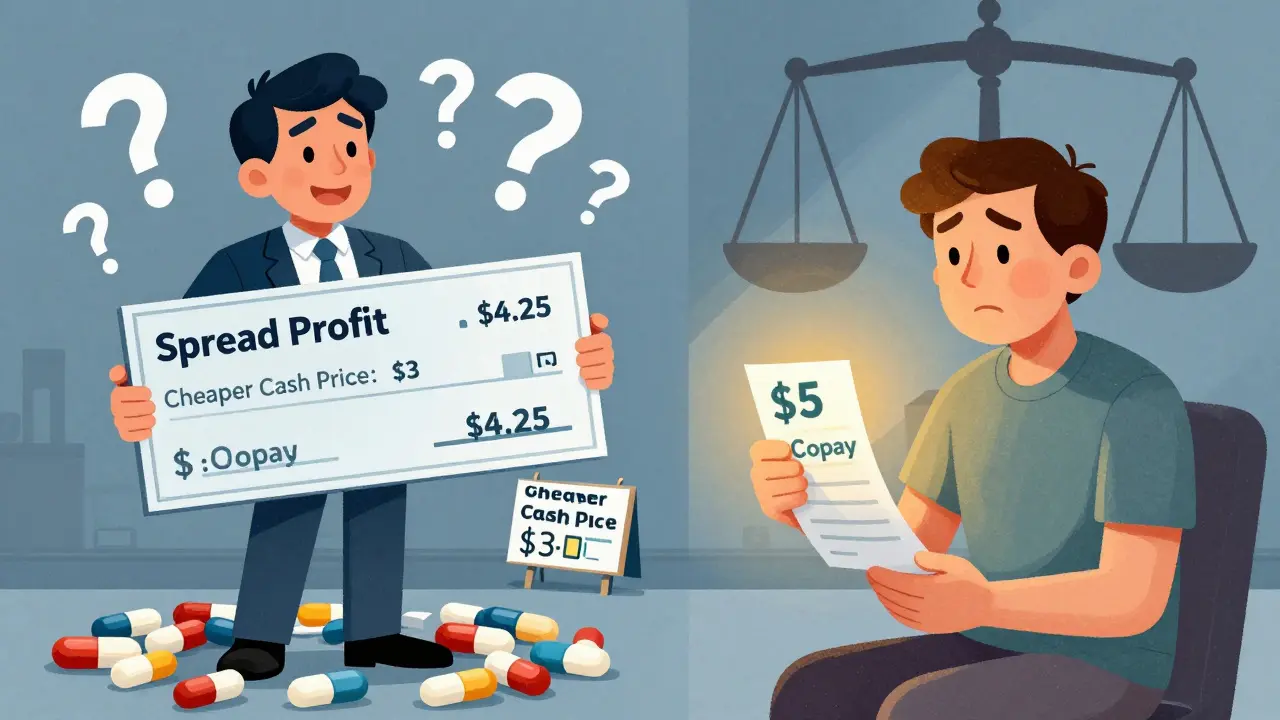
What You See on Your Receipt Isn’t What Insurance Pays
Your copay might be $5. But that doesn’t mean the insurance company paid $5. It might’ve paid $8.50 to the PBM, who paid $4.25 to the pharmacy, and kept $4.25. Or maybe the PBM passed through a tiny rebate - say, 3% - from the manufacturer. But that rebate doesn’t go to you or your plan. It stays with the PBM unless your employer specifically negotiated for pass-through pricing. Most small and mid-sized employers don’t have that leverage. Only 42% of large employers used pass-through pricing in 2024 - up from 18% in 2020 - but most plans still operate on the old, hidden-fee model.How to Find Out What Your Plan Is Really Paying
If you’re an employee, ask your HR department: Does our PBM use spread pricing on generics? If you’re self-insured, demand a full breakdown of your drug spend - not just the total, but what was paid to pharmacies, what was retained by the PBM, and what rebates were received. Look for these red flags:- Your copay for a generic is higher than the cash price at Walmart or Costco.
- You’re told a generic isn’t covered, but you can buy it cheaper without insurance.
- Your plan’s drug list changes every year - and the cheapest option always disappears.
What’s Changing - And What’s Not
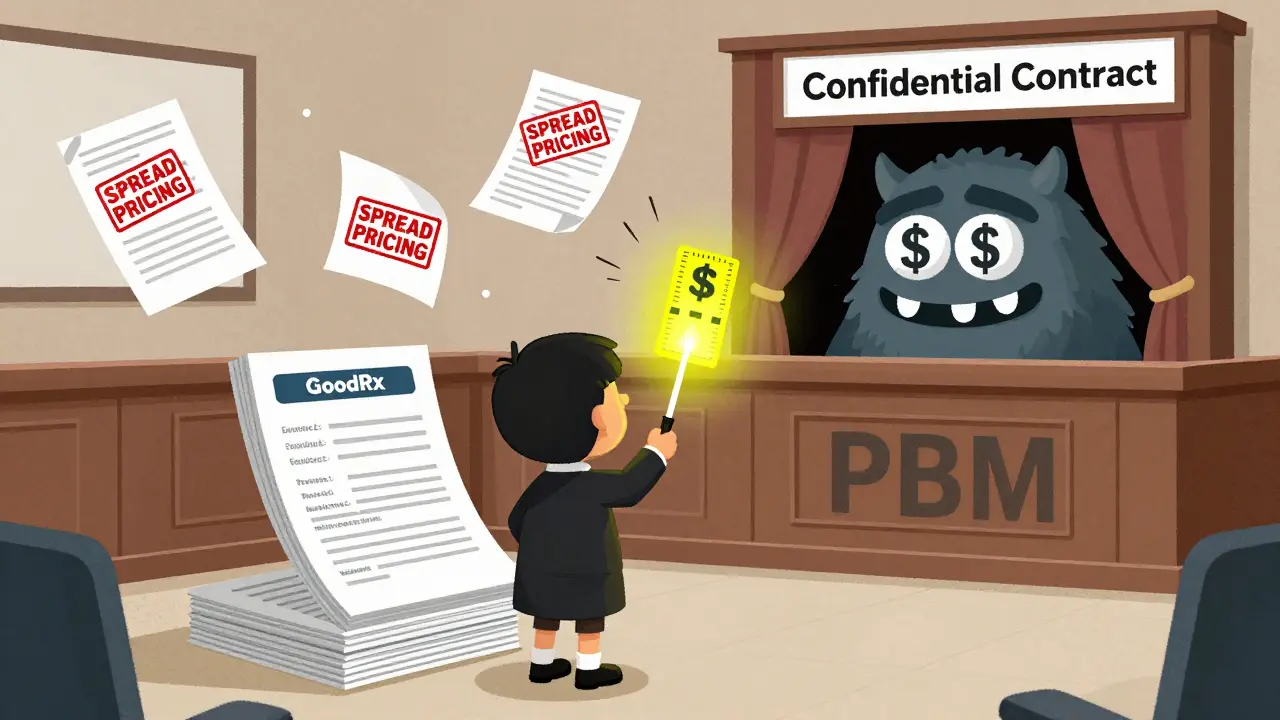
There’s pressure to fix this. The Inflation Reduction Act of 2022 excluded generics from Medicare drug price negotiation - correctly, because they’re already competitive. But the Biden administration’s 2024 executive order directed the Department of Health and Human Services to investigate practices that limit generic use. CMS announced new transparency rules in March 2025, but they don’t yet require PBMs to disclose spread pricing on generics. The Employee Benefit Research Institute predicts that by 2026, federal law will require full disclosure of generic drug acquisition costs - meaning PBMs won’t be able to hide their profits anymore. In the meantime, some employers are switching to transparent models. They pay PBMs a fixed administrative fee - say, $1.50 per claim - and pass through the full cost of the drug to the pharmacy. No spread. No secrets. The savings go straight to the plan.What This Means for You
You’re not just a patient. You’re a consumer. And your health plan is a product - one that’s being manipulated by hidden financial incentives. If you’re paying $10 for a generic that costs $3 cash, you’re not saving money - you’re subsidizing someone else’s profit. Here’s what you can do right now:- Check the cash price of your generic at pharmacies like Costco, Walmart, or GoodRx.
- If it’s lower than your copay, ask your pharmacist to process it as a cash transaction.
- Ask your employer or plan administrator if they use spread pricing - and if they’re moving to pass-through models.
- Use your pharmacy’s loyalty programs or discount cards - they often undercut insurance pricing.
Do generic drugs have rebates like brand-name drugs?
Generally, no. Generic drugs don’t rely on rebates because their prices are already low due to competition. Brand-name drugs use rebates - often 30% to 70% of list price - to secure preferred placement on insurance formularies. Generics are priced through direct discounts and wholesale deals, not post-sale rebates.
Why is my generic drug copay higher than the cash price?
Because your insurance plan may be using spread pricing. The pharmacy benefit manager (PBM) charges your plan $8.50 for a drug, pays the pharmacy $4.25, and pockets the $4.25 difference. Meanwhile, you pay a copay based on that inflated $8.50 price. Buying the same drug for $3 cash means you’re paying less than what your insurance is being charged - and your insurer is losing money on the deal.
Can my insurance refuse to cover a cheaper generic drug?
Yes. PBMs sometimes exclude low-cost generics to favor brand-name drugs that offer bigger rebates. Even if a generic is cheaper and equally effective, it might be left off the formulary because it doesn’t generate profit for the PBM. This forces you to pay more out-of-pocket or go through a lengthy appeal process.
What is spread pricing and how does it affect generics?
Spread pricing is when a pharmacy benefit manager (PBM) charges a health plan one price for a drug, pays the pharmacy a lower price, and keeps the difference as profit. For generics, this spread can be $4-$5 per prescription. Since generics don’t have rebates, spread pricing is the main way PBMs make money on them - and it’s often hidden from employers and patients.
How can I find out what my insurance really pays for my generic drugs?
Ask your employer or plan administrator for a detailed breakdown of drug spending. Look for terms like “pass-through pricing” - which means the PBM doesn’t keep the difference between what they charge and what they pay the pharmacy. You can also compare your copay to the cash price on GoodRx or at discount pharmacies. If the cash price is lower, your insurance isn’t getting you the best deal.
Are there laws to stop PBM abuse with generic drugs?
Some states have passed transparency laws, but federal rules are still catching up. The No Surprises Act of 2020 required more disclosure, but didn’t fully address generic pricing. The Employee Benefit Research Institute predicts that by 2026, federal law will require PBMs to disclose the true acquisition cost of generic drugs, ending the era of hidden spreads. Until then, you have to ask the questions and demand transparency.



William Storrs
Wow, this is eye-opening. I had no idea my $5 copay for generic blood pressure meds was basically funding a middleman’s profit. I just thought I was getting a deal. Turns out I’m paying more than if I just bought it cash at Walmart. Time to start asking HR about pass-through pricing.
Thanks for breaking this down so clearly - I feel like I just got a masterclass in how the system screws us over.