

When a hurricane knocks out power for weeks, or a wildfire shuts down every pharmacy in town, what do you do when your insulin, asthma inhaler, or blood pressure pill runs out? The expiration date on the bottle doesn’t vanish just because the world around you has fallen apart. But using an expired medication isn’t a simple yes-or-no choice-it’s a risk-benefit calculation you need to make with clear, grounded information.
What Does ‘Expired’ Actually Mean?
Many people think expired means dangerous. It doesn’t. It means the manufacturer can no longer guarantee the drug will work at 100% strength. The FDA requires all prescription and over-the-counter drugs to have expiration dates based on stability testing under ideal conditions: cool, dry, dark. But real life isn’t ideal. A pill sitting in a bathroom cabinet for five years isn’t the same as one stored in a climate-controlled warehouse.
The FDA’s Shelf Life Extension Program tested over 100 drugs used by the military. Eighty-eight percent of them were still effective years after their labeled expiration date-some up to 15 years later. But here’s the catch: those were sealed, properly stored, and tested in labs. Your medicine? It’s probably been through heat, humidity, and maybe even floodwater.
Not All Expired Medications Are Created Equal
Some drugs degrade slowly. Others fall apart fast. The difference matters when your life depends on it.
- Tablets like acetaminophen or ibuprofen: Often still 90%+ potent even 4-5 years past expiration if kept dry and cool. A University of Utah study found acetaminophen at 4 years post-expiration worked just as well as fresh.
- Antibiotics like amoxicillin: Lose potency slowly. FDA data shows they can retain 80% effectiveness up to a year after expiration. Useful in emergencies if no alternatives exist.
- Insulin: Loses about 10% potency per month after expiration at room temperature. After 6 months, you might be getting only 40% of the intended dose. That’s not safe for someone with type 1 diabetes.
- Epinephrine auto-injectors: Used for anaphylaxis. They degrade 2-4% per month. A 6-month-old expired EpiPen might still deliver 60-70% of the dose-better than nothing, but you may need to double the dose if possible. One verified pharmacist on Reddit reported seeing patients survive anaphylaxis using expired pens, but only after adjusting the dose.
- Nitroglycerin: This heart medication loses half its strength within 3 months of opening the bottle. If it’s expired and you’ve had the bottle open for months? Don’t risk it.
- Tetracycline: This antibiotic can break down into toxic compounds that damage kidneys. There are 17 documented cases since 2000 of Fanconi syndrome from expired tetracycline. Never use it past its date.
The key is knowing the drug class. For non-critical symptoms-headache, fever, mild pain-expired pills are often fine. For life-sustaining drugs? The risk skyrockets.
When Is It Too Risky to Use Expired Medication?
The American College of Emergency Physicians and the FDA agree: never use expired bronchodilators for acute asthma attacks after 6 months past expiration. If your inhaler is old and you’re struggling to breathe, the chance of failure is too high. Same with insulin, epinephrine, and heart medications like warfarin. Studies show expired warfarin causes INR levels to swing wildly, increasing stroke or bleeding risk by 300%.
During Hurricane Maria in 2017, 22% of Puerto Ricans using expired chronic meds reported treatment failure. That’s not a small number. That’s someone dying because their blood pressure pill didn’t work.
On the flip side, 78% of people using expired painkillers or antihistamines reported adequate relief. The risk-benefit ratio for those drugs is 1:3.5-meaning the benefit is more than three times the risk. For insulin? It’s 1:0.2. The risk is five times higher than the benefit.
Physical Condition Matters More Than the Date
Before you even think about taking an expired pill, check its appearance. The FDA says 73% of degraded medications show visible signs of damage.
Discard any medication that is:
- Discolored (yellow, brown, or spotted)
- Crumbly or powdery (tablets that break apart too easily)
- Smells strange (rancid, chemical, or moldy)
- Changed texture (liquids that are cloudy or have particles)
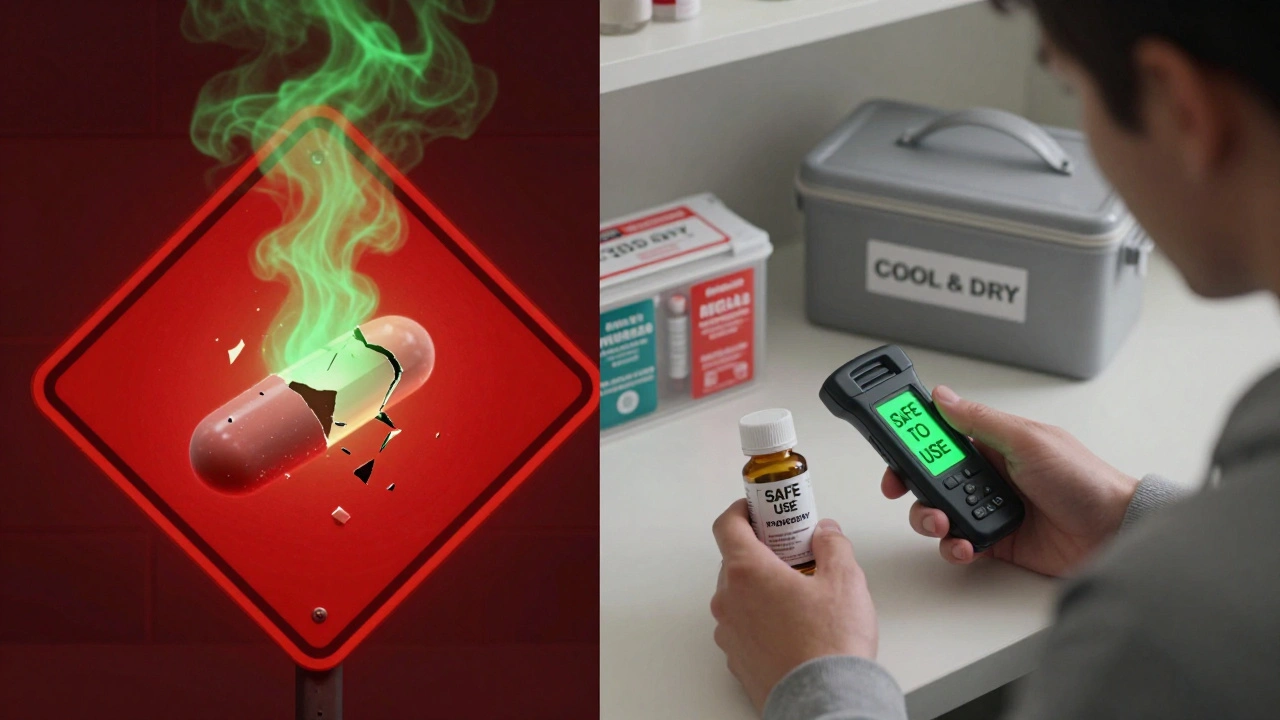
- Exposed to floodwater, extreme heat (>86°F for 48 hours), or moisture for more than 24 hours
One study found 92% of medications soaked in floodwater for 24 hours had bacterial contamination. That’s not just ineffective-that’s dangerous.
What Should You Do in an Emergency?
If you’re in a disaster and have no access to new medication, follow this 5-step process:
- Assess the drug’s criticality. Is it for a life-threatening condition? Or just a headache? Prioritize accordingly.
- Check physical condition. If it looks bad, throw it out.
- Review storage history. Was it in a hot car? A flooded basement? If yes, discard.
- Know the expiration window. For antibiotics or painkillers: up to 1 year post-expiration is often acceptable. For insulin, epinephrine, or heart meds: avoid unless absolutely no other option exists.
- Call for help if possible. Even a telehealth visit can guide you. In 2022, only 38% of rural disaster zones had telehealth access-but if you can get it, use it.
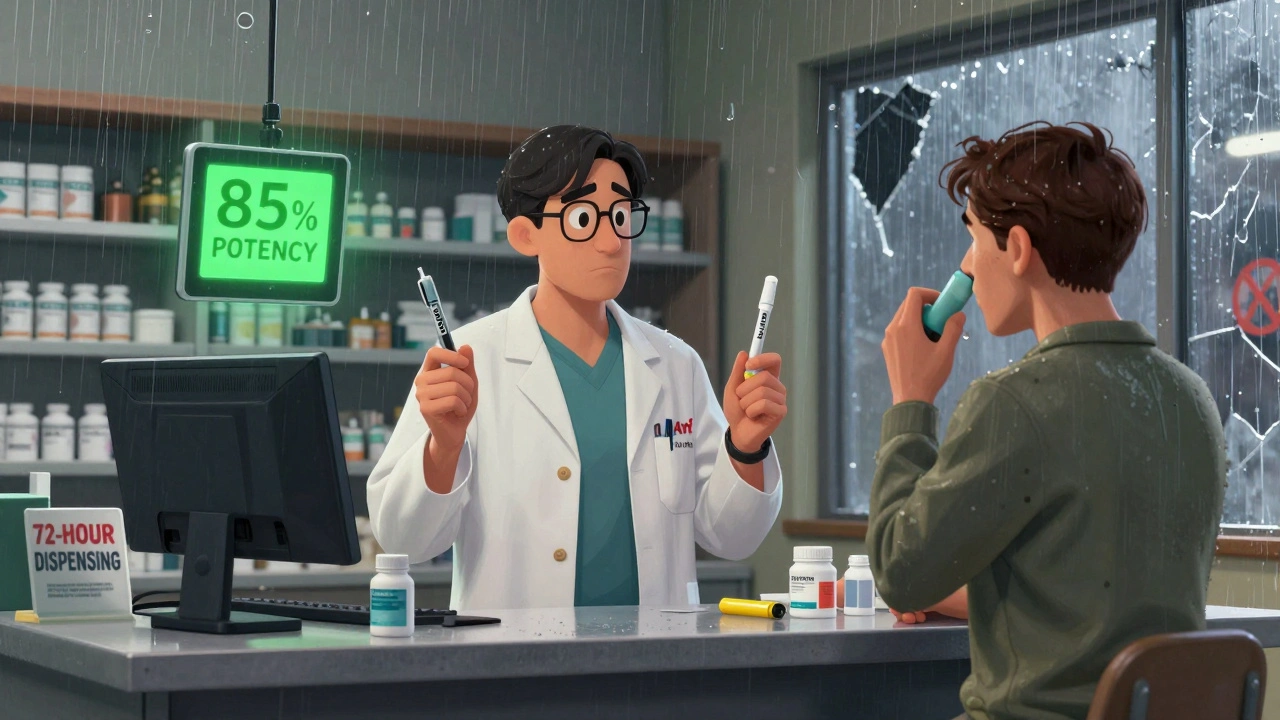
Pharmacists in 48 states can legally give you a 72-hour emergency supply without a prescription during declared disasters. Most chain pharmacies participate. If you’re near a pharmacy-even if it’s dark and quiet-go in. Ask. They’re trained for this.
What About Antibiotics? Can You Use Them?
Yes, but carefully.
Expired amoxicillin or ciprofloxacin can still kill bacteria, especially if it’s been less than a year since expiration. NIH research showed expired ciprofloxacin still worked at 78% strength against E. coli two years out. But against Pseudomonas? Only 42%. That’s a problem if you have a wound infection.
And here’s the big warning: using expired antibiotics increases the risk of resistant infections. A 2023 Johns Hopkins study found 28% of disaster survivors who used expired antibiotics developed resistant strains-compared to just 8% who used fresh ones. That’s not just your problem. That’s a public health risk.
Use antibiotics only if you’re certain it’s a bacterial infection and you have no other option. Don’t use them for viral illnesses like colds or flu. And never save leftover antibiotics for next time.
What’s Being Done to Fix This?
There’s progress, but it’s uneven.
The FDA’s 2023 Emergency Use Authorization template now includes guidance for expired drugs. During the 2023 Maui wildfires, 1,200 patients got clinical advice on using up to 6-month expired antibiotics. The CDC is rolling out a color-coded decision matrix in January 2024 to help first responders and patients make faster, safer choices.
The NIH is funding a $4.7 million project to build portable devices that can test medication potency in under 5 minutes. Imagine holding a small scanner over your pill bottle and getting a readout: “85% potency-safe to use.” That’s coming by hurricane season 2024.
Pharmaceutical companies are also working on better packaging to extend shelf life by 6-12 months. If that works, it could cut disaster-related shortages by 22%.
But right now? Only 42% of U.S. counties have permanent drug disposal sites. And 63% of state emergency plans don’t even mention expired medication protocols. That’s not just a gap-it’s a danger.
How to Prepare Now
Don’t wait for a disaster to think about this.
- Keep a 30-day supply of critical meds. Rotate them every 6 months.
- Store meds in a cool, dry place-not the bathroom or car.
- Label your emergency kit with expiration dates. Use a permanent marker.
- Know which of your meds are high-risk (insulin, epinephrine, warfarin) and which are low-risk (painkillers, antihistamines).
- Have a backup plan. Know which pharmacies in your area participate in emergency dispensing. Save their numbers.
- Teach your family what to do. If you’re incapacitated, someone else might need to make the call.
The goal isn’t to encourage reckless use of expired drugs. It’s to prevent panic-driven decisions that cost lives. In a crisis, knowledge is the most powerful medicine you can have.
Is it safe to use expired insulin during a disaster?
Using expired insulin is extremely risky. It loses about 10% of its potency per month after expiration. After 6 months, you may only be getting 40% of the intended dose, which can lead to dangerous high blood sugar or diabetic ketoacidosis. If no fresh insulin is available, seek emergency medical help immediately. Do not rely on expired insulin unless it’s a last resort and you have no other option.
Can expired antibiotics still work?
Yes, some expired antibiotics like amoxicillin or ciprofloxacin can still be effective up to a year after expiration if stored properly. However, they may not work against all types of bacteria, and using them increases the risk of antibiotic resistance. Only use them if you’re certain it’s a bacterial infection and no new prescription is available. Never use tetracycline past its expiration-it can become toxic.
What should I do if my epinephrine auto-injector has expired?
If you’re having an anaphylactic reaction and your EpiPen is expired, use it anyway. Studies show expired pens still deliver 60-70% of the dose. While not ideal, it’s better than nothing. If possible, double the dose by using two pens (if available). But replace the expired device immediately after the emergency. Always carry at least two auto-injectors if you have severe allergies.
Are expired pain relievers like ibuprofen or acetaminophen safe to use?
Yes. Studies show acetaminophen retains over 95% potency up to 4 years past expiration when stored properly. Ibuprofen is similar. These are low-risk medications for non-critical symptoms like headaches or fever. Check for discoloration or crumbling first. If the pills look fine, they’re likely safe to use in an emergency.
Can I get emergency medication without a prescription during a disaster?
Yes. In 48 states, pharmacists can legally dispense a 72-hour emergency supply of most prescription medications without a new prescription during a federally or state-declared emergency. Chain pharmacies like CVS and Walgreens typically participate. Ask at your local pharmacy-even if it’s dark or crowded. Many pharmacists are trained under ASHP guidelines for emergency response.
How do I safely dispose of expired medication after a disaster?
Do not flush pills or throw them in the trash where others might find them. If you have access to a drug take-back program, use it. Many pharmacies and police stations have drop boxes. If none are available, mix pills with coffee grounds or cat litter in a sealed container before throwing them away. Remove personal info from bottles. The Secure and Responsible Drug Disposal Act allows DEA-registered sites to collect expired meds-but only 42% of U.S. counties have permanent drop-off locations.




Anna Roh
My grandma kept her blood pressure pills in the bathroom for 8 years. They still worked. She also had a cat that licked them off the counter once. Don't ask me how she survived.