
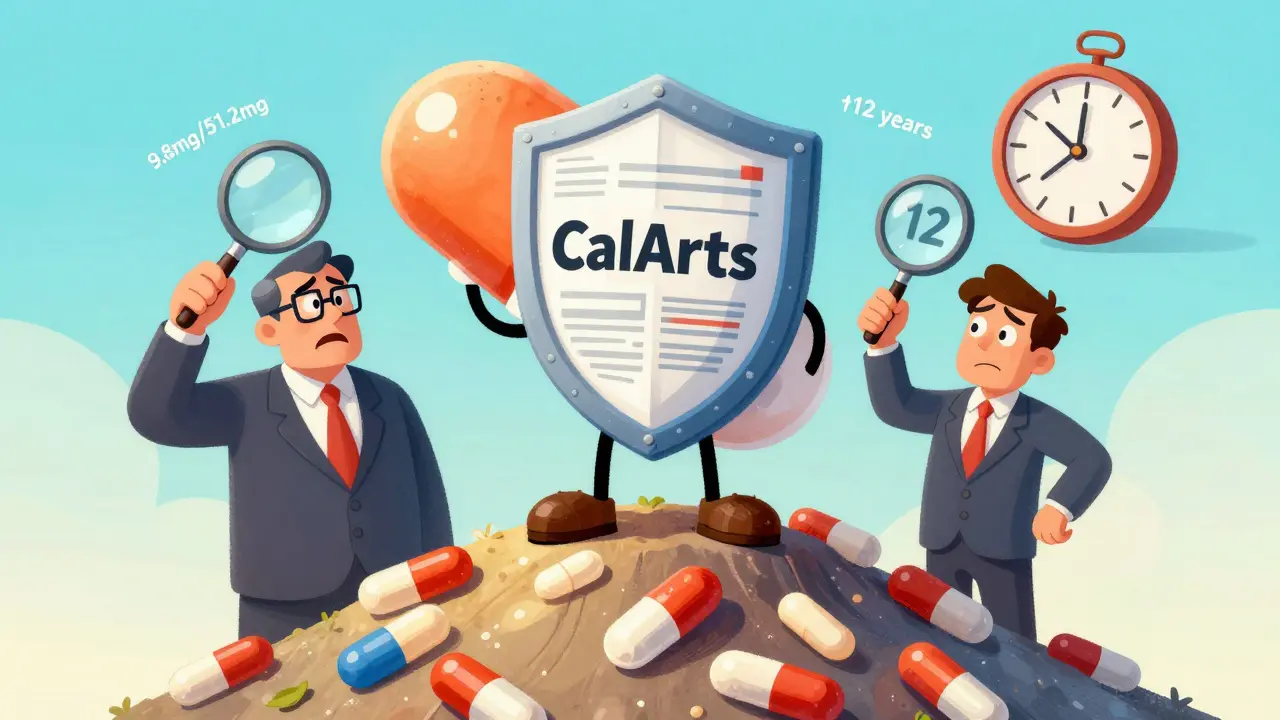
When a blockbuster drug’s core patent expires, you might assume generics will flood the market. But in reality, many brand-name drugs stay protected for years longer-not because the active ingredients changed, but because of cleverly written formulation patents on drug combinations. These aren’t new medicines. They’re the same pills, injections, or infusions, repackaged with slight tweaks that legally block generics from copying them exactly. It’s not fraud. It’s law. And it’s costing patients and insurers billions.
What Exactly Is a Formulation Patent on a Drug Combination?
A formulation patent doesn’t protect the chemical structure of a drug. That’s covered by the original, or "composition-of-matter," patent. Instead, it protects how two or more active ingredients are combined: the exact ratio, the delivery method, the release speed, or even the device used to administer them. For example, a patent might claim: "A tablet containing 10mg of Drug A and 50mg of Drug B, with a pH-sensitive coating that delays release until it reaches the small intestine." The U.S. Patent and Trademark Office (USPTO) allows these patents under 35 U.S.C. § 103-but only if the combination isn’t "obvious" to someone skilled in the field. That’s where it gets tricky. If two drugs are already used separately for the same condition, combining them seems logical. Courts have ruled that obviousness is judged by "common sense," not just technical expertise. So how do companies get these patents approved? They need proof of unexpected results.How Companies Prove Their Combination Isn’t Obvious
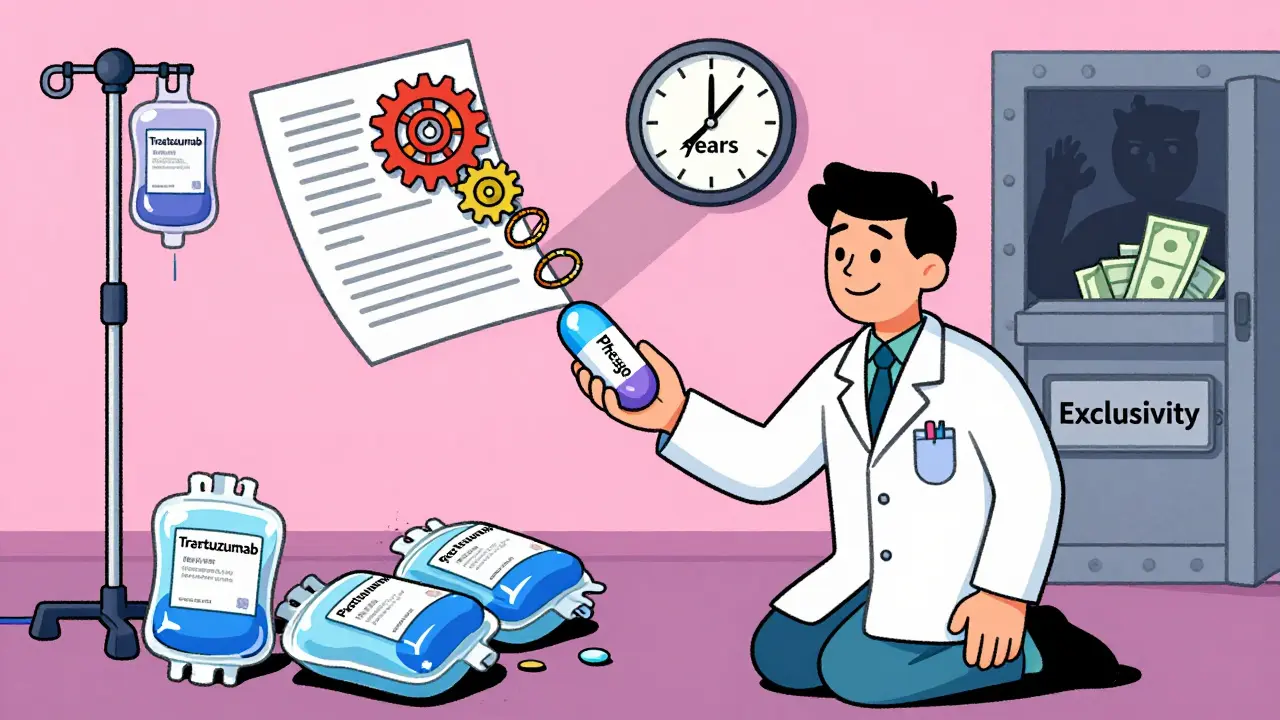
The FDA and USPTO don’t just accept claims like "this combo works better." They demand hard data. Companies must run head-to-head clinical trials showing statistically significant improvements over the individual drugs or existing combinations. The bar is high: p-values below 0.01, better side effect profiles, or dramatically improved patient adherence. Take Roche’s Phesgo®. It combines trastuzumab and pertuzumab-two drugs already used for breast cancer-into a single subcutaneous injection. Before Phesgo, patients needed two separate IV infusions lasting hours. Phesgo cut treatment time to under five minutes. That’s not just convenience-it’s a measurable improvement in quality of life and compliance. The patent was granted because the delivery method changed the entire treatment experience, not just the chemistry. Other common tricks include:- Exact ratios: 9.8mg of Drug X and 51.2mg of Drug Y (not 10mg and 50mg, which was already published)
- Modified release: tablets that release drug A slowly and drug B quickly
- New delivery devices: auto-injectors, inhalers, or patches that didn’t exist before
- Fixed-dose combinations: one pill replacing two separate pills
The Picket Fence Strategy: Layering Patents to Block Competition
No single formulation patent is enough. Successful companies build what’s called a "picket fence"-a dense cluster of overlapping patents covering every possible angle of the product. For example, a single drug might have:- A composition-of-matter patent (expires first)
- A method-of-use patent (for treating condition X)
- A formulation patent (for the tablet coating)
- A delivery device patent (for the injector)
- A dosage regimen patent (take once daily, not twice)
- A manufacturing process patent
Why This Strategy Works-And Why It’s Controversial
The pharmaceutical industry argues this is necessary. Developing a new drug costs $2.6 billion on average, according to Tufts Center for Drug Development. Without extra protection, companies can’t recoup their investment. Formulation patents contributed to 73% of the $1.4 trillion in global prescription sales in 2022, per DrugPatentWatch. But critics call it "evergreening." The Federal Trade Commission (FTC) says these patents often protect trivial changes with no real clinical benefit. In 2023, FTC Chair Lina Khan testified that secondary patents inflate U.S. drug prices by 17-23% beyond what innovation justifies. The FDA’s own data shows 31% of formulation patents filed between 2015 and 2022 covered minor tweaks-like switching from a sodium salt to a chloride salt-with no proven improvement in safety or effectiveness. Harvard’s Dr. Aaron Kesselheim called these "patent privateering"-exploiting the system without helping patients. And it’s not just ethical. It’s expensive. When a brand-name company discontinues an older version to push patients toward a new patented one, it’s called "product hopping." The FTC has 17 active cases on this practice, including one involving oxaliplatin, where the original IV formulation was pulled from the market, forcing patients into a more expensive, patented version.How Generics Fight Back-And Win
Generic manufacturers aren’t sitting idle. They file Paragraph IV certifications under the Hatch-Waxman Act, challenging the validity of formulation patents. Between 2020 and 2023, these challenges rose from 517 to 842 filings. Success rates jumped from 35% to 45% as courts apply stricter obviousness standards after the 2007 KSR v. Teleflex ruling. In the 2021 Mylan v. Celgene case, generics won approval for Revlimid® by targeting non-patented indications. Even though the branded version had a patent on its specific formulation for multiple myeloma, generics could legally sell the same drug for other conditions not covered by the patent. That loophole forced Celgene to drop prices and lose market share. Another tactic? Designing around the patent. If a patent claims a 10mg/50mg ratio, a generic can make a 12mg/48mg version and prove it’s equally effective. That’s legal. And it’s happening more often.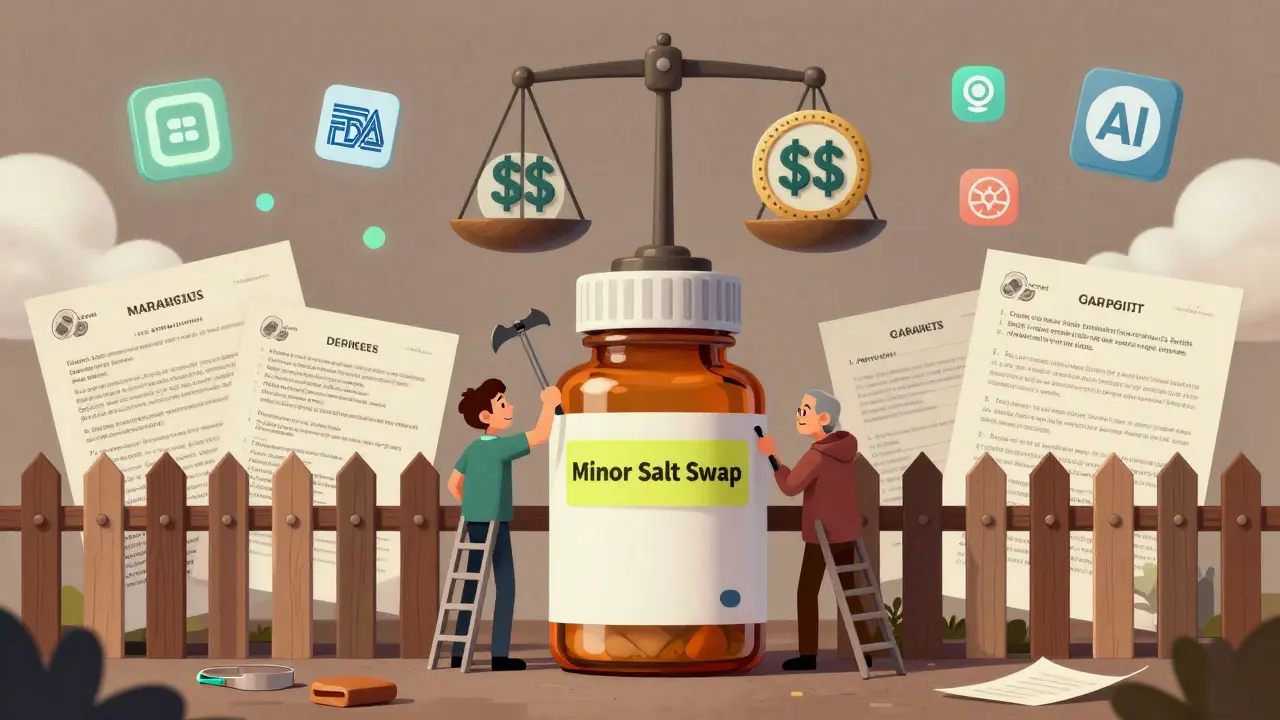
What’s Changing in 2025 and Beyond
Regulators are pushing back. In May 2024, the FDA proposed new rules requiring manufacturers to prove "clinical superiority" to qualify for 3-year exclusivity on new formulations. That’s a big deal. Right now, companies can get 3 years of exclusivity just for a new dosage form-even if it’s no better than the old one. Under the new rule, they’d have to show real patient benefit. Congress is also considering the Preserve Access to Affordable Generics Act, which would limit secondary patents to those demonstrating "meaningful clinical benefit." If passed, up to 28% of current formulation patents could be invalidated. The USPTO has already started narrowing patent scope for combination therapies. And generic companies are getting smarter. They’re hiring former patent examiners, using AI to predict which patents are vulnerable, and pooling resources to challenge multiple patents at once. As a result, the average exclusivity extension from formulation patents is falling-from 5.3 years (2020-2023) to an expected 3.8 years (2025-2030), according to IQVIA.Who Wins and Who Loses?
Big pharma still wins in the short term. Top 10 companies average 14.7 formulation patents per blockbuster drug. Mid-sized firms? Just 3.2. That gap means smaller players can’t compete on patent strategy alone. Patients and insurers lose when prices stay high for years longer than needed. But they win when generics finally enter-especially in oncology, immunology, and rare diseases, where combination therapies are most common. In those areas, 78% of formulation patents get approved, compared to just 43% for CNS drugs, because the clinical benefits are clearer. The real winners? The patent attorneys, the clinical trial consultants, and the regulatory strategists who know how to navigate this system. They’re the ones turning chemistry into cash.What This Means for Patients
If you’re taking a combination drug like Humalog (insulin lispro), Phesgo, or Nexium, chances are you’re paying for a patent strategy, not just a medicine. Your doctor might not know the difference between the original drug and the "improved" version. But you should. Ask: Is this new formulation actually better for me-or just more expensive? Is there a generic alternative for the same condition? Could I switch to the older version if it’s still available? The system is designed to protect innovation. But too often, it’s being used to protect profits.What’s the difference between a composition-of-matter patent and a formulation patent?
A composition-of-matter patent protects the chemical structure of a single active ingredient-it’s the original patent that gives a drug its first 12-14 years of exclusivity. A formulation patent protects how two or more ingredients are combined: their ratios, delivery method, release timing, or packaging. It doesn’t change the chemistry, just how the drug is delivered or used. Formulation patents are secondary and often used to extend exclusivity after the main patent expires.
Can generics copy a drug with a formulation patent?
Not if they copy the exact combination, ratio, or delivery method covered by the patent. But they can create a non-infringing version-like changing the ratio slightly, using a different excipient, or targeting a different medical condition not covered by the patent. Many generics succeed by exploiting these loopholes, especially when the branded company only patented one specific use of the combination.
Why do some formulation patents get rejected?
Most rejections happen because the combination is deemed "obvious" under the KSR v. Teleflex standard. If two drugs are already known to work for the same condition, combining them isn’t enough. The patent must show unexpected results-like significantly fewer side effects, better absorption, or a dramatic improvement in patient adherence. Without hard clinical data, examiners will reject it. Poorly written claims or lack of detailed description also cause rejections.
Do formulation patents always improve patient care?
No. While some do-like Phesgo reducing infusion time from hours to minutes-many are designed for profit, not patient benefit. The FDA found that 31% of formulation patents between 2015 and 2022 covered minor changes like salt forms or excipient swaps with no clinical improvement. These are often called "evergreening" tactics and are under increasing regulatory scrutiny.
How long do formulation patents last?
Formulation patents last 20 years from filing, like all utility patents. But because they’re usually filed later in the drug’s development, their effective market exclusivity is shorter. When combined with regulatory exclusivity (like 3-year new formulation protection), they can extend total market protection to 16 years or more after FDA approval. However, patent term extensions under Hatch-Waxman are capped at 14 years post-approval.



Susan Arlene
so like... they just tweak the numbers on a pill and call it a new drug? wild. we paying for math, not medicine.