
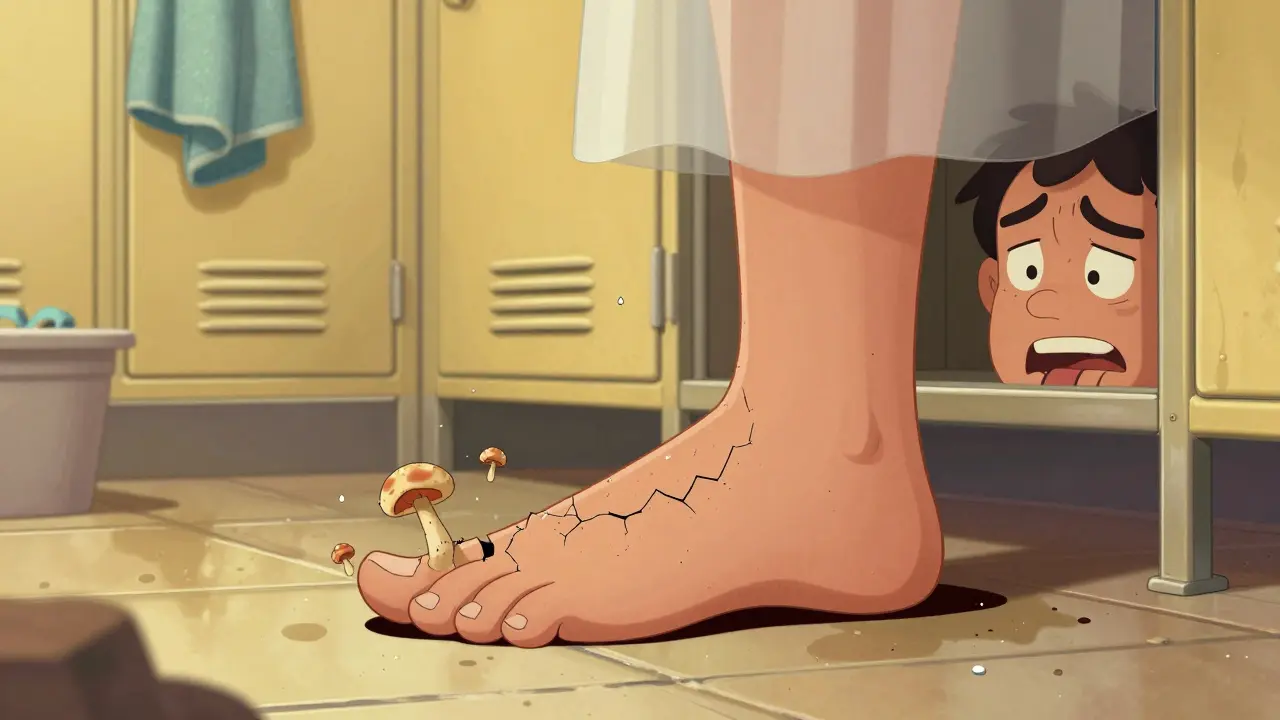
Most people think fungal infections are just a nuisance-itchy feet, a little flaky skin, maybe a rash that won’t go away. But these aren’t just embarrassing annoyances. Left untreated, they can turn into serious problems, especially if you have diabetes, a weakened immune system, or poor circulation. The truth is, fungal infections like athlete’s foot and candida are way more common-and more dangerous-than most people realize.
What’s Really Causing Your Itch?
Not all fungal infections are the same. Two of the most common types-athlete’s foot and candida-come from totally different fungi and affect different parts of the body. Athlete’s foot, also called tinea pedis, is caused by dermatophytes, a group of fungi that feed on keratin, the tough protein in your skin, hair, and nails. These fungi thrive in warm, damp places: locker rooms, public showers, sweaty shoes. They don’t just live there-they multiply fast. That’s why you’re more likely to get it if you walk barefoot in a gym or share towels.
Candida infections, on the other hand, are caused by yeast-mostly Candida albicans. This yeast lives naturally in your mouth, gut, and vaginal area. But when your body’s balance gets thrown off-by antibiotics, hormones, or a weakened immune system-it overgrows. That’s when you get thrush, a yeast infection, or a persistent skin rash. Unlike dermatophytes, candida doesn’t need keratin to survive. It can invade moist, non-keratinized areas like the inside of your mouth or vagina.
The difference matters because treatment isn’t one-size-fits-all. You can’t treat a yeast infection the same way you treat athlete’s foot.
Athlete’s Foot: More Than Just Itchy Toes
Athlete’s foot isn’t just for athletes. About 15% of people worldwide have it at any given time. In humid climates, that number jumps to 25-30%. It shows up in three main ways:
- Interdigital type (70% of cases): Peeling, cracked skin between the toes, especially between the fourth and fifth toes. This is the most common form and often smells bad.
- Moccasin type (20%): Dry, scaly skin covering the whole sole and sides of the foot. It looks like chronic dry skin-but it won’t improve with lotion.
- Vesicular/bullous type (10%): Small blisters filled with fluid. These can burst and lead to secondary bacterial infections.
Here’s the catch: athlete’s foot doesn’t go away on its own. Even if the itching stops, the fungus is still there. That’s why so many people get it back. A 2023 Cleveland Clinic study found that 67% of patients who finished their full treatment course cleared the infection. Only 32% who stopped early did.
Candida: When Your Body’s Normal Yeast Turns Against You
Over 75% of women will have at least one vaginal yeast infection in their lifetime. And nearly 90% of people with AIDS develop oral thrush. That’s not random-it’s a sign your immune system is struggling. Candida overgrowth happens when something disrupts the balance: antibiotics kill off good bacteria, steroids suppress immune response, or uncontrolled diabetes floods your system with sugar, which yeast loves.
Symptoms vary by location:
- Vaginal: Thick, white discharge, intense itching, burning during urination or sex.
- Oral (thrush): White patches on the tongue or inside cheeks that bleed if scraped, soreness, trouble swallowing.
- Skin folds: Red, itchy rash in areas like under the breasts, armpits, or groin. Often mistaken for a heat rash.
Unlike athlete’s foot, candida can become systemic. Invasive candidiasis-when the yeast enters the bloodstream-happens in about 46,000 U.S. cases each year. It’s deadly in up to 40% of cases in people with weakened immune systems. That’s why doctors treat it aggressively, even if it starts as a simple rash.
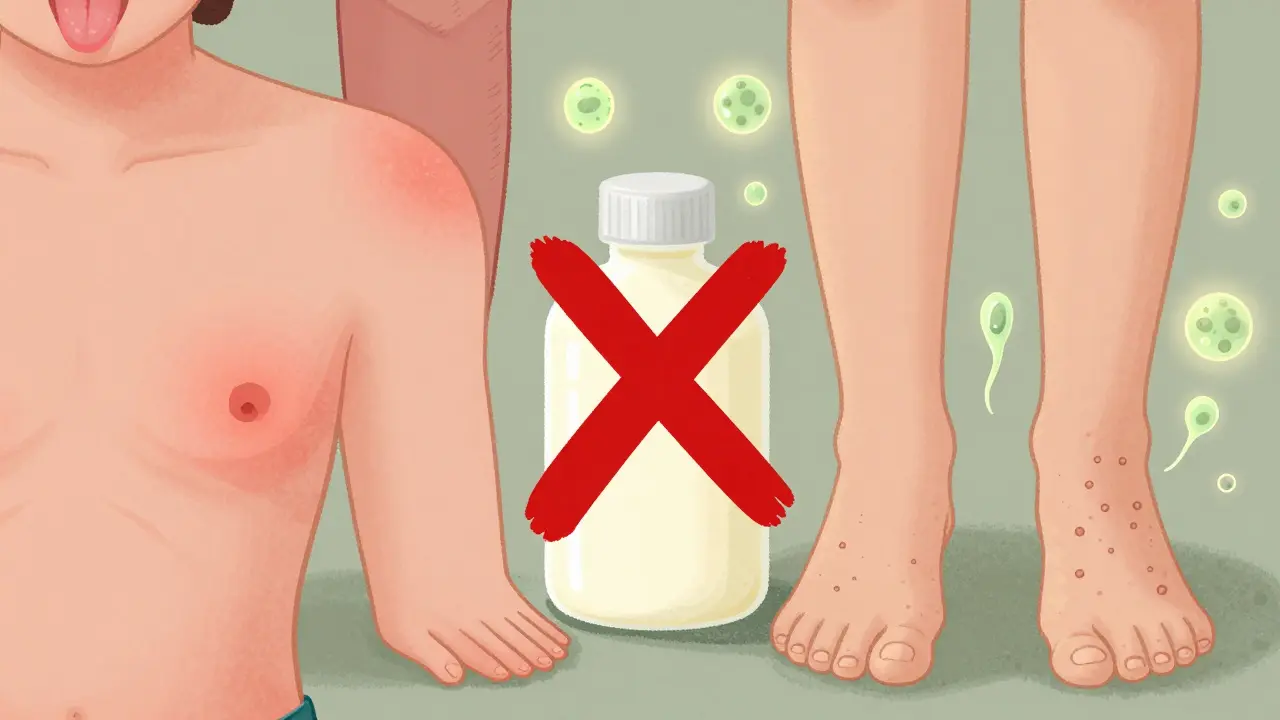
Antifungal Treatments: What Actually Works
There are two main paths: topical (applied to the skin) and oral (taken by mouth). Both have their place, but choosing the right one depends on severity and type.
Topical Treatments
For mild athlete’s foot, over-the-counter creams work well. The most effective ones are:
- Terbinafine (Lamisil): An allylamine that kills fungi outright. Studies show 78% of users see improvement in under a week. It’s the top-rated OTC product on Trustpilot with 4.2 out of 5 stars.
- Clotrimazole and Miconazole: Azoles that stop fungi from growing. They’re good for mild cases but don’t kill as fast as terbinafine.
- Whitfield’s Ointment: A mix of 3% salicylic acid and 6% benzoic acid. It doesn’t kill fungus-it peels away the infected skin layer. DermNet NZ studies found it cleared 65% of interdigital athlete’s foot cases in four weeks, better than clotrimazole alone.
For candida skin infections, clotrimazole cream works well. For vaginal yeast infections, single-dose suppositories or creams are standard. But oral thrush? That needs a stronger approach-usually nystatin mouth rinse or fluconazole pills.
Oral Treatments
If topical treatments fail, or if the infection is widespread, you need pills:
- Terbinafine (250 mg daily): Taken for 2-6 weeks. Cure rates: 80-90%. It’s the go-to for stubborn athlete’s foot.
- Itraconazole (200 mg daily): Works for both athlete’s foot and candida. Taken for 1-2 weeks.
- Fluconazole (150 mg weekly): The standard for vaginal yeast infections and oral thrush. Often just one or two doses are enough.
Here’s the trade-off: oral meds work faster and reduce recurrence. But they’re stronger. They can affect your liver, so doctors check your liver enzymes before prescribing. Topical treatments? Safer, but recurrence rates hit 40% within a year if you don’t finish the full course.
Why Treatments Fail-and How to Avoid It
Most people stop treatment too soon. They feel better after three days and quit. Big mistake. Fungus is still alive under the skin. As one Reddit user put it: “Stopped clotrimazole after three days. Came back worse two weeks later.”
Other common mistakes:
- Not drying feet properly. Moisture between toes is the #1 trigger.
- Wearing the same socks or shoes every day. Fungi live in fabric and leather.
- Ignoring secondary infections. If your foot turns red, hot, swollen, or oozes pus, you’ve got a bacterial infection too. That needs antibiotics.
- Sharing towels or sandals. Athlete’s foot spreads easily this way.
Successful treatment isn’t just about the cream. It’s about habits:
- Change socks daily. Cotton or moisture-wicking materials are best.
- Use antifungal powder in shoes. Powder with 2% miconazole cuts moisture and kills spores.
- Avoid walking barefoot in public showers. Wear flip-flops.
- Apply treatment 1 inch beyond the visible rash. Fungus spreads under the skin.
- Keep going for 1-2 weeks after symptoms disappear. That’s non-negotiable.

The New Frontiers: What’s Changing
The antifungal market is growing fast-projected to hit $21.7 billion by 2028. But resistance is rising. A new strain, Trichophyton indotineae, first spotted in India in 2017, is now in 28 countries. It doesn’t respond to terbinafine. That’s why the CDC and WHO are sounding alarms.
Good news: new drugs are coming. In 2021, the FDA approved Ibrexafungerp (Brexafemme), the first new class of antifungal in 20 years. It works against resistant candida. In March 2023, a new topical drug called olorofim showed 82% cure rates in stubborn athlete’s foot cases in clinical trials.
The CDC’s “My Action Plan” program, launched in 2022, is already cutting recurrent infections by 35% in diabetic patients by combining foot checks, antifungal prophylaxis, and education. That’s the future: not just treating, but preventing.
When to See a Doctor
You can handle mild athlete’s foot or a yeast infection with OTC meds. But if any of these happen, see a provider:
- Your skin turns red, swollen, or starts oozing pus.
- You have diabetes or a weakened immune system.
- The infection doesn’t improve after 2 weeks of treatment.
- You keep getting it back-even after finishing treatment.
- You have oral thrush and aren’t HIV-positive or on chemotherapy.
Untreated athlete’s foot can lead to cellulitis, bone infections, or even sepsis in high-risk people. Candida in the bloodstream can be fatal. Don’t wait until it’s too late.
Prevention: The Real Secret
The best treatment is no infection at all. Here’s how to keep it that way:
- Dry your feet thoroughly after bathing-especially between toes.
- Use a separate towel for your feet. Don’t share.
- Rotate shoes. Let them air out for 24 hours before wearing again.
- Wear sandals in public showers and pools.
- Keep blood sugar under control if you have diabetes.
- Don’t take antibiotics unless you really need them.
Fungal infections aren’t a sign of poor hygiene. They’re a sign your environment or immune system gave fungi an opening. Fix the opening, and you stop the infection before it starts.



Elaine Parra
This article is absolutely ridiculous. You act like fungal infections are some new threat, but they've been around since humans started wearing shoes. And now we're supposed to panic because of a few studies? I've had athlete's foot since I was 12 and never needed a prescription. Just dry your feet and move on. Stop overmedicalizing everything.