
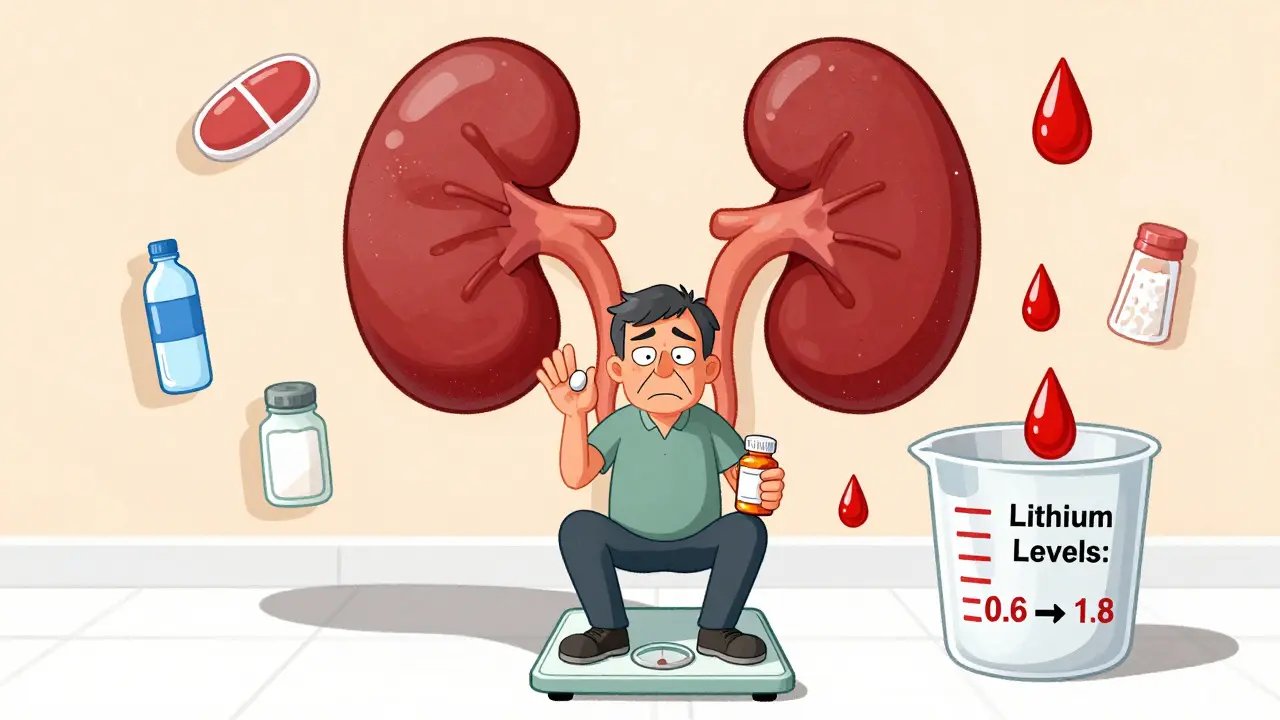
When you're taking lithium for bipolar disorder, even small changes in your body can push your lithium levels into dangerous territory. Lithium works well - but it's a tightrope walk. The difference between a therapeutic dose and a toxic one is slim. Your kidneys handle almost all of it, and anything that messes with kidney function or fluid balance can cause lithium to build up. This isn't theoretical. People have ended up in the hospital, or worse, because they took an over-the-counter painkiller, started a water pill, or didn't drink enough water during a heatwave.
Why Lithium Is So Sensitive
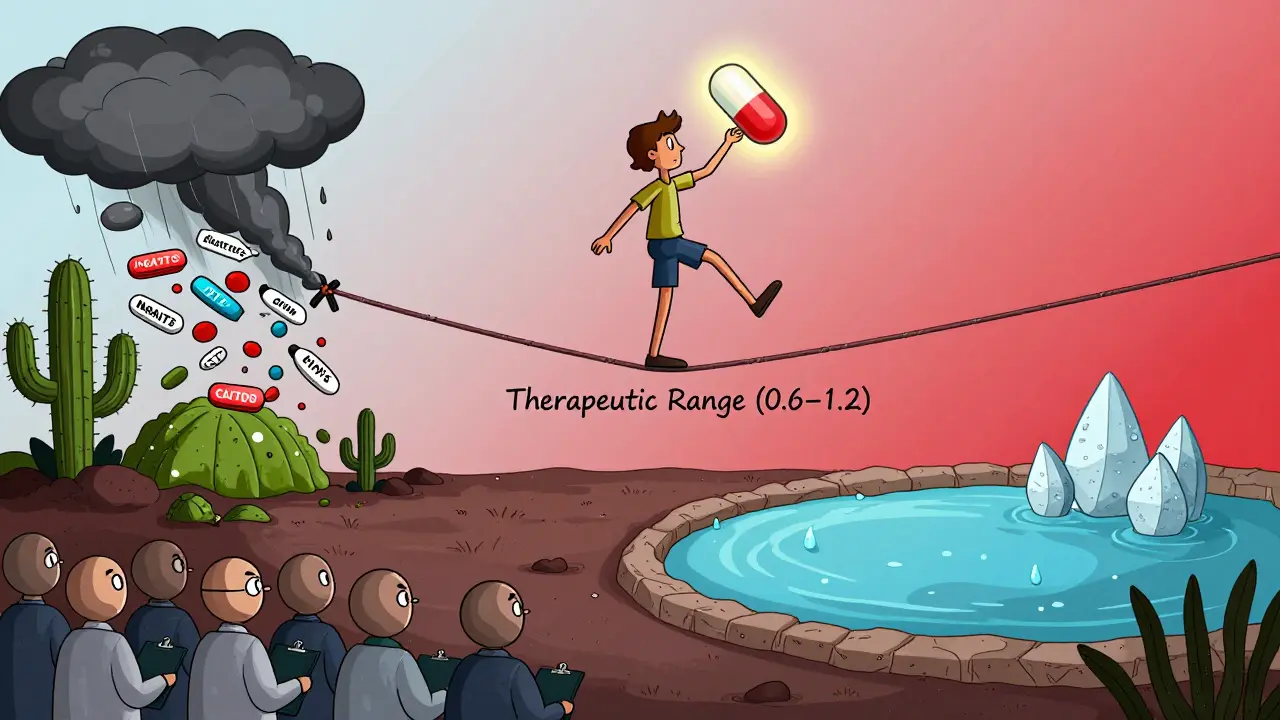
Lithium doesn't break down in your body. It's filtered out by your kidneys and excreted in urine. If your kidneys slow down - even a little - lithium sticks around longer. That’s why it has such a narrow window: 0.6 to 1.2 mmol/L. Go above that, and you risk toxicity. Go below, and your mood may not be controlled. There's no room for guesswork.
Older adults are especially at risk. People over 65 are more than three times as likely to develop lithium toxicity. Why? Kidney function naturally declines with age. Add in other health problems like heart failure or high blood pressure, and the risk climbs even higher. That’s why regular blood tests aren't optional - they're life-saving.
NSAIDs: The Silent Threat
You might not think twice about popping an ibuprofen for a headache or naproxen for sore muscles. But if you're on lithium, that’s a red flag. Non-steroidal anti-inflammatory drugs (NSAIDs) interfere with how your kidneys filter lithium. They do this by blocking prostaglandins - chemicals your kidneys use to regulate blood flow. Less blood flow means less lithium gets flushed out.
The effect isn't subtle. Studies show NSAIDs can raise lithium levels by 25% to 60%, depending on the drug. Indomethacin? Up to 60%. Ibuprofen? Around 40%. Even celecoxib, often seen as safer, can push levels up by 15-30%. The rise usually happens within the first week of taking the NSAID. And it doesn’t matter if you’ve been on lithium for years - this interaction can catch anyone off guard.
One tragic case from New Zealand involved a 72-year-old woman with kidney issues. She’d been stable on lithium for years. Then she started taking an NSAID for arthritis. Her lithium levels spiked. She wasn’t monitored closely. She died. This wasn’t rare. It’s a pattern. Many doctors and patients still don’t realize how fast this can go wrong.
Diuretics: A Double-Edged Sword
Diuretics - water pills - are another major concern. They're often prescribed for high blood pressure or swelling, but they can be dangerous with lithium.
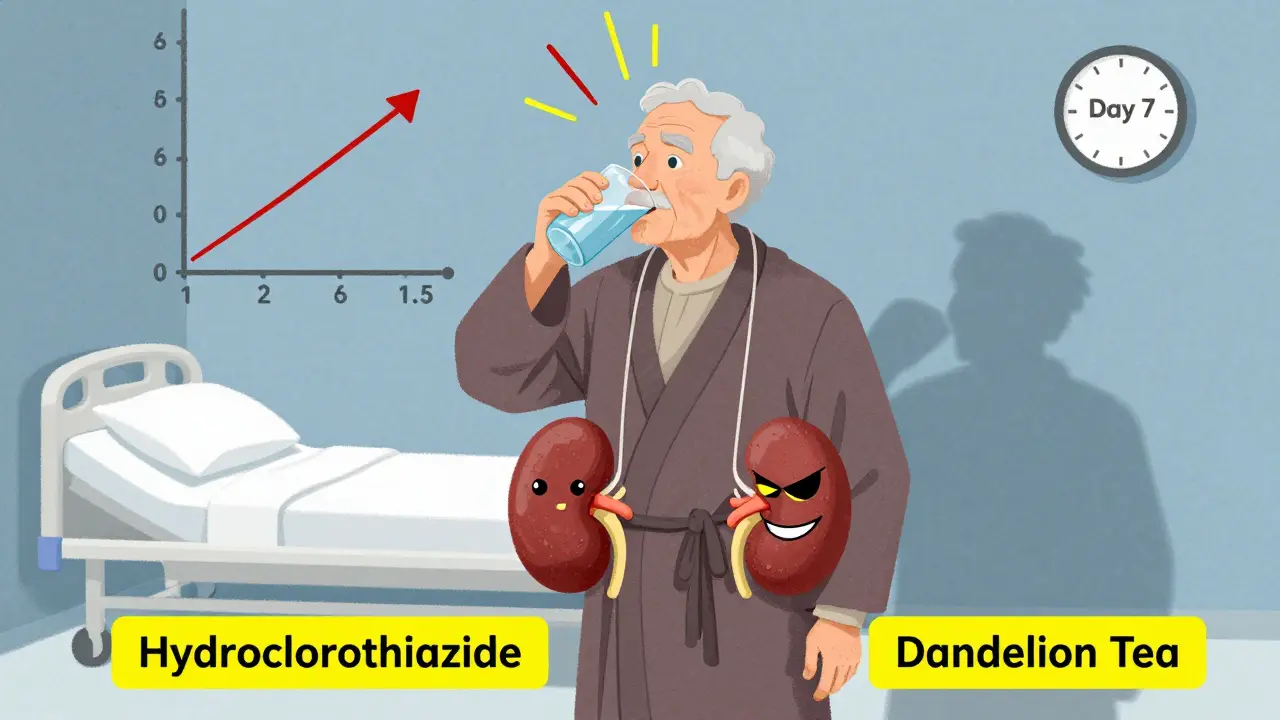
Thiazide diuretics like hydrochlorothiazide are the worst offenders. They can increase lithium levels by 25% to 50% within 7 to 10 days. The reason? They reduce the amount of sodium your kidneys excrete. Lithium and sodium are handled by the same system. Less sodium out = less lithium out. This isn't a slow burn - it's a sudden spike.
Loop diuretics like furosemide are less risky, but still dangerous. They can raise lithium levels by 10% to 25%. And while potassium-sparing diuretics like spironolactone have mixed data, they shouldn't be assumed safe.
Here’s the twist: some diuretics actually lower lithium levels. Osmotic diuretics like mannitol and carbonic anhydrase inhibitors like acetazolamide increase lithium clearance. That means your lithium dose might need to go up - not down - if you start one of these. It’s not just about what you take; it’s about how your body responds.
Dehydration: The Hidden Trigger
You don’t need a drug interaction to trigger lithium toxicity. Sometimes, all it takes is not drinking enough water.
Dehydration - even mild - can raise lithium levels by 15% to 25%. Losing just 2-3% of your body weight in fluid is enough. That’s why people traveling in hot climates, getting sick with vomiting or diarrhea, or sweating heavily after exercise are at high risk. A fever, a bout of food poisoning, or even a long flight can be enough to push lithium into toxic range.
And it’s not just water. Sodium intake matters too. Eating less salt? Lithium levels go up. Eating more salt? They go down. A change of just 20-30 mmol of sodium per day - about half a teaspoon of salt - can shift your lithium level by 10-20%. That’s why doctors tell you to keep your salt intake steady. No sudden low-salt diets. No extreme keto or detox plans.
Herbal diuretics are a hidden danger. Products marketed as “natural weight loss teas” or “detox supplements” often contain plants like dandelion, parsley, or juniper. These act like diuretics. They’re not regulated. No one warns you. But they can spike lithium levels just like prescription pills.
What to Do If You’re on Lithium
If you’re taking lithium, here’s what you need to know:
- Avoid NSAIDs if you can. Use acetaminophen (Tylenol) for pain instead. It doesn’t affect lithium.
- Never start a diuretic without talking to your doctor. Even if it’s for high blood pressure or swelling.
- Drink water consistently. Don’t wait until you’re thirsty. Aim for 1.5 to 2 liters a day. More if you’re sweating, sick, or in hot weather.
- Keep your salt intake steady. Don’t cut salt to “be healthy.” Don’t go on a salt-free diet. Consistency matters more than quantity.
- Watch for early signs of toxicity. Diarrhea, dizziness, drowsiness, tremors, or blurred vision? Call your doctor immediately. Don’t wait.
If you absolutely need an NSAID or diuretic - say, for severe arthritis or heart failure - your doctor should:
- Check your lithium level before starting the new drug.
- Check it again within 5-7 days, and then weekly for at least a month.
- Lower your lithium dose ahead of time if you’re over 65 or have kidney issues.
- Refer you to a kidney specialist if you’re on long-term lithium with other health problems.
What Happens If Lithium Levels Go Too High?
Toxicity doesn’t come out of nowhere. It starts quietly:
- Diarrhea (68% of early cases)
- Lightheadedness (52%)
- Drowsiness (47%)
- Tremors
- Blurred vision (31%)
- Ringing in the ears (29%)
If it gets worse: confusion, muscle weakness, seizures, coma. And it can leave lasting damage. Severe lithium toxicity can permanently harm your kidneys - especially if you’re older or already have kidney disease. Recovery isn’t guaranteed.
One study found that nearly half of elderly patients who had severe lithium toxicity never fully regained their previous kidney function. That’s not a side effect - it’s a life-altering risk.
Final Thoughts
Lithium is a powerful tool. But it’s not a drug you can treat casually. It doesn’t care if you think the NSAID is harmless. It doesn’t care if you’re “just going on a short trip.” Your body doesn’t distinguish between a prescription and a herbal tea. It only responds to chemistry.
The best defense? Awareness. Communication. Consistency. Tell every doctor you see - even your dentist - that you’re on lithium. Keep a list of all your meds and supplements. Drink water. Don’t change your salt intake. And if something feels off - even slightly - get checked. Lithium toxicity is preventable. But only if you know what to look for.



Nishan Basnet
Lithium is one of those drugs that makes you respect medicine. I’ve seen a cousin go through hell after mixing it with ibuprofen for a back injury. No one warned her-not her pharmacist, not her primary. She ended up in ICU with tremors so bad she couldn’t hold a cup. Now she’s on gabapentin and acetaminophen, and she’s stable. If you’re on lithium, treat every OTC pill like a grenade. And yes, that includes those ‘natural’ detox teas. They’re not natural. They’re chemical landmines.