
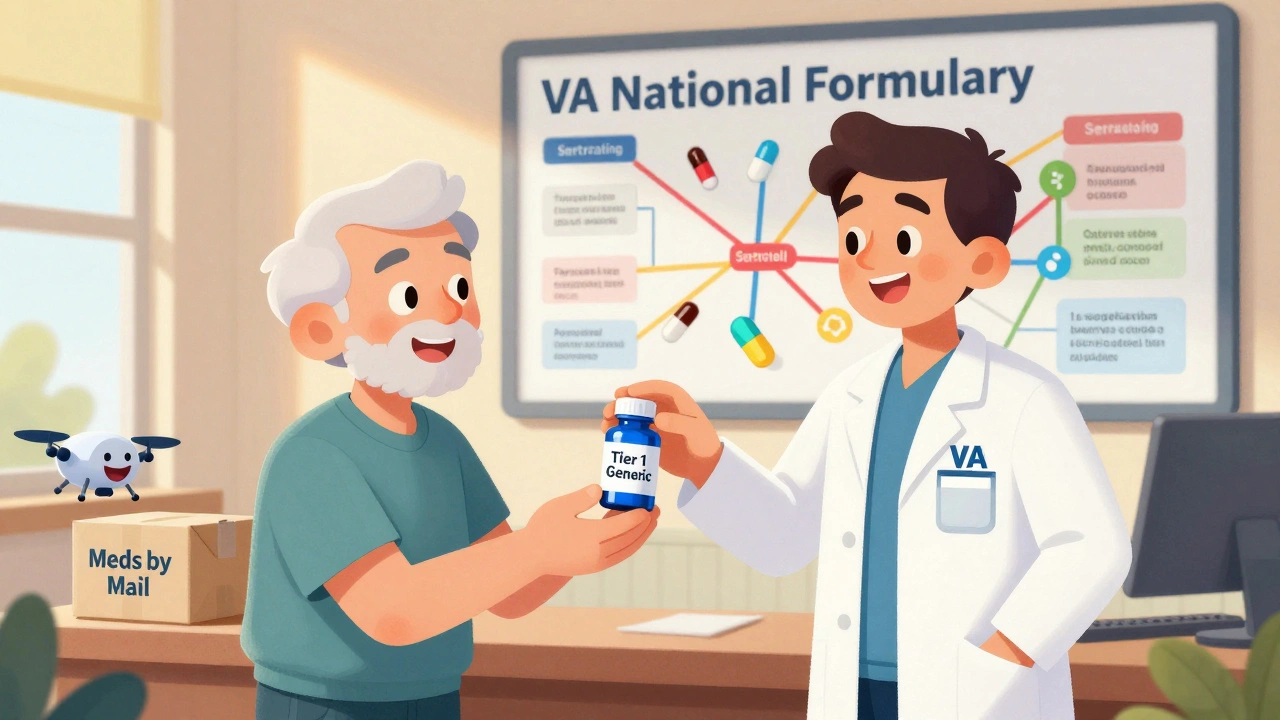
When you’re a veteran relying on VA healthcare, your prescription drugs don’t work like they do at a regular pharmacy. The VA doesn’t just fill prescriptions-it manages them with a strict, nationwide system designed to save money without sacrificing care. At the heart of this system is the VA National Formulary, a list of medications that every VA facility across the country must stock and offer. And here’s the key thing most veterans don’t realize: if a generic version exists, that’s what you get. No exceptions unless your doctor proves otherwise.
How the VA Formulary Works: One List, All Facilities
Unlike private insurers that might have dozens of different formularies based on your plan, the VA has just one: the National Formulary. It’s mandatory. Every VA clinic, hospital, and pharmacy-whether you’re in Alaska or Alabama-must carry the same approved drugs. This isn’t just about convenience. It’s about consistency. You won’t get a different drug just because you moved or switched VA centers. The formulary is split into three parts:- Standard VA National Formulary: The core list of drugs available everywhere.
- VA National Formulary Changes: Monthly updates adding or removing medications.
- VA Urgent/Emergent Formulary: Allows community pharmacies to fill critical prescriptions when VA pharmacies are closed or out of stock.
Tiered Copays: Why Your Generic Costs $5, Not $50
The VA uses a simple three-tier system to control what you pay out of pocket:- Tier 1: Preferred generic drugs. Copay is $5 for a 30-day supply. Sometimes $0.
- Tier 2: Non-preferred generics or some brand-name drugs with generic alternatives. Copay is $11.
- Tier 3: Brand-name drugs with no generic available, or specialty medications. Copay is $15.
- Alendronate (for osteoporosis)
- Allopurinol (for gout)
- Atorvastatin and pravastatin (for cholesterol)
- Fluoxetine and sertraline (for depression and anxiety)
- Furosemide (for fluid retention)
CHAMPVA and Specialty Drugs: What’s Covered and What’s Not
If you’re a family member of a veteran enrolled in CHAMPVA (Civilian Health and Medical Program), your coverage follows the same formulary rules-but with some big exceptions. In 2025, GLP-1 receptor agonists like Ozempic, Mounjaro, and Wegovy are only covered for FDA-approved uses:- Type 2 diabetes
- Obstructive sleep apnea (Zepbound)
- Cardiovascular risk reduction (Wegovy)
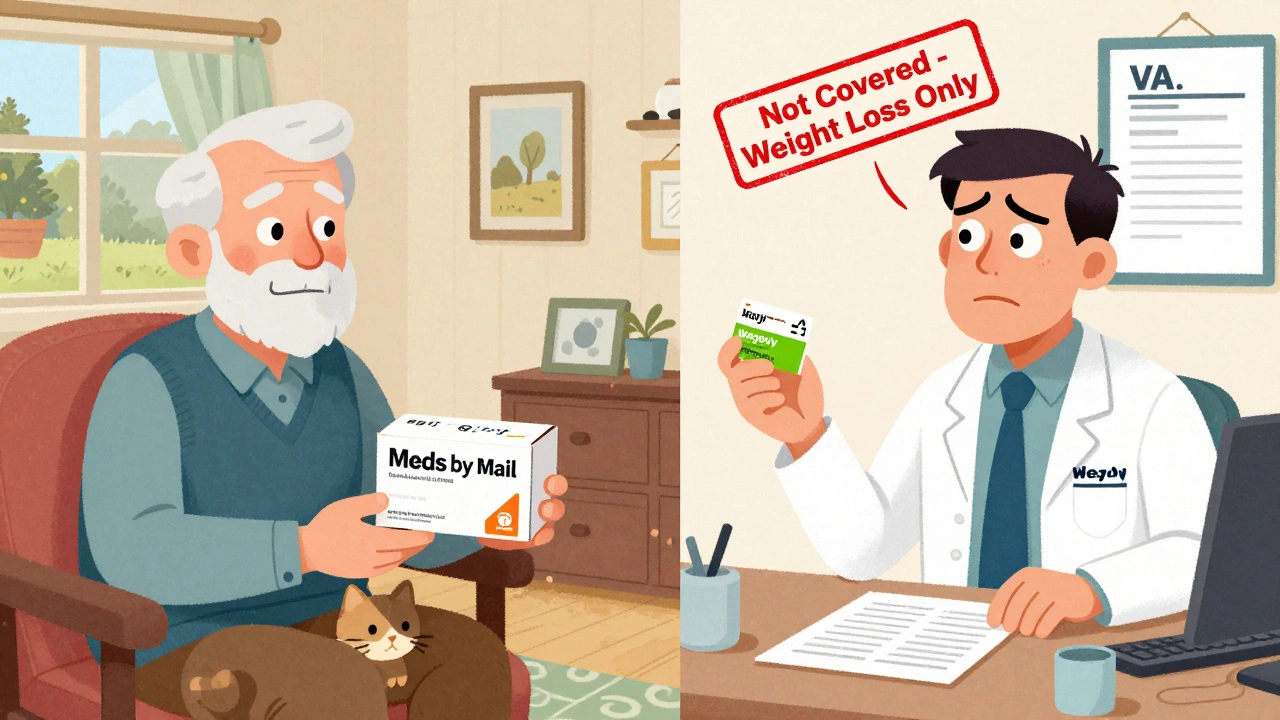
How to Get Your Medications: VA Pharmacy, Meds by Mail, or Community Care
You have three ways to get your prescriptions:- VA Pharmacy: Pick up at any VA clinic. Best for urgent needs.
- Meds by Mail: Free delivery to your home for maintenance drugs. No copay for CHAMPVA beneficiaries. No deductible. No shipping fees. This is the most popular option-87% of users rate it positively in the 2024 VA survey.
- Community Care: Use a local pharmacy if you’re far from a VA facility or need a drug not in stock. Requires prior authorization unless it’s an emergency.
What Veterans Say: The Good, the Bad, and the Confusing
Most veterans appreciate the low cost. ArmyVet2010 posted on Reddit in September 2025: “Switched to generic sertraline through Meds by Mail. Same effect as Zoloft. Costs me $0. At my old pharmacy? $15.” But confusion is common. About 35% of new enrollees don’t understand the difference between Tier 1 and Tier 2. Some think “generic” means “weaker.” The VA’s own Office of Inspector General found that 12% of veterans initially worried about generic effectiveness. But after talking to their provider, 94% kept taking them. The biggest complaints? Slow prior authorizations and lack of access to newer drugs. A 2024 VA survey showed that veterans spend an average of 2-3 visits just learning how the system works. Pharmacy staff are the main source of help-78% of veterans say they learned everything from VA pharmacists.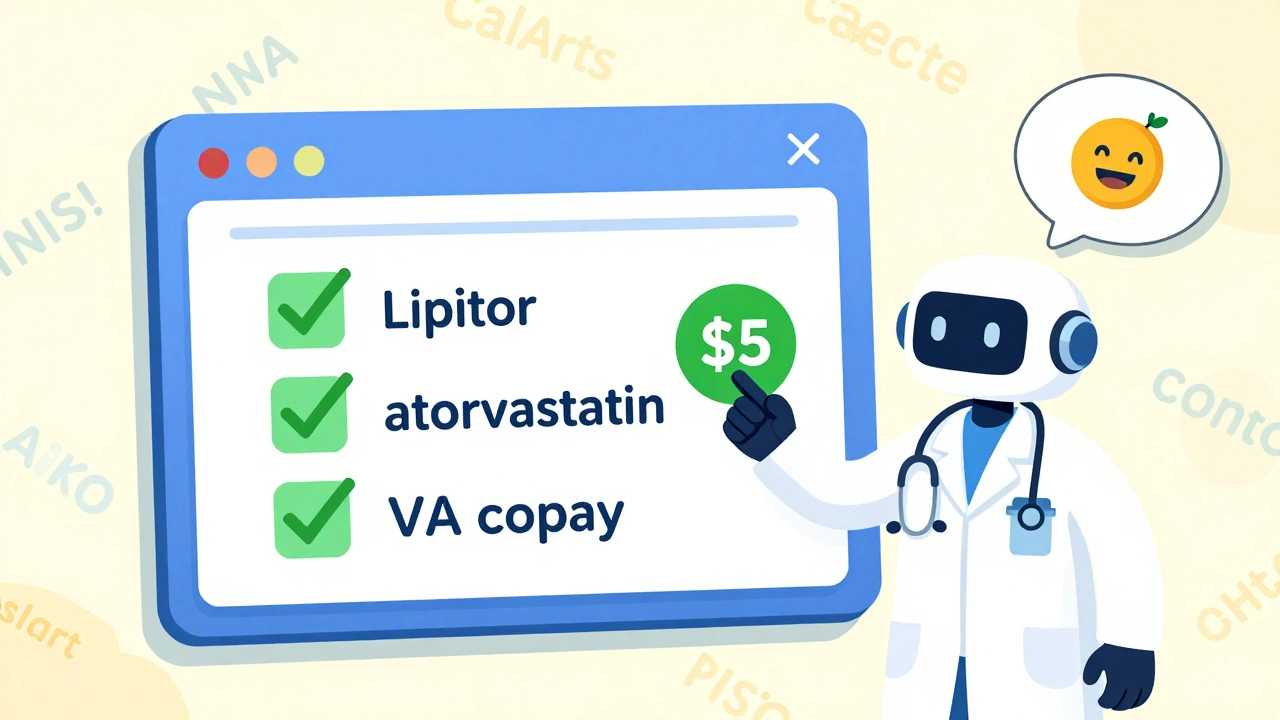
What’s Changing in 2026 and Beyond
The VA isn’t standing still. In 2026, they plan to roll out AI tools inside the electronic health record system that will automatically suggest generic alternatives when a prescriber writes a brand-name drug. Think of it like a smart assistant that says, “You wrote Lipitor. There’s a generic version that’s cheaper and just as effective. Want to switch?” They’re also expanding access to specialty drugs for rare diseases and cancer. The 2025-2027 Pharmacy Strategic Plan calls for more transparency-real-time formulary status updates in e-prescribing systems, so your doctor knows right away if a drug is covered. And while some critics argue the VA is too slow to adopt new treatments, the numbers speak for themselves. The Government Accountability Office called the VA’s formulary process “a national model for evidence-based drug management.” It’s not perfect. But it’s working-saving billions, keeping veterans healthy, and doing it all without bankrupting the system.What You Need to Do Now
If you’re a veteran or CHAMPVA beneficiary:- Go to VA.gov/health-care/refill-prescriptions/ and use the Formulary Advisor tool.
- Check your current prescriptions. Are they on Tier 1? If not, ask your provider if a generic is an option.
- Enroll in Meds by Mail if you take maintenance meds. It’s free, reliable, and saves time.
- Call the VA Pharmacy Benefits line at 1-800-877-8339 if you’re confused about coverage.
- Don’t assume a new drug is covered. Always check the latest monthly formulary update.
Are all generic drugs covered by the VA?
Almost all generic drugs are covered-unless they’re not on the National Formulary. The VA only includes generics that meet strict standards for safety, effectiveness, and cost. If a generic exists and is approved by the FDA, it’s almost always included. The VA’s policy is clear: choose the generic unless there’s a medical reason not to.
Can I get brand-name drugs through the VA?
Yes, but only if there’s no generic available, or if your doctor submits a prior authorization request proving the brand is medically necessary. Examples include severe allergies to generic fillers, or if a patient has tried multiple generics without success. Even then, the VA requires documentation and may limit the quantity or duration.
How often does the VA update its formulary?
The VA updates its formulary monthly. Changes are published in the National Formulary Monthly Decision Newsletter. New drugs are added, restrictions are adjusted, and some medications are removed based on clinical evidence and cost. You can subscribe to these updates on VA.gov or check the Formulary Advisor tool anytime.
Why is Wegovy not covered for weight loss?
As of January 2025, CHAMPVA and VA formulary rules only cover GLP-1 drugs like Wegovy for FDA-approved uses: type 2 diabetes, cardiovascular risk reduction, and obstructive sleep apnea. Weight loss alone is not an approved indication under current policy. This is based on cost-effectiveness reviews and clinical guidelines. Veterans seeking weight loss treatment may be referred to VA nutrition and lifestyle programs instead.
What’s the difference between VA and Medicare Part D formularies?
VA has only three tiers with low copays ($5-$15). Medicare Part D often has five tiers, with specialty drugs costing $100+ per month. The VA covers generics automatically. Medicare Part D often requires step therapy or prior authorization even for generics. VA drug costs per veteran are about 40% lower than Medicare Part D. The VA also offers free home delivery through Meds by Mail, which Medicare doesn’t match.



Christian Landry
This is actually kinda brilliant. $5 for my blood pressure med? Hell yes. I used to pay $45 at the pharmacy back home. Now I just order through Meds by Mail and forget about it. 🙌