
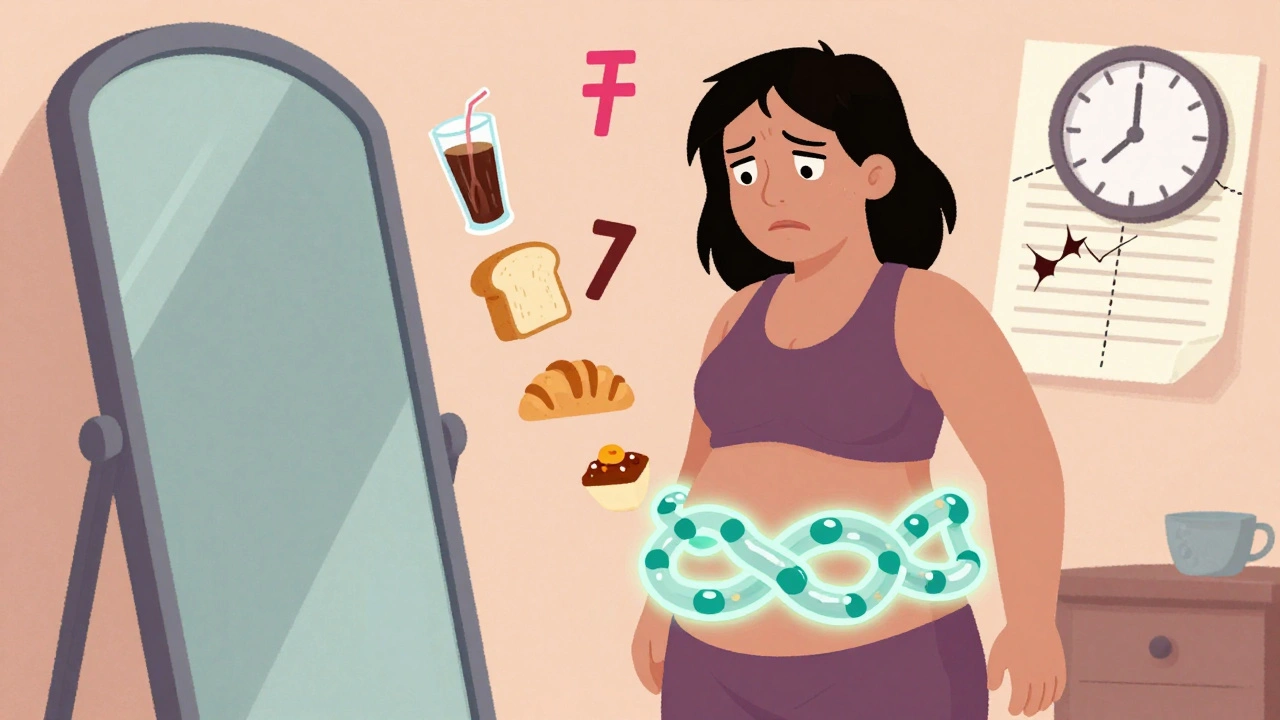
Why Losing Weight with PCOS Feels Impossible
If you have PCOS and have tried every diet under the sun only to watch the pounds creep back on, you’re not failing. You’re fighting a biological loop most people don’t understand. It’s not about willpower. It’s about insulin resistance-a hidden driver behind stubborn belly fat, intense cravings, and fatigue that won’t quit.
Polycystic Ovary Syndrome affects about 1 in 10 women of reproductive age. And for most of them, weight isn’t just a side effect-it’s part of the disease itself. Research shows 70% to 95% of women with PCOS who are overweight have insulin resistance. Even lean women with PCOS? Up to 75% still have it. That means your body isn’t using insulin the way it should. Instead of turning sugar into energy, your cells ignore it. So your pancreas pumps out more insulin to compensate.
That extra insulin doesn’t just sit there. It tells your body to store fat-especially around your belly. It also tells your ovaries to make more testosterone. More testosterone means more acne, more hair growth, and fewer periods. And here’s the worst part: that belly fat you’re carrying? It makes your insulin resistance worse. So you gain more weight. Your hormones get more out of balance. And the cycle keeps spinning.
How Insulin Resistance Turns Food Into Fat
Think of insulin as the key that unlocks your cells so glucose (sugar) can get inside and be used for energy. In PCOS, that key doesn’t fit well anymore. Your cells are locked out. So your body keeps making more keys-more insulin.
Here’s what happens next:
- You feel hungrier. High insulin blocks leptin, the hormone that tells you you’re full. So even after eating, you’re still craving food-especially carbs and sweets.
- Your body stops burning fat. Insulin shuts down fat breakdown. No matter how much you exercise, your body holds onto every bit of stored fat because it’s still flooded with insulin.
- Abdominal fat builds up. Unlike typical female fat storage (hips and thighs), PCOS pushes fat to your midsection. That’s not just inconvenient-it’s dangerous. Belly fat releases inflammatory chemicals that make insulin resistance worse and raise your risk of heart disease.
- Your hormones go haywire. High insulin lowers SHBG, a protein that keeps testosterone in check. With less SHBG, more testosterone circulates freely, worsening PCOS symptoms.
This isn’t laziness. It’s biochemistry. A 2022 study in PMC found that insulin resistance is the single most important factor driving PCOS symptoms-not just weight gain, but also irregular periods, infertility, and acne. The more insulin your body makes, the more testosterone your ovaries produce. And the more testosterone you have, the harder it becomes to lose weight.
The Health Risks You Can’t Ignore
Weight gain from PCOS isn’t just about how you look in the mirror. It’s about your long-term health. The CDC warns that women with PCOS are up to seven times more likely to develop type 2 diabetes, especially if they carry extra weight. That’s not a small risk-it’s a medical red flag.
Here’s what else comes with PCOS and insulin resistance:
- Type 2 diabetes - Your pancreas can’t keep up forever. Eventually, it burns out, and blood sugar stays high.
- High blood pressure and cholesterol - Belly fat increases triglycerides and lowers good HDL cholesterol.
- Sleep apnea - Extra weight around the neck blocks your airway while you sleep.
- Infertility - Insulin disrupts ovulation. Even if you’re not trying to get pregnant, this signals how deeply your hormones are out of sync.
- Endometrial cancer - Without regular periods, the lining of your uterus builds up. Over time, that increases cancer risk.
These aren’t distant possibilities. They’re real outcomes for women who don’t address the root cause. And the good news? You can reverse most of them-not with pills, but with food.
What to Eat: The PCOS Diet That Actually Works
You don’t need a fancy diet. You need a simple, science-backed approach that lowers insulin. Forget counting calories. Focus on lowering insulin spikes.
Here’s what works:
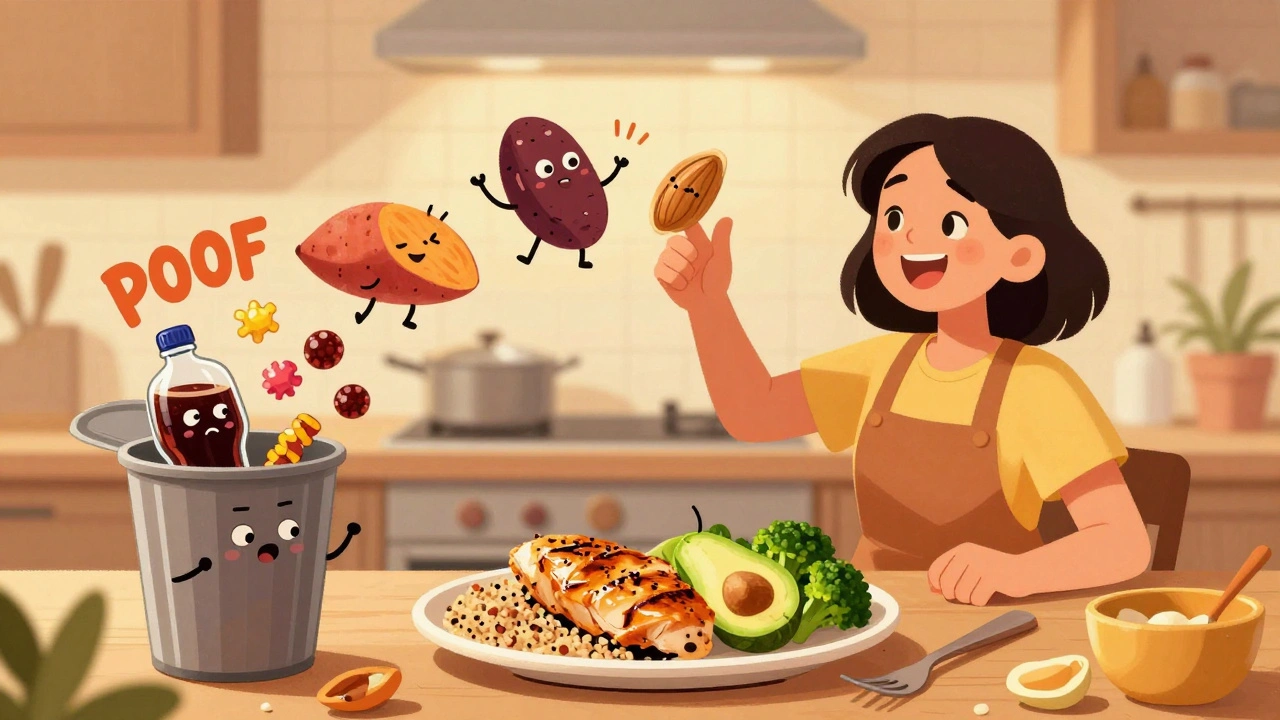
- Choose low-glycemic carbs. Swap white bread, pasta, and sugary cereals for oats, quinoa, sweet potatoes, legumes, and non-starchy vegetables. These release sugar slowly, so your insulin doesn’t spike.
- Pair carbs with protein and fat. Eat an apple with almond butter. Have rice with grilled chicken and avocado. Fat and protein slow down sugar absorption. That means less insulin.
- Eliminate sugary drinks. Soda, juice, energy drinks, and even flavored coffee are liquid sugar bombs. One 12-ounce soda can spike insulin as much as a full meal of white rice.
- Don’t skip meals. Going too long without eating causes your blood sugar to drop, then crash-triggering intense cravings. Eat every 3-4 hours with balanced meals.
- Watch portion sizes of even healthy carbs. A cup of quinoa is fine. Three cups? That’s a sugar overload. Use your hand as a guide: one palm of carbs per meal.
There’s no magic food. But research from Fertifa and the NHS shows that women who follow this pattern see improvements in insulin levels, weight, and even menstrual regularity within just 3-6 months.
What to Avoid: The Hidden Triggers
Some foods seem healthy but still wreck your insulin. Watch out for:
- Gluten-free processed snacks. Many are just sugar and starch with a fancy label. Check the ingredients-often they’re loaded with rice flour, potato starch, and added sugar.
- Low-fat products. When fat is removed, sugar is added to make it taste good. Low-fat yogurt? Often has more sugar than regular yogurt.
- Fruit juices and dried fruit. A handful of raisins equals the sugar of five grapes. A glass of orange juice is the sugar of six oranges-without the fiber.
- Artificial sweeteners. Some studies suggest they still trigger insulin release and cravings, even without calories. Stick to water, tea, or sparkling water with lemon.
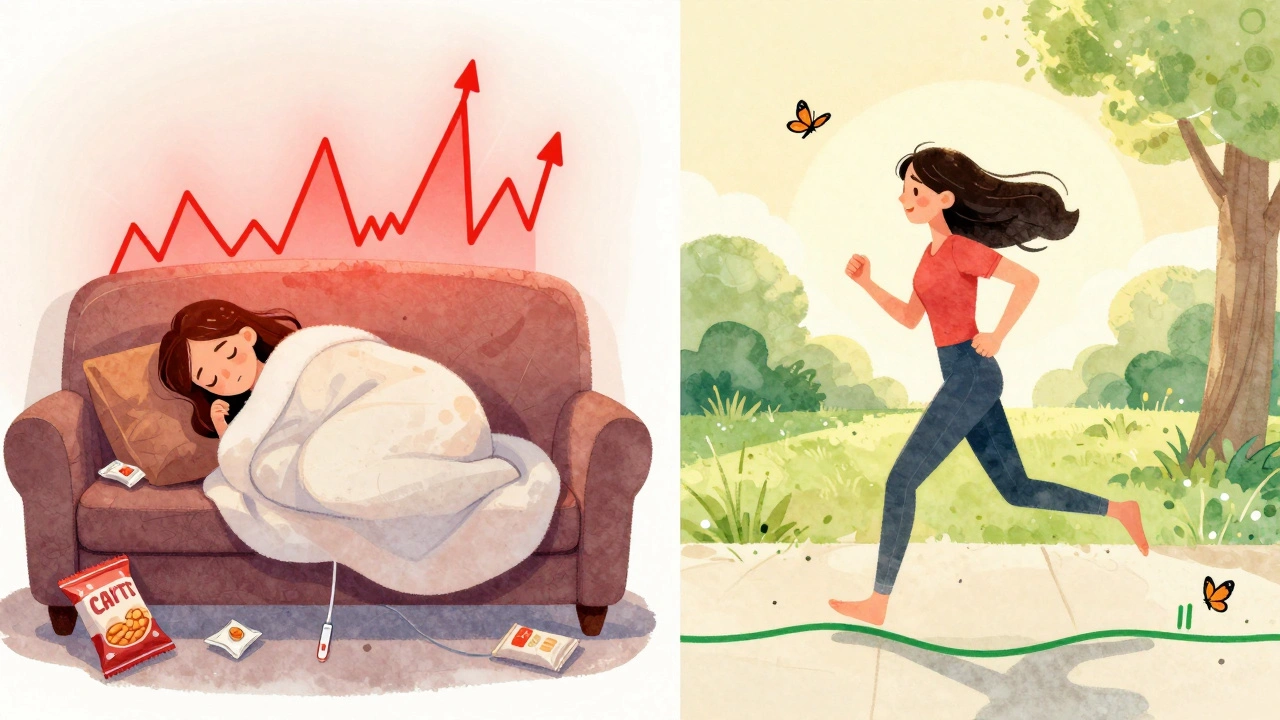
And yes-stress matters. Cortisol (the stress hormone) raises insulin and makes you crave carbs. Sleep deprivation does the same. If you’re not sleeping well or you’re constantly stressed, no diet will fully work. Prioritize rest. Even 20 minutes of deep breathing daily can help.
Real Results: What Happens When You Change Your Diet
One woman in Melbourne, 34, had PCOS for 8 years. She tried keto, intermittent fasting, and calorie counting. Nothing stuck. She gained 15kg and felt exhausted all the time.
She switched to a simple plan: no sugary drinks, three balanced meals a day with protein and veggies, and one small serving of whole grains. No restriction. No starvation. Just less sugar, more protein, and better sleep.
Within 4 months, she lost 9kg-mostly belly fat. Her periods returned. Her acne cleared. Her doctor said her insulin levels had dropped by 40%.
This isn’t rare. A 2023 study showed that women with PCOS who followed a low-glycemic diet lost 5-7% of their body weight in six months-and 80% of them started ovulating again. That’s not luck. That’s biology responding to the right fuel.
It’s Not About Perfection
You don’t need to eat perfectly. You need to be consistent. Miss a meal? Eat something balanced when you can. Crave sugar? Have a square of dark chocolate (85% cocoa) with a handful of nuts. It’s not about being flawless-it’s about breaking the cycle.
PCOS doesn’t mean you can’t lose weight. It means you need to work with your body, not against it. Lower insulin. Reduce inflammation. Feed your cells what they actually need. And the rest-weight loss, energy, regular cycles-follows.
What About Medication?
Metformin is sometimes prescribed to help with insulin resistance. It can help, especially if you’re prediabetic. But it’s not a substitute for diet. Studies show that lifestyle changes are more effective than medication alone. And unlike pills, food doesn’t have side effects like nausea or diarrhea.
Think of medication as a bridge-not the destination. Use it if your doctor recommends it, but don’t wait for it to fix things. Start changing your plate today.
Can you lose weight with PCOS without medication?
Yes. Many women lose weight and improve their symptoms just by changing what they eat. Focusing on low-glycemic foods, protein, healthy fats, and avoiding sugar reduces insulin levels-which is the main barrier to weight loss in PCOS. Studies show that even a 5-7% weight loss can restore ovulation and lower diabetes risk.
Why is belly fat so hard to lose with PCOS?
High insulin promotes fat storage in the abdomen, and belly fat itself makes insulin resistance worse. This creates a cycle: more insulin → more belly fat → worse insulin resistance. Breaking this cycle requires lowering insulin through diet, not just doing more cardio. Strength training helps too-it builds muscle, which improves insulin sensitivity.
Is keto good for PCOS?
Keto can help lower insulin quickly, and some women with PCOS see big improvements. But it’s not for everyone. Some find it too restrictive, leading to bingeing later. Others feel worse due to low thyroid function or adrenal fatigue. A lower-carb, balanced diet with moderate protein and healthy fats often works better long-term than extreme keto.
Does intermittent fasting help with PCOS?
It can, but only if done right. Skipping meals can spike cortisol and worsen insulin resistance in some women. If you try it, start with a 12-hour overnight fast (e.g., 7 pm to 7 am). Don’t jump into 16:8 unless you’re already eating well and not stressed. Always listen to your body.
How long until I see results?
Most women notice less bloating and fewer cravings within 2 weeks. Weight loss usually starts after 4-6 weeks. Hormonal changes like improved skin and regular periods can take 3-6 months. Patience is key-this isn’t a quick fix, but a long-term reset.
Next Steps: Start Small, Stay Consistent
Don’t overhaul your whole diet tomorrow. Pick one thing:
- Swap your morning cereal for eggs and spinach.
- Drink water instead of soda or juice.
- Add a protein source to every meal-even your snacks.
- Go to bed 30 minutes earlier.
Do that for 2 weeks. Then add one more. Small changes compound. And over time, your body will start to heal-not because you’re starving yourself, but because you’re finally feeding it what it needs.



Sam Mathew Cheriyan
lol so insulin is the new boogeyman now? what about glyphosate in your food? or the fact that big pharma made up pcos to sell metformin? i lost weight by drinking apple cider vinegar and sleeping under a pyramid.