Parkinson's DBS: What It Is, How It Works, and Who Benefits
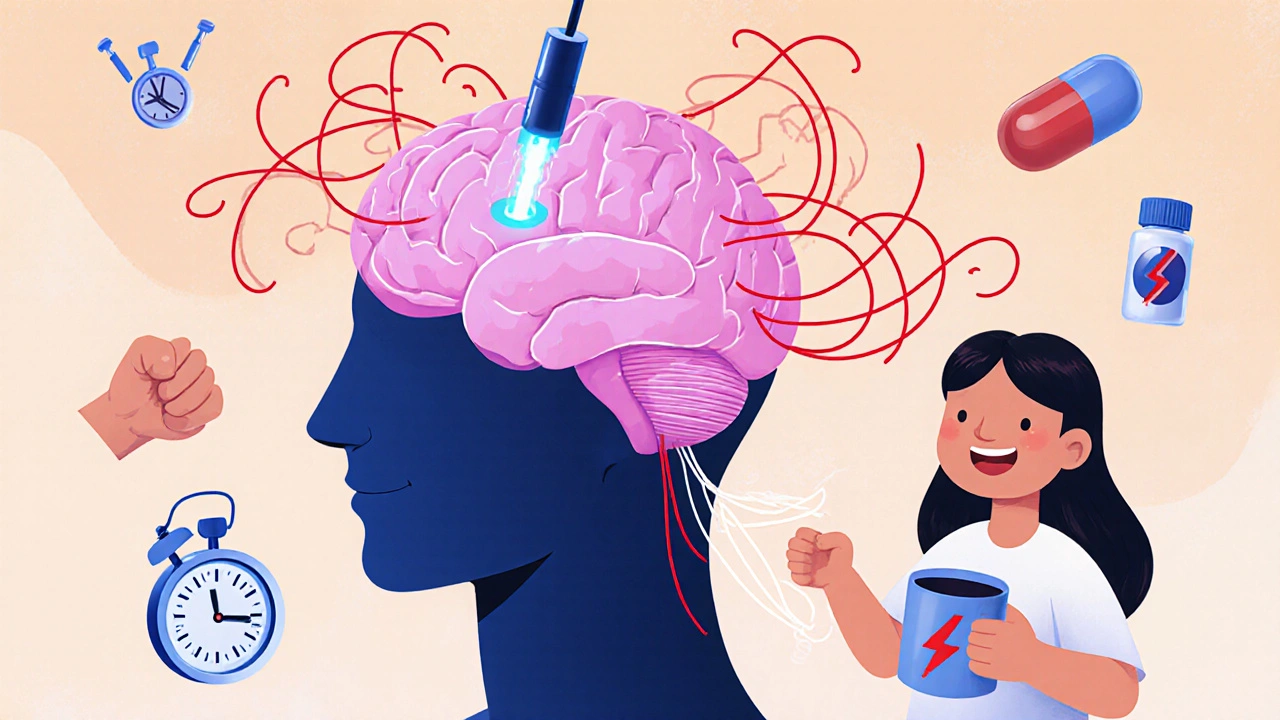
When medications for Parkinson's DBS, a surgical treatment that uses implanted electrodes to send electrical pulses to specific brain areas affected by Parkinson’s disease. Also known as deep brain stimulation, it doesn’t cure Parkinson’s—but for many, it turns debilitating tremors, stiffness, and slowness into something manageable. Many people start with pills like levodopa, but over time, those drugs stop working as well. Side effects get worse. Movements become unpredictable. That’s when doctors often suggest deep brain stimulation, a neurosurgical procedure that targets overactive brain circuits causing movement problems. It’s not for everyone, but for those who qualify, it can mean getting back to walking, dressing, and eating without help.
Parkinson’s DBS works by placing thin wires into parts of the brain like the subthalamic nucleus or globus pallidus—areas that go haywire in Parkinson’s. These wires connect to a pacemaker-like device implanted under the skin near the chest. The device sends regular pulses that calm the abnormal signals causing tremors and rigidity. Unlike older surgeries that destroyed brain tissue, DBS is reversible and adjustable. Doctors can tweak the settings over time as symptoms change. It’s also not a one-size-fits-all: some people get relief from shaking, others from freezing or dyskinesia (those sudden, uncontrolled movements caused by long-term medication use).
Who’s a good candidate? Usually someone who’s had Parkinson’s for at least four years, still responds to levodopa (even if the effect doesn’t last), and has troubling side effects from pills. It’s not for people with dementia, severe depression, or other major health issues. The surgery itself is safe for most, but like any brain procedure, there are risks—infection, bleeding, or hardware problems. Still, studies show over 70% of carefully selected patients see major improvements in movement and quality of life.
What you won’t find in most articles is how DBS affects daily life beyond tremors. Many report better sleep, less pain, and even improved mood—not because the device directly fixes those, but because they can move again. They can go out. They can hold their grandchild. That’s the real win. And while it doesn’t stop Parkinson’s from progressing, it buys years of better function.
Below, you’ll find real-world insights from people who’ve gone through it, comparisons with other treatments, and what to ask your doctor before deciding. This isn’t theoretical—it’s what works, what doesn’t, and what no one tells you until you’re sitting in the waiting room.
Deep Brain Stimulation (DBS) can dramatically improve motor symptoms for people with Parkinson’s who respond to levodopa. Learn who qualifies, how it works, what to expect, and why so few eligible patients get it.