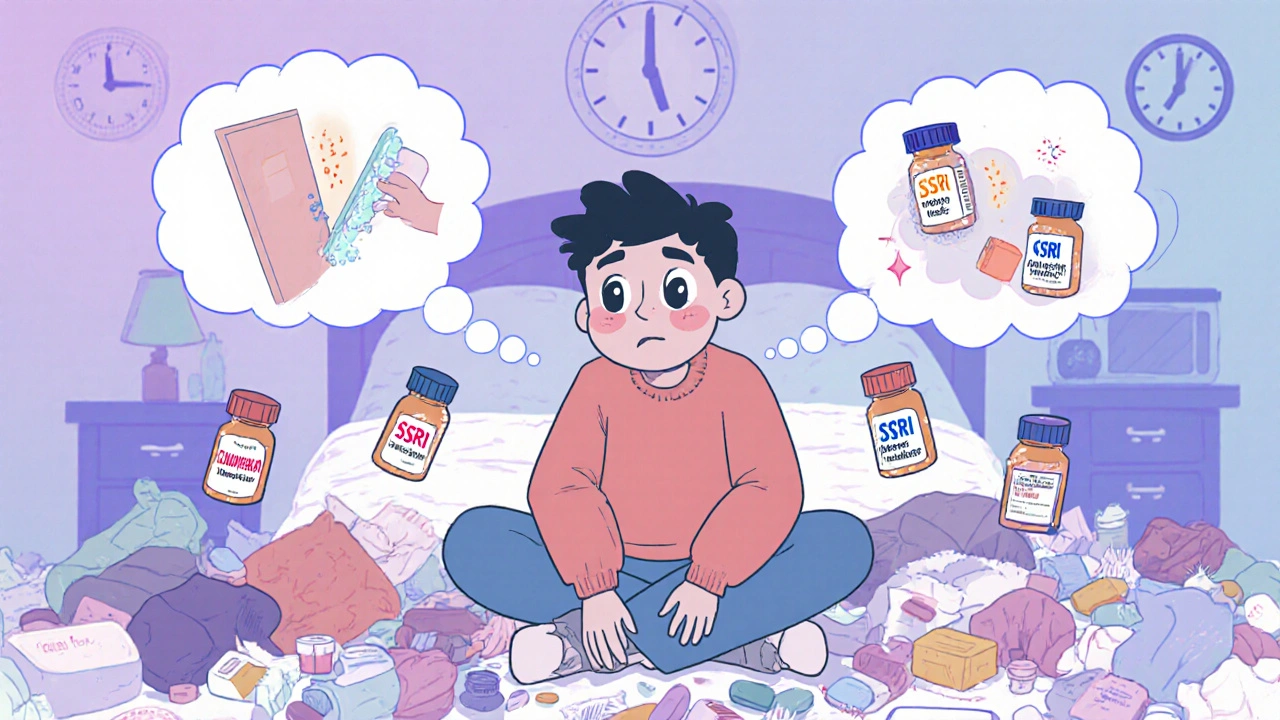
Clomipramine Dosing: How Much to Take, Risks, and Alternatives
When doctors prescribe clomipramine, a tricyclic antidepressant used mainly for obsessive-compulsive disorder and severe depression. Also known as Anafranil, it works differently than newer antidepressants by affecting both serotonin and norepinephrine in the brain. Getting the dose right matters — too little won’t help, too much can cause serious side effects like heart rhythm changes or seizures.
Most people start with 25 mg a day, often taken at night to reduce daytime drowsiness. After a week or two, your doctor might slowly increase it by 25 mg every few days, depending on how you respond and tolerate it. The usual effective range is 100–250 mg daily, but some patients need up to 300 mg under close supervision. Blood tests and ECGs are often used to check for heart-related risks, especially as the dose goes up. Unlike SSRIs, which are usually first-line for OCD, clomipramine is often tried when those don’t work — and studies show it can be more effective for severe cases, even if the side effects are tougher to handle.
That’s why many people compare it to other options like SSRIs, a class of antidepressants including fluoxetine and sertraline that target serotonin only — they’re gentler on the body but may not be strong enough. Tricyclic antidepressants, an older group of medications that include amitriptyline and nortriptyline work similarly to clomipramine but have different side effect profiles. You might hear about people switching from clomipramine to an SNRI like venlafaxine, or combining it with therapy — both are common paths when the first try doesn’t stick.
Side effects are real: dry mouth, constipation, weight gain, dizziness, and sexual problems are common. Older adults are more at risk for confusion or falls. If you’ve ever had heart issues, liver disease, or seizures, your doctor will be extra careful with dosing. Never stop clomipramine cold turkey — withdrawal can cause nausea, anxiety, and even rebound OCD symptoms. Tapering down slowly under medical care is non-negotiable.
What you’ll find in the articles below isn’t just a list of doses. It’s real-world insight: how people actually use clomipramine, what alternatives work better for some, and why side effects sometimes feel worse than the condition itself. You’ll see comparisons with SSRIs, stories about managing daily life on this med, and what to do when it stops working. This isn’t theory — it’s what patients and doctors are dealing with right now.
SSRIs and clomipramine are the only FDA-approved medications proven to treat OCD effectively. Learn dosing guidelines, side effects, real-world outcomes, and when to choose one over the other.